

Best Ricotta Cheesecake – Light, Creamy Italian Style Dessert
Ricotta Cheesecake
Ricotta cheesecake is a dessert that feels lighter than traditional cream cheese cheesecake but still delivers a rich, creamy texture and satisfying sweetness. It comes from Italian baking traditions where ricotta cheese is used to create soft, airy desserts that do not feel overly heavy after a meal. What makes ricotta cheesecake special is its texture. Instead of being dense and overly rich, it has a soft, slightly grainy creaminess that melts smoothly on the tongue. When baked correctly, it holds its shape but still feels delicate when sliced. The flavor is mild, milky, and slightly tangy, which pairs beautifully with lemon, vanilla, and subtle sweetness.
Many home bakers enjoy making ricotta cheesecake because it feels more forgiving than classic cheesecake. It does not rely entirely on heavy cream cheese, which means it is less likely to feel overly dense or overly sweet. This makes it a great choice for people who prefer desserts that feel lighter but still satisfying. In many kitchens, ricotta cheesecake is also connected to Italian Lemon Cheesecake traditions, where lemon zest and juice bring brightness to balance the richness of ricotta. This creates a dessert that feels fresh even after a full meal.
People searching for Light And Fluffy Cheesecake or Fluffy Ricotta Cheesecake often want a dessert that does not feel overwhelming. Ricotta cheesecake delivers exactly that balance between structure and softness. Unlike dense American-style cheesecakes, this version has a more rustic character. It is simple, elegant, and naturally flavorful without needing complicated toppings or techniques.
Why You’ll Love This Recipe
Ricotta cheesecake is loved because it offers a different experience from traditional cheesecake while still satisfying dessert cravings.
Preparation and Cooking Time, also serving
Ingredients
Optional Lemon Glaze
Substitution Notes
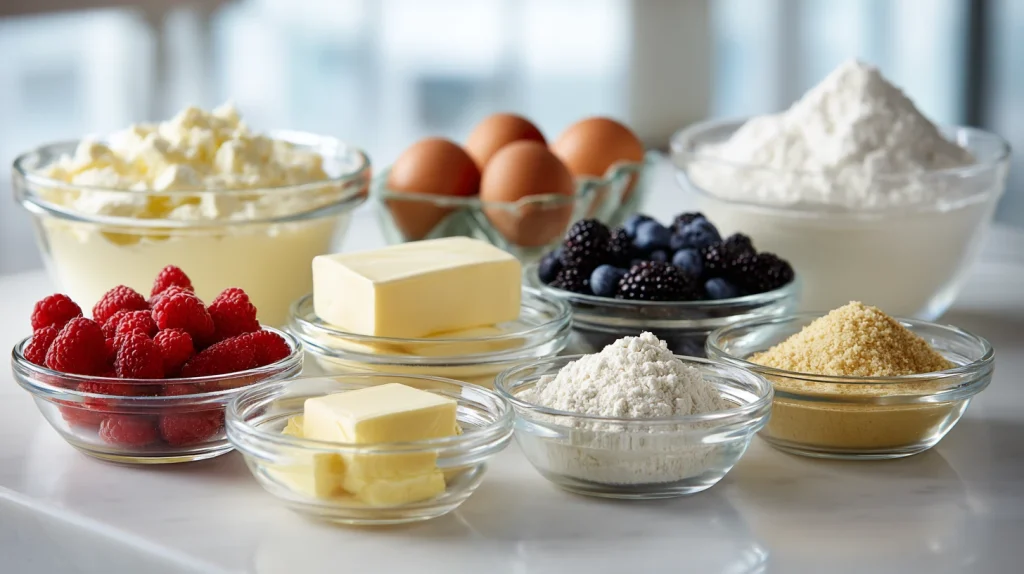
Step-by-Step Instructions
Step 1: Prepare the oven and pan
Preheat the oven to 325 degrees Fahrenheit and prepare a springform pan by lightly greasing it and lining the bottom with parchment paper. This ensures the ricotta cheesecake releases cleanly after baking and helps maintain its structure during cooling.
Step 2: Mix the base cheeses
In a large mixing bowl, combine ricotta cheese and cream cheese and blend until the mixture becomes smooth and free of large lumps, creating a creamy base that will support the texture of the ricotta cheesecake while ensuring even consistency throughout the batter.
Step 3: Add sugar and flavoring
Add sugar, vanilla extract, lemon zest, lemon juice, and salt to the cheese mixture and continue mixing until fully incorporated, allowing the citrus to distribute evenly so the ricotta cheesecake develops a balanced flavor profile.
Step 4: Add eggs and dry ingredients
Add eggs one at a time, mixing gently after each addition to avoid overmixing, then fold in flour and sour cream until the batter becomes smooth and slightly thick, which helps stabilize the structure of the ricotta cheesecake during baking.
Step 5: Pour and smooth the batter
Pour the mixture into the prepared pan and gently tap it on the counter to release air bubbles, then smooth the top with a spatula to ensure even baking and a clean finish for the ricotta cheesecake surface.
Step 6: Bake the cheesecake
Place the pan in the preheated oven and bake for 55 to 65 minutes until the edges are set and the center has a slight gentle wobble, a key indicator that the ricotta cheesecake is properly baked without being overcooked.
Step 7: Cool and chill
Turn off the oven and allow the cheesecake to cool inside with the door slightly open for 20 minutes, then transfer it to room temperature before refrigerating for at least 2 to 3 hours so the texture of the ricotta cheesecake fully sets.
Step 8: Add glaze and serve
If using glaze, whisk powdered sugar, lemon juice, and lemon zest until smooth, then drizzle over the chilled ricotta cheesecake before slicing and serving.
How to Serve
Ricotta cheesecake can be served in several simple but elegant ways.
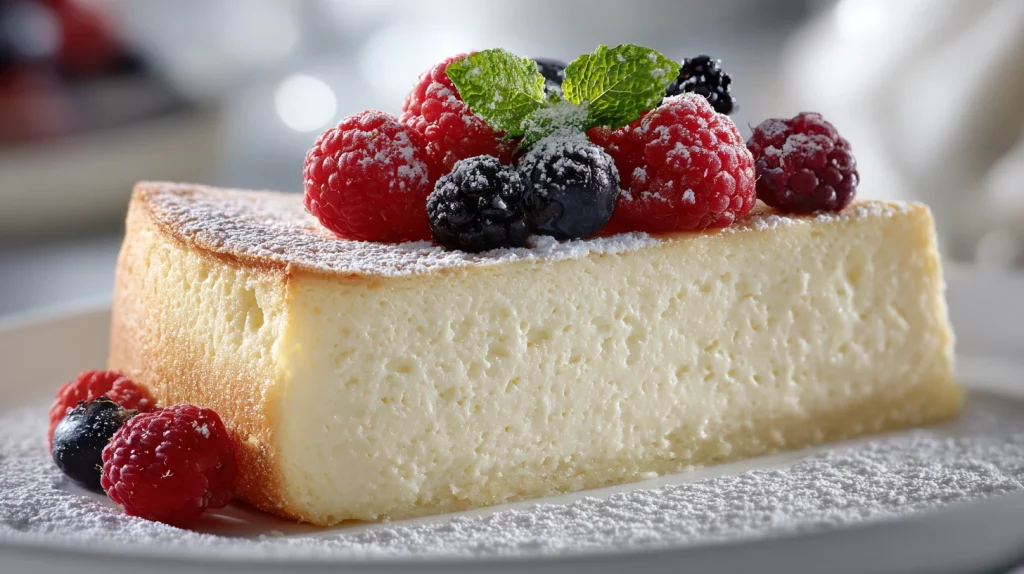
A clean slice presentation works best, showing the soft and creamy interior of the cheesecake.
Additional Tips
Recipe Variations
Freezing and Storage
Nutritional Information
Approximate values per serving:
Final Words
Ricotta cheesecake is a dessert that brings together simplicity and elegance in a way that feels natural and approachable. It does not rely on heavy techniques or complicated ingredients, yet the final result feels refined enough for special occasions. The soft texture and gentle flavor make it a dessert that appeals to a wide range of tastes.
What makes ricotta cheesecake especially valuable is its flexibility. Whether you enjoy it plain, with fruit, or with a bright citrus glaze, it adapts easily without losing its identity. Recipes like Creamy Lemon Ricotta Cheesecake or Fluffy Lemon Ricotta Cheesecake variations show how versatile this base can be while still keeping its signature light texture.
Once you master this recipe, it becomes a dependable dessert you can return to again and again. It works well for family dinners, gatherings, or quiet evenings when you want something sweet but not overly heavy. Over time, ricotta cheesecake often becomes a favorite because it feels balanced, comforting, and consistently satisfying.
FAQs

Best Ricotta Cheesecake – Light, Creamy Italian Style Dessert
Course: Desserts10
servings20
minutes55
minutes320
kcalIngredients
2 cups ricotta cheese, drained if needed
8 ounces cream cheese, softened
3/4 cup granulated sugar
3 large eggs
1/4 cup all purpose flour
1 teaspoon vanilla extract
1 tablespoon lemon zest
2 tablespoons fresh lemon juice
1/4 teaspoon salt
1/2 cup sour cream
- Optional Lemon Glaze
1 cup powdered sugar
2 tablespoons lemon juice
1 teaspoon lemon zest
Directions
- Preheat the oven to 325 degrees Fahrenheit and prepare a springform pan by lightly greasing it and lining the bottom with parchment paper. This ensures the ricotta cheesecake releases cleanly after baking and helps maintain its structure during cooling.
- In a large mixing bowl, combine ricotta cheese and cream cheese and blend until the mixture becomes smooth and free of large lumps, creating a creamy base that will support the texture of the ricotta cheesecake while ensuring even consistency throughout the batter.
- Add sugar, vanilla extract, lemon zest, lemon juice, and salt to the cheese mixture and continue mixing until fully incorporated, allowing the citrus to distribute evenly so the ricotta cheesecake develops a balanced flavor profile.
- Add eggs one at a time, mixing gently after each addition to avoid overmixing, then fold in flour and sour cream until the batter becomes smooth and slightly thick, which helps stabilize the structure of the ricotta cheesecake during baking.
- Pour the mixture into the prepared pan and gently tap it on the counter to release air bubbles, then smooth the top with a spatula to ensure even baking and a clean finish for the ricotta cheesecake surface.
- Place the pan in the preheated oven and bake for 55 to 65 minutes until the edges are set and the center has a slight gentle wobble, a key indicator that the ricotta cheesecake is properly baked without being overcooked.
- Turn off the oven and allow the cheesecake to cool inside with the door slightly open for 20 minutes, then transfer it to room temperature before refrigerating for at least 2 to 3 hours so the texture of the ricotta cheesecake fully sets.
- If using glaze, whisk powdered sugar, lemon juice, and lemon zest until smooth, then drizzle over the chilled ricotta cheesecake before slicing and serving.