

No Knead Dutch Oven Bread – Easy Crusty Homemade Bread
No Knead Dutch Oven Bread
No Knead Dutch Oven Bread is one of the simplest ways to bake bakery style bread at home without special skills or equipment. It delivers a thick golden crust, soft airy interior, and deep flavor that develops naturally over time. What makes this bread so special is that you do almost no physical work. There is no traditional kneading required, yet the result tastes like it came from a professional bakery.
The magic of No Knead Dutch Oven Bread comes from slow fermentation and high heat baking. The dough rests for hours, allowing gluten to develop naturally. Then it is baked inside a hot Dutch oven, which traps steam and creates the perfect environment for a crisp crust and soft crumb. This is why many home cooks prefer Bread Baked In Dutch Oven methods over traditional oven baking.
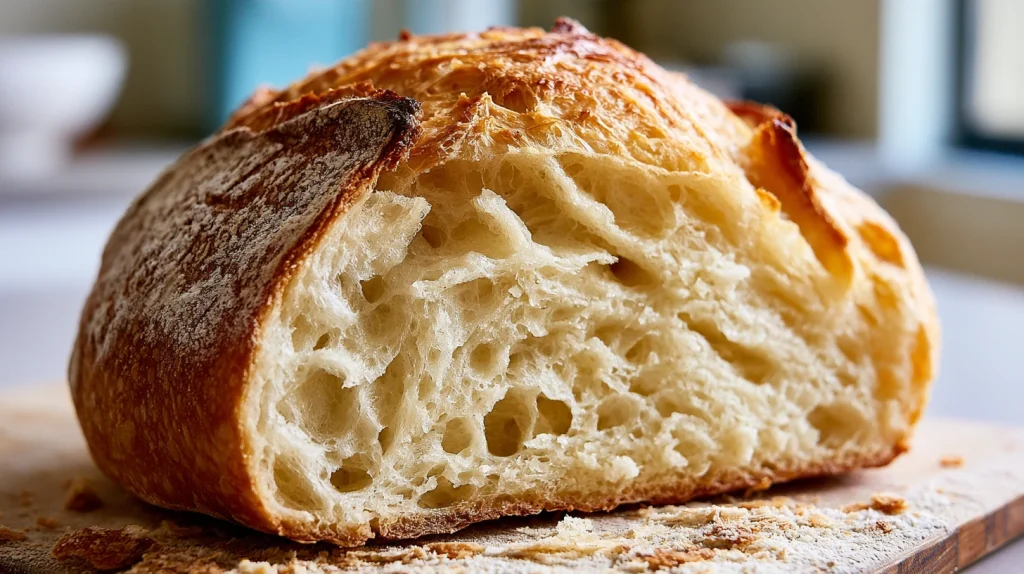
The taste is simple but deeply satisfying. The crust is crunchy and slightly caramelized, while the inside is light, chewy, and full of small air pockets. It pairs well with butter, soups, stews, or even eaten on its own while still warm. Many people who try Bread In Dutch Oven baking for the first time are surprised at how close it comes to artisan bakery bread. This method has become popular in Easy Bread Recipes For Dutch Oven collections because it removes the difficulty of kneading and shaping techniques. Instead, time and heat do the work. It is one of the most reliable Dutch Oven Easy Bread Recipes for beginners.
If you have ever wanted to try Baking Bread In Dutch Oven but felt intimidated, this recipe is designed to guide you step by step. It is simple, forgiving, and consistently produces great results. Even if you have never baked bread before, you can achieve a beautiful loaf with this method.
Why You’ll Love This Recipe
This No Knead Dutch Oven Bread recipe works because it relies on time instead of effort. The dough develops flavor slowly, which creates a deeper and more complex taste than quick bread recipes.
Preparation and Cooking Time, also serving
Ingredients
Optional additions:
Substitution Notes
Step-by-Step Instructions

Step 1: Mix the Dough
In a large bowl, combine flour, salt, and yeast. Slowly add warm water and mix with a spoon until a sticky dough forms. The dough should look rough and uneven. This is normal for No Knead Dutch Oven Bread and does not require kneading.
Step 2: First Resting Phase
Cover the bowl with plastic wrap or a damp cloth and leave it at room temperature for 8 to 18 hours. During this time, the dough will rise slowly and develop flavor. This long fermentation is what gives Bread In Dutch Oven its signature taste and texture.
Step 3: Prepare the Dutch Oven
Place your Dutch oven in the oven and preheat it to 450°F (230°C). Heating the pot is important because it creates instant steam when the dough is placed inside. This step is essential for achieving Bread Baked In Dutch Oven crust.
Step 4: Shape the Dough
Lightly flour a surface and gently turn out the dough. Do not overwork it. Shape it into a rough round loaf. The dough will be soft and slightly sticky, which is expected for Easy Bread Recipes For Dutch Oven style baking.
Step 5: Second Resting
Place the dough on parchment paper and let it rest for 30 to 40 minutes while the oven continues heating. This allows it to relax and slightly rise again before baking.
Step 6: Bake Covered
Carefully remove the hot Dutch oven. Lift the dough using parchment paper and place it inside. Cover with the lid and bake for 30 minutes. This trapped steam helps Bread Cooked In Dutch Oven rise and develop structure.
Step 7: Bake Uncovered
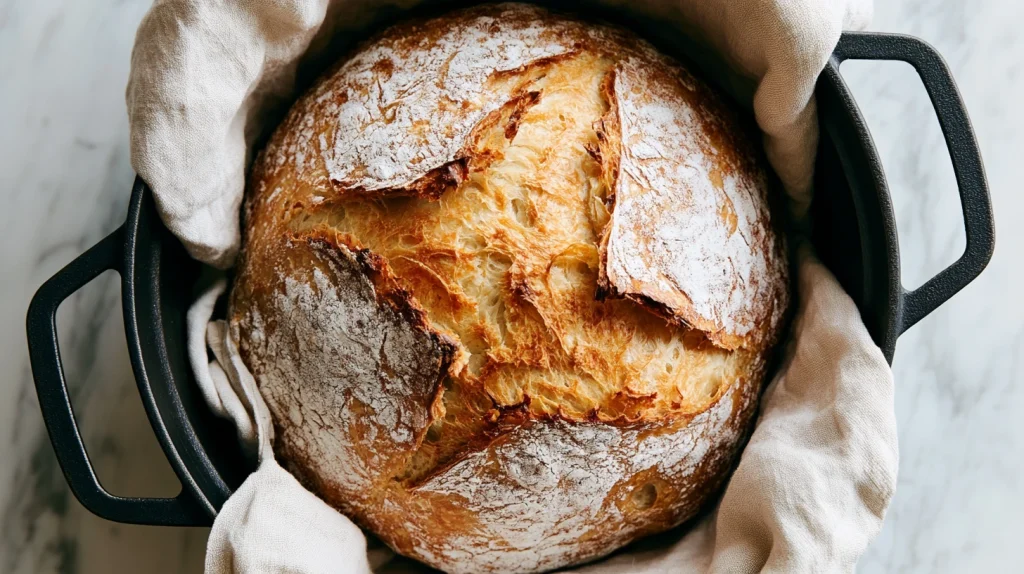
Remove the lid and continue baking for another 15 to 20 minutes until the crust becomes deep golden brown. This final stage creates the crispy exterior that defines Baked Bread In Dutch Oven recipes.
How to Serve
No Knead Dutch Oven Bread is best served slightly warm or at room temperature so the crumb stays soft and the crust keeps its crunch. Slice it with a serrated bread knife to preserve the structure instead of compressing it.
Additional Tips
Recipe Variations
Freezing and Storage
Nutritional Information
Approximate values per slice (based on 8 slices):
Values may vary depending on flour type and optional ingredients used.
Final Words
No Knead Dutch Oven Bread proves that great baking does not have to be complicated. With just a few basic ingredients and time, you can create a loaf that feels artisan, rustic, and deeply satisfying. The process is simple, but the results feel impressive every time.
What makes this method so reliable is the way time replaces effort. The slow fermentation builds flavor naturally, while the hot Dutch oven creates the perfect environment for a crisp crust and soft interior. Once you understand this balance, baking Bread Baked In Dutch Oven becomes almost effortless. This recipe is perfect for both beginners and experienced home cooks. It fits into everyday meals, special occasions, or even quiet moments when fresh bread is all you need. Whether you enjoy it warm with butter or as part of a full meal, it always delivers comfort.
As you continue baking, you can experiment with flavors, flours, and add ins to make your own version of Dutch Oven Recipes Bread. Over time, this simple method becomes a dependable kitchen skill that you can return to again and again.
Once you master No Knead Dutch Oven Bread, homemade bread will no longer feel difficult. It becomes a regular part of your cooking routine, bringing fresh, warm bread to your table whenever you want.
FAQs

No Knead Dutch Oven Bread – Easy Crusty Homemade Bread
Course: Bread Recipes8
servings10
minutes50
minutes160
kcalIngredients
3 cups all purpose flour
1 ½ teaspoons salt
½ teaspoon instant yeast
1 ½ cups warm water
- Optional additions:
1 tablespoon olive oil for richer texture
1 teaspoon sugar for slightly faster fermentation
1 teaspoon herbs like rosemary or thyme for flavor
Directions
- In a large bowl, combine flour, salt, and yeast. Slowly add warm water and mix with a spoon until a sticky dough forms. The dough should look rough and uneven. This is normal for No Knead Dutch Oven Bread and does not require kneading.
- Cover the bowl with plastic wrap or a damp cloth and leave it at room temperature for 8 to 18 hours. During this time, the dough will rise slowly and develop flavor. This long fermentation is what gives Bread In Dutch Oven its signature taste and texture.
- Place your Dutch oven in the oven and preheat it to 450°F (230°C). Heating the pot is important because it creates instant steam when the dough is placed inside. This step is essential for achieving Bread Baked In Dutch Oven crust.
- Lightly flour a surface and gently turn out the dough. Do not overwork it. Shape it into a rough round loaf. The dough will be soft and slightly sticky, which is expected for Easy Bread Recipes For Dutch Oven style baking.
- Place the dough on parchment paper and let it rest for 30 to 40 minutes while the oven continues heating. This allows it to relax and slightly rise again before baking.
- Carefully remove the hot Dutch oven. Lift the dough using parchment paper and place it inside. Cover with the lid and bake for 30 minutes. This trapped steam helps Bread Cooked In Dutch Oven rise and develop structure.
- Remove the lid and continue baking for another 15 to 20 minutes until the crust becomes deep golden brown. This final stage creates the crispy exterior that defines Baked Bread In Dutch Oven recipes.