

Smoked Chicken Wings Recipe – Juicy Low and Slow BBQ Wings
Smoked Chicken Wings
Smoked chicken wings are one of the most flavorful ways to prepare chicken because they combine low heat cooking with deep wood smoke infusion. Instead of relying on frying or heavy sauces, smoked chicken wings develop their taste slowly in a smoker, allowing the meat to stay juicy while the skin absorbs a rich smoky aroma.
What makes smoked chicken wings special is the balance between texture and flavor. The outside becomes lightly crisp while the inside remains tender and juicy. As the wings cook in a smoker or pellet grill, the smoke penetrates the meat, creating layers of flavor that cannot be achieved in an oven alone.
Many home cooks love smoked chicken wings because they are simple to prepare but deliver restaurant quality results. Whether cooked on a pellet grill, charcoal smoker, or electric smoker, the process is mostly hands off, which makes it perfect for gatherings, game days, or weekend cooking.
These wings are also extremely versatile. You can season them with a dry rub, glaze them after smoking, or serve them plain with dipping sauces. Popular setups like Pit Boss Smoked Wings, Chicken Wings On The Traeger, Chicken Wings On Pit Boss, and Smoked Chicken Pellet Smoker methods have made smoked wings a favorite across backyard cooking communities. The flavor is rich but not overwhelming. The smoke adds depth, the seasoning adds character, and the chicken itself remains the star of the dish. Once you understand how smoked wings work, they quickly become a go to recipe for outdoor cooking.
Why You’ll Love This Recipe
Smoked chicken wings are one of the easiest ways to create impressive flavor without complicated cooking techniques. Once the wings are seasoned and placed in the smoker, most of the work is done by controlled heat and wood smoke.
Another reason you will love smoked chicken wings is consistency. Smoking allows the wings to cook evenly at a steady temperature, reducing the risk of dry meat or uneven cooking. This makes it easier for beginners to get reliable results.
The recipe is also highly flexible. You can use different woods like hickory, apple, cherry, or mesquite depending on the flavor you want. You can also adjust seasoning using different Smoked Wings Rub or Smoked Wing Seasoning blends to create unique profiles.
Smoked chicken wings also work for many occasions. They are perfect for parties, outdoor BBQs, casual dinners, or meal prep. They hold their flavor well even after resting, making them ideal for serving in batches.
Finally, smoked chicken wings pair beautifully with sauces and sides. From spicy buffalo style sauces to creamy ranch dips, they adapt easily to different flavor preferences without losing their smoky character.
Preparation and Cooking Time, also serving
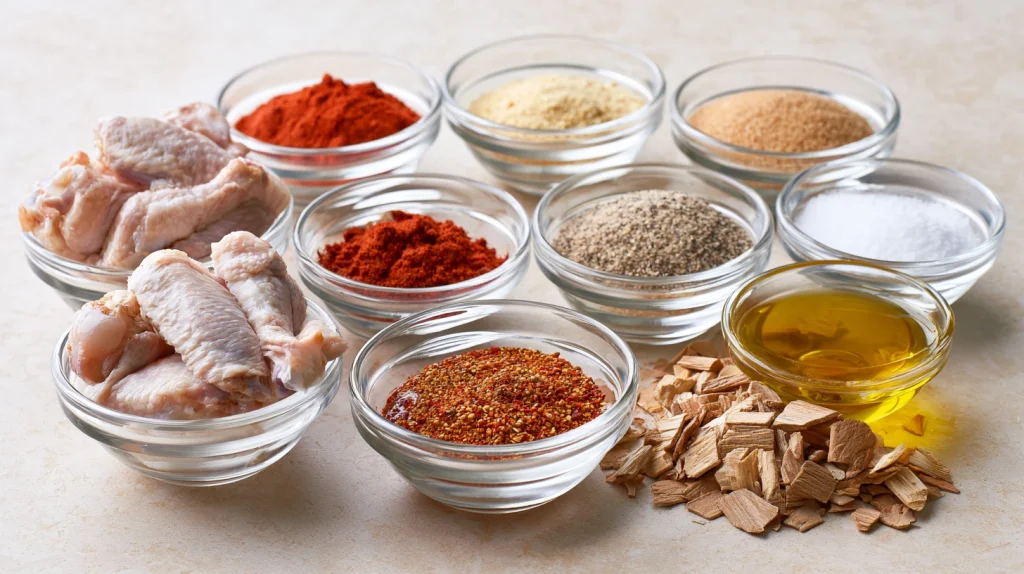
Ingredients
For smoked wings rub
Substitution notes
Step-by-Step Instructions
Step 1: Prepare the chicken wings
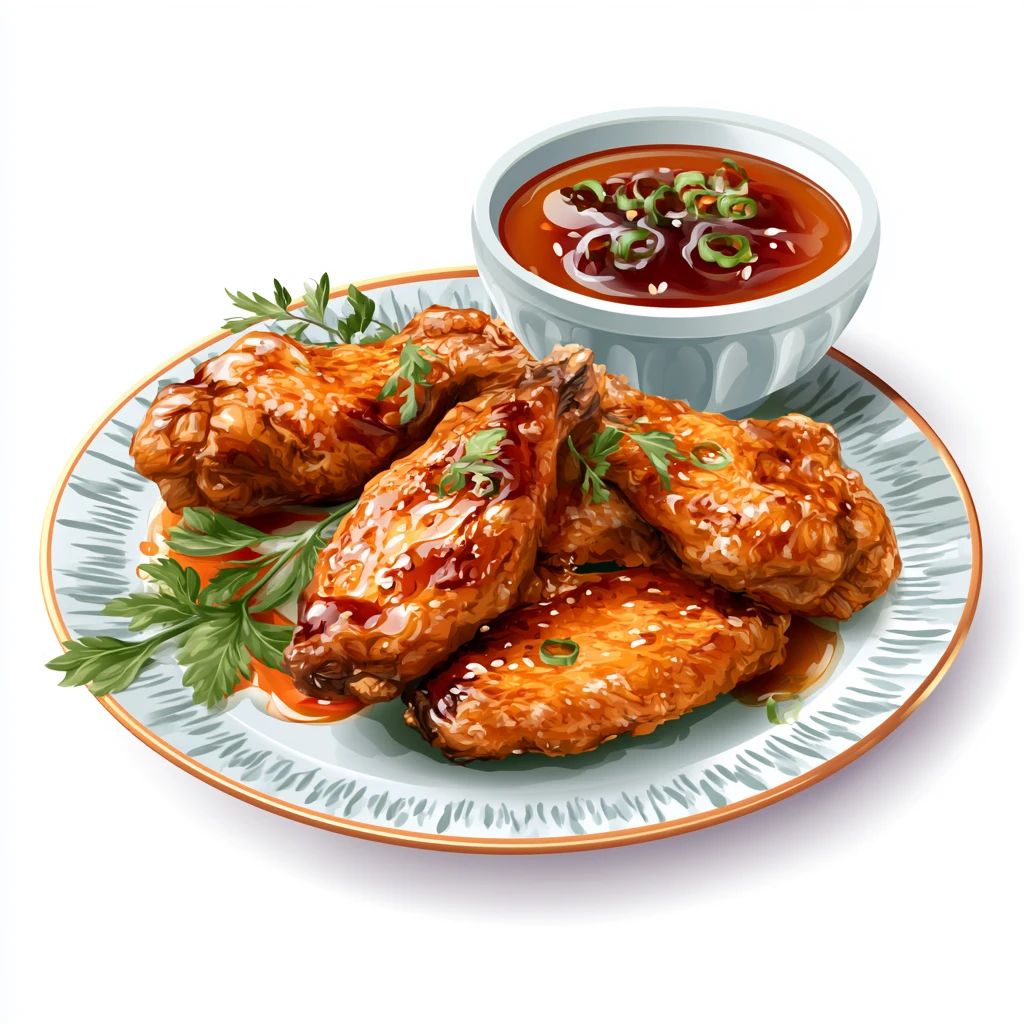
Clean and dry the chicken wings thoroughly using paper towels. Removing moisture is important because dry skin helps the wings absorb smoke better and improves texture during cooking. Place the wings in a large bowl and coat them evenly with olive oil so the seasoning sticks properly.
Step 2: Season the wings
Add salt, black pepper, smoked paprika, garlic powder, onion powder, chili powder, and brown sugar to the wings. Mix well so every piece is evenly coated. If time allows, let the wings rest for at least 1 hour so the seasoning can penetrate the surface before smoking.
Step 3: Preheat the smoker
Set your smoker or pellet grill to 110 to 120°C. Use wood chips or pellets depending on your smoker type. Hickory and apple wood are commonly used for smoked chicken wings because they provide a balanced flavor that is not too strong or too sweet.
Step 4: Place wings in the smoker
Arrange the wings in a single layer on the smoker rack. Make sure they are not touching so smoke can circulate evenly. Close the lid and let the wings cook slowly, maintaining steady temperature throughout the process.
Step 5: Smoke the wings slowly
Allow the wings to smoke for about 60 to 90 minutes. During this time, the smoke slowly infuses the chicken while the fat renders, helping develop flavor and tenderness. Avoid opening the smoker too often so heat and smoke remain consistent.
Step 6: Increase heat for final crisping
After the initial smoking phase, increase the smoker temperature to 200 to 220°C. This step helps render remaining fat from the skin and creates a lightly crisp exterior. Continue cooking the smoked chicken wings for another 20 to 30 minutes, turning them once halfway through so they brown evenly on all sides.
Step 7: Check doneness and rest
Remove the smoked chicken wings once they are fully cooked and the internal temperature reaches 75°C. The skin should look slightly tightened and lightly crisp, while the meat should stay juicy. Let the wings rest for about 10 minutes so the juices settle and the smoky flavor becomes more balanced.
How to Serve
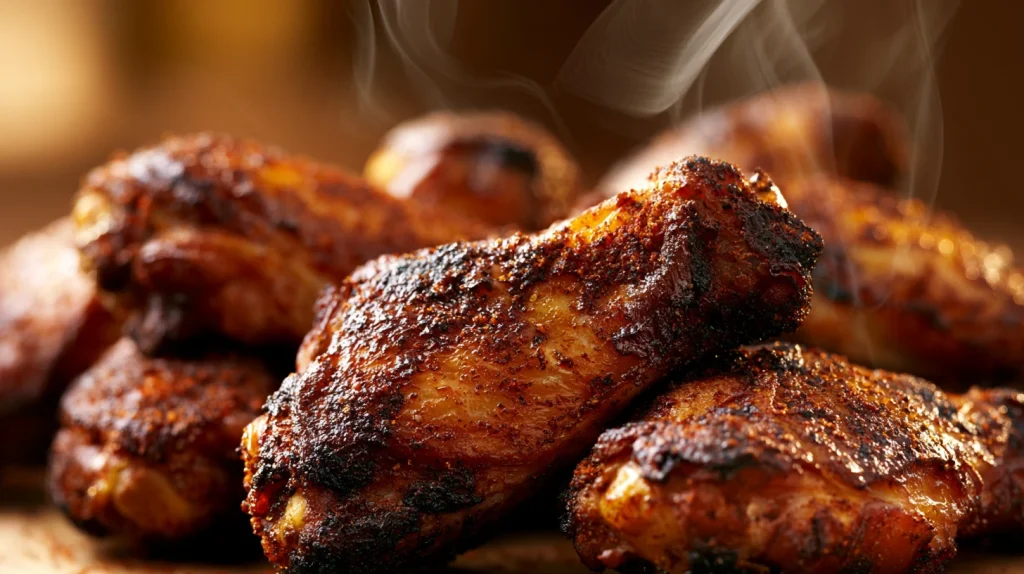
Smoked chicken wings are best served hot, straight from the smoker, when the smoky aroma is at its peak. Arrange them on a large platter so the dark, glossy skin and seasoning are clearly visible. A light sprinkle of extra smoked paprika or fresh herbs can enhance presentation without overpowering the natural flavor.
These wings pair very well with creamy and cooling dips such as ranch, garlic yogurt sauce, or blue cheese dressing. The richness of the dip balances the deep smoky notes of the wings and creates a smooth contrast in every bite.
For side dishes, smoked chicken wings work well with classic BBQ sides like coleslaw, grilled corn, baked potatoes, or potato wedges. They also pair nicely with simple salads if you want a lighter meal.
You can also serve them as part of a BBQ spread alongside other dishes like ribs, brisket, or grilled vegetables. Recipes inspired by Pit Boss Smoked Wings, Chicken Wings On The Traeger, and Smoked Wings Pellet Grill Pit Boss setups are often served this way for gatherings and outdoor meals.
Additional Tips
Recipe Variations
Freezing and Storage
Nutritional Information
Approximate values per serving:
Values may vary depending on rub, wood type, and cooking method.
Final Words
Smoked chicken wings are one of the most rewarding ways to cook chicken because they rely on time, smoke, and simple seasoning rather than complicated steps. Once you understand how heat and smoke work together, you can consistently produce wings that are juicy inside with a deep, flavorful crust outside. The process is slow, but it rewards patience with results that feel close to professional BBQ cooking.
What makes smoked chicken wings especially valuable is how adaptable they are. You can adjust wood type, seasoning, or finishing sauces to create completely different flavor profiles without changing the core method. Whether you prefer mild, spicy, or sweet variations, the same smoking technique supports all of them while keeping the texture consistent and satisfying.
Another reason these wings stand out is their versatility for different occasions. They work equally well for casual family dinners, outdoor BBQ gatherings, or game day spreads. Recipes inspired by Smoked Chicken Pellet Smoker methods or Pit Boss Smoked Wings style cooking are especially popular because they allow you to prepare large batches with minimal effort while still maintaining strong flavor.
In the end, smoked chicken wings are more than just a recipe. They are a reliable cooking method that helps you understand low and slow cooking in a practical way. Once you make them a few times, they quickly become a regular part of your outdoor cooking routine, offering consistent flavor, simple preparation, and crowd pleasing results every time.
FAQs

Smoked Chicken Wings Recipe – Juicy Low and Slow BBQ Wings
Course: Chicken Recipes6
servings20
minutes1
hour30
minutes520
kcalIngredients
1.5 kg chicken wings, split and cleaned
2 tablespoons olive oil
1 tablespoon salt
1 tablespoon black pepper
1 tablespoon smoked paprika
1 teaspoon garlic powder
1 teaspoon onion powder
1 teaspoon chili powder optional
1 teaspoon brown sugar
1 teaspoon mustard powder optional
1 tablespoon apple cider vinegar (optional for light marinade)
- For smoked wings rub
1 tablespoon smoked paprika
1 teaspoon garlic powder
1 teaspoon onion powder
1 teaspoon black pepper
1 teaspoon salt
1 teaspoon chili flakes optional
1 teaspoon dried herbs (oregano or thyme optional)
Directions
- Clean and dry the chicken wings thoroughly using paper towels. Removing moisture is important because dry skin helps the wings absorb smoke better and improves texture during cooking. Place the wings in a large bowl and coat them evenly with olive oil so the seasoning sticks properly.
- Add salt, black pepper, smoked paprika, garlic powder, onion powder, chili powder, and brown sugar to the wings. Mix well so every piece is evenly coated. If time allows, let the wings rest for at least 1 hour so the seasoning can penetrate the surface before smoking.
- Set your smoker or pellet grill to 110 to 120°C. Use wood chips or pellets depending on your smoker type. Hickory and apple wood are commonly used for smoked chicken wings because they provide a balanced flavor that is not too strong or too sweet.
- Arrange the wings in a single layer on the smoker rack. Make sure they are not touching so smoke can circulate evenly. Close the lid and let the wings cook slowly, maintaining steady temperature throughout the process.
- Allow the wings to smoke for about 60 to 90 minutes. During this time, the smoke slowly infuses the chicken while the fat renders, helping develop flavor and tenderness. Avoid opening the smoker too often so heat and smoke remain consistent.
- After the initial smoking phase, increase the smoker temperature to 200 to 220°C. This step helps render remaining fat from the skin and creates a lightly crisp exterior. Continue cooking the smoked chicken wings for another 20 to 30 minutes, turning them once halfway through so they brown evenly on all sides.
- Remove the smoked chicken wings once they are fully cooked and the internal temperature reaches 75°C. The skin should look slightly tightened and lightly crisp, while the meat should stay juicy. Let the wings rest for about 10 minutes so the juices settle and the smoky flavor becomes more balanced.