

Mango Chutney Recipe – Easy Sweet and Spiced Mango Chutney
Mango Chutney
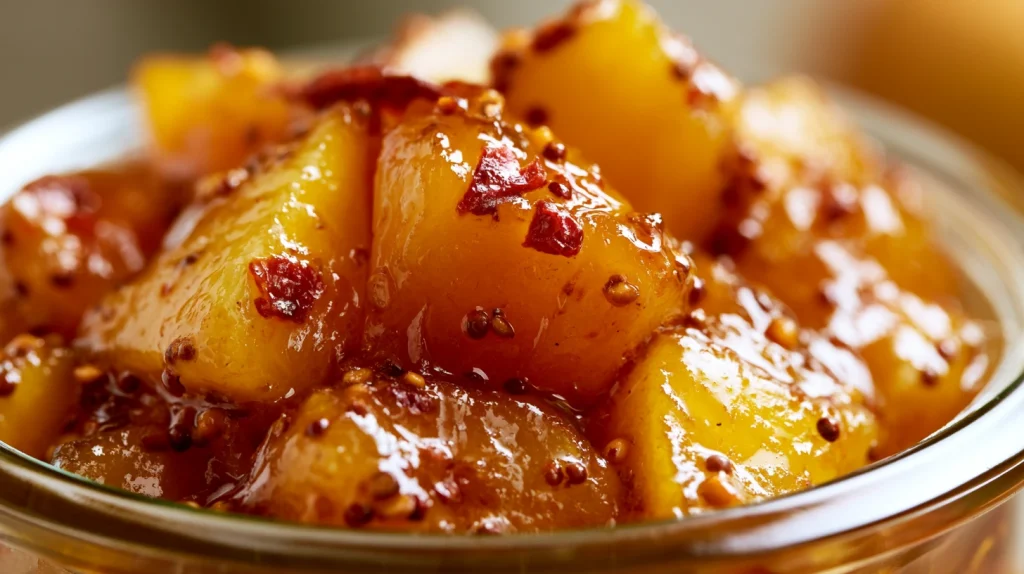
mango chutney is a slow cooked condiment made by combining mangoes with vinegar, sugar, and a careful blend of spices. It sits in a unique category between jam, relish, and sauce, but it is none of these fully. What makes it special is its ability to balance sweetness, acidity, and spice in a single spoonful without feeling heavy or one dimensional.
A well made mango chutney starts with fruit first. The mango provides natural body and sweetness, while vinegar sharpens the edges so the flavor does not become overly sugary. Spices then bring structure. Cumin adds earthiness, mustard seeds bring light bitterness and texture, and chili adds controlled heat. When these elements cook slowly, they turn into a thick, glossy condiment that clings gently to food.
Mango Chutney is widely used in both traditional and modern cooking. It is especially valued in South Asian meals, British inspired spreads, and fusion dishes where sweet and savory need to meet in the middle. It is commonly paired with curries, grilled meats, rice bowls, and street foods like Bunny Chow, where it cuts through richness and adds brightness.
What makes mango chutney even more appealing to home cooks is how forgiving it is. It does not demand exact precision like baking. Instead, it rewards tasting, adjusting, and slow cooking. This makes it one of the most practical Mango Recipes you can keep in your kitchen rotation. It also fits naturally into Gluten Free Family Meals because it contains no gluten ingredients by default. This makes it a safe, flavorful addition for households with mixed dietary needs.
Why You’ll Love This Recipe
Preparation and Cooking Time, also serving
Ingredients
Substitution notes
Step-by-Step Instructions

Step 1 Prepare and cut the mango properly
Peel the mangoes and cut them into evenly sized cubes so they cook uniformly. Uneven cutting can lead to some pieces breaking down too early while others stay firm, so consistency matters for texture control.
Step 2 Heat spices gently to release aroma
Heat oil in a heavy bottom pan and add mustard seeds and cumin seeds. Allow them to crackle slowly over medium heat until they release aroma, but avoid burning them because that creates bitterness in the chutney.
Step 3 Build the aromatic base
Add chopped onions, garlic, and ginger into the pan and cook slowly until soft and lightly golden. This step creates the savory base that balances the sweetness of mango later.
Step 4 Add mango and dry spices
Add mango chunks along with turmeric, chili flakes, salt, and cinnamon. Stir well so the spices coat the mango evenly and begin drawing out natural juices.
Step 5 Add sugar and vinegar slowly
Pour in vinegar and sugar gradually while stirring. The mixture will loosen at first, then slowly begin to thicken as it cooks down and concentrates in flavor.
Step 6 Slow simmer for flavor development
Reduce heat to low and allow the mixture to simmer gently. This is where mango softens, spices integrate, and the chutney begins to develop its glossy texture.
Step 7 Adjust texture and finish cooking
Continue cooking until the chutney reaches a thick consistency where it slowly falls off a spoon. Stir occasionally to prevent sticking and adjust seasoning if needed.
Step 8 Cool completely before storing
Remove from heat and allow the mango chutney to cool naturally. As it cools, it will thicken further and flavors will become more rounded and balanced.
How To Serve
Additional Tips
Recipe Variations
Freezing and Storage
Nutritional Information
Approximate per serving
Final Words
mango chutney is one of those recipes that shows how slow cooking can transform simple ingredients into something far more complex and useful. It takes basic mangoes and turns them into a condiment that can support both everyday meals and special dishes without losing its identity. The balance of sweetness from mango, sharpness from vinegar, and warmth from spices creates a layered flavor that feels complete in a single spoonful.
What makes this recipe especially valuable in home cooking is its adaptability. It can sit quietly next to rice and curries, or it can become the main flavor enhancer in sandwiches, wraps, or grilled dishes. It also fits naturally into Gluten Free Family Meals, making it a reliable option for households with different dietary needs.
The more you cook mango chutney, the more you understand how flexible it really is. You can adjust sweetness, spice level, and texture depending on the dish it will accompany. Over time, it becomes less of a recipe and more of a base technique that you can customize in many directions.
It also improves with rest. A freshly cooked batch is good, but after a day or two, the flavors deepen and settle into a more rounded profile. This makes it ideal for batch cooking and planned meals. Whether used in traditional curries, modern fusion plates, or simple snacks, mango chutney consistently adds brightness and balance. It is a small addition that makes a noticeable difference, which is why it remains a staple in many kitchens.
FAQs

Mango Chutney Recipe – Easy Sweet and Spiced Mango Chutney
Course: Snacks12
servings20
minutes45
minutes130
kcalIngredients
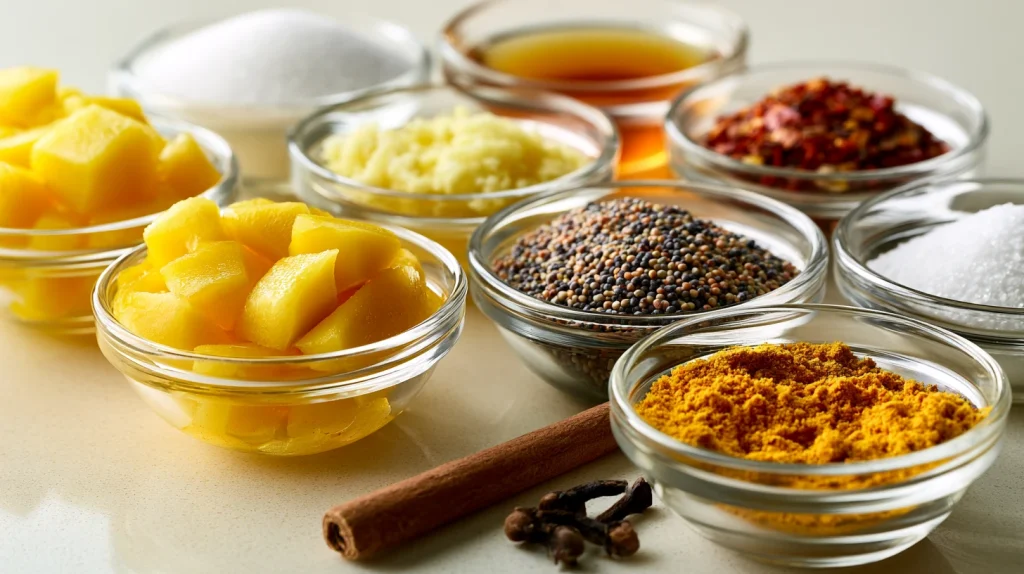
4 cups ripe mango chunks, peeled and diced evenly
1 1/4 cup sugar, adjust depending on mango sweetness
1 cup apple cider vinegar or white vinegar
1 medium onion, finely chopped
4 garlic cloves, minced
1 tablespoon fresh grated ginger
1 teaspoon mustard seeds
1 teaspoon cumin seeds
1 teaspoon turmeric powder
1 to 2 teaspoons chili flakes or finely chopped fresh chili
1 teaspoon salt
1/2 teaspoon cinnamon powder
1/2 teaspoon ground cloves (optional but adds depth)
1/2 cup raisins or chopped dried apricots for texture and sweetness
1 tablespoon oil for sautéing spices
Directions
- Peel the mangoes and cut them into evenly sized cubes so they cook uniformly. Uneven cutting can lead to some pieces breaking down too early while others stay firm, so consistency matters for texture control.
- Heat oil in a heavy bottom pan and add mustard seeds and cumin seeds. Allow them to crackle slowly over medium heat until they release aroma, but avoid burning them because that creates bitterness in the chutney.
- Add chopped onions, garlic, and ginger into the pan and cook slowly until soft and lightly golden. This step creates the savory base that balances the sweetness of mango later.
- Add mango chunks along with turmeric, chili flakes, salt, and cinnamon. Stir well so the spices coat the mango evenly and begin drawing out natural juices.
- Pour in vinegar and sugar gradually while stirring. The mixture will loosen at first, then slowly begin to thicken as it cooks down and concentrates in flavor.
- Reduce heat to low and allow the mixture to simmer gently. This is where mango softens, spices integrate, and the chutney begins to develop its glossy texture.
- Continue cooking until the chutney reaches a thick consistency where it slowly falls off a spoon. Stir occasionally to prevent sticking and adjust seasoning if needed.
- Remove from heat and allow the mango chutney to cool naturally. As it cools, it will thicken further and flavors will become more rounded and balanced.