

Dried Mangoes Recipe – Best Chewy and Sweet Snacks at Home
Dried Mangoes
Dried mangoes are made by removing most of the water from fresh mango slices through slow drying methods such as dehydration, oven drying, or sun drying. What remains is a concentrated form of the fruit where the natural sugars, acids, and aromatic compounds become much more intense. This is why even a small bite of dried mango delivers a strong burst of tropical flavor compared to fresh mango, which contains a lot of water that naturally dilutes taste.
The taste of dried mango is rich, layered, and more complex than many people expect. At first bite, you notice a natural fruity sweetness, then a deeper mango flavor that feels almost caramel-like as you chew. Depending on the mango variety and ripeness, there can also be a gentle tang that balances the sweetness and prevents it from becoming overwhelming. When prepared well, dried mango does not taste flat or overly sugary, but instead feels balanced and naturally satisfying.
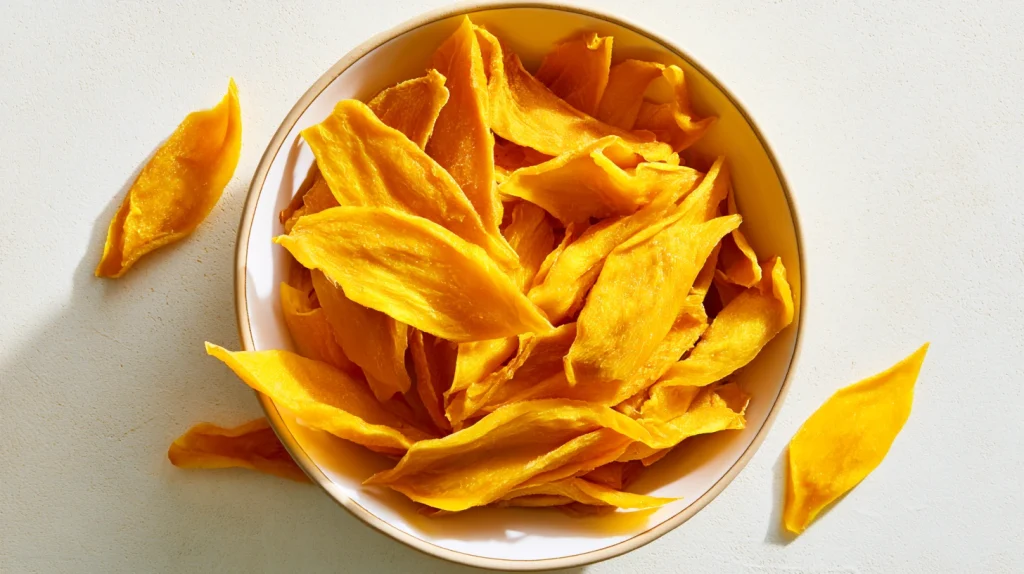
Texture is one of the most important parts of dried mango quality. A properly made batch should be flexible, slightly chewy, and soft enough to bite without effort, but not wet or sticky in an unpleasant way. If it is under dried, it feels too moist and can spoil quickly. If it is over dried, it becomes tough and leathery. The ideal dried mango texture sits in the middle, where the fruit still feels alive but stable, giving a pleasant chew that slowly releases flavor as you eat it.
People love dried mangoes because they fit easily into everyday life. They are portable, require no refrigeration, and last much longer than fresh fruit, making them practical for travel, work, or quick snacking. At the same time, they feel naturally sweet and wholesome, which makes them a preferred alternative to processed sweets. Many also enjoy using mango dried fruit in cooking, where it adds natural sweetness and depth to desserts, breakfast bowls, and even savory dishes like chutneys or sauces.
Why You’ll Love This Recipe
Preparation and Cooking Time, also serving
Ingredients
Substitution notes:
Step-by-Step Instructions

Step 1: Prepare mangoes
Wash, peel, and slice mangoes into even 5 to 7 mm strips. Uniform slicing ensures even drying and prevents inconsistent texture where some pieces become too dry while others stay soft.
Step 2: Optional syrup coating
If using sugar, dissolve it in warm water and cool completely. Dip mango slices briefly to coat lightly, then let excess drip off to avoid sticky buildup during drying.
Step 3: Add lemon juice
Lightly brush or dip mango slices in lemon juice. This prevents browning and keeps color bright while enhancing natural fruit flavor during drying.
Step 4: Arrange for drying
Place mango slices in a single layer on trays without overlapping. Proper spacing allows airflow which is essential for even moisture removal.
Step 5: Dry mangoes slowly
Dry at low temperature around 55 to 60°C in a dehydrator or lowest oven setting. Dry for 6 to 10 hours until slices become leathery and flexible but not moist.
Step 6: Check texture
Press slices gently to test readiness. They should bend without breaking and feel slightly sticky but not wet. Adjust drying time based on thickness.
Step 7: Cool and condition
Let mango slices cool completely, then store in an airtight container for 12 to 24 hours. This step balances internal moisture and improves final chew.
How to Serve
Additional Tips
Recipe Variations
Freezing and Storage
Nutritional Information
Final Words
Dried mangoes are one of those simple foods that show how powerful basic ingredients can become when handled with patience. Fresh mango already has a strong identity, but once it is slowly dehydrated, that identity becomes more concentrated and structured. What you are really doing in this process is preserving the essence of mango, not just the fruit itself but its aroma, sweetness, and natural balance. When done properly, dried mango becomes something you can rely on in your kitchen throughout the year, not just during mango season.
At home, this recipe also teaches an important cooking principle that professional chefs rely on constantly, control over moisture. By adjusting how much water is removed, you directly control texture, chewiness, and intensity of flavor. A slightly shorter drying time gives you soft dried mango with a tender bite, while a longer drying time produces a firmer, more traditional chewy texture. This flexibility is what makes homemade dried mango more valuable than most store bought versions, because you are not limited to one fixed style.
Most importantly, dried mangoes fit naturally into everyday cooking without effort. They can be a quick snack, a baking ingredient, or even a flavor booster in savory dishes where sweetness is needed for balance. Once you understand how to make them properly, you start seeing them as more than just preserved fruit. They become a practical ingredient that saves waste, adds variety to your meals, and gives you a naturally sweet option that feels both wholesome and satisfying.
FAQs

Dried Mangoes Recipe – Best Chewy and Sweet Snacks at Home
Course: Snacks5
servings25
minutes12
hours120/40
kcalIngredients
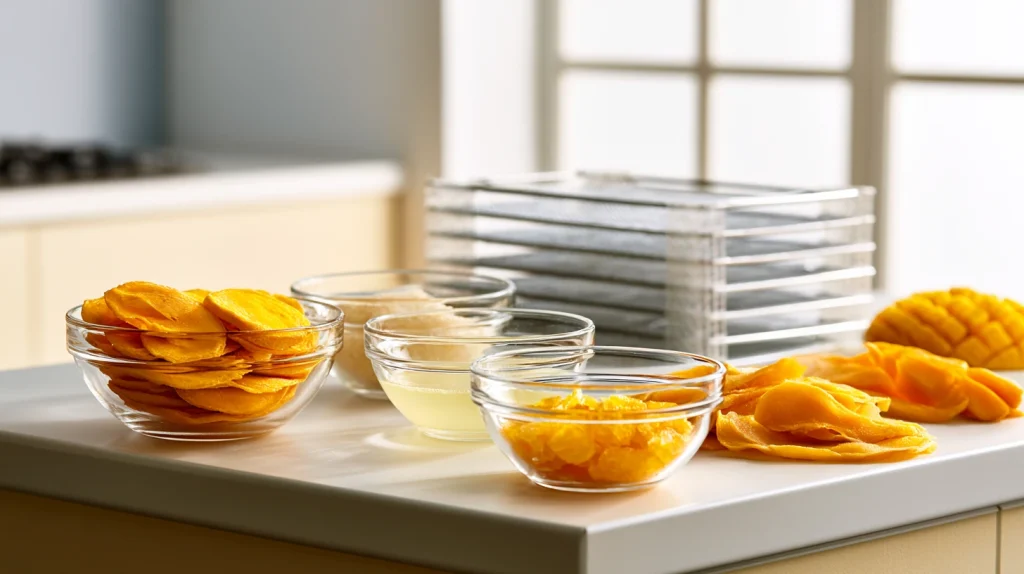
1 kg fresh ripe mangoes
2 tablespoons lemon juice
2 to 4 tablespoons sugar optional
1 cup water optional for syrup method
Pinch of salt optional
1 to 2 tablespoons honey optional substitute
Directions
- Wash, peel, and slice mangoes into even 5 to 7 mm strips. Uniform slicing ensures even drying and prevents inconsistent texture where some pieces become too dry while others stay soft.
- If using sugar, dissolve it in warm water and cool completely. Dip mango slices briefly to coat lightly, then let excess drip off to avoid sticky buildup during drying.
- Lightly brush or dip mango slices in lemon juice. This prevents browning and keeps color bright while enhancing natural fruit flavor during drying.
- Place mango slices in a single layer on trays without overlapping. Proper spacing allows airflow which is essential for even moisture removal.
- Dry at low temperature around 55 to 60°C in a dehydrator or lowest oven setting. Dry for 6 to 10 hours until slices become leathery and flexible but not moist.
- Press slices gently to test readiness. They should bend without breaking and feel slightly sticky but not wet. Adjust drying time based on thickness.
- Let mango slices cool completely, then store in an airtight container for 12 to 24 hours. This step balances internal moisture and improves final chew.