

Mango Jam Recipe – Best Homemade Jam Without Pectin
Mango Jam
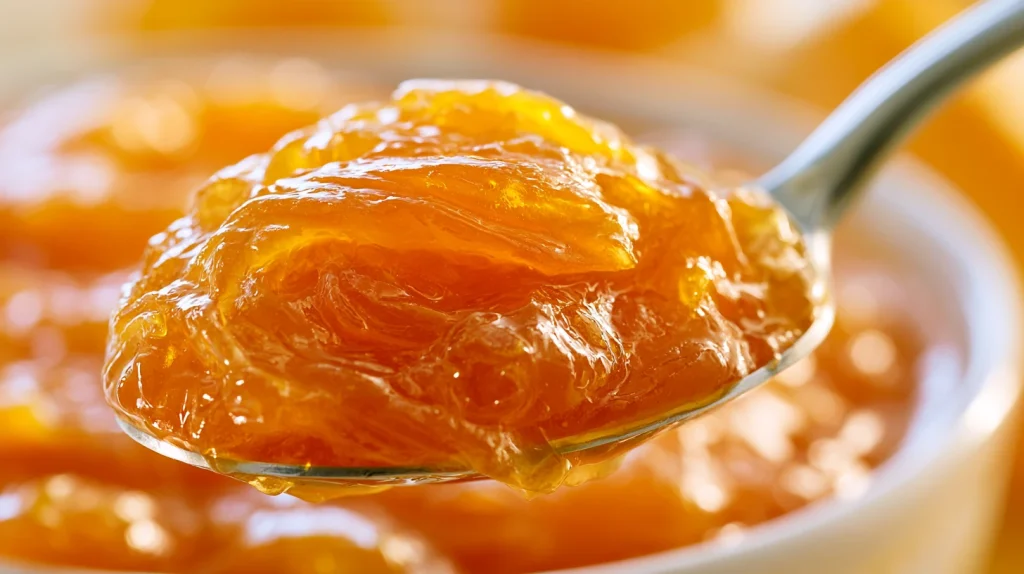
Mango jam is a thick, spreadable preserve made by cooking ripe mango pulp with sugar until it reaches a glossy, spoonable consistency. It captures the natural flavor of mango in a concentrated form that can be enjoyed long after mango season ends. When done properly, mango jam tastes like ripe tropical fruit transformed into a smooth, rich spread that melts on warm toast.
The flavor of mango jam depends heavily on the ripeness of the fruit. Fully ripe mangoes give a naturally sweet, fragrant jam with deep tropical notes, while slightly firm mangoes add a gentle tang that balances the sweetness. As it cooks, the fruit breaks down and the sugars intensify, creating a layered taste that feels both fresh and cooked at the same time.
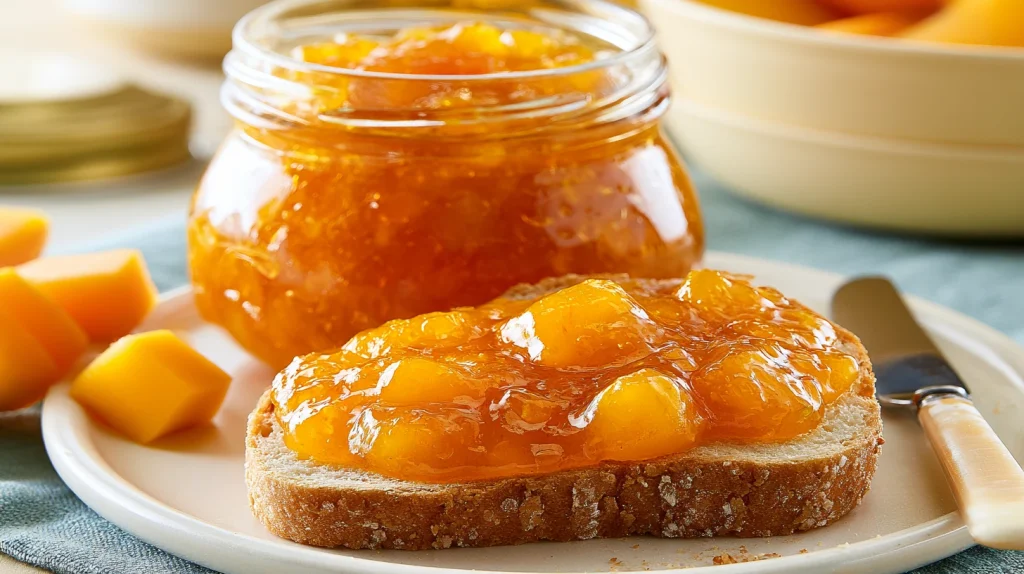
Unlike many store-bought spreads, homemade mango jam has a clean, natural flavor. You can clearly taste the fruit instead of artificial sweetness or preservatives. The texture is also more customizable. Some people prefer a smooth, silky jam, while others enjoy a slightly chunky version where small mango pieces remain visible.
People love mango jam because it is incredibly versatile. It works on breakfast toast, inside pastries, as a filling for cakes, or even as a topping for yogurt and pancakes. It is also one of the easiest preserves to make at home because mango naturally contains pectin-like properties when cooked down properly.
Why You’ll Love This Recipe
Preparation and Cooking Time, also serving
Ingredients
Substitution notes:
Step-by-Step Instructions

Step 1: Prepare mango pulp
Peel and chop ripe mangoes, then blend or mash them into a smooth pulp. If you prefer a chunkier texture, lightly mash instead of fully blending. The quality of mango pulp directly affects the final mango jam flavor, so use ripe, aromatic fruit.
Step 2: Start slow cooking
Place mango pulp in a heavy-bottom pan and cook on medium heat. Stir continuously to prevent sticking, as natural sugars can burn easily. At this stage, the fruit will become thinner before it begins to thicken.
Step 3: Add sugar gradually
Add sugar slowly while stirring to help it dissolve evenly. As sugar melts, the mixture will become glossy and slightly more liquid again before thickening later. This is normal in fruit jam recipe preparation.
Step 4: Add lemon juice
Mix in lemon juice to balance sweetness and help the jam set naturally. It also enhances brightness in flavor and supports preservation.
Step 5: Reduce and thicken
Continue cooking on low to medium heat, stirring frequently. The mixture will slowly reduce, becoming thicker and darker in color. This is the most important stage for mango jam recipe without pectin, as natural thickening happens here.
Step 6: Test consistency
Place a small amount on a cold plate and let it sit for a minute. If it wrinkles slightly when pushed, the mango jam is ready. If it is still runny, continue cooking.
Step 7: Cool and jar
Remove from heat and allow the jam to cool slightly before transferring into sterilized jars. Once fully cooled, it will thicken further into a spreadable consistency.
How to Serve
Additional Tips
Recipe Variations
Freezing and Storage
Nutritional Information
Final Words
Homemade mango jam is one of the most practical ways to preserve the taste of ripe mangoes in a form that can be used every day. It turns seasonal fruit into a year-round ingredient that works across breakfast, baking, and even savory cooking. When you make it yourself, you control the sweetness, thickness, and purity of the final product, which is something no store-bought jam can fully match.
The real strength of mango jam is its flexibility in the kitchen. It can be smooth or chunky, sweet or lightly tangy, simple or spiced depending on how you cook it. Once you understand the basic method of slow reduction and natural thickening, you can adapt it easily into different styles like low sugar mango jam or mango pineapple jelly without changing the core process.
Most importantly, this is a recipe that rewards patience more than skill. A slow, steady cook transforms fresh mango pulp into a rich, glossy spread that carries deep fruit flavor in every spoonful. Once you make it at home a few times, it becomes a staple that you will want to keep stocked in your kitchen throughout the year.
FAQs

Mango Jam Recipe – Best Homemade Jam Without Pectin
Course: Desserts4
servings20
minutes40
minutes60
kcalIngredients
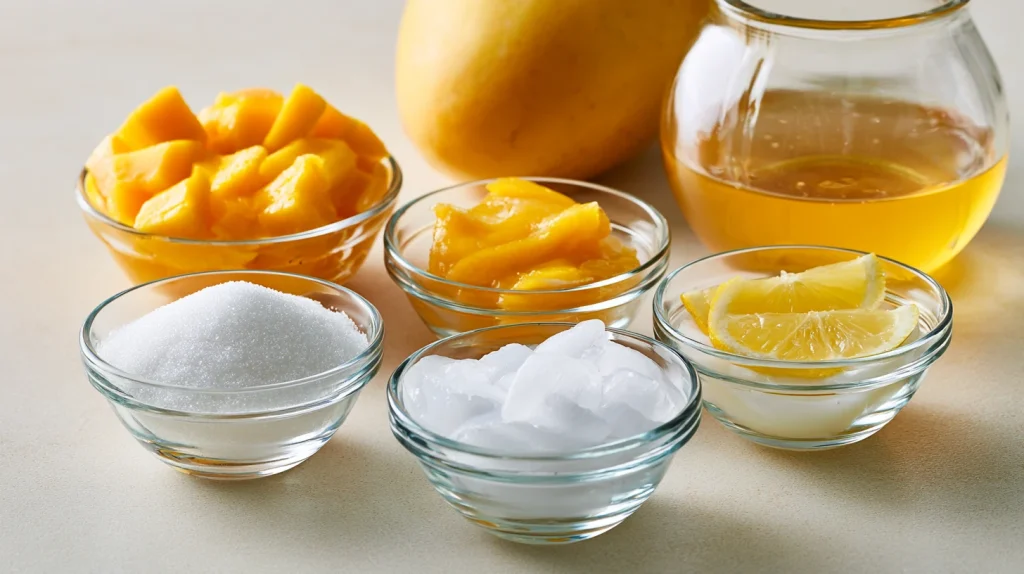
Ripe mango pulp: 1 kg (fresh blended or mashed mango flesh)
Sugar: 300 to 500 grams depending on sweetness preference
Lemon juice: 2 tablespoons fresh squeezed
Water: 2 to 4 tablespoons optional for initial cooking stage
Vanilla extract: 1 teaspoon optional for aroma enhancement
Directions
- Peel and chop ripe mangoes, then blend or mash them into a smooth pulp. If you prefer a chunkier texture, lightly mash instead of fully blending. The quality of mango pulp directly affects the final mango jam flavor, so use ripe, aromatic fruit.
- Place mango pulp in a heavy-bottom pan and cook on medium heat. Stir continuously to prevent sticking, as natural sugars can burn easily. At this stage, the fruit will become thinner before it begins to thicken.
- Add sugar slowly while stirring to help it dissolve evenly. As sugar melts, the mixture will become glossy and slightly more liquid again before thickening later. This is normal in fruit jam recipe preparation.
- Mix in lemon juice to balance sweetness and help the jam set naturally. It also enhances brightness in flavor and supports preservation.
- Continue cooking on low to medium heat, stirring frequently. The mixture will slowly reduce, becoming thicker and darker in color. This is the most important stage for mango jam recipe without pectin, as natural thickening happens here.
- Place a small amount on a cold plate and let it sit for a minute. If it wrinkles slightly when pushed, the mango jam is ready. If it is still runny, continue cooking.
- Remove from heat and allow the jam to cool slightly before transferring into sterilized jars. Once fully cooled, it will thicken further into a spreadable consistency.