

Beef Bourguignon Recipe: Classic French Beef Stew
Introduction to Beef Bourguignon Recipe
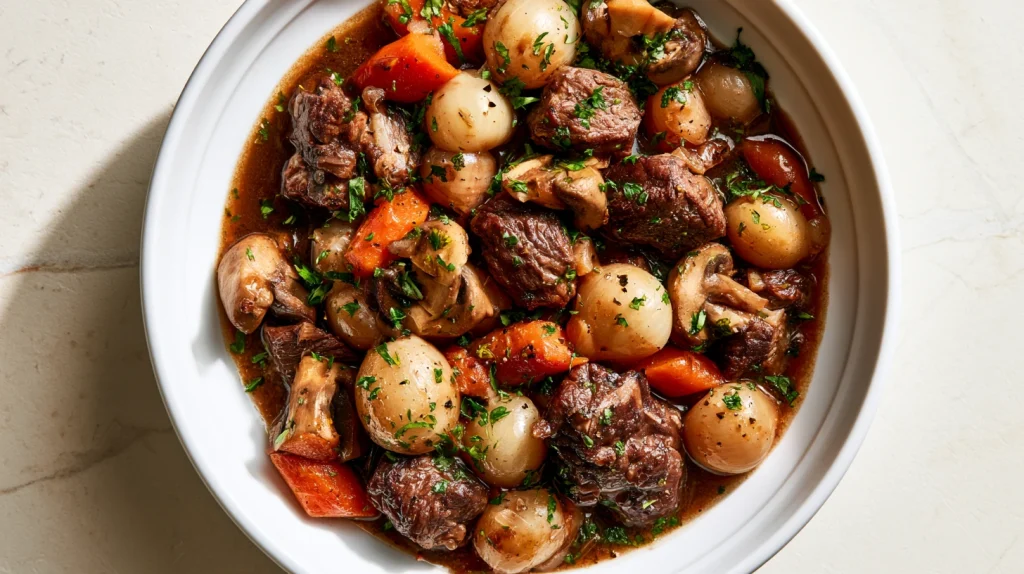
A well prepared beef bourguignon recipe is one of the finest examples of how simple ingredients can become an exceptionally rich meal when cooked with patience. This classic French dish combines tender beef, onions, carrots, mushrooms, garlic, herbs, and a deep red wine sauce. The beef cooks slowly until it becomes fork tender, while the sauce develops a concentrated savory flavor that coats every piece of meat.
The beauty of a traditional French Beef Bourguignon Recipe is its balance. The wine does not simply make the dish taste like wine. As it cooks, its sharpness softens and combines with beef juices, vegetables, aromatics, and herbs to create a smooth, deeply flavored sauce. The finished dish should taste rich and savory, with a gentle sweetness from the vegetables and a subtle herbal character.
This recipe is sometimes written as Beef Bourginon, although the traditional spelling is Beef Bourguignon. You may also see it called a Beef Burgundy Recipe, referring to the Burgundy region of France and the traditional use of Burgundy wine.
Although the finished dish has the appearance of something from a restaurant, the technique is completely achievable in a home kitchen. You do not need complicated equipment. A heavy Dutch oven, a good cutting board, and enough time are the main tools required.
The most important part of making an excellent beef bourguignon recipe is not rushing the cooking process. The beef needs to be browned properly before it is braised. The vegetables should have enough time to soften, and the sauce needs time to reduce and concentrate.
This makes Beef Bourguignon an excellent choice when you want a meal that feels special enough for entertaining but is still practical for a family dinner. It is also one of those dishes that often tastes even better the following day because the flavors have more time to blend.
Why You’ll Love This Recipe
One of the most important lessons behind a good beef bourguignon recipe is that browning and braising serve different purposes. Browning develops the roasted flavor that gives the dish its character. Braising then slowly softens the beef and allows that flavor to move into the cooking liquid.
Another useful technique is keeping the beef pieces reasonably dry before browning. Moisture on the surface of the meat creates steam, which prevents the deep browning you want. Patting the beef thoroughly with paper towels before it enters the pan makes a noticeable difference.
You should also resist the temptation to crowd the pot. If too many pieces of beef are added at once, the temperature drops and the meat begins to steam. Browning the beef in batches takes a few extra minutes, but it gives the finished Bourguignon Recipe much more flavor.
Preparation and Cooking Time, Also Serving
The long cooking time is essential because chuck or other braising cuts contain connective tissue that needs time to break down. The goal is not simply to cook the beef until it reaches a safe temperature. The goal is to cook it slowly enough that the connective tissue melts into the sauce and gives the meat its tender texture.
Ingredients
For the Beef
For the Vegetables and Aromatics
Substitution Notes
Step-by-Step Instructions

Step 1: Prepare the Beef and Ingredients
Cut the beef chuck into evenly sized pieces, approximately 2 inches each. Pat the beef thoroughly with paper towels to remove surface moisture, then season it evenly with salt and black pepper. Prepare all the vegetables before beginning because the cooking process moves quickly once the pot is hot. Dice the onion, slice the carrots, chop the garlic, clean the mushrooms, and prepare the pearl onions.
Step 2: Render the Bacon
Place a large Dutch oven over medium heat and add the diced bacon. Cook for approximately 5 to 7 minutes, stirring occasionally, until the bacon has rendered its fat and becomes lightly crisp. Transfer the bacon to a plate lined with paper towels, leaving the rendered fat in the Dutch oven. If the bacon produces an unusually large amount of fat, remove some while keeping about 2 tablespoons in the pot.
Step 3: Brown the Beef
Increase the heat to medium high and add the olive oil to the bacon fat. Place the beef into the Dutch oven in a single layer, working in batches if necessary. Brown each piece thoroughly on several sides, allowing approximately 2 to 3 minutes per side. Transfer the browned beef to a clean bowl and continue until all the beef has been browned. Do not rush this step because the browned surface contributes significant flavor to the finished sauce.
Step 4: Cook the Aromatics
Reduce the heat to medium and add the diced onion and carrots to the Dutch oven. Cook for approximately 5 minutes, stirring occasionally, until the vegetables begin to soften and pick up the browned bits from the bottom of the pot. Add the chopped garlic and cook for about 30 seconds, just until fragrant. Stir in the tomato paste and cook for another 1 to 2 minutes so its flavor becomes deeper and less raw.
Step 5: Build the Braising Liquid
Return the browned beef and cooked bacon to the Dutch oven. Sprinkle the flour over the mixture and stir well so the flour coats the beef and vegetables. Cook for about 1 minute, then slowly pour in the red wine while scraping the bottom of the pot with a wooden spoon. Allow the wine to simmer for 3 to 5 minutes, giving it time to reduce slightly. Add the beef broth, bay leaves, and fresh thyme.
Step 6: Slowly Braise the Beef
Bring the liquid to a gentle simmer, then reduce the heat to low. Cover the Dutch oven and transfer it to a preheated 325°F oven. Cook for approximately 2½ to 3 hours, stirring gently once or twice during cooking. The beef is ready when it can be easily pierced with a fork and begins to break apart without resistance. Keep the braising liquid at a gentle simmer rather than allowing it to boil aggressively.
Step 7: Cook the Mushrooms and Pearl Onions
While the beef is finishing, heat the butter in a large skillet over medium heat. Add the pearl onions and mushrooms and cook for approximately 8 to 10 minutes, stirring occasionally, until they develop light golden edges and become tender. Cooking these vegetables separately keeps their texture intact instead of allowing them to become overly soft during the long braising process.
Step 8: Finish the Sauce and Serve
Remove the Dutch oven from the oven and carefully remove the bay leaves and thyme stems. Stir in the cooked mushrooms and pearl onions, then taste the sauce and adjust the seasoning with additional salt and pepper if needed. If the sauce seems too thin, simmer the uncovered Dutch oven over medium low heat for several minutes until it reaches a rich, lightly thickened consistency. Sprinkle with fresh parsley and serve hot.
How to Serve
Additional Tips
The Dutch oven is particularly useful for this recipe because it maintains steady heat and distributes it evenly. Dutch Oven Beef dishes benefit from this stable cooking environment because the meat can braise slowly without sudden temperature changes.
Another important technique is choosing the right beef cut. Lean cuts may appear attractive, but they can become dry during a long braise. Chuck contains connective tissue and marbling that gradually transforms during cooking, producing tender meat and a richer sauce.
Do not worry if the beef seems slightly firm during the first two hours. Toughness during braising often means the connective tissue has not finished breaking down. Continue cooking gently until the meat becomes tender.
The sauce should not be watery. After the beef is tender, remove the lid and allow the liquid to reduce if necessary. The ideal consistency should be thick enough to coat the back of a spoon without becoming heavy or paste like.
For the best flavor, consider making the dish a day ahead. Refrigerate it after cooling, then remove any solidified fat from the surface before gently reheating. This allows the flavors to become even more integrated.
Recipe Variations
Freezing and Storage
Beef Bourguignon is particularly well suited to make ahead cooking. In fact, many cooks prefer the flavor after a night in the refrigerator because the sauce has time to settle and the aromatics become more integrated.
If you are preparing it for a dinner party, make the entire dish the day before. Reheat it gently before guests arrive and prepare the side dishes separately.
Nutritional Information
Approximate values per serving, based on six servings:
These values are estimates and can vary depending on the exact cut of beef, bacon, broth, wine, vegetables, and serving size. They also do not include additional side dishes such as mashed potatoes, noodles, or bread.
Final Words
A great beef bourguignon recipe is built on technique rather than complicated ingredients. Good beef, a dry red wine, fresh vegetables, herbs, and careful cooking are enough to create a dish with remarkable depth.
The most important steps are worth remembering. Dry the beef well, brown it in batches, develop the aromatics, reduce the wine slightly, and braise the beef slowly until it becomes tender. Then finish the sauce carefully and add the mushrooms and pearl onions at the right stage.
If you enjoy French Recipes Authentic in style but want something practical enough to make at home, Beef Bourguignon is an excellent recipe to learn. It teaches several valuable cooking techniques that can be applied to many other braised dishes.
Serve it with creamy mashed potatoes, egg noodles, or crusty bread, and give the sauce plenty of attention because it is one of the best parts of the meal.
Once you make this recipe successfully, you will have more than a special dinner. You will have a reliable method for turning an affordable cut of beef into an elegant, deeply satisfying meal that is perfect for family dinners, weekends, holidays, and special occasions.
Frequently Asked Questions

Beef Bourguignon Recipe: Classic French Beef Stew
6
servings30
minutes25
minutes620
kcalIngredients
- For the Beef
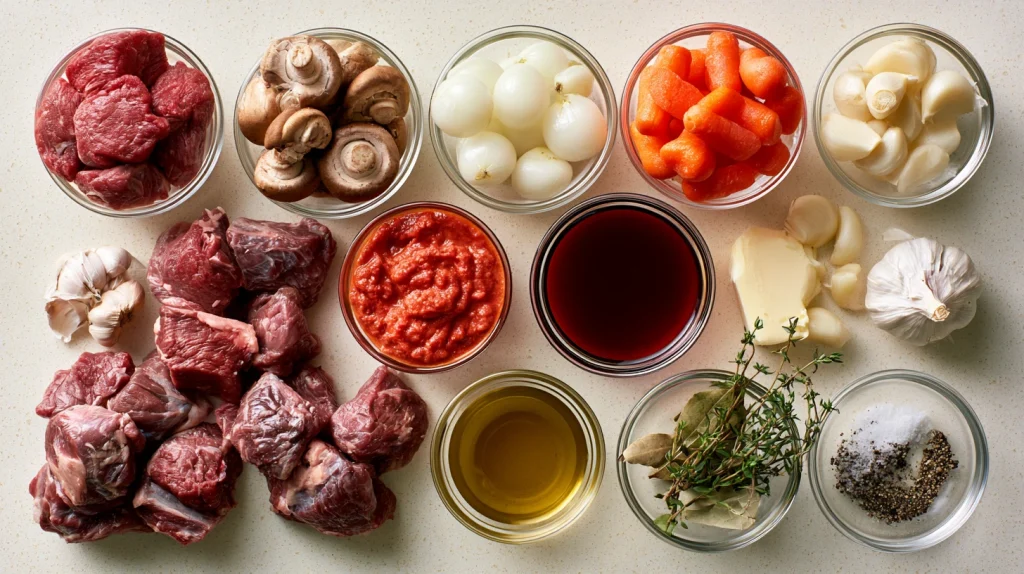
3 pounds beef chuck roast, cut into 2 inch pieces
1½ teaspoons kosher salt
1 teaspoon freshly ground black pepper
2 tablespoons olive oil
4 ounces bacon, diced
- For the Vegetables and Aromatics
1 large yellow onion, diced
2 medium carrots, peeled and sliced
4 cloves garlic, finely chopped
2 tablespoons tomato paste
2 tablespoons all purpose flour
2 cups dry red wine
2 cups beef broth
2 bay leaves
4 sprigs fresh thyme
8 ounces pearl onions, peeled
8 ounces cremini mushrooms, cleaned and halved
2 tablespoons unsalted butter
2 tablespoons chopped fresh parsley
Directions
- Cut the beef chuck into evenly sized pieces, approximately 2 inches each. Pat the beef thoroughly with paper towels to remove surface moisture, then season it evenly with salt and black pepper. Prepare all the vegetables before beginning because the cooking process moves quickly once the pot is hot. Dice the onion, slice the carrots, chop the garlic, clean the mushrooms, and prepare the pearl onions.
- Place a large Dutch oven over medium heat and add the diced bacon. Cook for approximately 5 to 7 minutes, stirring occasionally, until the bacon has rendered its fat and becomes lightly crisp. Transfer the bacon to a plate lined with paper towels, leaving the rendered fat in the Dutch oven. If the bacon produces an unusually large amount of fat, remove some while keeping about 2 tablespoons in the pot.
- Increase the heat to medium high and add the olive oil to the bacon fat. Place the beef into the Dutch oven in a single layer, working in batches if necessary. Brown each piece thoroughly on several sides, allowing approximately 2 to 3 minutes per side. Transfer the browned beef to a clean bowl and continue until all the beef has been browned. Do not rush this step because the browned surface contributes significant flavor to the finished sauce.
- Reduce the heat to medium and add the diced onion and carrots to the Dutch oven. Cook for approximately 5 minutes, stirring occasionally, until the vegetables begin to soften and pick up the browned bits from the bottom of the pot. Add the chopped garlic and cook for about 30 seconds, just until fragrant. Stir in the tomato paste and cook for another 1 to 2 minutes so its flavor becomes deeper and less raw.
- Return the browned beef and cooked bacon to the Dutch oven. Sprinkle the flour over the mixture and stir well so the flour coats the beef and vegetables. Cook for about 1 minute, then slowly pour in the red wine while scraping the bottom of the pot with a wooden spoon. Allow the wine to simmer for 3 to 5 minutes, giving it time to reduce slightly. Add the beef broth, bay leaves, and fresh thyme.
- Bring the liquid to a gentle simmer, then reduce the heat to low. Cover the Dutch oven and transfer it to a preheated 325°F oven. Cook for approximately 2½ to 3 hours, stirring gently once or twice during cooking. The beef is ready when it can be easily pierced with a fork and begins to break apart without resistance. Keep the braising liquid at a gentle simmer rather than allowing it to boil aggressively.
- While the beef is finishing, heat the butter in a large skillet over medium heat. Add the pearl onions and mushrooms and cook for approximately 8 to 10 minutes, stirring occasionally, until they develop light golden edges and become tender. Cooking these vegetables separately keeps their texture intact instead of allowing them to become overly soft during the long braising process.
- Remove the Dutch oven from the oven and carefully remove the bay leaves and thyme stems. Stir in the cooked mushrooms and pearl onions, then taste the sauce and adjust the seasoning with additional salt and pepper if needed. If the sauce seems too thin, simmer the uncovered Dutch oven over medium low heat for several minutes until it reaches a rich, lightly thickened consistency. Sprinkle with fresh parsley and serve hot.