

Ratatouille Recipe – A Classic French Vegetarian Delight
Special Ratatouille Recipe
Ratatouille is more than just a colorful vegetable dish. It is a celebration of fresh, vibrant produce, carefully layered and baked to perfection. Hailing from the heart of Provence, this classic French Ratatouille combines the natural sweetness of bell peppers, zucchini, and eggplant with the richness of tomato and aromatic herbs. The result is a hearty, wholesome dish that appeals to vegetarians and meat-lovers alike. Its tender, oven-baked vegetables release a medley of flavors that meld beautifully together, creating a comforting yet sophisticated meal. Loved worldwide for its presentation and taste, Ratatouille is versatile enough to serve as a main course, side dish, or a fancy vegetarian meal perfect for entertaining or casual dining.
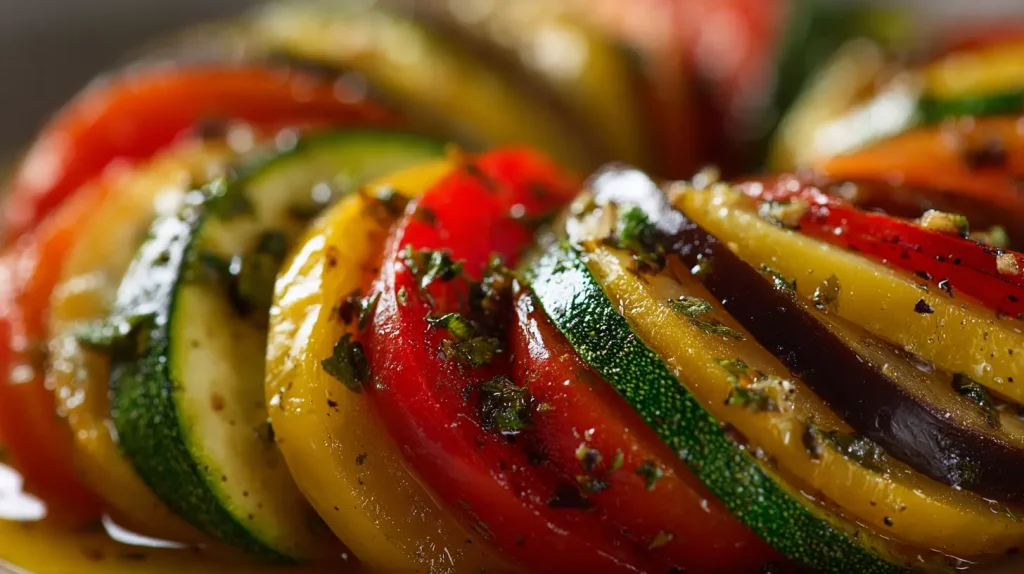
The magic of this dish lies in its simplicity. Each vegetable is treated with care to retain its flavor and texture, while the herbs and seasonings enhance the natural freshness of the ingredients. The dish is visually stunning, often arranged in spirals or layered meticulously, making it not only a treat for the palate but also for the eyes. Whether you’re preparing it as a Ratatouille casserole or following a traditional French Ratatouille recipe, the balance of flavors is guaranteed to impress anyone who tastes it.
Why You’ll Love This Recipe
This Ratatouille Recipe stands out for several compelling reasons. First, it transforms humble vegetables into a dish worthy of a fine dining experience. With every bite, you experience the perfect blend of textures: the tender bite of zucchini, the slightly firm eggplant, and the soft, juicy tomato. Second, the recipe is highly versatile. You can make it as an easy Ratatouille recipe for a weeknight dinner or elevate it into a fancy vegetarian meal for guests. The oven-baked Ratatouille recipe is both convenient and forgiving, allowing you to prepare it in advance or adjust it based on what vegetables are in season.
Third, it is a healthy veggie-filled dinner that satisfies without being heavy. Packed with fiber, vitamins, and antioxidants, this dish is perfect for anyone looking for a nutritious, flavorful, and filling option. Finally, Ratatouille teaches valuable cooking techniques. From slicing vegetables uniformly to layering them thoughtfully for even cooking, this recipe hones skills that translate to many different veggie recipes. It is not just a dish; it’s a lesson in flavor, texture, and presentation.
Preparation and Cooking Time, also Serving
This timing accounts for slicing, layering, and baking to perfection, ensuring each vegetable maintains its individual flavor while harmonizing with the Ratatouille sauce.
Ingredients
Substitution Notes:
Step-by-Step Instructions

Step 1: Prepare the Ratatouille Sauce
Begin by heating 2 tablespoons of olive oil in a skillet over medium heat. Add the chopped onion and garlic, sautéing until translucent and fragrant. Stir in the chopped tomatoes and herbs including thyme, rosemary, and oregano. Simmer gently for 10-12 minutes until the tomatoes break down into a thick, flavorful Ratatouille sauce. Season lightly with salt and pepper. This sauce will form the base for your layered vegetables.
Step 2: Slice and Prepare the Vegetables
While the sauce simmers, wash and slice the eggplant, zucchini, yellow squash, and bell peppers uniformly. Uniform slicing ensures even cooking and creates a visually stunning presentation. Lightly brush each slice with olive oil and season with a pinch of salt and pepper to enhance flavor and prevent dryness during baking.
Step 3: Arrange the Vegetables in the Baking Dish
Preheat your oven to 375°F (190°C). Spread the Ratatouille sauce evenly on the bottom of a shallow baking dish or cast-iron skillet. Begin layering the vegetables in an alternating pattern eggplant, zucchini, yellow squash, and bell peppers in concentric circles or rows, slightly overlapping each slice. This arrangement not only ensures even cooking but also creates a visually appealing spiral or striped pattern.
Step 4: Bake the Ratatouille
Cover the dish with aluminum foil and bake for 30 minutes. Remove the foil and bake an additional 15-20 minutes until the vegetables are tender and slightly caramelized at the edges. The oven-baked Ratatouille recipe allows the flavors to meld beautifully, giving you a rich, aromatic dish.
Step 5: Garnish and Serve
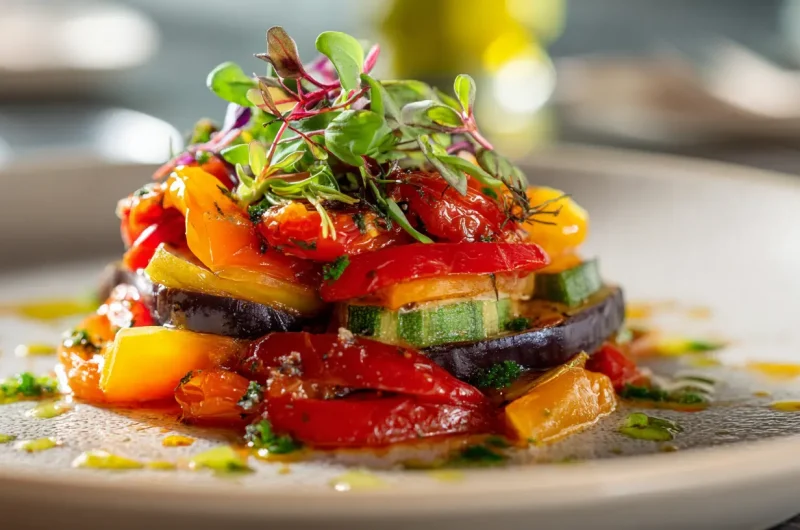
Once baked, allow the Ratatouille to rest for 5 minutes. Garnish with fresh basil leaves and a light drizzle of olive oil. This resting period helps the flavors integrate fully while making the dish easier to serve.
How to Serve
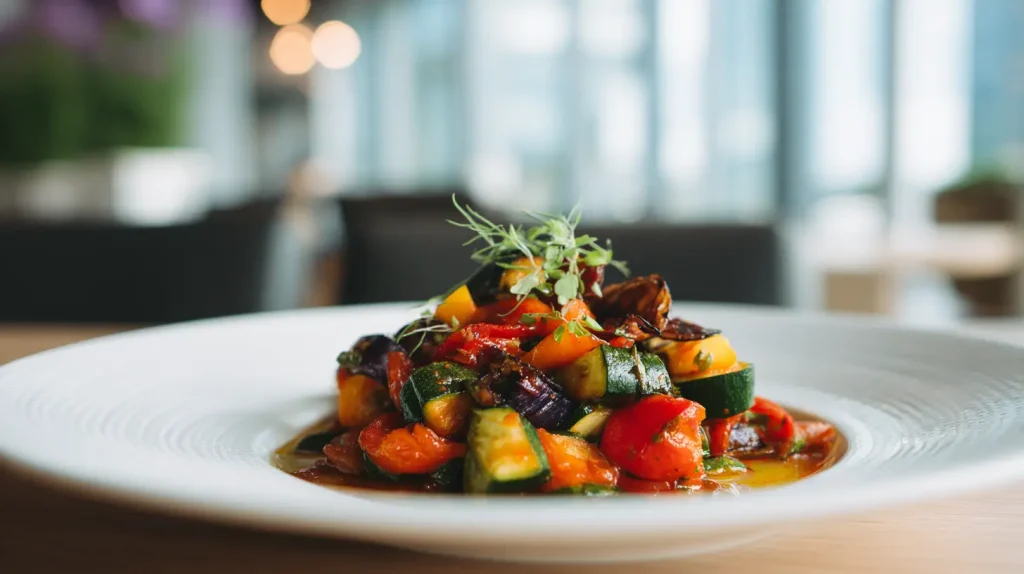
Ratatouille can be served as a main dish or a side. For a dinner for one vegetarian, plate a generous portion with a drizzle of Ratatouille sauce. Pair it with crusty bread, garlic rice, or quinoa for added substance. For a Ratatouille casserole style serving, bake it in a ceramic dish and present it family-style for sharing. A light sprinkle of Parmesan or vegan cheese adds depth if desired, and serving with a fresh salad enhances the meal’s freshness and color.
Additional Tips
Recipe Variations
Freezing and Storage
Nutritional Information (Per Serving, Approximate)
Final Words
Cooking Ratatouille at home is a rewarding experience that goes beyond simply preparing a meal. Each step, from slicing fresh vegetables to layering them thoughtfully in the baking dish, allows you to engage with the ingredients in a meaningful way. This Ratatouille Recipe showcases how careful attention to detail like seasoning, layering, and baking can transform simple produce into a dish that is both visually stunning and delicious. The harmony of textures, the gentle melding of flavors, and the vibrant colors make every bite memorable, proving that vegetarian cooking can be as satisfying and elegant as any meat-based entrée.
One of the most remarkable aspects of Ratatouille is its versatility. It can serve as a healthy veggie-filled dinner for one, a side dish for family meals, or a centerpiece for entertaining guests. Whether you’re preparing it as an oven-baked Ratatouille recipe for a classic French touch or experimenting with variations like a Ratatouille casserole or Mediterranean-inspired twist, the dish is endlessly adaptable. It offers home cooks the chance to learn valuable techniques, such as even slicing, balancing flavors, and timing the cooking of multiple vegetables for uniform tenderness all skills that enhance your broader culinary repertoire.
Finally, making Ratatouille at home allows you to bring the tradition of French cooking into your kitchen without the intimidation of complex recipes. It emphasizes freshness, seasonality, and the natural flavors of vegetables while giving you creative freedom to personalize the dish. By mastering this classic French Ratatouille, you not only enjoy a fancy vegetarian meal that is nourishing and flavorful, but you also gain confidence in handling ingredients, layering techniques, and seasoning to perfection. Every preparation, whether for a simple weeknight dinner or a special occasion, celebrates the joy of cooking and the satisfaction of serving a dish that looks as beautiful as it tastes.
FAQ’s
Ratatouille Recipe – A Classic French Vegetarian Delight
Course: Dinner Recipes6
servings25
minutes50
minutes180
kcalIngredients
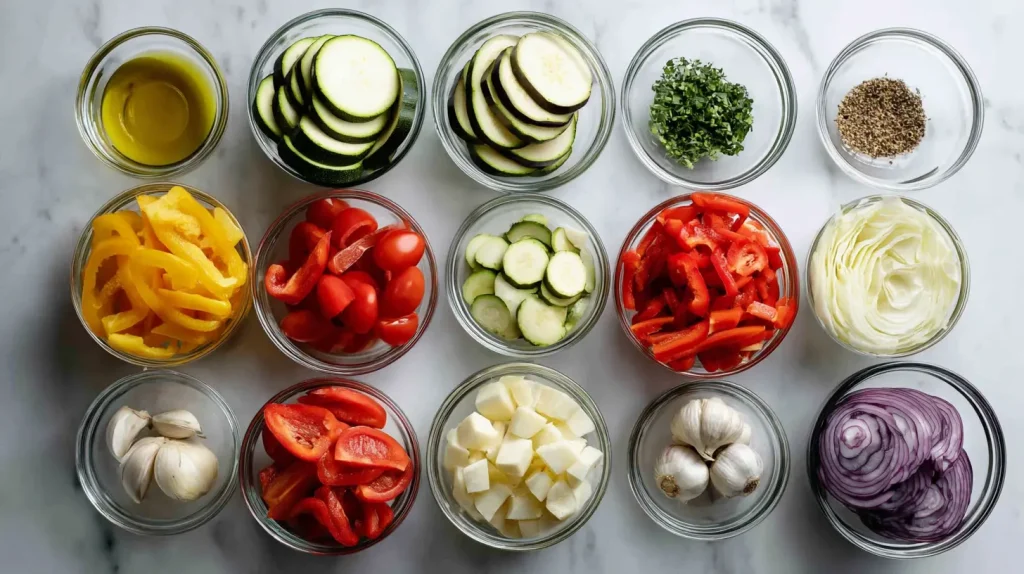
1 medium eggplant, sliced into 1/4-inch rounds
2 medium zucchinis, sliced into 1/4-inch rounds
2 medium yellow squash, sliced into 1/4-inch rounds
1 red bell pepper, thinly sliced
1 yellow bell pepper, thinly sliced
1 medium onion, finely chopped
3 cloves garlic, minced
4 medium tomatoes, peeled and chopped (or 1 cup canned crushed tomatoes)
1/4 cup olive oil
1 teaspoon dried thyme
1 teaspoon dried rosemary
1 teaspoon dried oregano
Salt and black pepper to taste
Fresh basil leaves for garnish
Directions
- Begin by heating 2 tablespoons of olive oil in a skillet over medium heat. Add the chopped onion and garlic, sautéing until translucent and fragrant. Stir in the chopped tomatoes and herbs including thyme, rosemary, and oregano. Simmer gently for 10-12 minutes until the tomatoes break down into a thick, flavorful Ratatouille sauce. Season lightly with salt and pepper. This sauce will form the base for your layered vegetables.
- While the sauce simmers, wash and slice the eggplant, zucchini, yellow squash, and bell peppers uniformly. Uniform slicing ensures even cooking and creates a visually stunning presentation. Lightly brush each slice with olive oil and season with a pinch of salt and pepper to enhance flavor and prevent dryness during baking.
- Preheat your oven to 375°F (190°C). Spread the Ratatouille sauce evenly on the bottom of a shallow baking dish or cast-iron skillet. Begin layering the vegetables in an alternating pattern eggplant, zucchini, yellow squash, and bell peppers in concentric circles or rows, slightly overlapping each slice. This arrangement not only ensures even cooking but also creates a visually appealing spiral or striped pattern.
- Cover the dish with aluminum foil and bake for 30 minutes. Remove the foil and bake an additional 15-20 minutes until the vegetables are tender and slightly caramelized at the edges. The oven-baked Ratatouille recipe allows the flavors to meld beautifully, giving you a rich, aromatic dish.
- Once baked, allow the Ratatouille to rest for 5 minutes. Garnish with fresh basil leaves and a light drizzle of olive oil. This resting period helps the flavors integrate fully while making the dish easier to serve.
Notes
- Slice all vegetables uniformly to ensure even cooking.
- Do not overcrowd the dish; leave slight gaps for heat circulation.
- Use fresh herbs wherever possible; they enhance aroma and flavor dramatically.
- Let the Ratatouille rest before serving to allow the sauce to absorb into the vegetables.
- For deeper flavor, roast the eggplant slices separately with a touch of salt before layering.