Greek Salad: A Fresh, Flavorful Mediterranean Classic
Greek Salad
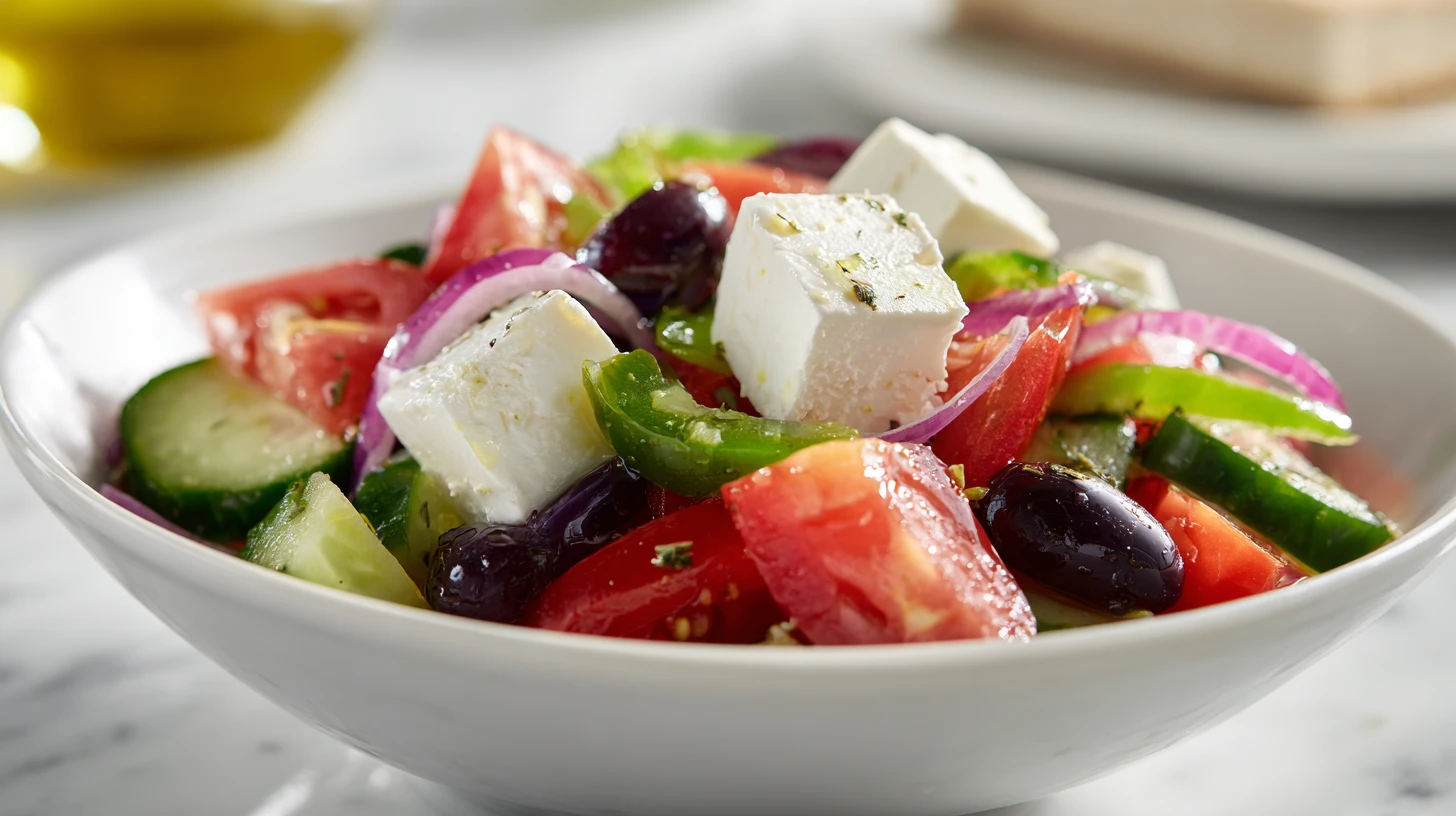
Greek salad is a vibrant, colorful dish that perfectly balances textures and flavors. Imagine the crisp crunch of fresh vegetables, the creamy tang of feta cheese, and the briny punch of Kalamata olives, all kissed with a zesty, aromatic dressing. This iconic Greek-inspired salad dish embodies Mediterranean freshness, simplicity, and healthful eating. Its appeal lies in its clean flavors, the contrast of textures, and the ease of preparation, making it a favorite for lunch, dinner, or a light side dish. Whether you are exploring salad Mediterranean recipes for the first time or seeking a classic Greek lettuce salad, this dish delivers authenticity, elegance, and nutrition.
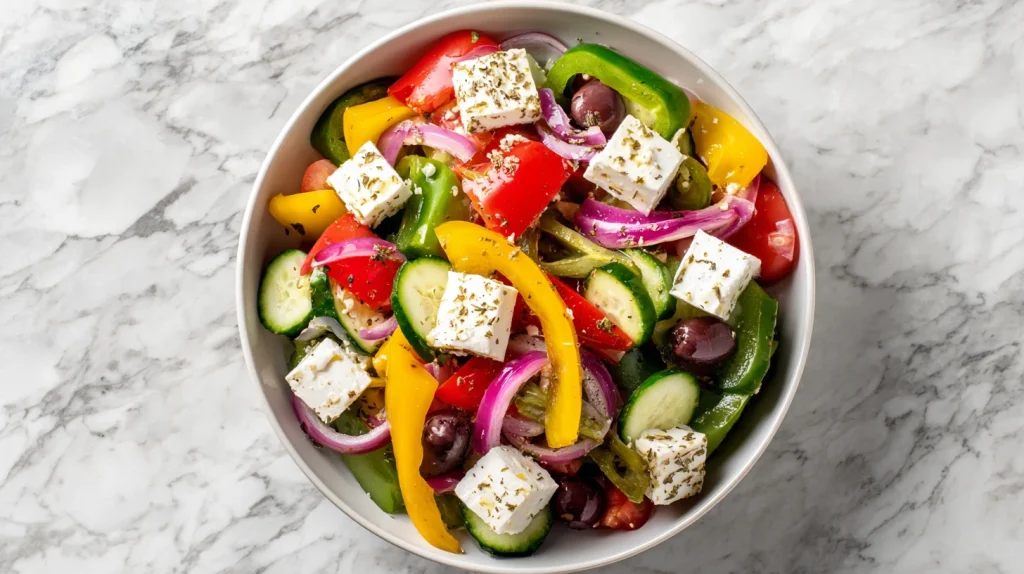
What sets Greek salad apart from other salads is its harmonious layering of ingredients. Crisp lettuce, juicy tomatoes, crunchy cucumbers, sweet bell peppers, and savory red onions mingle with feta and olives to create a medley that is simultaneously refreshing, indulgent, and deeply satisfying. The dressing, often a blend of olive oil, red wine vinegar, lemon juice, and herbs, ties everything together with a subtle tang and richness. Unlike many salads that rely on heavy sauces, the best Greek vinaigrette highlights the natural flavors of the vegetables, enhancing each bite without overpowering it.
For home cooks seeking the ultimate Greek salad, this dish is a canvas for creativity. Add lettuce varieties, swap feta for a creamy alternative, or experiment with different herbs while retaining the Mediterranean essence. The flexibility makes it ideal for dinner parties, family meals, or even solo lunches. It’s no wonder this dish has remained a staple in Greek lettuce salad recipes and classic Greek salad dressing recipes worldwide.
Why You’ll Love This Recipe
Cooking a Greek salad at home elevates a simple meal into a culinary experience. The reasons this recipe stands out include:
These qualities make this Greek lettuce salad recipe an exceptional choice for anyone seeking a fresh, flavorful, and visually appealing salad.

Preparation and Cooking Time
This recipe is entirely no-cook, relying on fresh, high-quality ingredients to shine. Perfect for weekday meals or salade aesthetic presentations.
Ingredients
Substitution Notes:
Step-by-Step Instructions

Step 1: Prepare the Vegetables
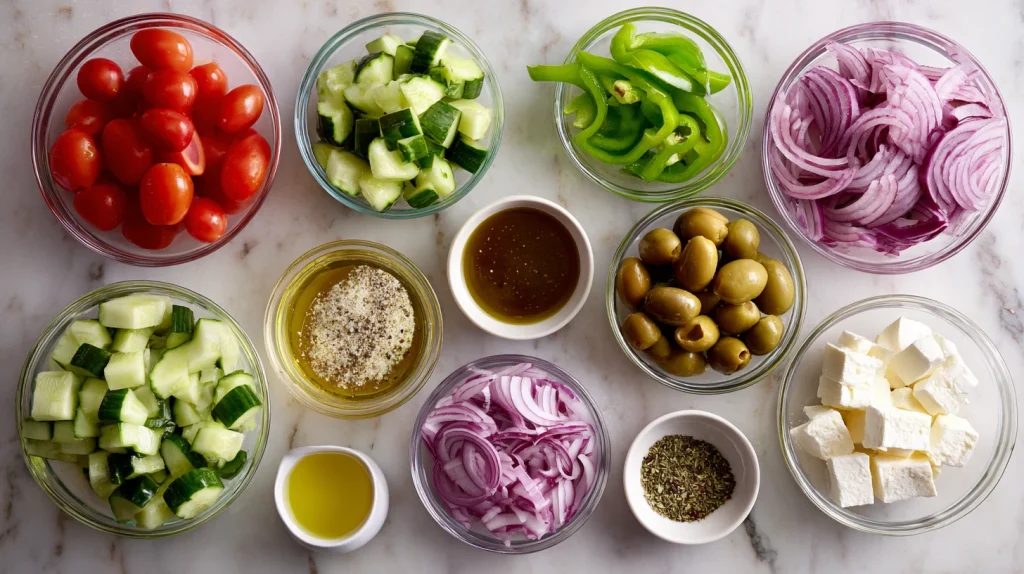
Start by washing all your vegetables thoroughly. Pat them dry with a kitchen towel to prevent excess water from diluting the dressing. Chop the romaine lettuce into bite-sized pieces, halve the cherry tomatoes, slice the cucumber thinly, and cut the red bell pepper into strips. Slice the red onion into thin rings. Arranging and preparing vegetables carefully ensures an even distribution of flavors in every forkful.
Step 2: Assemble the Salad Base
In a large salad bowl, layer the romaine lettuce first, followed by cucumbers, tomatoes, bell peppers, and red onion. This layering creates a visually appealing Mediterranean salad aesthetic. Gently toss the vegetables together to mix the colors and textures without bruising the delicate leaves.
Step 3: Add Feta and Olives
Sprinkle the crumbled feta cheese evenly over the salad. Add the pitted Kalamata olives on top. The cheese provides creaminess, while olives introduce a briny depth that balances the sweetness of tomatoes and peppers. Ensure the feta is distributed evenly to allow each bite to have a touch of creaminess.
Step 4: Make the Dressing
In a small bowl, whisk together extra virgin olive oil, red wine vinegar, lemon juice, dried oregano, salt, and black pepper. Taste and adjust seasoning to preference. This authentic Greek dressing enhances the natural flavors of the vegetables and gives your salad the signature tangy, herbaceous profile of a classic Greek salad dressing recipe.
Step 5: Toss and Serve
Pour the dressing over the salad and gently toss to coat all ingredients. Avoid overmixing, which can bruise the lettuce or crumble the feta excessively. Serve immediately for maximum freshness and texture. The vibrant colors and crisp vegetables will make the dish both visually appealing and delicious.
How to Serve
For a stunning presentation, use a wide, shallow bowl or a plate that highlights the vibrant colors of the salad. Greek salad dinner ideas include pairing with grilled meats, roasted chicken, or seafood. Drizzle extra dressing on top if desired and garnish with fresh herbs like parsley or dill for a restaurant-quality touch. Serve alongside warm pita bread or as a side for a Greek-style vegetable and feta dish main course. For a formal Mediterranean salad aesthetic, arrange vegetables symmetrically and top with a neat portion of feta and olives for visual appeal.
Additional Tips
Recipe Variations
Freezing and Storage
Nutritional Information (Approximate per serving)
This makes Greek salad an excellent low-calorie, nutrient-dense option for salad Mediterranean recipes and a healthy food salad aesthetic diet.
Final Words
Creating a Greek salad at home allows you to enjoy a fresh, authentic Mediterranean salad aesthetic right from your kitchen. The balance of crisp vegetables, tangy feta, and briny olives ensures every bite is both satisfying and nourishing. By mastering the ultimate Greek salad, you not only gain a versatile recipe for quick dinners and elegant meals but also the confidence to tweak it creatively with different vegetables, proteins, or dressings.
Making this dish at home elevates your dining experience and provides a sense of accomplishment. You control the freshness, the quality of ingredients, and the exact seasoning, which means every forkful reflects your personal touch. It’s a dish that rewards care, attention, and love for cooking.
Whether serving it for a casual weeknight dinner or a festive gathering, this classic Greek lettuce salad shines with vibrant color and flavor. Incorporate this recipe into your regular repertoire, and it will quickly become a go-to for healthy, elegant meals that impress both family and guests. Cooking it yourself reinforces the pleasure of eating seasonally and locally, making your Greek-style vegetable and feta dish not just a salad but a wholesome experience that embodies the charm of the Mediterranean lifestyle.
FAQ’s

Greek Salad: A Fresh, Flavorful Mediterranean Classic
Course: Salad Recipes6
servings15
minutes180
kcalIngredients
4 cups romaine lettuce, chopped (or mixed greens for variation)
1 cup cherry tomatoes, halved (or diced large tomatoes)
1 cup cucumber, sliced (English or Persian cucumbers work well)
1/2 cup red bell pepper, thinly sliced
1/4 cup red onion, thinly sliced
1/2 cup Kalamata olives, pitted
1/2 cup feta cheese, crumbled
2 tablespoons extra virgin olive oil
1 tablespoon red wine vinegar
1 teaspoon fresh lemon juice
1/2 teaspoon dried oregano
Salt and freshly ground black pepper to taste
Directions
- Start by washing all your vegetables thoroughly. Pat them dry with a kitchen towel to prevent excess water from diluting the dressing. Chop the romaine lettuce into bite-sized pieces, halve the cherry tomatoes, slice the cucumber thinly, and cut the red bell pepper into strips. Slice the red onion into thin rings. Arranging and preparing vegetables carefully ensures an even distribution of flavors in every forkful.
- In a large salad bowl, layer the romaine lettuce first, followed by cucumbers, tomatoes, bell peppers, and red onion. This layering creates a visually appealing Mediterranean salad aesthetic. Gently toss the vegetables together to mix the colors and textures without bruising the delicate leaves.
- Sprinkle the crumbled feta cheese evenly over the salad. Add the pitted Kalamata olives on top. The cheese provides creaminess, while olives introduce a briny depth that balances the sweetness of tomatoes and peppers. Ensure the feta is distributed evenly to allow each bite to have a touch of creaminess.
- In a small bowl, whisk together extra virgin olive oil, red wine vinegar, lemon juice, dried oregano, salt, and black pepper. Taste and adjust seasoning to preference. This authentic Greek dressing enhances the natural flavors of the vegetables and gives your salad the signature tangy, herbaceous profile of a classic Greek salad dressing recipe.
- Pour the dressing over the salad and gently toss to coat all ingredients. Avoid overmixing, which can bruise the lettuce or crumble the feta excessively. Serve immediately for maximum freshness and texture. The vibrant colors and crisp vegetables will make the dish both visually appealing and delicious.