Jollof Rice Recipe – Best Nigerian Jollof Rice Dinner
Jollof Rice
Jollof rice is more than just a meal; it is a celebration of flavors, colors, and culture. Originating from West Africa, this traditional African Jollof rice dish is famous for its vibrant red hue, rich tomato base, and perfectly spiced aroma. The balance of savory tomatoes, bell peppers, and spices delivers a taste that is smoky, slightly sweet, and deeply comforting. Every spoonful carries the essence of Nigerian food, making it a beloved dish for family gatherings, festive celebrations, and everyday meals.
Whether you are experiencing Jollof rice for the first time or returning to its familiar flavors, this dish stands out for its versatility. From vegetarian Nigerian Jollof rice to hearty, meaty versions, it can be adapted to suit a variety of diets. Home cooks and professional chefs alike admire its ability to combine simplicity with depth of flavor, and it is a must-learn dish for anyone exploring African cooking.
Why You’ll Love This Recipe
This Jollof rice recipe brings the best of Nigerian recipes into your kitchen. By following the steps carefully, you can recreate a restaurant-quality dish at home.

Preparation and Cooking Time
Ingredients
Substitution Notes:

Step-by-Step Instructions

Step 1: Prepare the Rice
Rinse the rice thoroughly in cold water until the water runs clear. This removes excess starch and prevents the rice from becoming mushy. Set aside to drain while you prepare the sauce.
Step 2: Make the Base Sauce
Heat the oil in a large, heavy-bottomed pot over medium heat. Add the chopped onions and sauté until soft and translucent. Stir in the garlic and ginger and cook for another minute to release their aroma. Blend the red bell peppers, tomatoes, tomato paste, and scotch bonnet peppers until smooth. Pour the blended mixture into the pot and cook for 10-15 minutes, stirring occasionally. Allow the sauce to reduce slightly and develop its deep red color.
Step 3: Season the Sauce
Add smoked paprika, curry powder, thyme, salt, and black pepper. Stir well to combine. This is the moment when the flavors begin to intensify, creating the signature taste of Nigerian Jollof rice.
Step 4: Add the Rice
Gently fold the drained rice into the sauce, ensuring each grain is coated. Pour the stock gradually, starting with 2 cups, and stir carefully. Cover the pot and reduce the heat to low. Let the rice cook for 25-30 minutes, checking occasionally to prevent sticking. Add more stock if needed.
Step 5: Add Vegetables (Optional)
For a vegetable Jollof rice dish or vegetarian Nigerian Jollof rice, stir in the mixed vegetables about 10 minutes before the rice finishes cooking. This keeps the vegetables tender but not overcooked.
Step 6: Steam the Rice
Once the rice is cooked, turn off the heat and leave it covered for 5-10 minutes. This steaming step ensures the grains are fluffy and fully infused with the sauce’s flavors. Fluff gently with a fork before serving.
How to Serve
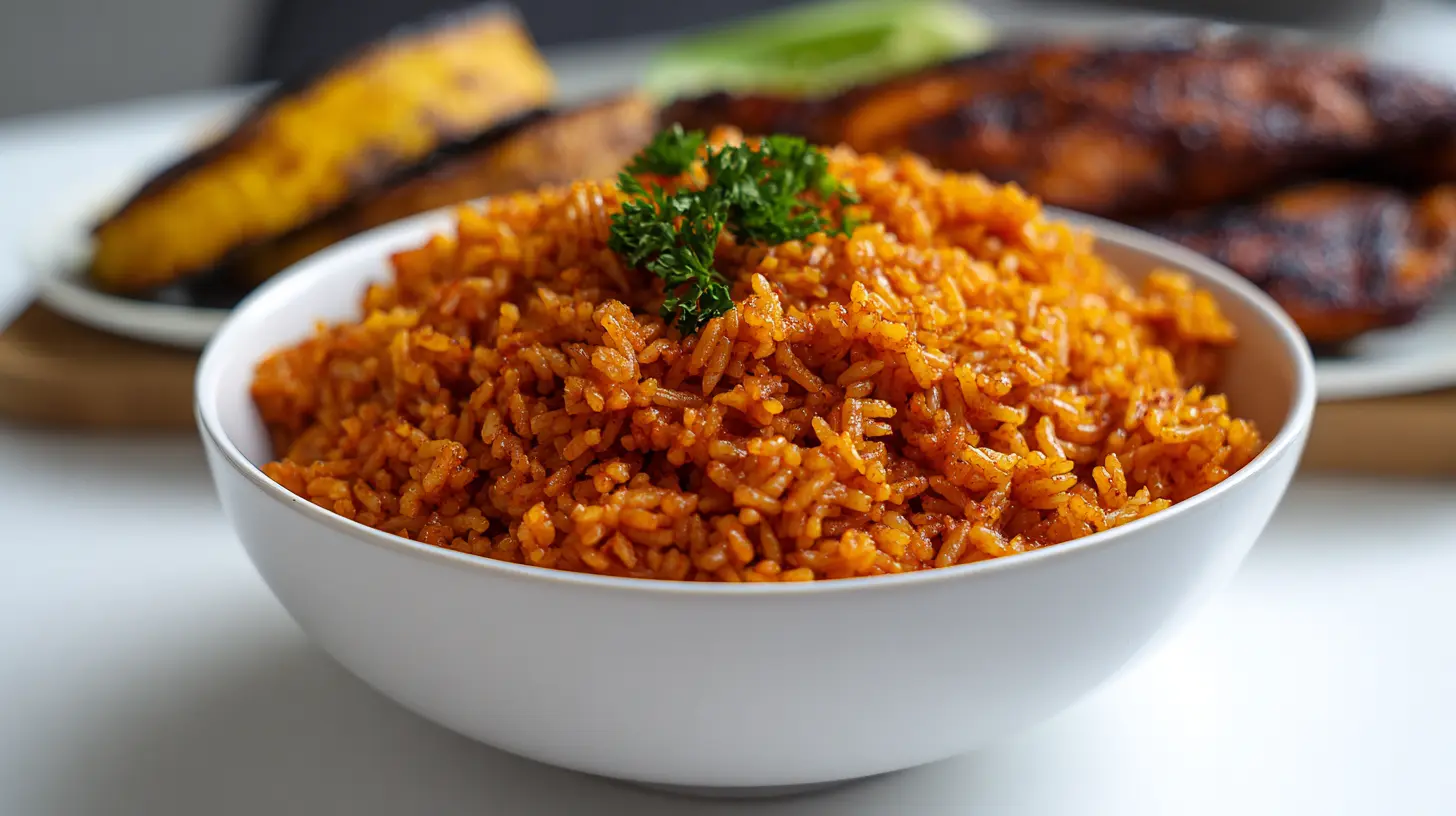
Jollof rice can be plated elegantly for both casual meals and festive occasions. Serve it with grilled or fried chicken, roasted fish, or tofu for a vegan twist. Garnish with freshly chopped parsley or coriander for a pop of color. Side dishes like fried plantains, steamed vegetables, or a fresh salad complement the flavors beautifully. For an authentic touch, serve in a shallow bowl to allow the aromas to mingle.

Additional Tips
Recipe Variations
Freezing and Storage
Nutritional Information (Approximate per serving)
Final Words
Cooking Jollof rice at home is more than preparing a meal; it’s an experience that brings the vibrant flavors of Nigerian food into your kitchen. This dish embodies the essence of African cooking with its rich tomato base, fragrant spices, and beautifully cooked rice. By following this recipe, you not only recreate a traditional African Jollof rice dish but also gain the confidence to experiment with variations such as Jollof rice vegan, vegetable Jollof rice dish, or even seafood-infused versions. Each step in this guide is designed to help you achieve a balance of flavors and textures that is both authentic and satisfying, turning every meal into a celebration of taste.
Mastering this recipe allows you to share a truly memorable dish with family and friends. The vibrant color, aromatic spices, and perfectly cooked grains make it an impressive centerpiece for any occasion, from casual weeknight dinners to festive gatherings. Preparing Jollof rice at home also gives you control over ingredients, allowing you to adjust seasoning, spice levels, and add fresh vegetables for a healthier, personalized version. It’s a versatile dish that appeals to all ages and dietary preferences, making it a staple for anyone who loves Nigerian recipes and traditional African cuisine.
Finally, cooking Jollof rice is a journey that connects you with a rich culinary heritage. Each bite tells a story of tradition, creativity, and the joy of sharing good food. By making this dish at home, you are not only enjoying the best Jollof rice recipe but also preserving and celebrating the flavors that have made Nigerian Jollof rice famous worldwide. With practice and attention to detail, you can perfect your technique, impress your guests, and even create your signature version that reflects your taste and creativity. This recipe is an invitation to embrace African cooking, explore vibrant flavors, and turn every meal into a joyful culinary experience.
FAQ’s

Jollof Rice Recipe – Best Nigerian Jollof Rice Dinner
Course: Rice Recipes6
servings20
minutes40
minutes320
kcalIngredients
2 cups long-grain parboiled rice
1/4 cup vegetable oil or palm oil
1 medium onion, finely chopped
1 red bell pepper, blended
2 medium tomatoes, blended
2 tablespoons tomato paste
2 cloves garlic, minced
1 teaspoon ginger, minced
1 teaspoon smoked paprika
1 teaspoon curry powder
1 teaspoon thyme
2-3 cups vegetable or chicken stock
1-2 scotch bonnet peppers, blended (adjust to taste)
1 cup mixed vegetables (carrots, peas, green beans) for Jollof rice vegan or vegetable Jollof rice dish
Salt and black pepper, to taste
Fresh parsley or coriander, for garnish
Directions
- Rinse the rice thoroughly in cold water until the water runs clear. This removes excess starch and prevents the rice from becoming mushy. Set aside to drain while you prepare the sauce.
- Heat the oil in a large, heavy-bottomed pot over medium heat. Add the chopped onions and sauté until soft and translucent. Stir in the garlic and ginger and cook for another minute to release their aroma. Blend the red bell peppers, tomatoes, tomato paste, and scotch bonnet peppers until smooth. Pour the blended mixture into the pot and cook for 10-15 minutes, stirring occasionally. Allow the sauce to reduce slightly and develop its deep red color.
- Add smoked paprika, curry powder, thyme, salt, and black pepper. Stir well to combine. This is the moment when the flavors begin to intensify, creating the signature taste of Nigerian Jollof rice.
- Gently fold the drained rice into the sauce, ensuring each grain is coated. Pour the stock gradually, starting with 2 cups, and stir carefully. Cover the pot and reduce the heat to low. Let the rice cook for 25-30 minutes, checking occasionally to prevent sticking. Add more stock if needed.
- For a vegetable Jollof rice dish or vegetarian Nigerian Jollof rice, stir in the mixed vegetables about 10 minutes before the rice finishes cooking. This keeps the vegetables tender but not overcooked.
- Once the rice is cooked, turn off the heat and leave it covered for 5-10 minutes. This steaming step ensures the grains are fluffy and fully infused with the sauce’s flavors. Fluff gently with a fork before serving.
Notes
- Use a heavy-bottomed pot to prevent the sauce and rice from burning.
- Avoid stirring too frequently once the rice is cooking; this helps maintain distinct grains.
- Allow the sauce to cook down and intensify before adding the rice; this step is key to deep flavor.
- Adjust chili levels carefully; scotch bonnet peppers are very spicy.
- For a smoky flavor, let the rice sit uncovered over low heat for a few minutes at the end of cooking, creating the classic “party rice” effect often loved in Nigerian food.