Kimchi Ramen Recipe – Rich Spicy Korean Flavors
Special Kimchi Ramen Recipe
Kimchi ramen is one of the most satisfying bowls of noodles you can make at home. It blends the bold, fermented flavor of kimchi with rich broth and springy ramen noodles to create a dish that feels both comforting and exciting. The base of this dish starts with a savory stock that absorbs the spicy, tangy character of kimchi, giving the soup its signature depth. What makes kimchi ramen stand out from other noodle soups is the way it balances heat, sourness, saltiness, and umami in one bowl.
The taste is layered but easy to love. The broth carries a gentle heat, the kimchi adds sharp tang and crunch, and the noodles soak up all that flavor as they cook. Every bite feels full and satisfying. People love this dish because it feels like a complete meal. It is warming, filling, and endlessly adaptable. Whether you are exploring recipes with kimchi dishes for the first time or you already enjoy recipes with kimchi in it, this bowl is a perfect place to start.
Why You’ll Love This Recipe
This kimchi ramen recipe is built around real kitchen technique that gives you deep flavor with simple steps. The broth develops gradually, allowing the fermented kimchi to release its full character without becoming harsh or overly sour. You get a balanced bowl where the spice feels warm rather than overwhelming, and the savory depth tastes slow cooked even though it comes together quickly. This method shows you practical ways to use kimchi so you can get the best flavor from it every time, instead of just adding it to water and hoping for good results.
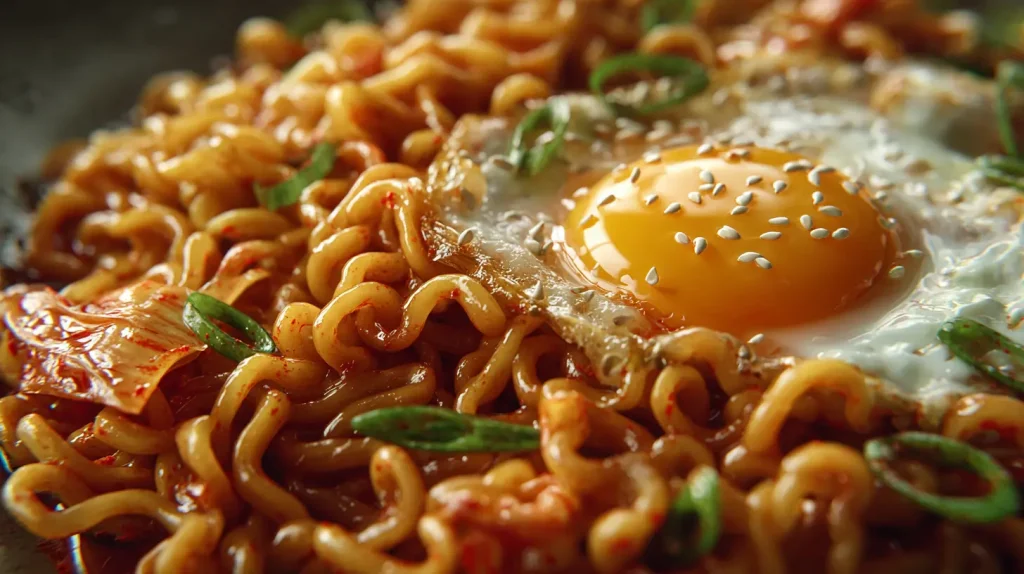
Another reason this dish stands out is how adaptable it is for everyday cooking. You can easily turn it into creamy kimchi ramen for a softer, richer texture, or build it into one of your favorite cheese ramen recipes when you want something extra comforting. It is also perfect for anyone exploring recipes with kimchi in it because it teaches you how to adjust salt, heat, and acidity in a very clear, forgiving way. Once you make this once or twice, you will feel confident experimenting with new recipes with kimchi dishes and discovering more things to eat with kimchi without feeling intimidated.
Preparation and Cooking Time, also serving
Ingredients
Substitution Notes
Step-by-Step Instructions

Step 1: Build the Flavor Base
Heat a medium pot over medium heat and add the sesame oil. Add the garlic and ginger and cook gently until fragrant. Add the chopped kimchi and stir well, allowing it to heat through and release its juices. This step deepens the flavor and forms the foundation of the kimchi ramen broth.
Step 2: Create the Broth
Pour in the chicken broth and water. Add soy sauce, gochujang, sugar, and black pepper. Stir well and bring the mixture to a gentle boil. Let it simmer for about 5 minutes so all the flavors combine and the broth becomes slightly cloudy and rich.
Step 3: Cook the Noodles
Add the ramen noodles directly into the simmering broth. Cook according to package instructions, usually 2 to 3 minutes, stirring gently so they do not stick together. The noodles should be tender but still slightly springy.
Step 4: Add the Eggs
Crack the eggs gently into the broth. Let them poach directly in the soup until the whites are set and the yolks are as runny or firm as you prefer. This adds richness and protein to the bowl.
Step 5: Finish the Soup
Taste the broth and adjust with a little more soy sauce or sugar if needed. Stir in most of the green onions, saving some for garnish. Turn off the heat and let the soup rest for 1 minute before serving so the flavors settle.
How to Serve
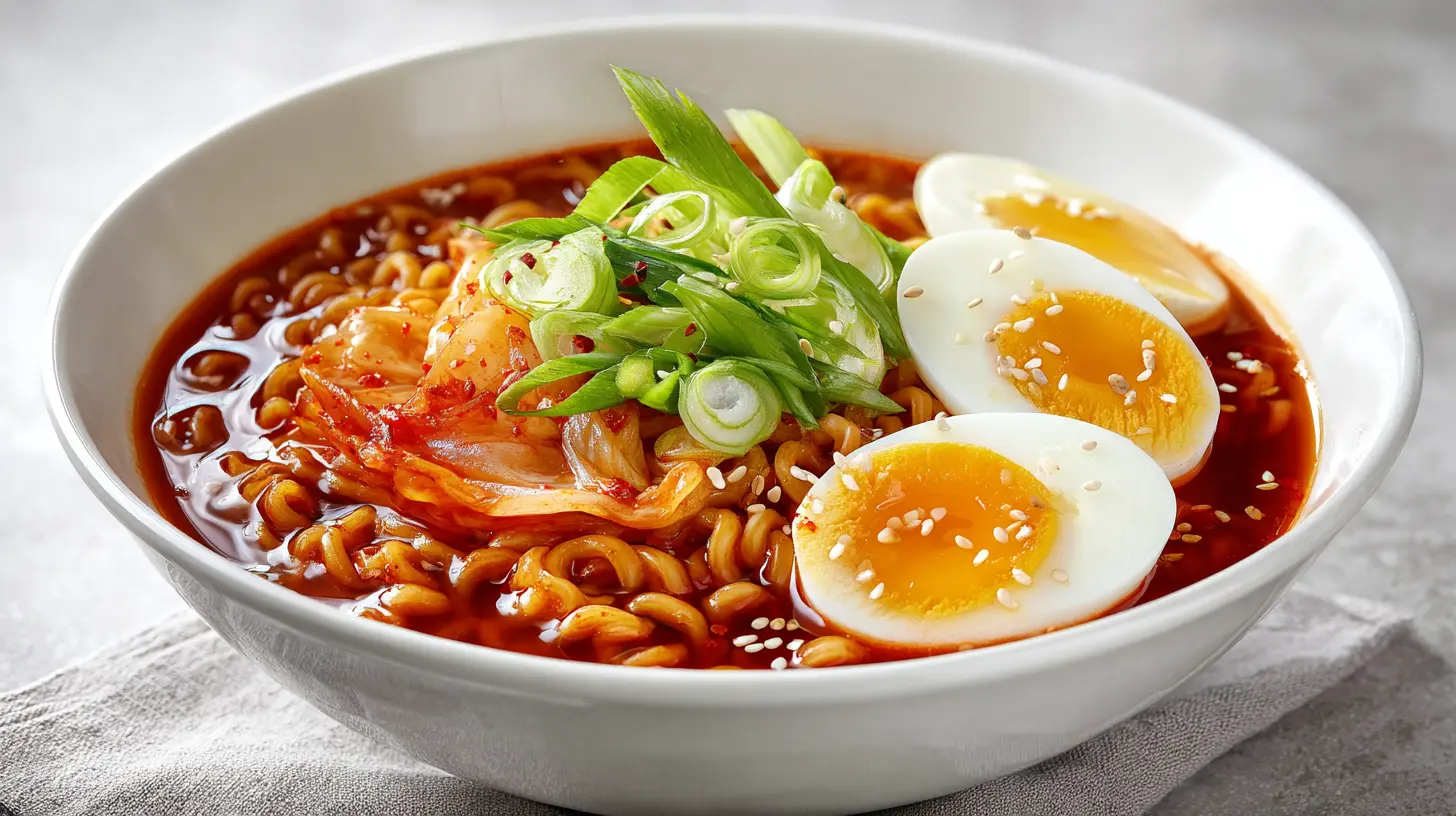
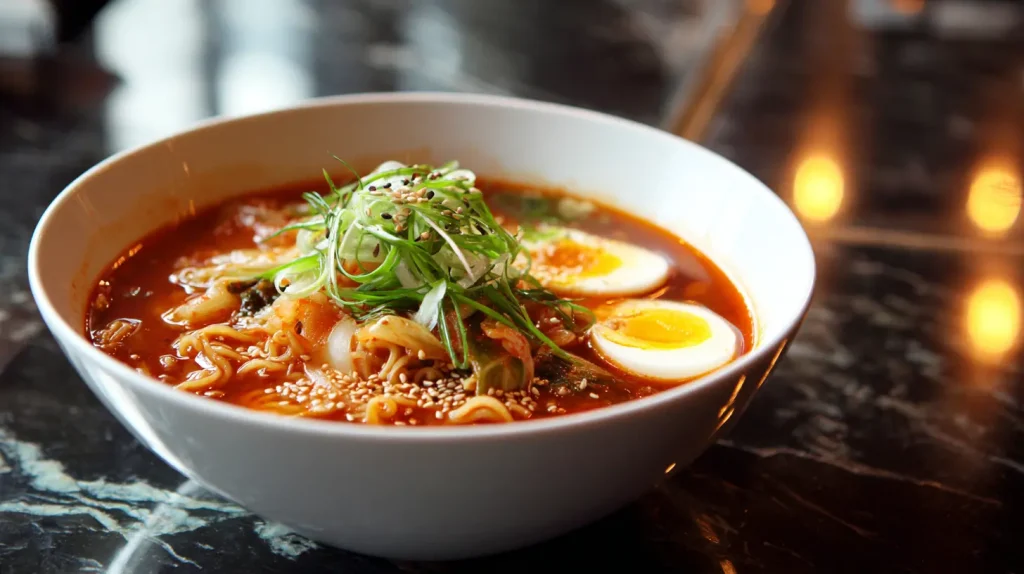
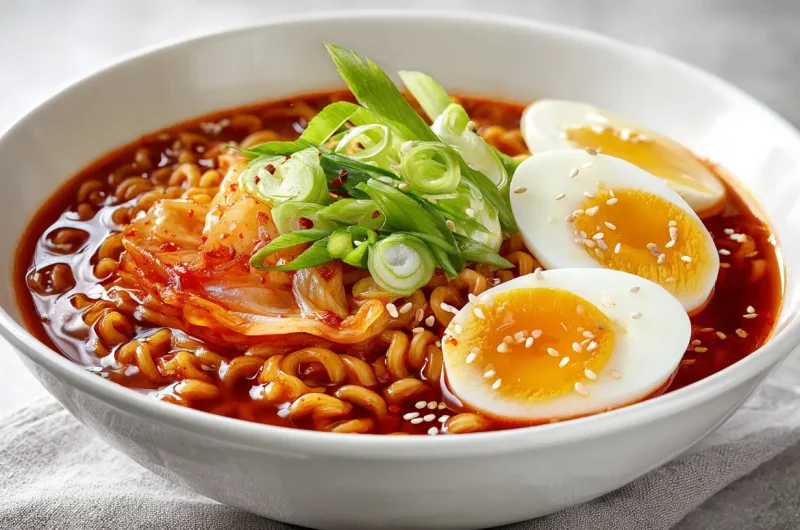
Serve kimchi ramen in deep bowls that hold heat well. Arrange the noodles neatly and pour the broth over them. Place the egg gently on top. Finish with fresh green onions and an extra spoon of kimchi in the center.
As side dishes, simple items work best. Steamed dumplings, cucumber salad, or lightly pickled vegetables complement the soup without overpowering it. For extra indulgence, add a slice of melted cheese on top for a creamy kimchi ramen experience or experiment with popular cheese ramen noodle recipes for a richer feel. If you enjoy building a complete meal, pair the soup with small portions of foods that highlight ways to use kimchi, such as kimchi pancakes or rice bowls. These are excellent things to eat with kimchi when you want a balanced table.
Additional Tips
Recipe Variations
Freezing and Storage
Nutritional Information
Approximate values per serving:
Final Words
Kimchi ramen is a dish that proves powerful flavors do not require complicated cooking. When you make it at home, you begin to understand how a simple fermented ingredient can completely transform a basic pot of broth and noodles. The combination of heat, tang, and umami makes this bowl deeply satisfying, and once you experience how fresh it tastes compared to instant versions, it is hard to go back. Preparing kimchi ramen yourself also gives you full control over the spice level, salt balance, and richness, which is something no packaged version can offer.
Cooking this recipe regularly builds real kitchen confidence. You start to recognize how long to sauté the kimchi, when the broth has reached the perfect depth, and how noodles should feel when they are ready. These skills naturally carry over into other recipes with kimchi dishes and help you better understand recipes with kimchi in it across different cuisines. Over time, the process becomes second nature, and you will feel comfortable experimenting with new ways to use kimchi without feeling overwhelmed.
What makes kimchi ramen truly special is how adaptable and comforting it is. You can enjoy it as a quick solo meal, a cozy dinner for two, or even as a base for more creative versions like creamy kimchi ramen or cheese ramen noodle recipes. No matter how you customize it, this dish answers the question of what to make with kimchi in the most satisfying way. It becomes more than just a recipe. It becomes a reliable, warming meal that you can return to again and again when you want something bold, fast, and deeply comforting.
FAQ’s
Kimchi Ramen Recipe – Rich Spicy Korean Flavors
Course: Noodle Recipes2
servings10
minutes20
minutes420
kcalIngredients
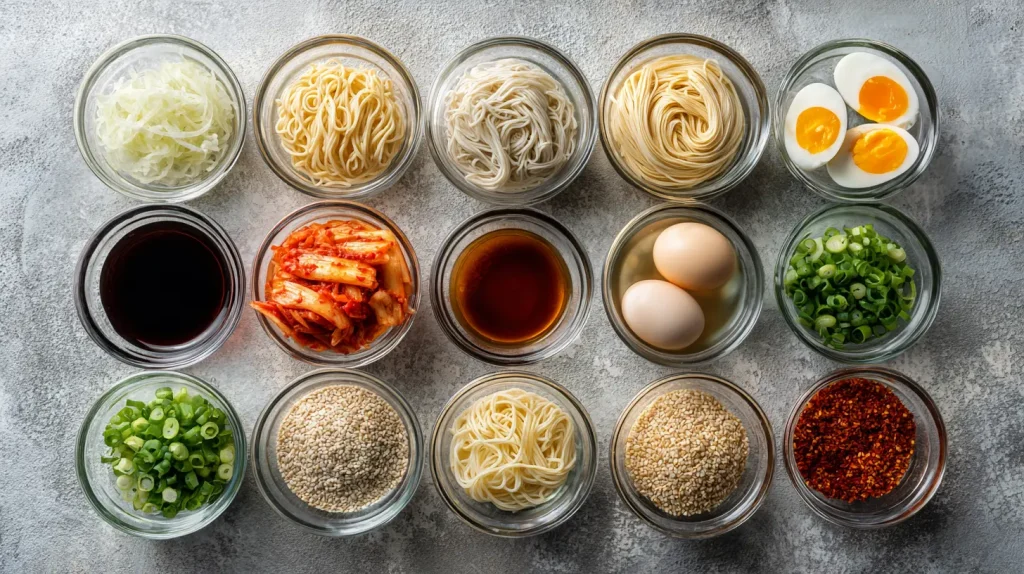
2 packs ramen noodles, seasoning packets discarded
2 cups kimchi, roughly chopped
4 cups chicken broth or vegetable broth
1 cup water
1 tablespoon sesame oil
3 cloves garlic, minced
1 tablespoon fresh ginger, grated
1 tablespoon soy sauce
1 teaspoon gochujang
2 large eggs
1/2 cup sliced green onions
1 teaspoon sugar
1/2 teaspoon black pepper
Directions
- Heat a medium pot over medium heat and add the sesame oil. Add the garlic and ginger and cook gently until fragrant. Add the chopped kimchi and stir well, allowing it to heat through and release its juices. This step deepens the flavor and forms the foundation of the kimchi ramen broth.
- Pour in the chicken broth and water. Add soy sauce, gochujang, sugar, and black pepper. Stir well and bring the mixture to a gentle boil. Let it simmer for about 5 minutes so all the flavors combine and the broth becomes slightly cloudy and rich.
- Add the ramen noodles directly into the simmering broth. Cook according to package instructions, usually 2 to 3 minutes, stirring gently so they do not stick together. The noodles should be tender but still slightly springy.
- Crack the eggs gently into the broth. Let them poach directly in the soup until the whites are set and the yolks are as runny or firm as you prefer. This adds richness and protein to the bowl.
- Taste the broth and adjust with a little more soy sauce or sugar if needed. Stir in most of the green onions, saving some for garnish. Turn off the heat and let the soup rest for 1 minute before serving so the flavors settle.
Notes
- Always taste your kimchi before cooking. If it is very sour, reduce the amount slightly or add a pinch of sugar.
- Use low to medium heat when sautéing garlic and ginger to avoid bitterness.
- Add noodles only when you are ready to serve to keep them from becoming too soft.
- If you want a thicker broth, let it simmer uncovered for a few extra minutes.
- For a deeper flavor, add a small piece of dried kombu to the broth and remove it before adding noodles.