
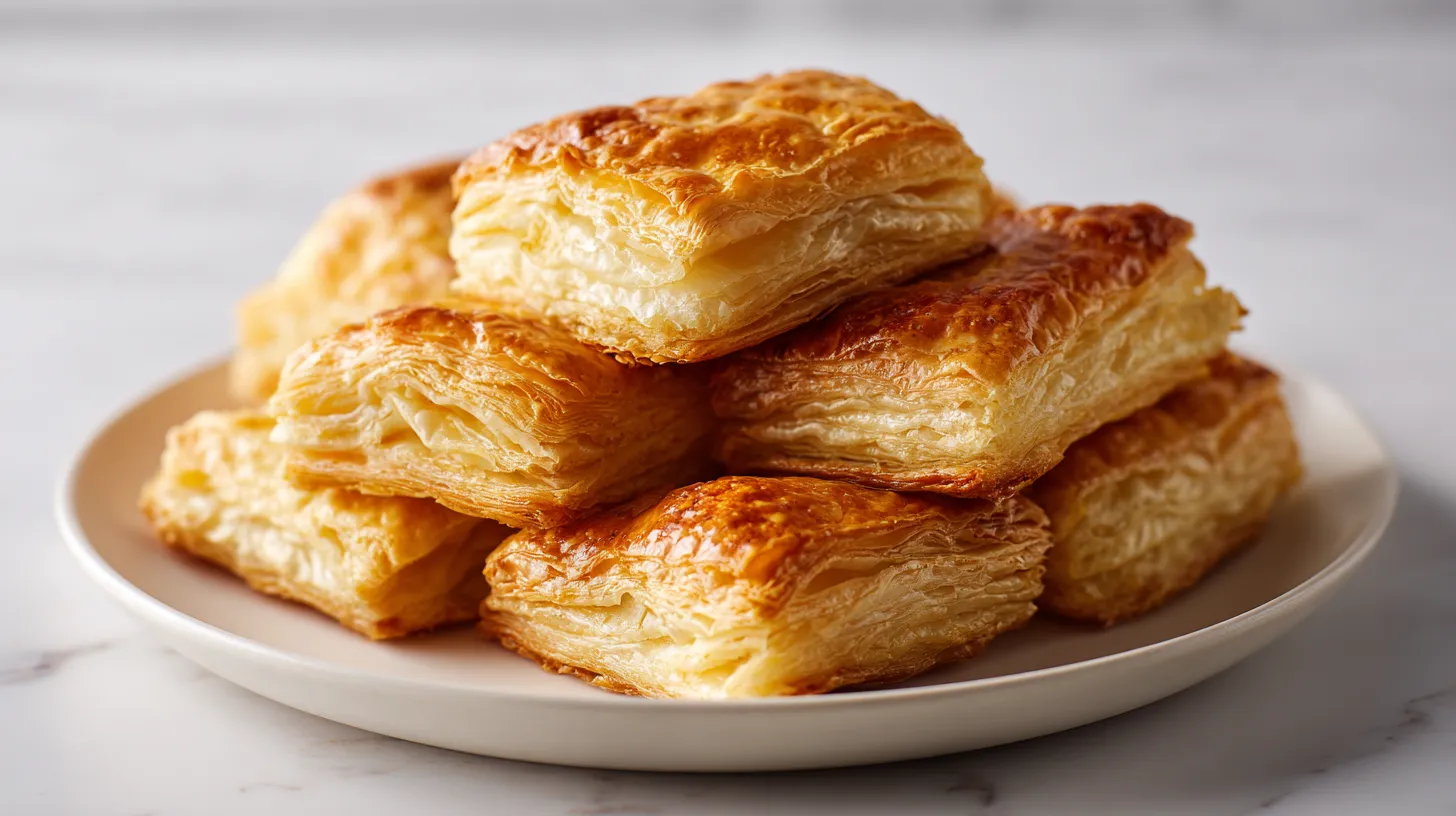
Puff Pastry Recipe – Flaky Homemade Pastry Tutorial
Puff Pastry Recipe
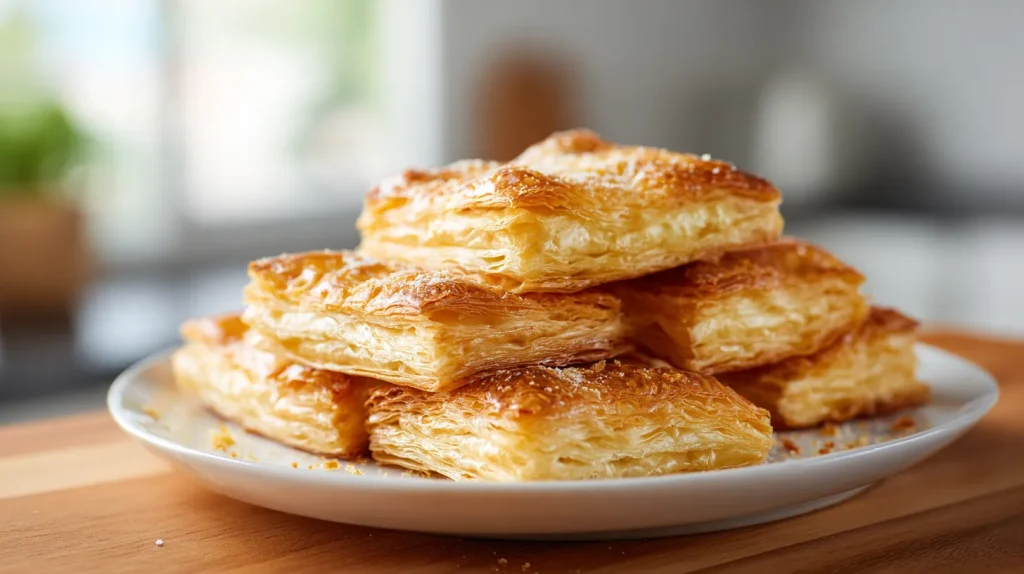
A puff pastry recipe transforms simple ingredients into a light, flaky, and buttery masterpiece. The magic of puff pastry lies in its layers: delicate sheets of dough alternate with butter, creating a crisp exterior and soft, airy interior. When baked, it rises beautifully, offering a golden, buttery texture that melts in your mouth.
What makes this puff pastry recipe special is its versatility. It can be used in both sweet and savory dishes, from Nutella turnovers puff pastries and cheese Danish with glaze to elegant appetizers or rustic homemade pastry recipes. Home cooks love it because it offers a professional touch with a homey, comforting feel, whether making homemade Danish pastries or experimenting with sweet puff pastry recipes for dessert.
The texture, aroma, and flavor of freshly baked puff pastry elevate any dish. Its buttery layers complement fillings of chocolate, cream cheese, fruits, or savory ingredients. This recipe allows you to master how to make chocolate puff pastry, homemade puff pastry tutorial, or simply create easy puff pastry recipe options that are both approachable and rewarding.
Why You’ll Love This Recipe
Mastering this puff pastry recipe allows you to create bakery-quality pastries right in your own kitchen. The technique of folding butter into dough produces delicate, flaky layers that rise beautifully in the oven. Each bite offers a satisfying combination of crispness and tenderness, making it a standout base for both sweet and savory dishes. Whether you are making Nutella turnovers puff pastries, cheese Danish with glaze, or a rustic tart, the results are consistently impressive and visually appealing.
Another reason to love this recipe is its incredible versatility. Puff pastry serves as the foundation for countless creations, from sweet puff pastry recipes like fruit-filled pastries and chocolate puff pastry to savory dishes with vegetables, cheeses, or meats. Home cooks can easily customize fillings and toppings, giving each batch a unique flavor profile that suits brunch spreads, dessert tables, or appetizer platters. The recipe’s approachable method ensures that even intricate-looking pastries are achievable without stress.
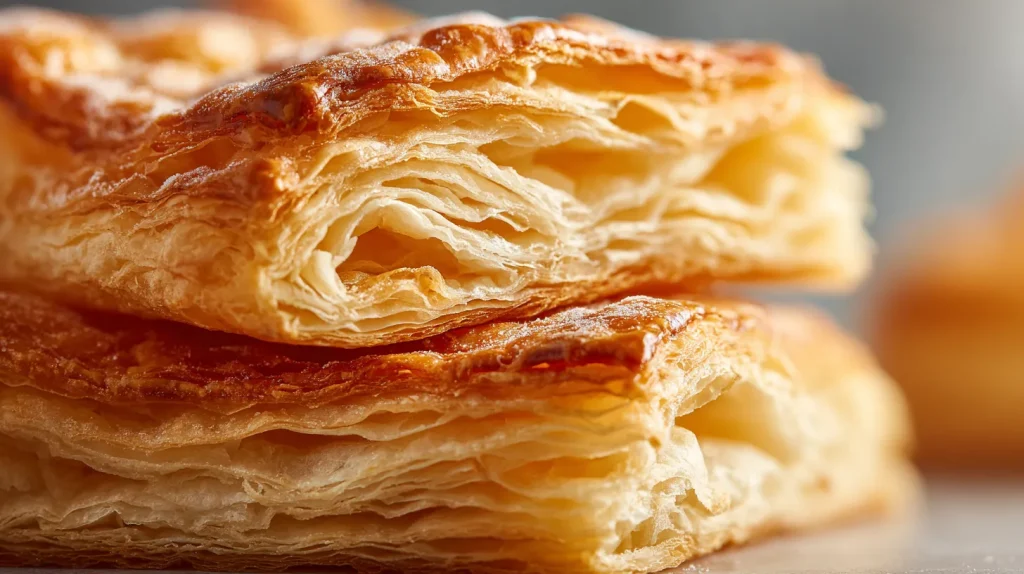
Finally, this puff pastry recipe is both practical and rewarding. The dough can be prepared ahead of time, chilled, or frozen, offering flexibility for busy schedules. Once you learn the folding and rolling technique, you gain a reliable skill that can be used for homemade Danish pastries, cream cheese pastries recipes, or easy puff pastry recipe creations for any occasion. Its combination of elegance, flavor, and hands-on satisfaction makes it a recipe you’ll return to again and again.
Preparation and Cooking Time, also serving
Ingredients
Substitution Notes
Step-by-Step Instructions
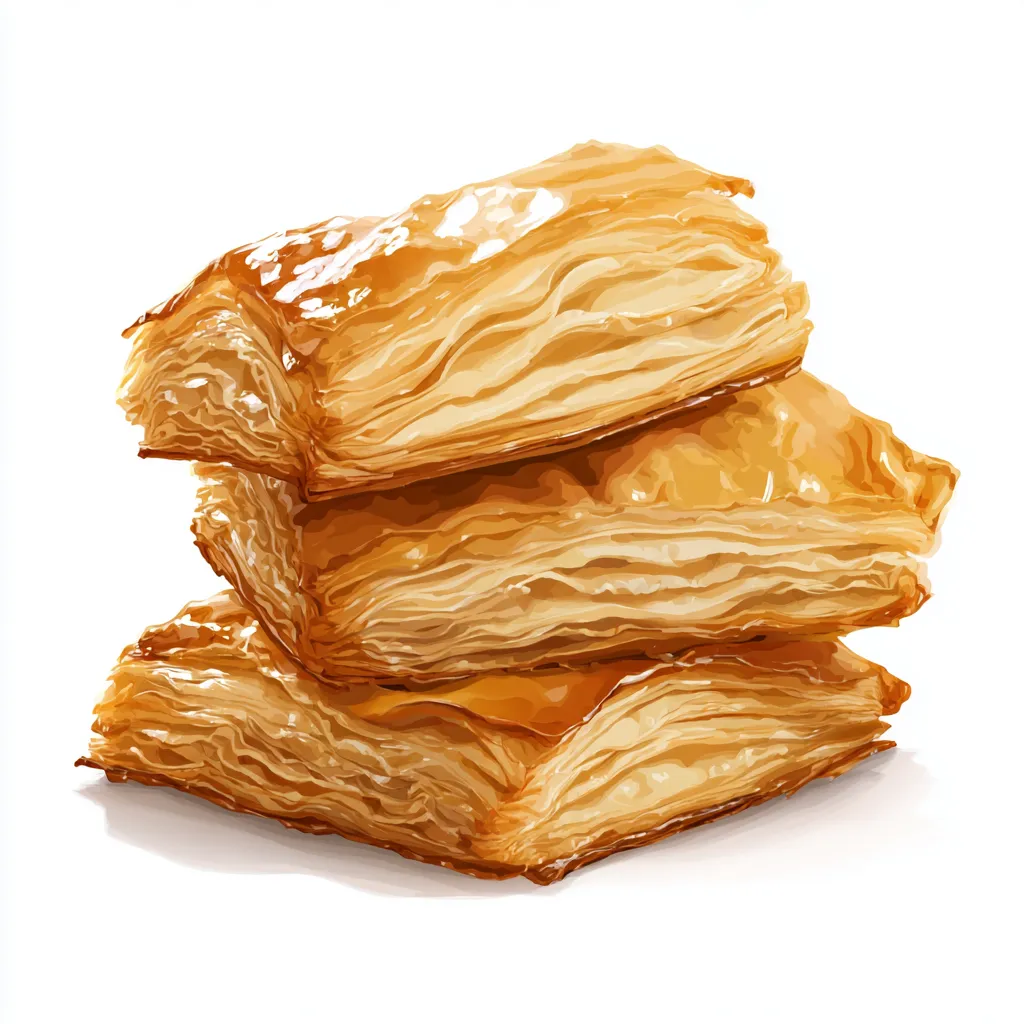
Step 1: Prepare the dough
In a large mixing bowl, combine flour and salt. Cut cold butter into small cubes and add to flour. Using a pastry cutter or your fingers, work the butter into the flour until the mixture resembles coarse crumbs with pea-sized pieces of butter remaining.
Step 2: Incorporate cold water
Gradually add cold water, mixing gently until the dough just comes together. Avoid overmixing to ensure flaky layers. Form the dough into a rectangle, wrap in plastic, and chill for at least 30 minutes.
Step 3: Roll and fold
On a lightly floured surface, roll the chilled dough into a rectangle. Fold it into thirds like a letter, rotate 90 degrees, and roll again. Repeat this process 4-5 times, chilling the dough for 15 minutes between folds if it becomes too soft. This creates the layers needed for puff pastry.
Step 4: Shape and fill
Roll the dough to desired thickness for your recipe. Cut into shapes for cheese Danish with glaze, Nutella turnovers puff pastries, or other sweet and savory pastries. Add fillings as desired, leaving edges clear for sealing.
Step 5: Apply egg wash
Brush pastries with egg wash for a shiny, golden finish. This step enhances visual appeal and contributes to a crisp crust.
Step 6: Bake
Preheat the oven to 400°F (200°C). Place pastries on a parchment-lined baking sheet and bake 20-25 minutes, or until puffed and golden. Rotate the sheet halfway for even browning.
How to Serve
Serve puff pastries warm to highlight their crisp, airy layers. For sweet puff pastry recipes, dust with powdered sugar or drizzle with glaze. For savory pastries, serve alongside fresh salads or roasted vegetables. Presentation can be elevated by arranging pastries on a platter with garnishes like fresh berries, herbs, or a small bowl of dipping sauce.
Puff pastries are versatile enough for brunch spreads, tea-time treats, or desserts at dinner parties. Pair cheese Danish with glaze with coffee or tea, and serve Nutella turnovers puff pastries for an indulgent treat. Their buttery layers make each bite a special experience, and plating multiple variations together creates a visually stunning presentation.
Additional Tips
Recipe Variations
Freezing and Storage
Nutritional Information
Final Words
Mastering a puff pastry recipe is a game-changer in any home kitchen. The technique of folding butter into dough to create delicate, flaky layers may seem intricate at first, but with practice, it becomes intuitive. Each step from chilling the dough to careful rolling and folding contributes to a golden, airy pastry that rises beautifully and melts in your mouth. This recipe empowers home cooks to achieve bakery-quality results with confidence and precision.
Puff pastry is incredibly versatile, lending itself to both sweet and savory creations. You can craft Nutella turnovers puff pastries, cheese Danish with glaze, or fruit-filled puff pastries for dessert, or savory tarts and appetizers with vegetables, cheese, or cooked meats. The ability to customize fillings and toppings ensures that every batch reflects your personal taste and creativity, making it perfect for brunch spreads, holiday meals, or casual dinners that need a touch of elegance.
Making puff pastry at home also gives you control over ingredients and flavors, which elevates the quality and freshness of your baked goods. Unlike store-bought options, you can adjust butter content, select fillings, and experiment with textures to suit your preferences. Once you master this homemade puff pastry tutorial, you’ll find endless opportunities to impress family, friends, and guests with delicate, golden layers that showcase both skill and care. Puff pastry is more than just dough it’s a foundation for culinary creativity that turns simple ingredients into extraordinary dishes.
FAQ’s

Puff Pastry Recipe – Flaky Homemade Pastry Tutorial
Course: Desserts8
servings30
minutes25
minutes280
kcalIngredients
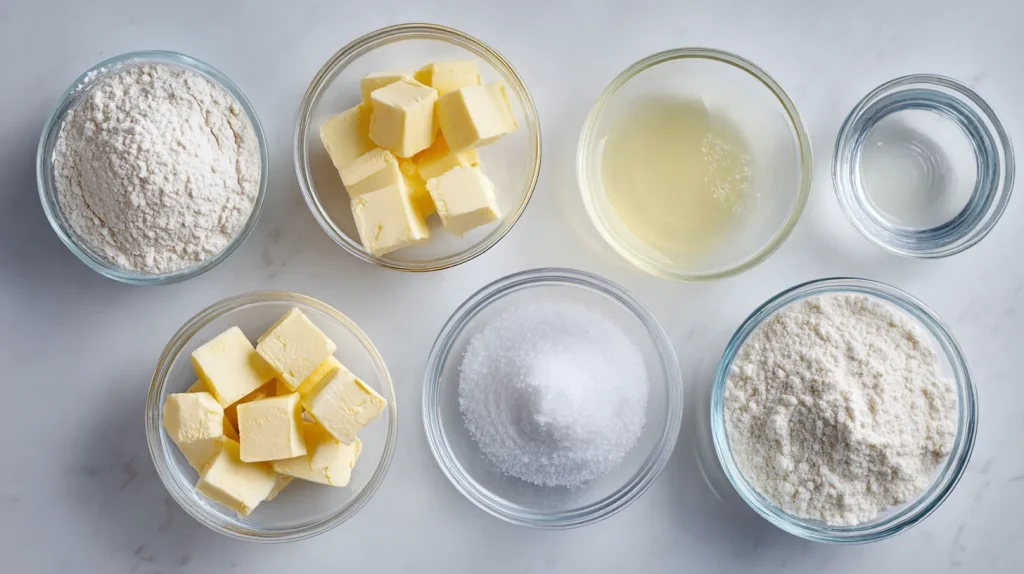
All-purpose flour: 2 1/2 cups (320 g)
Unsalted butter, cold: 1 cup (225 g)
Salt: 1 teaspoon
Cold water: 2/3 cup (160 ml)
Optional: egg wash (1 egg + 1 tbsp water) for shine
Directions
- In a large mixing bowl, combine flour and salt. Cut cold butter into small cubes and add to flour. Using a pastry cutter or your fingers, work the butter into the flour until the mixture resembles coarse crumbs with pea-sized pieces of butter remaining.
- Gradually add cold water, mixing gently until the dough just comes together. Avoid overmixing to ensure flaky layers. Form the dough into a rectangle, wrap in plastic, and chill for at least 30 minutes.
- On a lightly floured surface, roll the chilled dough into a rectangle. Fold it into thirds like a letter, rotate 90 degrees, and roll again. Repeat this process 4-5 times, chilling the dough for 15 minutes between folds if it becomes too soft. This creates the layers needed for puff pastry.
- Roll the dough to desired thickness for your recipe. Cut into shapes for cheese Danish with glaze, Nutella turnovers puff pastries, or other sweet and savory pastries. Add fillings as desired, leaving edges clear for sealing.
- Brush pastries with egg wash for a shiny, golden finish. This step enhances visual appeal and contributes to a crisp crust.
- Preheat the oven to 400°F (200°C). Place pastries on a parchment-lined baking sheet and bake 20-25 minutes, or until puffed and golden. Rotate the sheet halfway for even browning.
Notes
- Keep butter and water very cold to achieve optimal layers
- Avoid overworking the dough to prevent tough pastry
- Chill dough between folds for easier handling and better rise
- Use sharp knives or pizza cutters for clean edges
- Customize layers with a light sprinkle of sugar or cinnamon for sweet versions


