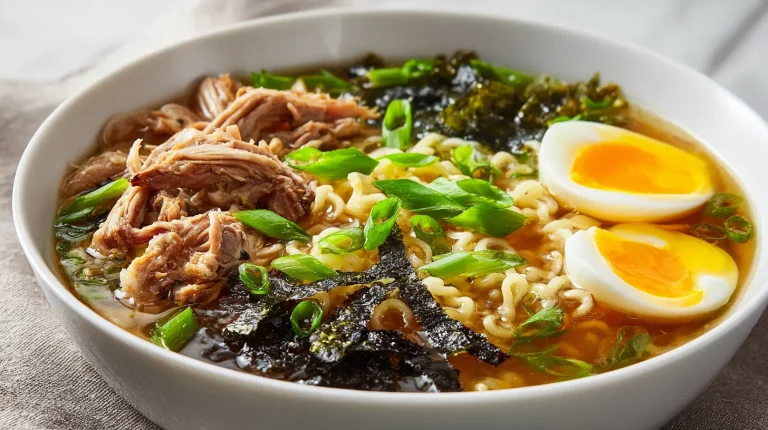
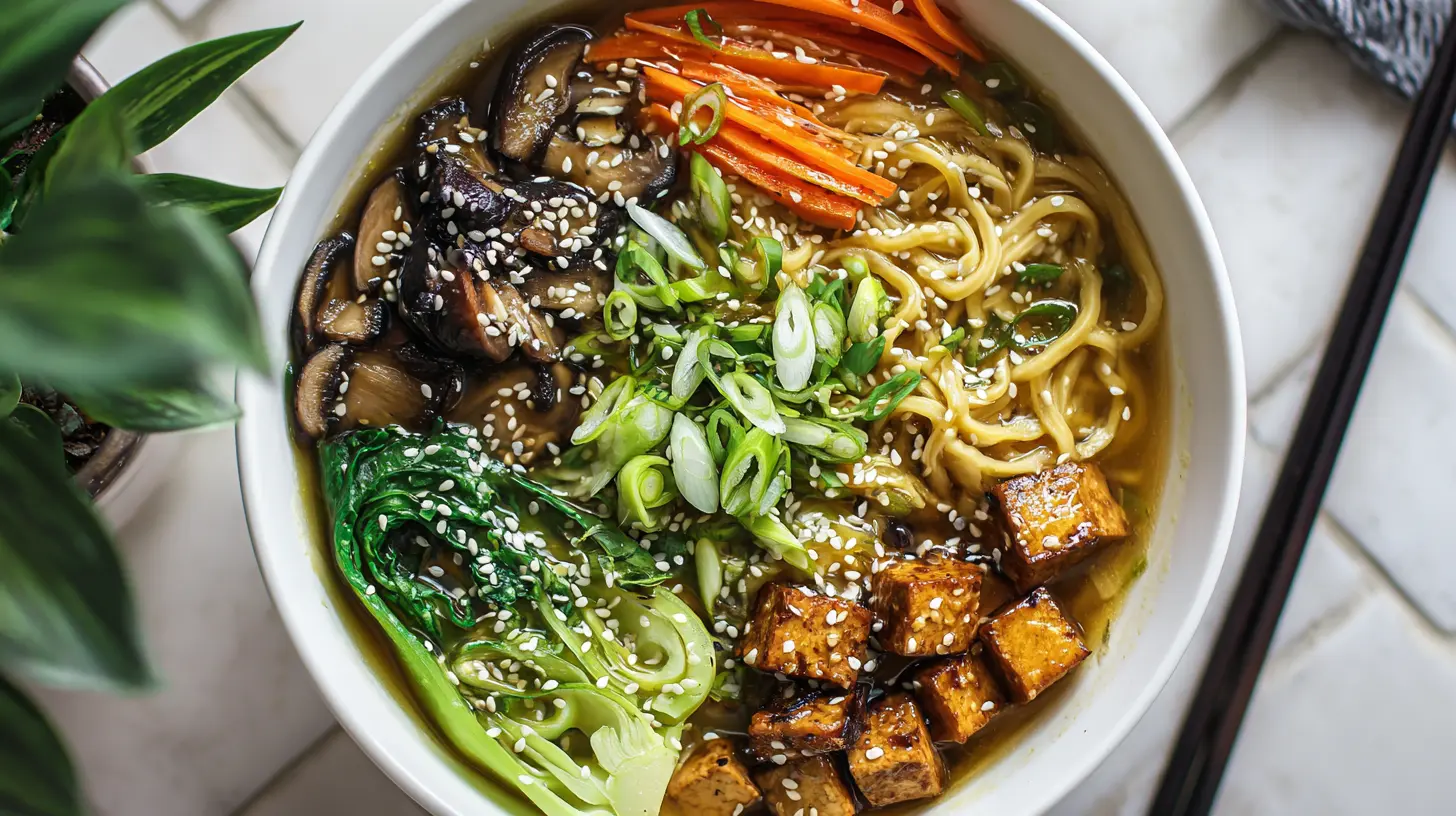
Vegan Ramen Recipe – Easy Quick Plant-Based Meal
Fall Special Vegan ramen
Vegan ramen is more than just a bowl of noodles. It’s a comforting, flavorful, and satisfying dish that brings warmth to any meal. What makes it special is the balance of textures and flavors: silky noodles, rich broth, tender vegetables, and layers of umami from plant-based ingredients. Unlike traditional ramen, vegan ramen offers a wholesome, meat-free alternative that doesn’t compromise on taste or depth. The broth is often infused with mushrooms, miso, soy, or coconut milk, creating a creamy, savory base that harmonizes beautifully with noodles and toppings.
People love vegan ramen because it’s versatile, customizable, and packed with nourishing ingredients. It can be made quickly for a fast plant based meals option or prepared more elaborately as a centerpiece for dinner. Each bowl is an invitation to savor a combination of hearty flavors and textures, making it a dish that satisfies both the palate and the soul. From the first sip of the steaming broth to the final bite of tender noodles, vegan ramen transforms everyday ingredients into a culinary experience that feels indulgent yet wholesome.
Why You’ll Love This Recipe
As a professional chef, I can confidently say that this vegan ramen recipe offers a perfect balance of flavor, nutrition, and simplicity. Here are the key reasons to try it:

Preparation and Cooking Time, Also Serving
Ingredients
Substitution Notes:

Step-by-Step Instructions

Step 1: Prepare the Broth
In a large pot, heat sesame oil over medium heat. Add minced garlic and ginger, sautéing until fragrant, about 1-2 minutes. Add mushrooms and cook until they begin to soften, releasing their natural umami. Pour in vegetable broth and bring to a gentle simmer. Stir in soy sauce and miso paste until fully incorporated. For a creamier ramen, add coconut milk at this stage.
Step 2: Cook the Noodles
Bring a separate pot of water to boil and cook the vegan ramen noodles according to package instructions. Drain and set aside, reserving a small amount of the cooking water in case you need to loosen the broth later.
Step 3: Prepare the Tofu
While the broth simmers, press and cube the tofu. For added texture, pan-fry tofu in a small amount of sesame oil until golden and crisp on all sides. This adds a contrasting bite to the soft noodles and vegetables.
Step 4: Add Vegetables
Add carrots, bok choy, spinach, and corn to the simmering broth. Cook for 3-5 minutes until vegetables are tender but still vibrant. Ensure the flavors meld by tasting and adjusting with additional soy sauce or miso if needed.
Step 5: Assemble the Ramen Bowls
Divide noodles evenly among four bowls. Ladle the hot broth and vegetables over the noodles. Top each bowl with tofu cubes, sliced green onions, and a sprinkle of nutritional yeast if using. Add chili paste or sriracha for those who enjoy a bit of heat.
How to Serve
Vegan ramen is best served immediately, steaming hot in deep bowls that allow the broth to shine. Garnish with fresh herbs like cilantro or Thai basil for added aroma and visual appeal. You can drizzle a little sesame oil over the top for richness and sprinkle sesame seeds to enhance texture.
Pair with simple sides like steamed edamame, pickled vegetables, or a fresh Asian-style salad. For a creative twist, serve with a small dish of dipping sauce made from soy, lime juice, and chili for guests to add as desired. Layered presentation with colorful vegetables and golden tofu will make each bowl visually stunning, perfect for family dinners or creative vegan recipes that impress.

Additional Tips
Recipe Variations
Freezing and Storage
Nutritional Information (Approximate per Serving)
Final Words
Creating vegan ramen at home allows you to enjoy a wholesome, flavorful, and deeply satisfying bowl of comfort. From the rich, umami-packed broth to the perfectly cooked noodles and fresh vegetables, every bite is a celebration of plant-based ingredients. Making it yourself ensures control over flavor, texture, and nutrition while avoiding preservatives and excess sodium found in prepackaged alternatives.
This dish is versatile, easily customizable, and quick enough to fit into a busy schedule. Whether preparing fast plant based meals or indulging in a leisurely dinner, vegan ramen offers a nourishing and creative culinary experience. By adding your favorite vegetables, proteins, and garnishes, you can make a bowl uniquely your own while staying aligned with a healthy, plant-based lifestyle.
Sharing vegan ramen with friends and family elevates mealtime into an experience. Thoughtful presentation, vibrant colors, and layered flavors make it perfect for casual dinners or special occasions. With the right technique, even home cooks can create a bowl that rivals professional restaurants, demonstrating that plant-based cooking can be both satisfying and gourmet. Cooking vegan ramen is not just about a meal; it’s about creating a ritual of warmth, comfort, and creativity. Each bowl you prepare is an opportunity to experiment with flavors, textures, and seasonal ingredients. This recipe is designed to be approachable, yet it empowers home cooks to create a memorable and nourishing experience, proving that plant-based cuisine can be as indulgent and delicious as traditional dishes.
FAQ’s

Vegan Ramen Recipe – Easy Quick Plant-Based Meal
Course: Noodle Recipes4
servings15
minutes25
minutes350
kcalIngredients
8 oz vegan ramen noodles or any plant-based noodles
4 cups vegetable broth
1 cup unsweetened coconut milk (optional for creamy ramen)
2 tablespoons soy sauce or tamari
1 tablespoon miso paste
2 teaspoons sesame oil
2 cloves garlic, minced
1 tablespoon fresh ginger, minced
1 cup mushrooms, sliced (shiitake, cremini, or button)
1 cup bok choy or spinach
1 medium carrot, julienned
1/2 cup corn kernels
1 block firm tofu, cubed
2 green onions, sliced
1 tablespoon nutritional yeast (optional for extra umami)
1 teaspoon chili paste or sriracha (optional)
Salt and pepper, to taste
Directions
- In a large pot, heat sesame oil over medium heat. Add minced garlic and ginger, sautéing until fragrant, about 1-2 minutes. Add mushrooms and cook until they begin to soften, releasing their natural umami. Pour in vegetable broth and bring to a gentle simmer. Stir in soy sauce and miso paste until fully incorporated. For a creamier ramen, add coconut milk at this stage.
- Bring a separate pot of water to boil and cook the vegan ramen noodles according to package instructions. Drain and set aside, reserving a small amount of the cooking water in case you need to loosen the broth later.
- While the broth simmers, press and cube the tofu. For added texture, pan-fry tofu in a small amount of sesame oil until golden and crisp on all sides. This adds a contrasting bite to the soft noodles and vegetables.
- Add carrots, bok choy, spinach, and corn to the simmering broth. Cook for 3-5 minutes until vegetables are tender but still vibrant. Ensure the flavors meld by tasting and adjusting with additional soy sauce or miso if needed.
- Divide noodles evenly among four bowls. Ladle the hot broth and vegetables over the noodles. Top each bowl with tofu cubes, sliced green onions, and a sprinkle of nutritional yeast if using. Add chili paste or sriracha for those who enjoy a bit of heat.
Notes
- Layer Flavors: Sauté garlic, ginger, and mushrooms before adding broth to extract maximum umami.
- Broth Depth: Adding miso and nutritional yeast enhances the savory profile without overpowering the vegetables.
- Noodle Texture: Cook noodles just until tender, then rinse briefly with cold water to stop cooking. This prevents them from becoming mushy in the hot broth.
- Tofu Preparation: Press tofu to remove excess moisture for a firmer texture. Pan-frying adds color and contrast.
- Customize Heat: Add chili paste, sriracha, or crushed red pepper flakes according to preference.
- Storage Consideration: Keep noodles and broth separate if making ahead to maintain noodle texture.