

Chili Oil Recipe – Bold, Aromatic, and Easy to Make at Home
Chili Oil Recipe
A good chili oil recipe is one of the most useful things you can learn in home cooking. It may seem simple at first because it uses only oil, chilies, and aromatics, but when made properly, chili oil becomes a powerful flavor booster that can completely transform meals. A spoonful can add heat, depth, aroma, and richness to noodles, rice, soups, eggs, dumplings, grilled meats, and vegetables.
What makes a chili oil recipe special is the layering of flavor. It is not only about spice. A properly balanced chili oil recipe includes warmth from dried chilies, fragrance from garlic and spices, and richness from hot infused oil. The final result should taste deep and complex instead of simply hot.
People love homemade chili oil because it feels customizable and fresh compared to store bought versions. You control the spice level, texture, and aromatics. Some people prefer smoky oil, while others enjoy brighter and more fragrant versions inspired by Japanese Cooking Seasoning Ideas or Korean Spicy Seasoning Recipe styles.
Another reason the chili oil recipe has become so popular is versatility. It works as both a condiment and a cooking ingredient. Many cooks now keep homemade jars ready at all times because chili oil can instantly improve simple meals. It also fits beautifully into Diy Spicy Condiments For Cooking and Homemade Chinese Spices collections for people who enjoy making pantry staples from scratch. Once you learn the fundamentals of a good chili oil recipe, you can adapt it endlessly based on personal taste and different cuisines.
Why You’ll Love This Recipe
This chili oil recipe stands out because it delivers flavor far beyond simple heat.
Preparation and Cooking Time, also serving
This chili oil recipe works well for meal prep because a small amount goes a long way.
Ingredients
For the chili oil:
Optional ingredients:
Substitution notes:
Step-by-Step Instructions

Step 1: Prepare the chili mixture
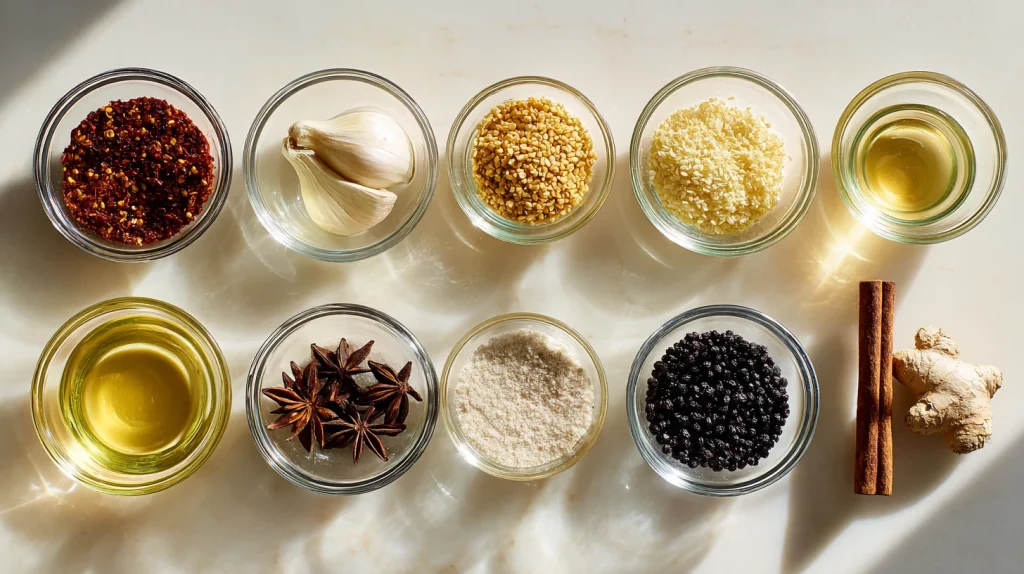
Place chili flakes, garlic, sesame seeds, sugar, and salt into a heatproof bowl. This bowl will receive the hot oil later, so make sure it is large enough to safely handle heat. The balance of chili flakes and aromatics is what defines a great chili oil recipe.
Step 2: Heat the oil with spices
Pour oil into a saucepan and add cinnamon stick, star anise, bay leaves, and optional Sichuan peppercorns. Heat slowly over medium heat until the spices become fragrant. Do not rush this step. Slow heating allows the oil to absorb flavor properly, which is essential for Homemade Chinese Spices inspired chili oil.
Step 3: Remove whole spices
Once the oil smells aromatic and the spices darken slightly, carefully remove the cinnamon stick, star anise, and bay leaves. Leaving them too long may make the oil bitter.
Step 4: Check oil temperature
Allow the oil to cool slightly for about 1 to 2 minutes. Oil that is too hot can burn the chili flakes and create bitterness. A properly balanced chili oil recipe depends heavily on temperature control.
Step 5: Pour oil over chili mixture
Carefully pour the hot oil over the chili mixture. You should immediately hear sizzling. Stir gently as the ingredients bloom in the hot oil. This is the most important moment in the chili oil recipe because it activates aroma and flavor.
Step 6: Let the chili oil rest
Allow the chili oil to cool fully before transferring it into a jar. Resting helps the flavors deepen and blend together.
How to Serve
A chili oil recipe becomes useful because of how many ways it can be served.
You can drizzle chili oil over:
It also works beautifully mixed into sauces and marinades.
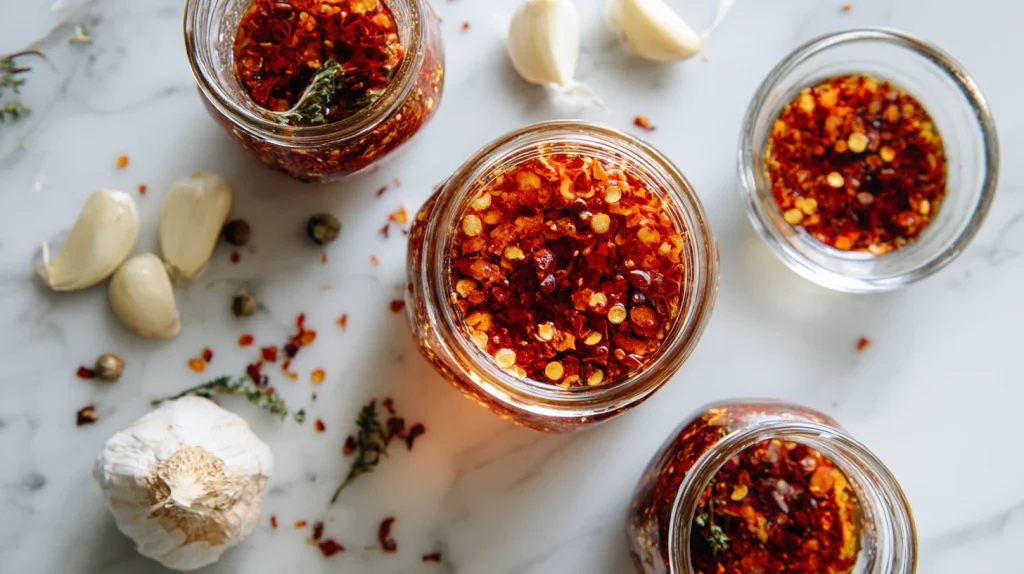
For presentation, spoon chili oil into small dipping bowls alongside meals. The deep red color and floating chili flakes create a visually rich garnish.
This chili oil recipe also pairs especially well with:
Because it fits into both Japanese Cooking Seasoning Ideas and Chinese inspired cooking styles, it becomes a highly versatile kitchen staple.
Additional Tips
These details significantly improve the final chili oil recipe.
Recipe Variations
These variations allow you to customize the chili oil recipe based on your preferred flavor profile.
Freezing and Storage
Proper storage helps maintain the quality of your homemade chili oil recipe.
Nutritional Information
Approximate values per tablespoon:
This chili oil recipe is concentrated, so small amounts provide significant flavor.
Final Words
A homemade chili oil recipe is one of the most rewarding kitchen staples you can learn because it transforms ordinary meals with very little effort. Once you understand how aromatics, spices, and hot oil work together, you gain the ability to create deep flavor using only a spoonful at a time. Whether you drizzle it over noodles, stir it into soups, or use it as a dipping sauce, chili oil becomes a reliable way to add warmth, richness, and personality to everyday cooking.
Another reason this chili oil recipe deserves a permanent place in your kitchen is its flexibility. You can adjust spice levels, aromatics, and textures depending on your taste and cooking style. Some people prefer bold Red Chilli Oil Recipe versions with intense heat, while others enjoy milder oils inspired by Japanese Cooking Seasoning Ideas or Korean Spicy Seasoning Recipe flavors. That adaptability makes homemade chili oil useful for a wide range of meals and cuisines without requiring complicated ingredients.
Over time, making your own chili oil recipe becomes more than just preparing a condiment. It becomes part of understanding how flavor is built in cooking. You begin to notice how different chilies, oils, and aromatics affect the final result. From Diy Spicy Condiments For Cooking to homemade noodle toppings and marinades, chili oil quickly becomes something you reach for almost daily. Once you learn Chilli Oil Recipe How To Make techniques properly, you will always have a powerful homemade ingredient ready to improve simple meals and bring more depth to your cooking.
FAQs

Chili Oil Recipe – Bold, Aromatic, and Easy to Make at Home
Course: Sauces1 cup
servings10
minutes15
minutes110
kcalIngredients
- For the chili oil:
1 cup neutral oil (canola, peanut, or vegetable oil)
1/2 cup red chili flakes
4 cloves garlic, finely minced
1 tablespoon sesame seeds
1 teaspoon sugar
1 teaspoon salt
1 small cinnamon stick
2 star anise
2 bay leaves
- Optional ingredients:
1 teaspoon Sichuan peppercorns
1 teaspoon smoked paprika
1 tablespoon soy sauce
Directions
- Place chili flakes, garlic, sesame seeds, sugar, and salt into a heatproof bowl. This bowl will receive the hot oil later, so make sure it is large enough to safely handle heat. The balance of chili flakes and aromatics is what defines a great chili oil recipe.
- Pour oil into a saucepan and add cinnamon stick, star anise, bay leaves, and optional Sichuan peppercorns. Heat slowly over medium heat until the spices become fragrant. Do not rush this step. Slow heating allows the oil to absorb flavor properly, which is essential for Homemade Chinese Spices inspired chili oil.
- Once the oil smells aromatic and the spices darken slightly, carefully remove the cinnamon stick, star anise, and bay leaves. Leaving them too long may make the oil bitter.
- Allow the oil to cool slightly for about 1 to 2 minutes. Oil that is too hot can burn the chili flakes and create bitterness. A properly balanced chili oil recipe depends heavily on temperature control.
- Carefully pour the hot oil over the chili mixture. You should immediately hear sizzling. Stir gently as the ingredients bloom in the hot oil. This is the most important moment in the chili oil recipe because it activates aroma and flavor.
- Allow the chili oil to cool fully before transferring it into a jar. Resting helps the flavors deepen and blend together.