

Bibimbap Recipe – Easy Authentic Korean Bibimbap
Bibimbap Recipe
A bibimbap recipe is one of the best ways to experience the balance of flavors, colors, and textures that make Korean cuisine so popular around the world. The name “bibimbap” means “mixed rice,” and that simple description perfectly captures the heart of this classic dish. Warm steamed rice is topped with seasoned vegetables, tender meat, a perfectly cooked egg, and a flavorful spicy sauce before everything is mixed together just before eating. Every bite delivers a combination of savory, fresh, spicy, and slightly sweet flavors.
One of the reasons people love bibimbap is its flexibility. Every ingredient is prepared separately, allowing each one to keep its own flavor and texture before being combined into one satisfying bowl. Crisp vegetables add freshness, marinated beef brings richness, the egg creates creaminess, and the spicy sauce ties everything together. The result is a meal that feels complete without being heavy. If you are searching for a Bibimbap Authentic experience at home, this recipe follows the traditional cooking methods while using ingredients that are easy to find in most grocery stores. Each vegetable is cooked individually, the beef is properly marinated, and the gochujang sauce is balanced to complement every ingredient without overpowering the dish.
Many home cooks think Korean food is difficult to prepare, but this Bibimbap Recipe Korean Authentic proves otherwise. Once the ingredients are prepared, assembling the bowl takes only a few minutes. It is an excellent recipe for both beginners and experienced cooks because every step is straightforward and rewarding. This guide also serves as a reliable Traditional Bibimbap Recipe while giving you practical tips to make the cooking process easier. Whether you discovered this dish as a Bibambap Recipe online or searched for an Easy Korean Bibimbap to prepare on a busy weeknight, this version delivers authentic flavor without unnecessary complications.
By the end of this guide, you’ll understand why this Traditional Korean Bibimbap Recipe has remained one of Korea’s most beloved meals for generations. The same cooking techniques can also be adapted into a Spicy Korean Bibimbap Recipe by adjusting the sauce or into a Bimbimbop Recipe Easy enough for busy weekdays without sacrificing quality.
Why You’ll Love This Recipe
Preparation and Cooking Time, Also Serving
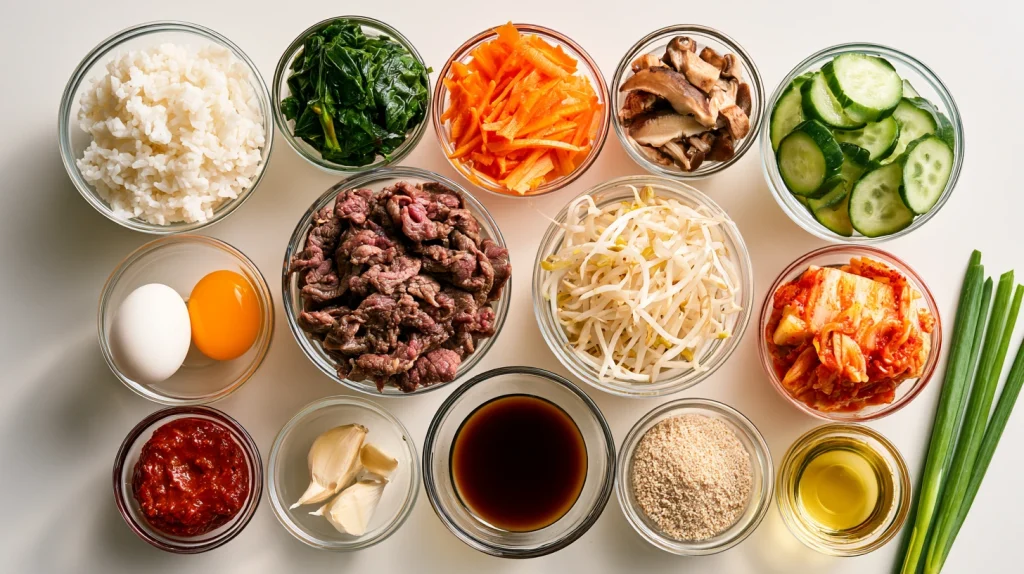
Ingredients
For the Rice
For the Beef
For the Vegetables
For the Bibimbap Sauce
For Assembly
Substitution Notes
Step-by-Step Instructions

Step 1: Cook the Rice and Marinate the Beef
Cook the short grain rice according to the package directions until it is tender and slightly sticky. Once cooked, keep it covered to stay warm. While the rice cooks, combine the soy sauce, sesame oil, brown sugar, garlic, ginger, and sesame seeds in a bowl. Add the thinly sliced beef, mix thoroughly so every piece is coated, and let it marinate for at least 20 minutes. This process helps create the rich flavor expected from a quality Bibimbap Meat Recipe while allowing the meat to remain tender during cooking.
Step 2: Prepare the Vegetables
Bring a pot of water to a boil and blanch the spinach and bean sprouts separately for about one minute each before transferring them to ice water to preserve their color. Drain well and gently squeeze out excess moisture. Season them lightly with sesame oil, garlic, and a pinch of salt. In separate skillets or one at a time, sauté the carrots, zucchini, and mushrooms until they are tender but still slightly crisp. Cooking each vegetable individually keeps their flavors clean and gives the finished bowl the colorful appearance expected from a Bibimbap Authentic presentation.
Step 3: Cook the Beef and Prepare the Sauce
Heat a skillet over medium-high heat and add the vegetable oil. Cook the marinated beef for about 3 to 5 minutes, stirring frequently until browned and fully cooked. Remove it from the pan and keep warm. In a small bowl, whisk together the gochujang, sesame oil, rice vinegar, honey, soy sauce, garlic, and sesame seeds until smooth. This balanced sauce delivers the signature flavor found in a Bibimbap Recipe Korean Authentic while allowing you to adjust the spice level for a milder or Spicy Korean Bibimbap Recipe.
Step 4: Fry the Eggs and Assemble the Bowls
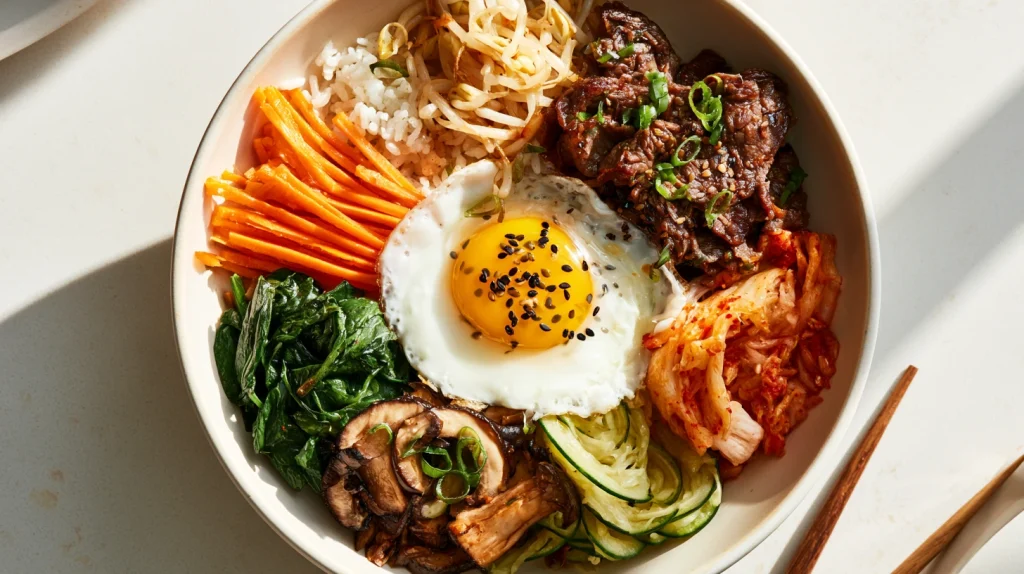
Cook the eggs in a lightly oiled skillet until the whites are fully set while keeping the yolks soft. Divide the warm rice among four serving bowls. Arrange the beef, spinach, carrots, zucchini, bean sprouts, and mushrooms in separate sections over the rice, creating a colorful circular pattern. Place one fried egg in the center of each bowl and sprinkle with sliced green onions, toasted sesame seeds, and roasted seaweed if using. Careful arrangement preserves the traditional presentation that makes every Traditional Bibimbap Recipe visually appealing.
Step 5: Finish and Serve
Drizzle each bowl with the prepared bibimbap sauce or serve it on the side so everyone can adjust the amount to their preference. Just before eating, mix the rice, vegetables, beef, egg, and sauce together until every ingredient is evenly coated. This simple final step combines the flavors and textures into one satisfying meal that reflects a Traditional Korean Bibimbap Recipe while remaining approachable enough to become your favorite Easy Korean Bibimbap or Bimbimbop Recipe Easy for everyday cooking.
How to Serve
Bibimbap is best served immediately while the rice is hot and the vegetables are still fresh and vibrant. The contrast between warm rice, tender beef, crisp vegetables, and a silky egg yolk is what makes this dish so enjoyable. Serve each bowl with the toppings neatly arranged instead of mixing everything together. This traditional presentation allows everyone to appreciate each ingredient before combining the flavors.
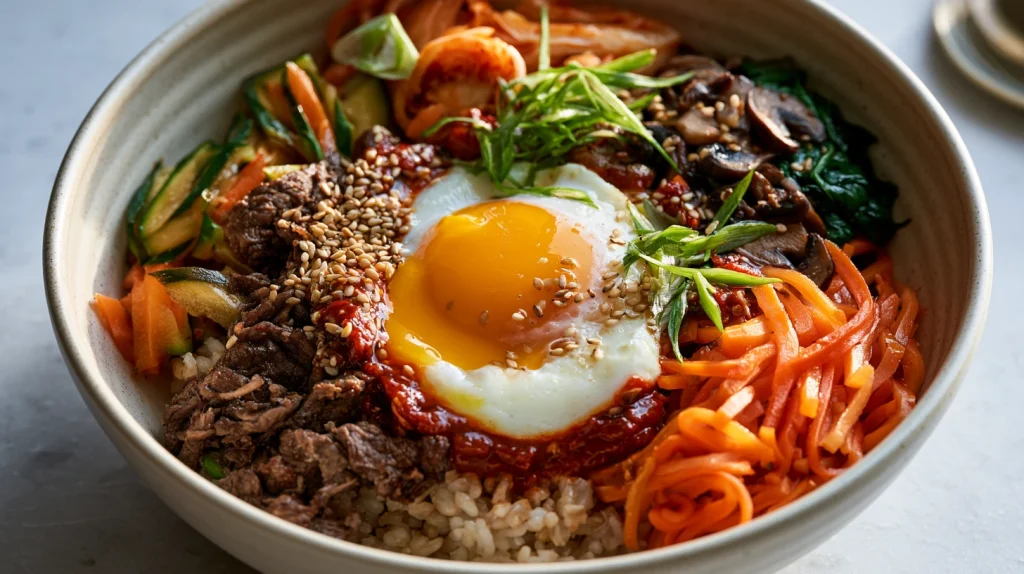
Place a small bowl of extra bibimbap sauce on the table so each person can adjust the spice level to their preference. Some people enjoy a mild flavor, while others prefer a generous amount of sauce for a Spicy Korean Bibimbap Recipe.
For an authentic Korean meal, serve bibimbap with a few classic side dishes.
For an elegant presentation, use wide ceramic bowls that allow each topping to be displayed separately. Finish with toasted sesame seeds, sliced green onions, and a few strips of roasted seaweed for extra color and flavor.
Additional Tips
Recipe Variations
Freezing and Storage
Nutritional Information
Approximate values per serving
Final Words
This bibimbap recipe is a perfect example of how simple ingredients can be transformed into a beautiful, balanced, and satisfying meal. Every component has its own purpose, from the fluffy rice and tender marinated beef to the colorful vegetables, rich egg, and bold gochujang sauce. Together, they create a dish that is comforting, nutritious, and full of authentic Korean flavor.
Once you understand the basic cooking method, preparing Bibimbap Authentic at home becomes surprisingly easy. You can customize the vegetables, protein, and spice level to suit your family’s preferences while still preserving the traditional character of the dish. Whether you are making a Traditional Bibimbap Recipe for a special dinner, an Easy Korean Bibimbap for a busy weeknight, or experimenting with your own Bibambap Recipe variations, this recipe provides a dependable foundation. Keep it bookmarked because it is one of those meals that never becomes boring and always delivers impressive results.
FAQs

Bibimbap Recipe – Easy Authentic Korean Bibimbap
Course: Dinner Recipes4
servings35
minutes25
minutes645
kcalIngredients
- For the Rice
2 cups short grain Korean rice
2½ cups water
- For the Beef
12 ounces beef sirloin, thinly sliced
2 tablespoons soy sauce
1 tablespoon sesame oil
1 tablespoon brown sugar
2 garlic cloves, minced
1 teaspoon grated fresh ginger
1 teaspoon toasted sesame seeds
1 teaspoon vegetable oil
- For the Vegetables
2 cups spinach
1 large carrot, julienned
1 zucchini, julienned
1 cup bean sprouts
5 shiitake mushrooms, sliced
2 teaspoons sesame oil
2 garlic cloves, minced
Salt to taste
- For the Bibimbap Sauce
3 tablespoons gochujang
1 tablespoon sesame oil
1 tablespoon rice vinegar
1 tablespoon honey
2 teaspoons soy sauce
1 teaspoon sesame seeds
1 garlic clove, finely minced
- For Assembly
4 eggs
2 green onions, sliced
1 teaspoon toasted sesame seeds
Roasted seaweed strips, optional
Directions
- Cook the short grain rice according to the package directions until it is tender and slightly sticky. Once cooked, keep it covered to stay warm. While the rice cooks, combine the soy sauce, sesame oil, brown sugar, garlic, ginger, and sesame seeds in a bowl. Add the thinly sliced beef, mix thoroughly so every piece is coated, and let it marinate for at least 20 minutes. This process helps create the rich flavor expected from a quality Bibimbap Meat Recipe while allowing the meat to remain tender during cooking.
- Bring a pot of water to a boil and blanch the spinach and bean sprouts separately for about one minute each before transferring them to ice water to preserve their color. Drain well and gently squeeze out excess moisture. Season them lightly with sesame oil, garlic, and a pinch of salt. In separate skillets or one at a time, sauté the carrots, zucchini, and mushrooms until they are tender but still slightly crisp. Cooking each vegetable individually keeps their flavors clean and gives the finished bowl the colorful appearance expected from a Bibimbap Authentic presentation.
- Heat a skillet over medium-high heat and add the vegetable oil. Cook the marinated beef for about 3 to 5 minutes, stirring frequently until browned and fully cooked. Remove it from the pan and keep warm. In a small bowl, whisk together the gochujang, sesame oil, rice vinegar, honey, soy sauce, garlic, and sesame seeds until smooth. This balanced sauce delivers the signature flavor found in a Bibimbap Recipe Korean Authentic while allowing you to adjust the spice level for a milder or Spicy Korean Bibimbap Recipe.
- Cook the eggs in a lightly oiled skillet until the whites are fully set while keeping the yolks soft. Divide the warm rice among four serving bowls. Arrange the beef, spinach, carrots, zucchini, bean sprouts, and mushrooms in separate sections over the rice, creating a colorful circular pattern. Place one fried egg in the center of each bowl and sprinkle with sliced green onions, toasted sesame seeds, and roasted seaweed if using. Careful arrangement preserves the traditional presentation that makes every Traditional Bibimbap Recipe visually appealing.
- Drizzle each bowl with the prepared bibimbap sauce or serve it on the side so everyone can adjust the amount to their preference. Just before eating, mix the rice, vegetables, beef, egg, and sauce together until every ingredient is evenly coated. This simple final step combines the flavors and textures into one satisfying meal that reflects a Traditional Korean Bibimbap Recipe while remaining approachable enough to become your favorite Easy Korean Bibimbap or Bimbimbop Recipe Easy for everyday cooking.