

Kimchi Bokkeumbap – Easy Korean Fried Rice Recipe
Kimchi Bokkeumbap
Kimchi bokkeumbap is one of the most loved comfort foods in Korean home cooking. This flavorful fried rice dish transforms simple ingredients into a satisfying meal by combining well-fermented kimchi, cooked rice, vegetables, and savory seasonings. Every bite offers a delicious balance of spicy, tangy, savory, and slightly smoky flavors that make this dish both comforting and exciting to eat.
One of the reasons kimchi bokkeumbap is so popular is its simplicity. It is often prepared with leftover rice and mature kimchi, making it an economical meal that reduces food waste while delivering outstanding flavor. As kimchi ferments, it develops a deeper tanginess that becomes even more delicious when stir-fried with rice and seasonings. The result is a rich and satisfying dish that can be enjoyed any time of the day.
This recipe is perfect for busy home cooks because it comes together quickly using ingredients that are commonly found in many kitchens. It can be served as a quick lunch, an easy dinner, or even a hearty breakfast topped with a fried egg. Whether you are new to Korea Food or already enjoy cooking traditional recipes, this dish is approachable enough for beginners while still offering authentic flavor.
Kimchi bokkeumbap is also incredibly versatile. While this recipe uses simple ingredients, it can easily be customized with bacon, spam, chicken, shrimp, tofu, mushrooms, or additional vegetables. It can be enjoyed on its own or served alongside grilled meats, soups, and traditional side dishes. If you are looking for flavorful Rice Side Dishes or a complete Korean Rice Bowl, this recipe is an excellent choice.
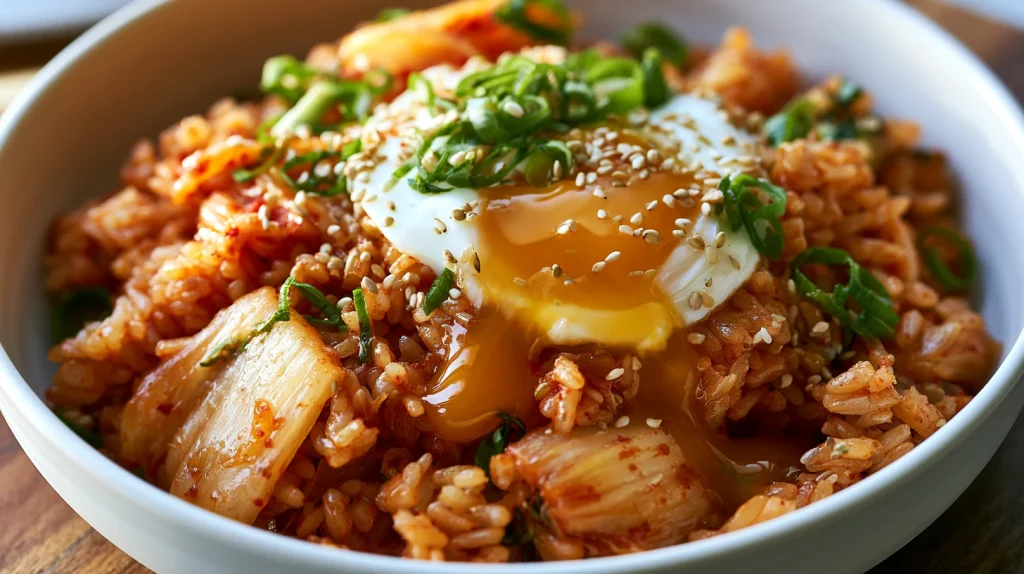
Many people discover this recipe after seeing beautiful Korean Food Pictures featuring vibrant red kimchi, fluffy rice, green onions, and perfectly cooked fried eggs. Its colorful appearance creates a beautiful Kimchi Aesthetic that is just as appealing as its flavor. Served in a bowl with sesame seeds, roasted seaweed, and fresh scallions, it becomes a restaurant-quality Kimchi Fried Rice Bowl that is easy to prepare at home.
Throughout this guide, you will learn the techniques that help create authentic kimchi bokkeumbap with balanced flavor, perfectly separated rice, and well-caramelized kimchi. Every step is explained clearly so home cooks can prepare this classic Korean Dish with confidence. Whether you are making your first batch or refining your technique, this recipe will help you create delicious homemade Korean Food Rice that tastes fresh, satisfying, and full of authentic flavor.
Why You’ll Love This Recipe
Preparation and Cooking Time, Also Serving
Ingredients
Optional Toppings
Substitution Notes
Step-by-Step Instructions

Step 1: Prepare the Ingredients
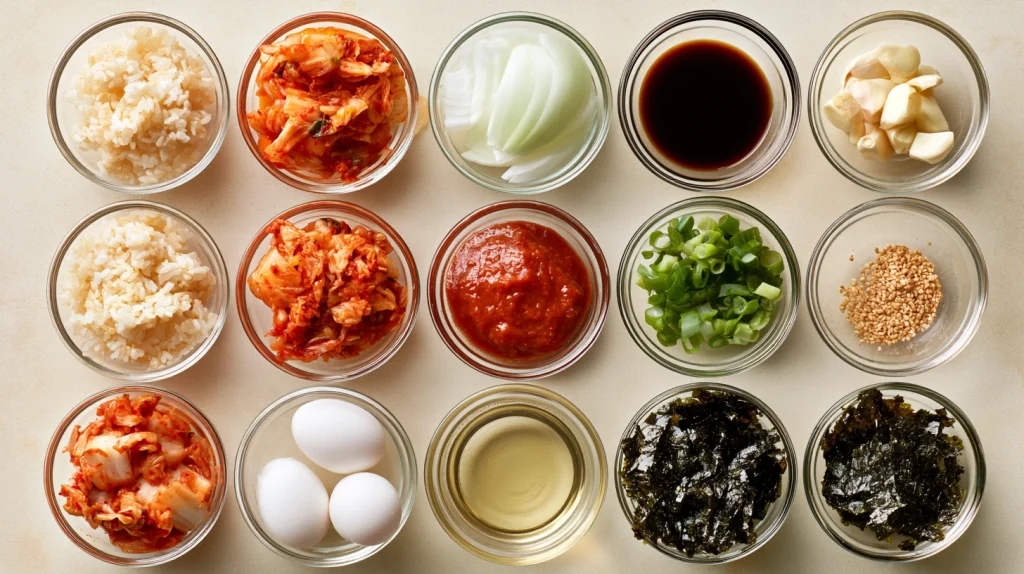
Chop the kimchi into small bite-sized pieces and reserve two tablespoons of the kimchi juice for extra flavor. Dice the bacon, finely chop the onion, mince the garlic, and slice the green onions. Separate the cold cooked rice with clean hands or a fork so the grains are loose before cooking. Having every ingredient prepared before heating the pan allows the stir-frying process to move quickly and helps prevent overcooking.
Step 2: Cook the Base Ingredients
Heat the vegetable oil in a large wok or heavy skillet over medium-high heat. Add the diced bacon and cook until lightly browned and beginning to crisp before stirring in the onion. Cook until the onion softens, then add the minced garlic and chopped kimchi. Continue cooking for several minutes, stirring frequently, until the kimchi becomes slightly caramelized and its moisture has reduced. Stir in the kimchi juice, soy sauce, gochujang, sugar, and black pepper, allowing the seasonings to coat every ingredient evenly.
Step 3: Stir-Fry the Rice
Add the cold rice to the pan and gently break apart any remaining clumps with a spatula. Fold the rice into the kimchi mixture until every grain is evenly coated with the flavorful sauce. Continue stir-frying over medium-high heat, turning the rice frequently while allowing small portions to develop light caramelization against the hot pan. This process builds deeper flavor while keeping the rice fluffy instead of mushy.
Step 4: Finish the Fried Rice
Drizzle the sesame oil over the fried rice and gently fold in most of the sliced green onions. Continue cooking for another minute until everything is evenly combined and fragrant. Taste the rice and adjust the seasoning if necessary by adding a little more soy sauce, kimchi juice, or gochujang according to your preferred balance of savory, spicy, and tangy flavors.
Step 5: Garnish and Serve
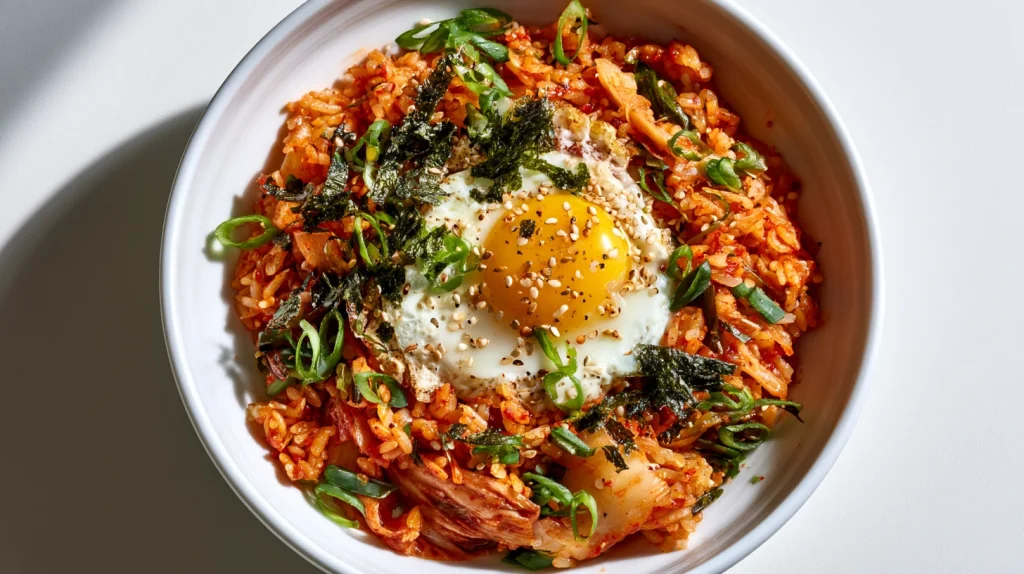
Divide the kimchi bokkeumbap among serving bowls while it is still hot and top each portion with a freshly fried egg if desired. Finish with toasted sesame seeds, roasted seaweed strips, the remaining sliced green onions, and an extra spoonful of kimchi for additional flavor and texture. Serve immediately while the rice remains hot and slightly crisp around the edges for the most authentic taste and texture.
How to Serve
Kimchi bokkeumbap is best served immediately after cooking while the rice is hot, slightly crispy, and full of flavor. Traditionally, it is presented in a shallow bowl with colorful toppings that add freshness, texture, and visual appeal. A fried egg with a soft yolk is one of the most popular additions because the rich yolk blends into the rice and creates an even creamier texture.
This dish can be enjoyed on its own or paired with a variety of Korean-inspired side dishes to create a complete meal.
Additional Tips
Recipe Variations
Freezing and Storage
Refrigerating
Freezing
Reheating
Nutritional Information
Approximate values per serving
Final Words
Kimchi bokkeumbap is a wonderful example of how a few simple ingredients can be transformed into a deeply satisfying meal. The combination of tangy kimchi, fluffy rice, savory seasonings, and aromatic sesame oil creates layers of flavor that make this recipe a favorite in Korean kitchens. Whether you enjoy it as a quick weeknight dinner, a hearty lunch, or a comforting breakfast with a fried egg, this dish is both practical and delicious.
This recipe is easy enough for beginners while offering techniques that produce authentic results every time. If you are exploring Korea Food, learning to prepare a traditional Korean Dish, or searching for flavorful Korean Food Rice recipes, this homemade kimchi bokkeumbap deserves a place in your regular meal rotation. With its vibrant appearance, delicious taste, and endless customization options, it is a recipe you will return to again and again.
FAQs

Kimchi Bokkeumbap – Easy Korean Fried Rice Recipe
Course: Dinner Recipes, Rice Recipes4
servings15
minutes15
minutes465
kcalIngredients
4 cups cold cooked short-grain rice, preferably day-old
1½ cups well-fermented kimchi, finely chopped
2 tablespoons kimchi juice
2 tablespoons vegetable oil
1 tablespoon sesame oil
4 ounces (115 g) bacon, diced
1 small onion, finely diced
2 garlic cloves, finely minced
2 green onions, sliced
1 tablespoon soy sauce
1 tablespoon gochujang
1 teaspoon sugar
½ teaspoon freshly ground black pepper
- Optional Toppings
4 fried eggs
Roasted seaweed strips
Toasted sesame seeds
Sliced green onions
Kimchi on the side
Directions
- Chop the kimchi into small bite-sized pieces and reserve two tablespoons of the kimchi juice for extra flavor. Dice the bacon, finely chop the onion, mince the garlic, and slice the green onions. Separate the cold cooked rice with clean hands or a fork so the grains are loose before cooking. Having every ingredient prepared before heating the pan allows the stir-frying process to move quickly and helps prevent overcooking.
- Heat the vegetable oil in a large wok or heavy skillet over medium-high heat. Add the diced bacon and cook until lightly browned and beginning to crisp before stirring in the onion. Cook until the onion softens, then add the minced garlic and chopped kimchi. Continue cooking for several minutes, stirring frequently, until the kimchi becomes slightly caramelized and its moisture has reduced. Stir in the kimchi juice, soy sauce, gochujang, sugar, and black pepper, allowing the seasonings to coat every ingredient evenly.
- Add the cold rice to the pan and gently break apart any remaining clumps with a spatula. Fold the rice into the kimchi mixture until every grain is evenly coated with the flavorful sauce. Continue stir-frying over medium-high heat, turning the rice frequently while allowing small portions to develop light caramelization against the hot pan. This process builds deeper flavor while keeping the rice fluffy instead of mushy.
- Drizzle the sesame oil over the fried rice and gently fold in most of the sliced green onions. Continue cooking for another minute until everything is evenly combined and fragrant. Taste the rice and adjust the seasoning if necessary by adding a little more soy sauce, kimchi juice, or gochujang according to your preferred balance of savory, spicy, and tangy flavors.
- Divide the kimchi bokkeumbap among serving bowls while it is still hot and top each portion with a freshly fried egg if desired. Finish with toasted sesame seeds, roasted seaweed strips, the remaining sliced green onions, and an extra spoonful of kimchi for additional flavor and texture. Serve immediately while the rice remains hot and slightly crisp around the edges for the most authentic taste and texture.