

Dakgangjeong Recipe – Best Crispy Korean Fried Chicken
Dakgangjeong Recipe
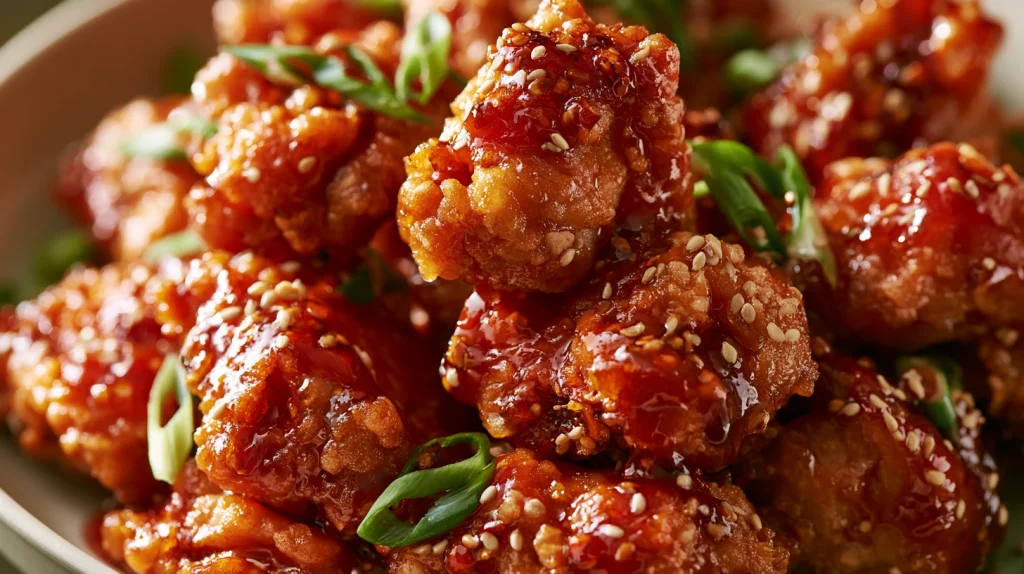
This dakgangjeong recipe makes crisp Korean fried chicken coated in a glossy sweet, spicy, and savory sauce. Each piece is fried until deeply crisp, then tossed in a sticky Dakgangjeong Sauce that clings to the chicken without completely hiding its crunchy coating. The result is one of the most satisfying Korean chicken dishes to make at home because every bite combines crunch, tender chicken, and a concentrated layer of sweet and spicy flavor.
Dakgangjeong is different from many fried chicken dishes because the sauce is designed to become sticky as it cooks. Instead of simply pouring sauce over fried chicken, the sauce is reduced until it thickens enough to coat each piece. This gives the finished chicken its characteristic shiny appearance and helps the flavor stay attached to the crispy exterior.
The chicken is traditionally cut into relatively small pieces, which gives you plenty of surface area for the coating and sauce. Small pieces also cook quickly and make the finished dish easy to eat with chopsticks, forks, or simply as finger food. Boneless chicken thighs are particularly useful because they remain juicy during frying, although chicken breast can also be used when handled carefully.
A successful dakgangjeong recipe depends on three separate stages: preparing the chicken, creating a crisp coating, and cooking the sauce to the right consistency. If the chicken is not dry before coating, the crust may become uneven. If the oil is not hot enough, the coating can absorb excess oil. If the sauce is not reduced enough, it may slide off the chicken instead of creating the glossy finish associated with Dakgangjeong.
This dish is often described as Dakgangjeong (Sweet Crispy Korean Fried Chicken), and the description is accurate. It has a pronounced sweetness, but the best version does not taste like candy. Soy sauce, garlic, ginger, rice syrup, and Korean chili paste or chili flakes provide savory depth and heat that balance the sweetness.
For home cooks who enjoy Korean Crispy Fried Chicken, this recipe is a useful starting point because the techniques can be applied to many other fried chicken preparations. The coating can be adjusted for different levels of crunch, while the sauce can be made milder or hotter depending on your preference. The sauce is especially important. A good Korean Fried Chicken Spicy Sauce should taste balanced before it ever touches the chicken. It should have sweetness at the front, savory depth underneath, a little acidity, and enough heat to keep the flavor interesting. Cooking it briefly also concentrates the ingredients and gives it the sticky texture needed for coating.
If you are looking for a Korean Fried Chicken Recipe Easy enough to prepare at home, this method keeps the process organized. The chicken can be coated while the oil heats, and the sauce can be prepared separately. Once the chicken has been fried and drained, the final tossing stage takes only a few minutes. The recipe can also be adjusted for dietary needs. Using gluten-free soy sauce or tamari and checking that the other sauces are certified gluten-free allows you to create Korean Fried Chicken Gluten Free without sacrificing the sweet and spicy character of the dish.
Why You’ll Love This Recipe
Preparation and Cooking Time, Also Serving
Ingredients
For the Dakgangjeong Sauce
For Garnishing
Substitution Notes
Step-by-Step Instructions
Step 1: Prepare and Season the Chicken
Trim excess fat from the chicken thighs and cut them into bite-sized pieces of approximately equal size so they cook evenly during frying. Place the chicken in a large bowl and add the salt, black pepper, grated ginger, minced garlic, soy sauce, and egg, then mix thoroughly until every piece is lightly seasoned and coated. Cover the bowl and refrigerate for about 30 minutes, which gives the seasonings time to penetrate the chicken while keeping the pieces firm enough to coat easily.
Step 2: Coat the Chicken
Combine the potato starch and cornstarch in a wide shallow bowl, then remove the chicken from the refrigerator and coat each piece thoroughly in the starch mixture, pressing gently so the coating adheres to the seasoned surface. Shake off loose excess starch before placing each coated piece on a clean tray, making sure the pieces do not touch too closely because moisture can cause them to stick together and weaken the crust before frying.
Step 3: Heat the Frying Oil
Pour enough neutral vegetable oil into a heavy-bottomed pot or deep fryer to allow the chicken pieces to move freely without touching the bottom, then heat the oil to approximately 350°F (175°C). Use a kitchen thermometer if available because accurate oil temperature is one of the most important factors in achieving crisp Korean fried chicken, and avoid adding too many pieces at once because a crowded pot can rapidly lower the oil temperature.
Step 4: Fry the Chicken for the First Time
Carefully lower several coated chicken pieces into the hot oil without dropping them from a height, working in small batches so the temperature remains stable. Fry for approximately 4 to 5 minutes, turning the pieces occasionally, until the coating is firm and lightly golden and the chicken is cooked through. Transfer the fried chicken to a wire rack rather than directly onto paper towels so excess oil can drain away while air continues circulating around the crust.
Step 5: Prepare the Dakgangjeong Sauce
While the chicken is frying, combine the rice syrup, ketchup, soy sauce, gochujang, brown sugar, rice vinegar, minced garlic, grated ginger, sesame oil, and water in a wide skillet or saucepan. Bring the mixture to a gentle simmer over medium-low heat and cook for several minutes, stirring frequently, until it becomes slightly thicker and glossy. Do not reduce it too aggressively because the sauce will continue thickening when it cools and should remain fluid enough to coat the chicken evenly.
Step 6: Double Fry the Chicken
Allow the first batch of fried chicken to rest for several minutes while the oil returns to about 375°F (190°C), then carefully return the chicken to the hotter oil and fry for another 1 to 2 minutes until the coating becomes deeper golden, dry, and noticeably crisp. The second fry removes additional surface moisture from the crust, creating the characteristic crunch that allows the chicken to stand up to the sticky sauce without becoming immediately soft.
Step 7: Coat and Finish the Chicken
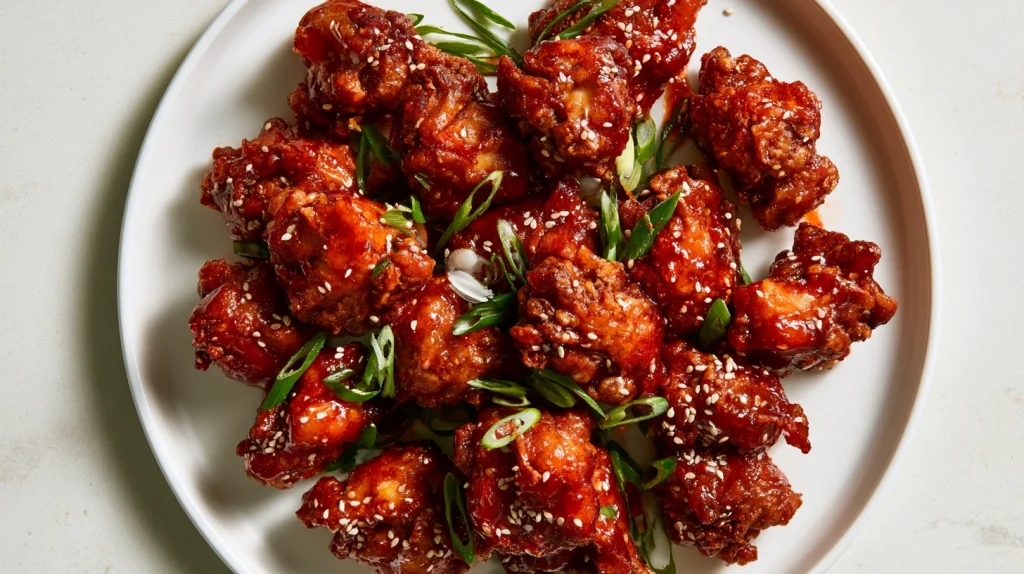
Transfer the double-fried chicken directly into the warm sauce and toss quickly with tongs or a spatula until each piece is lightly and evenly coated, keeping the heat low so the sauce remains glossy rather than becoming overly thick. Once coated, immediately transfer the chicken to a serving platter and finish with roasted sesame seeds, sliced green onions, and optional chopped peanuts, then serve while the crust is still crisp and the sauce is warm.
How to Serve
Dakgangjeong is best served immediately after the chicken has been coated with the warm sauce. The contrast between the crisp chicken and sticky glaze is strongest during the first few minutes, so avoid covering the finished chicken tightly before serving because trapped steam can soften the crust. Arrange the pieces in a single layer on a wide platter and sprinkle sesame seeds and green onions over the top for a clean presentation.
This Korean fried chicken works particularly well as part of a shared meal. The sweet and spicy sauce pairs naturally with plain rice, fresh vegetables, and lightly seasoned side dishes that allow the chicken to remain the main flavor.
For a complete Korean-inspired dinner, serve the chicken with rice, quick pickled vegetables, and a simple soup. The combination of sweet, spicy, salty, and refreshing elements keeps the meal balanced without competing with the Dakgangjeong Sauce.
Additional Tips
Recipe Variations
Freezing and Storage
Refrigerating
Freezing
Reheating
Nutritional Information
Approximate values per serving
These values are estimates and can vary depending on the chicken cut, frying oil, starch, sauces, and serving size.
Final Words
A good dakgangjeong recipe is all about contrast. The chicken should be tender and juicy inside, the coating should be dry and crisp, and the sauce should be glossy, sticky, sweet, spicy, and savory without becoming overwhelmingly heavy. When these elements are handled separately and brought together at the end, the result is a Korean fried chicken dish that tastes remarkably fresh and satisfying. The double-frying method is the technique that makes the biggest difference. The first fry cooks the chicken and establishes the crust, while the second fry removes additional moisture and firms the coating. This gives the chicken enough structure to hold the Dakgangjeong Sauce without immediately becoming soggy.
The sauce deserves the same attention. Rather than simply mixing ingredients and pouring them over the chicken, simmer the sauce briefly until it becomes glossy and slightly thick. This concentrates the flavors and allows the sauce to cling to the chicken. Always remember that the sauce will thicken further as it cools, so it should still be fluid when you toss the chicken. This recipe is an excellent introduction to Korean Crispy Fried Chicken because it teaches techniques that can be applied to other fried chicken dishes. You can adjust the sweetness, spice level, coating, and garnishes to suit your preferences while maintaining the basic method.
If you are searching for a Korean Fried Chicken Recipe Easy enough for a home kitchen, this version provides a clear approach without sacrificing texture or flavor. It can become a party appetizer, a weekend dinner, or part of a larger Korean-inspired meal. With gluten-free substitutions, it can also be adapted into Korean Fried Chicken Gluten Free without losing its signature crisp coating and sweet-spicy glaze.
FAQs

Dakgangjeong Recipe – Best Crispy Korean Fried Chicken
Course: Dinner Recipes4
servings25
minutes30
minutes610
kcalIngredients
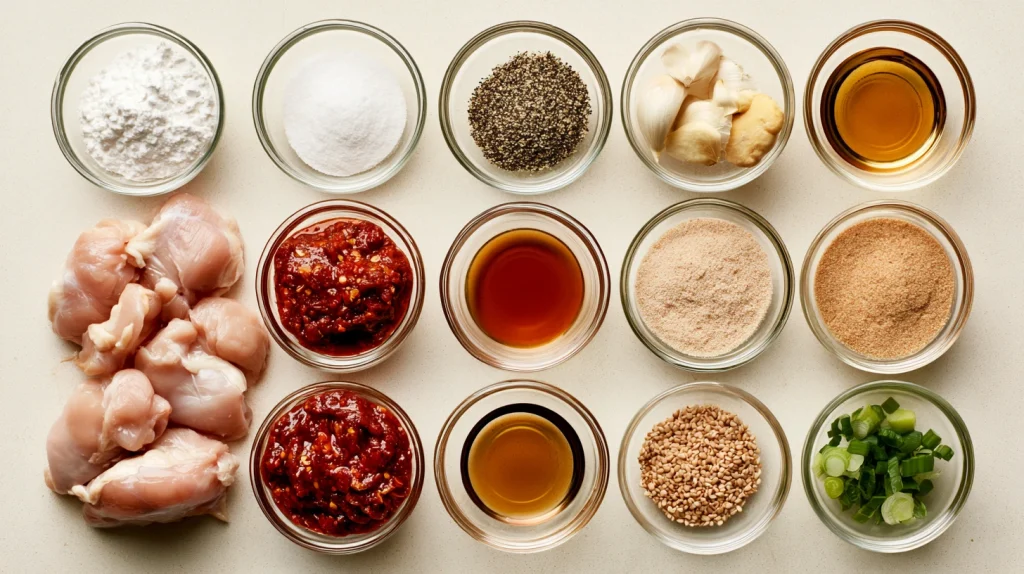
2 pounds (900 g) boneless, skinless chicken thighs
1 teaspoon fine salt
½ teaspoon black pepper
1 tablespoon grated fresh ginger
2 cloves garlic, finely minced
1 tablespoon soy sauce
1 large egg
1 cup potato starch
½ cup cornstarch
Vegetable oil, for deep frying
- For the Dakgangjeong Sauce
⅓ cup Korean rice syrup or corn syrup
¼ cup ketchup
2 tablespoons soy sauce
2 tablespoons gochujang
2 tablespoons brown sugar
1 tablespoon rice vinegar
2 cloves garlic, finely minced
1 teaspoon grated fresh ginger
1 teaspoon toasted sesame oil
2 tablespoons water
- For Garnishing
2 tablespoons roasted sesame seeds
2 green onions, thinly sliced
1 tablespoon finely chopped peanuts, optional
Directions
- Trim excess fat from the chicken thighs and cut them into bite-sized pieces of approximately equal size so they cook evenly during frying. Place the chicken in a large bowl and add the salt, black pepper, grated ginger, minced garlic, soy sauce, and egg, then mix thoroughly until every piece is lightly seasoned and coated. Cover the bowl and refrigerate for about 30 minutes, which gives the seasonings time to penetrate the chicken while keeping the pieces firm enough to coat easily.
- Combine the potato starch and cornstarch in a wide shallow bowl, then remove the chicken from the refrigerator and coat each piece thoroughly in the starch mixture, pressing gently so the coating adheres to the seasoned surface. Shake off loose excess starch before placing each coated piece on a clean tray, making sure the pieces do not touch too closely because moisture can cause them to stick together and weaken the crust before frying.
- Pour enough neutral vegetable oil into a heavy-bottomed pot or deep fryer to allow the chicken pieces to move freely without touching the bottom, then heat the oil to approximately 350°F (175°C). Use a kitchen thermometer if available because accurate oil temperature is one of the most important factors in achieving crisp Korean fried chicken, and avoid adding too many pieces at once because a crowded pot can rapidly lower the oil temperature.
- Carefully lower several coated chicken pieces into the hot oil without dropping them from a height, working in small batches so the temperature remains stable. Fry for approximately 4 to 5 minutes, turning the pieces occasionally, until the coating is firm and lightly golden and the chicken is cooked through. Transfer the fried chicken to a wire rack rather than directly onto paper towels so excess oil can drain away while air continues circulating around the crust.
- While the chicken is frying, combine the rice syrup, ketchup, soy sauce, gochujang, brown sugar, rice vinegar, minced garlic, grated ginger, sesame oil, and water in a wide skillet or saucepan. Bring the mixture to a gentle simmer over medium-low heat and cook for several minutes, stirring frequently, until it becomes slightly thicker and glossy. Do not reduce it too aggressively because the sauce will continue thickening when it cools and should remain fluid enough to coat the chicken evenly.
- Allow the first batch of fried chicken to rest for several minutes while the oil returns to about 375°F (190°C), then carefully return the chicken to the hotter oil and fry for another 1 to 2 minutes until the coating becomes deeper golden, dry, and noticeably crisp. The second fry removes additional surface moisture from the crust, creating the characteristic crunch that allows the chicken to stand up to the sticky sauce without becoming immediately soft.
- Transfer the double-fried chicken directly into the warm sauce and toss quickly with tongs or a spatula until each piece is lightly and evenly coated, keeping the heat low so the sauce remains glossy rather than becoming overly thick. Once coated, immediately transfer the chicken to a serving platter and finish with roasted sesame seeds, sliced green onions, and optional chopped peanuts, then serve while the crust is still crisp and the sauce is warm.