

Bibim Guksu – Easy Korean Cold Spicy Noodles Recipe
Bibim Guksu
Bibim guksu is a classic Korean cold noodle dish known for its refreshing texture, spicy-sweet sauce, and simple preparation. The Korean word “bibim” refers to mixing or tossing, while “guksu” means noodles, so the name describes exactly what happens in the dish. Cooked noodles are cooled, drained thoroughly, and tossed with a bold sauce made from gochujang, gochugaru, vinegar, sesame oil, soy sauce, garlic, and a touch of sweetness.
Unlike a warm noodle dish with a heavy broth, bibim guksu is served cold or cool. That makes it especially appealing during warm weather, although it is delicious any time you want a fast and flavorful meal. The sauce provides heat and sweetness at the same time, while vinegar adds enough acidity to keep the dish bright instead of heavy.
This is one of the easiest Korean noodle dishes to prepare at home because the sauce requires no cooking. Once the noodles are boiled, the remaining work is mostly mixing. The result is a dish with restaurant-style flavor that can be prepared in a short amount of time. The noodles are an important part of the recipe. Traditional Korean somyeon, or thin wheat noodles, are commonly used because they cook quickly and have a delicate texture that works beautifully with the sauce. Once cooked, they should be rinsed thoroughly under cold water to remove excess starch and stop the cooking process.
The sauce is where you can make the dish your own. A little more gochujang gives it additional heat and body, while extra vinegar makes it sharper and more refreshing. Sesame oil contributes a nutty aroma, and sugar or another sweetener balances the heat and acidity. If you enjoy Simple Asian Noodles, this recipe is an excellent one to keep in your collection. It uses a short ingredient list but delivers a surprisingly complex flavor. It is also ideal when you need Quick Asian Noodles because the sauce can be mixed while the noodles are cooking.
Bibim guksu belongs naturally among Cold Asian Noodle Recipes because it is designed to be served cool rather than steaming hot. It also makes a useful comparison with Asian Cold Noodles from other cuisines because the Korean version relies heavily on fermented chili paste and a sweet, tangy flavor profile. Although this recipe is traditionally associated with thin noodles, you can experiment with other noodles if necessary. Some Asian Thick Noodles can work, although they will create a chewier and more substantial dish. The sauce should be adjusted slightly depending on the noodle because thicker noodles can absorb more seasoning.
For anyone searching for a Guksu Recipe that is simple enough for a weekday meal, bibim guksu is an excellent starting point. It introduces several important Korean flavors without requiring a long cooking process. You may also see the dish described as Guksu Korean or Guksu Noodles when searching for Korean noodle recipes. While guksu is a broad Korean term for noodle dishes, bibim guksu specifically refers to noodles that are mixed with a flavorful sauce rather than served primarily in broth.
Why You’ll Love This Recipe
Preparation and Cooking Time, Also Serving
Bibim guksu is particularly convenient when you need a fast lunch or dinner because most of the preparation involves mixing ingredients rather than cooking several separate components. You can prepare the sauce while the noodle water comes to a boil, then rinse the noodles and combine everything immediately.
For four servings, simply double the ingredients. If you are preparing the dish for meal planning, keep the sauce and cooked noodles separate until close to serving time. This helps prevent the noodles from absorbing too much sauce and becoming overly soft.
Ingredients
For the Noodles
For the Bibim Sauce
For the Toppings
Substitution Notes
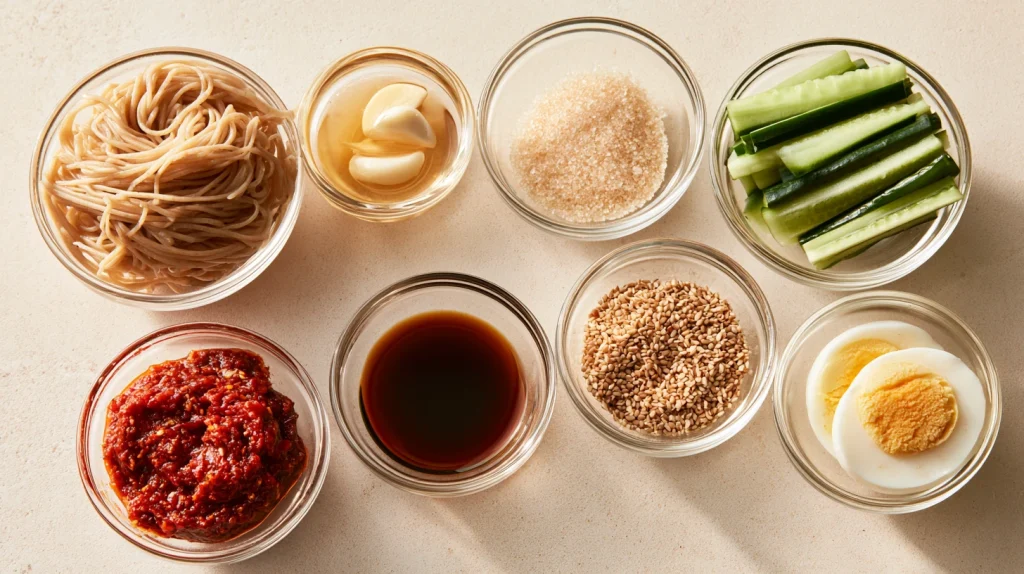
Step-by-Step Instructions

Step 1: Prepare the Bibim Sauce
Add the gochujang, soy sauce, rice vinegar, toasted sesame oil, sugar, gochugaru if using, minced garlic, and toasted sesame seeds to a small bowl, then stir thoroughly until the mixture becomes smooth and the sugar is fully dissolved. Taste the sauce and adjust it according to your preference, adding a little more vinegar for brightness, sugar for sweetness, gochujang for body and heat, or soy sauce for additional savory flavor, then set the finished sauce aside while you prepare the noodles.
Step 2: Boil the Noodles
Bring approximately 6 cups of water to a strong boil in a large pot, add the salt, and carefully place the somyeon or thin wheat noodles into the water. Stir the noodles immediately and continue stirring occasionally so they do not stick together, then cook according to the package directions, usually for only a few minutes, until they are tender but still slightly firm.
Step 3: Rinse the Noodles Thoroughly
Drain the cooked noodles immediately in a colander and rinse them under cold running water while gently tossing them with your hands or tongs to remove excess starch and stop the cooking process. Continue rinsing until the noodles feel cool and clean rather than sticky, then drain them thoroughly and gently press or shake the noodles to remove as much excess water as possible because water left on the noodles will dilute the sauce.
Step 4: Combine the Noodles and Sauce
Transfer the thoroughly drained noodles to a large mixing bowl and pour the prepared bibim sauce over them, then use clean tongs or your hands to gently toss the noodles until the sauce is evenly distributed from top to bottom. Continue mixing for about 30 to 60 seconds, making sure the sauce reaches all the noodles while avoiding excessive handling that could break the delicate strands.
Step 5: Prepare and Add the Toppings
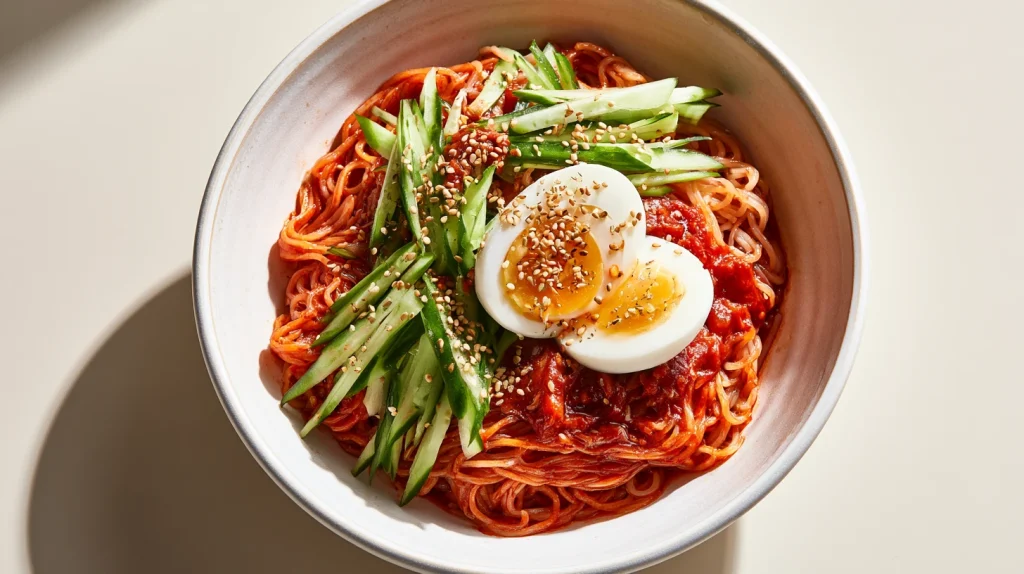
Arrange the seasoned noodles in two serving bowls, then add the thinly sliced cucumber, halved boiled egg, and sliced green onions on top. Sprinkle each bowl with toasted sesame seeds and add a small drizzle of sesame oil if desired, keeping the toppings arranged neatly so the contrasting colors and textures remain visible.
Step 6: Chill and Serve
Serve the bibim guksu immediately while the noodles are cool, or refrigerate the assembled bowls for approximately 10 to 15 minutes if you prefer them more chilled. Before eating, give the noodles one final gentle toss with chopsticks or tongs so the sauce and toppings are distributed evenly, then serve while the noodles still have a springy texture and the cucumber remains crisp.
How to Serve
Bibim guksu is traditionally served cold or cool, making it especially refreshing when the weather is warm. The noodles should have a springy texture, while the sauce should cling evenly to each strand without pooling heavily at the bottom of the bowl.
Additional Tips
Recipe Variations
Freezing and Storage
Nutritional Information
The following values are approximate and based on two servings using the listed ingredients. Actual nutrition will vary depending on the brands and exact quantities used.
The sodium level can vary considerably depending on the soy sauce and gochujang used. Using a reduced-sodium soy sauce can lower the overall sodium content. Adding more vegetables can increase fiber and make each serving more filling without significantly changing the cooking method.
Final Words
Bibim guksu is one of those recipes that proves a fast meal can still have layers of flavor. The noodles are simple, but the combination of gochujang, vinegar, sesame oil, garlic, soy sauce, and sweetness creates a sauce that is spicy, tangy, savory, and slightly sweet all at once. The technique is straightforward. Cook the noodles carefully, rinse them thoroughly in cold water, drain them well, and mix them with a properly balanced sauce. Those steps are simple, but they make a major difference in the final texture.
If you are looking for Simple Asian Noodles that can be prepared quickly, this is an excellent recipe to add to your collection. It is also one of the most practical Quick Asian Noodles for busy lunches because the sauce requires no cooking. The cold serving style makes it especially useful among Cold Asian Noodle Recipes and Asian Cold Noodles. It provides a refreshing alternative to warm noodle soups while still delivering a satisfying combination of noodles, vegetables, protein, and bold seasoning.
For anyone exploring Korean food, bibim guksu is also a helpful introduction to Guksu Korean dishes. Guksu is a broad category of Korean noodle preparations, and learning how to make a simple sauce-based version gives you a foundation for experimenting with other Korean noodle dishes. The recipe is also flexible enough to suit different preferences. You can make it vegetarian with tofu and vegetables, add chicken or shrimp for protein, increase the spice level, or use different noodles when traditional somyeon is unavailable.
While it is different from a Quick Asian Noodle Soup because it is served without broth, the same basic idea of combining noodles with a flavorful Korean-inspired sauce makes it a useful addition to a collection of fast Asian meals. Whether you are making a quick lunch, preparing a light summer dinner, or simply craving something spicy and refreshing, bibim guksu is worth learning. Once you have the basic sauce balanced to your taste, the recipe becomes extremely easy to repeat and customize.
FAQs

Bibim Guksu – Easy Korean Cold Spicy Noodles Recipe
Course: Noodle Recipes2
servings10
minutes5
minutes430
kcalIngredients
- For the Noodles
7 ounces Korean somyeon or thin wheat noodles
6 cups water for boiling
1 tablespoon salt for the cooking water
- For the Bibim Sauce
2 tablespoons gochujang
1 tablespoon soy sauce
1 1/2 tablespoons rice vinegar
1 tablespoon toasted sesame oil
1 tablespoon granulated sugar
1 tablespoon gochugaru, optional for extra heat
2 cloves garlic, finely minced
1 teaspoon toasted sesame seeds
- For the Toppings
1/2 Korean cucumber or 1/2 English cucumber, thinly sliced
1 boiled egg, halved
2 tablespoons sliced green onions
1 teaspoon toasted sesame seeds
1 teaspoon sesame oil, optional for finishing
Directions
- Add the gochujang, soy sauce, rice vinegar, toasted sesame oil, sugar, gochugaru if using, minced garlic, and toasted sesame seeds to a small bowl, then stir thoroughly until the mixture becomes smooth and the sugar is fully dissolved. Taste the sauce and adjust it according to your preference, adding a little more vinegar for brightness, sugar for sweetness, gochujang for body and heat, or soy sauce for additional savory flavor, then set the finished sauce aside while you prepare the noodles.
- Bring approximately 6 cups of water to a strong boil in a large pot, add the salt, and carefully place the somyeon or thin wheat noodles into the water. Stir the noodles immediately and continue stirring occasionally so they do not stick together, then cook according to the package directions, usually for only a few minutes, until they are tender but still slightly firm.
- Drain the cooked noodles immediately in a colander and rinse them under cold running water while gently tossing them with your hands or tongs to remove excess starch and stop the cooking process. Continue rinsing until the noodles feel cool and clean rather than sticky, then drain them thoroughly and gently press or shake the noodles to remove as much excess water as possible because water left on the noodles will dilute the sauce.
- Transfer the thoroughly drained noodles to a large mixing bowl and pour the prepared bibim sauce over them, then use clean tongs or your hands to gently toss the noodles until the sauce is evenly distributed from top to bottom. Continue mixing for about 30 to 60 seconds, making sure the sauce reaches all the noodles while avoiding excessive handling that could break the delicate strands.
- Arrange the seasoned noodles in two serving bowls, then add the thinly sliced cucumber, halved boiled egg, and sliced green onions on top. Sprinkle each bowl with toasted sesame seeds and add a small drizzle of sesame oil if desired, keeping the toppings arranged neatly so the contrasting colors and textures remain visible.
- Serve the bibim guksu immediately while the noodles are cool, or refrigerate the assembled bowls for approximately 10 to 15 minutes if you prefer them more chilled. Before eating, give the noodles one final gentle toss with chopsticks or tongs so the sauce and toppings are distributed evenly, then serve while the noodles still have a springy texture and the cucumber remains crisp.