

Ensenada Fish Tacos Recipe- Easy, Crispy & Flavorful
Ensenada Fish Tacos Recipe
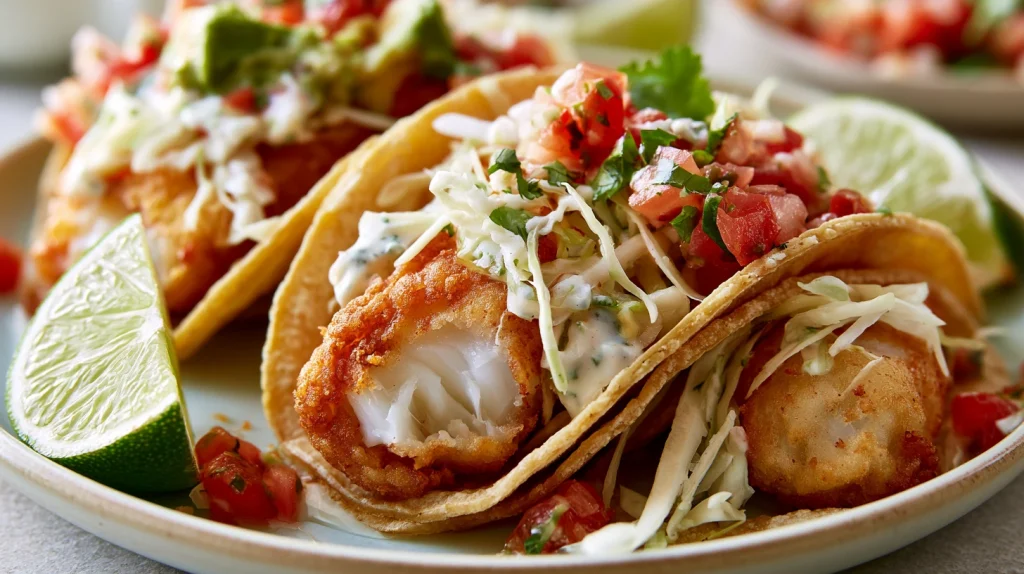
An ensenada fish tacos recipe is built around one simple idea: crisp fried fish paired with fresh, bright toppings. Originating from Ensenada in Baja California, these tacos are loved for their contrast of textures and flavors. The fish is tender and flaky inside with a light, golden crust outside, while shredded cabbage, creamy sauce, lime, and salsa add freshness, acidity, and just enough heat.
The beauty of these tacos is that they do not require complicated cooking. A few carefully prepared components can produce a restaurant-quality meal at home. The most important part is treating the fish properly. It needs to be dry before battering, the batter needs to be light, and the frying oil needs to stay at the correct temperature. These details determine whether the finished fish is crisp and delicate or greasy and heavy.
Cod is one of the best choices for this recipe because it has mild flavor and firm, flaky flesh. However, you can use other firm white fish depending on what is available. Haddock, pollock, tilapia, mahi mahi, and halibut can all produce excellent results. Flounder can also be used when handled carefully, making a good option for Flounder Fish Tacos.
The batter is particularly important. A combination of flour and cornstarch gives the fish a crisp exterior without creating a thick shell. Baking powder helps keep the coating light, while cold beer or sparkling water adds a delicate texture. The goal is a batter that coats the fish evenly and fries quickly into a golden crust.
Once the fish is cooked, it is paired with warm corn tortillas and fresh toppings. Crunchy cabbage is essential because it provides a clean texture against the fried fish. Lime adds acidity, while the creamy sauce brings richness. Pico de gallo, avocado, cilantro, and jalapeños can then be added according to taste.
This recipe is also useful if you enjoy Food Recipes Seafood because the same cooking method can be adapted to several types of fish. You can make classic tacos with cod, use flounder for a more delicate version, or experiment with different sauces and toppings. The technique remains straightforward even when the flavors change.
The best tacos are assembled immediately before serving. Crispy fish does not stay crisp for long once it comes into contact with wet toppings, so timing matters. Prepare the cabbage, sauce, salsa, tortillas, and other toppings first, then fry the fish last. This allows the hot fish to go directly into the tortillas while the crust is still crisp.
The result is a satisfying homemade taco with a combination of textures that is difficult to resist. The crisp fish provides the foundation, cabbage adds crunch, sauce contributes creaminess, and lime brings everything into balance. Once you understand this basic method, you can confidently create your own variations while keeping the character of classic Ensenada-style fish tacos.
Why You’ll Love This Recipe
Preparation and Cooking Time, Also Serving
The preparation time includes cutting and seasoning the fish, preparing the cabbage, mixing the sauce, and making the batter. The cooking time can vary slightly depending on the size of your frying pan and how many pieces of fish you cook per batch.
For the best results, prepare the sauce and toppings before heating the oil. The fish should be fried last so it can be served while the coating is hot and crisp.
Ingredients
For the Fish
For the Fish Batter
For Frying
For the Cabbage Topping
For the Fish Taco Sauce
For Serving
Substitution Notes
Step-by-Step Instructions
Step 1: Prepare and Season the Fish
Pat the fish fillets completely dry with paper towels, then cut them into evenly sized pieces approximately 3 inches long and 1 inch wide. Place the pieces on a clean plate and season them evenly with kosher salt, black pepper, garlic powder, paprika, and ground cumin. Turn each piece so the seasoning reaches all sides, then refrigerate the fish while you prepare the remaining ingredients.
Step 2: Prepare the Toppings and Sauce
Place the shredded cabbage in a bowl and toss it with lime juice, chopped cilantro, and salt, then refrigerate it until needed. In a separate bowl, combine the mayonnaise, sour cream, lime juice, hot sauce, garlic powder, smoked paprika, and salt, stirring until completely smooth. Cover the sauce and refrigerate it while you prepare the batter and heat the oil.
Step 3: Make the Fish Batter
Whisk the flour, cornstarch, baking powder, salt, black pepper, and garlic powder together in a medium bowl. In another bowl, whisk the egg with the cold beer or sparkling water, then pour the liquid mixture into the dry ingredients and stir gently until a smooth but slightly lumpy batter forms. Stop mixing as soon as the ingredients are combined because excessive mixing can make the coating heavier.
Step 4: Heat the Oil and Coat the Fish
Pour enough vegetable or canola oil into a heavy skillet or Dutch oven to reach a depth of approximately 1 1/2 to 2 inches, then heat it to 350°F using a kitchen thermometer to monitor the temperature. While the oil heats, remove the fish from the refrigerator and dip each piece into the batter, turning it gently until completely coated before allowing the excess batter to drip back into the bowl.
Step 5: Fry the Fish
Carefully place the battered fish into the 350°F oil, working in small batches so the pan does not become crowded and the oil temperature remains stable. Fry the pieces for approximately 3 to 5 minutes, turning them as needed until the coating is crisp and golden and the fish reaches an internal temperature of 145°F, then transfer the cooked fish to a wire rack positioned over a baking sheet.
Step 6: Warm the Tortillas and Assemble
Warm the corn tortillas in a dry skillet over medium heat for approximately 20 to 30 seconds per side, keeping the warmed tortillas covered so they remain flexible. Place one piece of fried fish inside each tortilla, then add shredded cabbage, creamy sauce, pico de gallo, avocado, cilantro, and a squeeze of fresh lime, adjusting the amount of each topping so the fish remains the main component.
Step 7: Serve Immediately
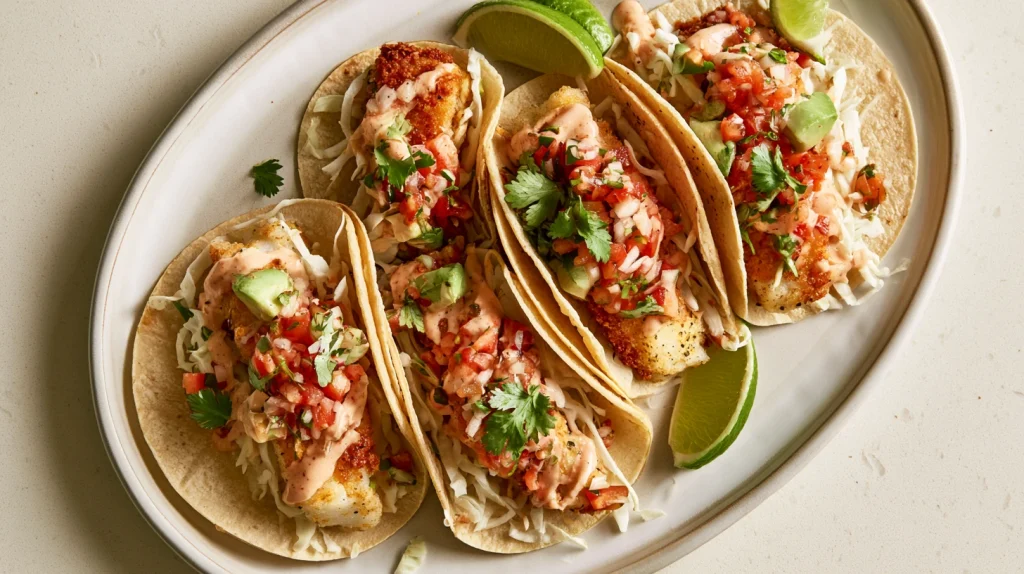
Arrange the assembled tacos on a serving platter and serve them immediately with additional lime wedges, sauce, cabbage, salsa, and optional pickled jalapeños on the side. Keep the fish uncovered until serving so steam does not soften the crisp coating, and avoid assembling the tacos too far in advance because the moisture from the toppings will gradually reduce the crunch.
How to Serve
Additional Tips
Recipe Variations
Freezing and Storage
Nutritional Information
Approximate nutritional information per serving, based on three tacos with fish, tortillas, cabbage, sauce, pico de gallo, and avocado:
These values are estimates rather than laboratory measurements. Actual nutrition will depend on the type of fish used, the amount of oil absorbed during frying, tortilla size, sauce quantity, and the toppings added to each taco.
Final Words
A well-made ensenada fish tacos recipe is all about getting the fundamentals right. You do not need an extensive ingredient list or complicated restaurant techniques. What matters is using good-quality fish, keeping the batter light, controlling the frying temperature, and preparing fresh toppings that balance the richness of the crispy coating.
The most important timing decision is to fry the fish last. Have the cabbage, sauce, salsa, tortillas, and other toppings ready before the oil reaches temperature. Once the fish comes out of the fryer, assemble the tacos and serve them immediately. This keeps the coating crisp and gives you the best possible contrast between hot fish and cool toppings.
Cod is an excellent starting point, but do not be afraid to experiment. Haddock, pollock, tilapia, mahi mahi, halibut, and flounder can all be used successfully. You can also change the character of the tacos by switching the sauce or salsa. A smoky chipotle sauce creates a richer taco, while mango salsa adds sweetness and freshness.
If you are looking for The Best Fish Tacos to prepare at home, this recipe gives you a dependable method that can be repeated and adapted. Once you master the batter and frying process, you can create everything from classic Ensenada-style tacos to spicy Bang Bang Fish Tacos and delicate Flounder Tacos.
The real value of making these tacos yourself is control. You decide how crisp the fish should be, how much sauce to use, how spicy the toppings should be, and which type of fish works best for your family. With fresh ingredients and a little attention to frying temperature, a simple homemade taco dinner can feel genuinely special.
FAQs

Ensenada Fish Tacos Recipe- Easy, Crispy & Flavorful
Course: Appetizers4
servings25
minutes20
minutes650
kcalIngredients
- For the Fish
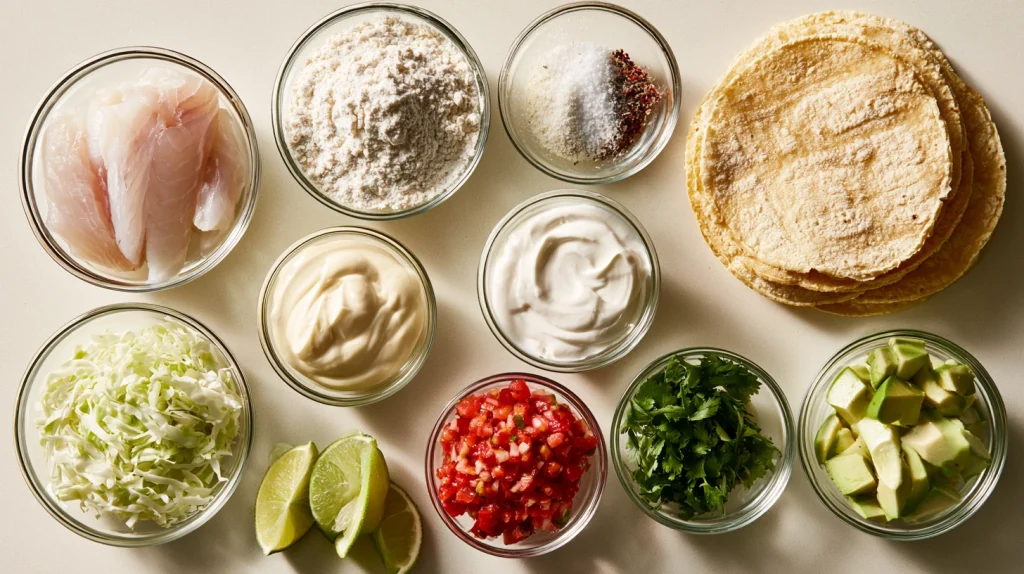
1 1/2 pounds firm white fish fillets, preferably cod
1/2 teaspoon kosher salt
1/4 teaspoon black pepper
1/2 teaspoon garlic powder
1/2 teaspoon paprika
1/4 teaspoon ground cumin
- For the Fish Batter
1 cup all-purpose flour
1/3 cup cornstarch
1 teaspoon baking powder
1/2 teaspoon kosher salt
1/4 teaspoon black pepper
1/2 teaspoon garlic powder
1 large egg
1 cup cold Mexican-style lager or sparkling water
- For Frying
6 to 8 cups vegetable oil or canola oil, or enough to create a 1 1/2 to 2-inch depth in the pan
- For the Cabbage Topping
3 cups finely shredded green cabbage
2 tablespoons fresh lime juice
1 tablespoon fresh cilantro, finely chopped
1/4 teaspoon salt
- For the Fish Taco Sauce
1/2 cup mayonnaise
1/3 cup sour cream
2 tablespoons fresh lime juice
1 teaspoon hot sauce
1/2 teaspoon garlic powder
1/4 teaspoon smoked paprika
1/4 teaspoon salt
- For Serving
12 small corn tortillas
1/2 cup pico de gallo
1 medium avocado, sliced
1 lime, cut into wedges
2 tablespoons fresh cilantro, chopped
1/4 cup pickled jalapeños, optional
Directions
- Pat the fish fillets completely dry with paper towels, then cut them into evenly sized pieces approximately 3 inches long and 1 inch wide. Place the pieces on a clean plate and season them evenly with kosher salt, black pepper, garlic powder, paprika, and ground cumin. Turn each piece so the seasoning reaches all sides, then refrigerate the fish while you prepare the remaining ingredients.
- Place the shredded cabbage in a bowl and toss it with lime juice, chopped cilantro, and salt, then refrigerate it until needed. In a separate bowl, combine the mayonnaise, sour cream, lime juice, hot sauce, garlic powder, smoked paprika, and salt, stirring until completely smooth. Cover the sauce and refrigerate it while you prepare the batter and heat the oil.
- Whisk the flour, cornstarch, baking powder, salt, black pepper, and garlic powder together in a medium bowl. In another bowl, whisk the egg with the cold beer or sparkling water, then pour the liquid mixture into the dry ingredients and stir gently until a smooth but slightly lumpy batter forms. Stop mixing as soon as the ingredients are combined because excessive mixing can make the coating heavier.
- Pour enough vegetable or canola oil into a heavy skillet or Dutch oven to reach a depth of approximately 1 1/2 to 2 inches, then heat it to 350°F using a kitchen thermometer to monitor the temperature. While the oil heats, remove the fish from the refrigerator and dip each piece into the batter, turning it gently until completely coated before allowing the excess batter to drip back into the bowl.
- Carefully place the battered fish into the 350°F oil, working in small batches so the pan does not become crowded and the oil temperature remains stable. Fry the pieces for approximately 3 to 5 minutes, turning them as needed until the coating is crisp and golden and the fish reaches an internal temperature of 145°F, then transfer the cooked fish to a wire rack positioned over a baking sheet.
- Warm the corn tortillas in a dry skillet over medium heat for approximately 20 to 30 seconds per side, keeping the warmed tortillas covered so they remain flexible. Place one piece of fried fish inside each tortilla, then add shredded cabbage, creamy sauce, pico de gallo, avocado, cilantro, and a squeeze of fresh lime, adjusting the amount of each topping so the fish remains the main component.
- Arrange the assembled tacos on a serving platter and serve them immediately with additional lime wedges, sauce, cabbage, salsa, and optional pickled jalapeños on the side. Keep the fish uncovered until serving so steam does not soften the crisp coating, and avoid assembling the tacos too far in advance because the moisture from the toppings will gradually reduce the crunch.