

Kimchi Recipe – Easy Korean Fermented Cabbage
Kimchi
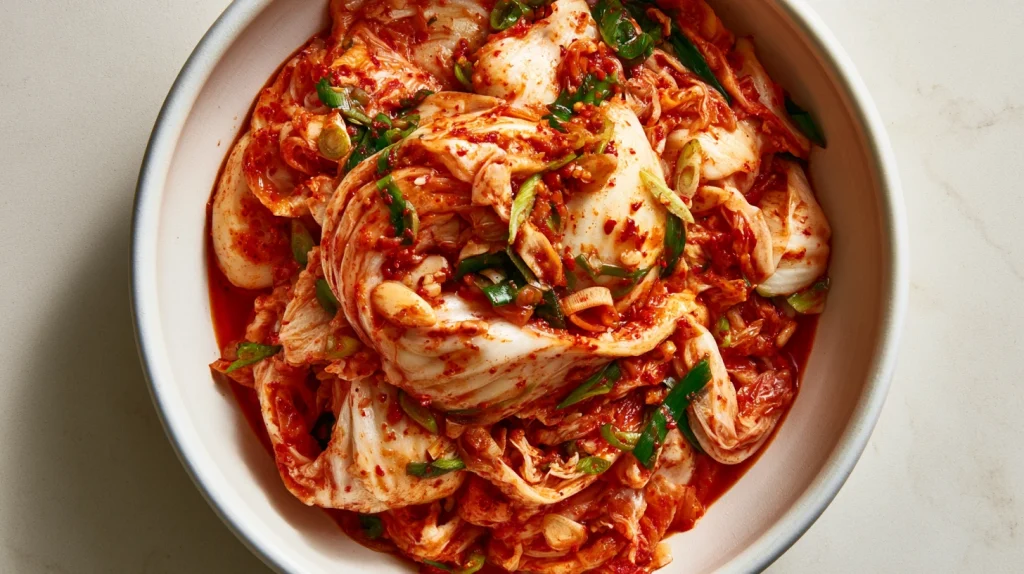
Kimchi is one of Korea’s most recognizable foods, known for its bold combination of fermented vegetables, chili, garlic, ginger, and savory seasoning. Although there are many regional and seasonal varieties, cabbage kimchi is one of the most familiar versions. It combines crisp napa cabbage with a deeply seasoned paste that develops a tangy, spicy, savory flavor as it ferments.
A good kimchi has several textures and flavors working together. The cabbage should remain pleasantly crisp while becoming tender enough to eat comfortably. The seasoning should be spicy but balanced, with garlic, ginger, Korean chili flakes, and fermented ingredients creating depth rather than simply heat. A slight sweetness helps round everything out, while fermentation gives the finished kimchi its characteristic tang.
Making kimchi at home is much more approachable than many people expect. The process involves salting the cabbage, preparing a seasoning paste, coating the vegetables, packing everything into a clean container, and allowing fermentation to develop. Each stage has a specific purpose, but none requires advanced cooking skills.
The most important ingredient is napa cabbage. Its layered leaves absorb the seasoning well, while the natural structure of the cabbage allows it to remain crunchy during fermentation. Proper salting is equally important because it draws out excess water, seasons the cabbage throughout, and creates the texture needed for successful fermentation.
This Authentic Kimchi Recipe uses a traditional combination of Korean chili flakes, garlic, ginger, fish sauce, and a small amount of sweetness. Depending on your preferences, you can make the finished kimchi more or less spicy, add additional vegetables, or adjust the seasoning after the cabbage has been prepared.
Kimchi is more than a side dish. It can be served with steamed rice, grilled meats, noodles, fried eggs, dumplings, soups, sandwiches, and rice bowls. Its sharp, fermented flavor adds contrast to rich foods and can make simple meals taste much more complete.
If you have always wondered How To Make Kimchi, the key is to approach the recipe in stages rather than rushing the process. The cabbage needs enough time to salt properly, the seasoning paste needs to be evenly distributed, and the fermentation needs to be monitored according to the temperature of your kitchen.
The fermentation stage is where the character of the kimchi develops. Freshly mixed kimchi has a bright, spicy, strongly seasoned taste. As it sits, natural fermentation gradually produces acidity and a more complex flavor. Some people prefer young kimchi because the cabbage is especially crisp, while others enjoy it after several days when the flavor has become more pronounced.
This recipe is also useful if you are looking for an Easy Kimchi Recipe without sacrificing the essential characteristics of Korean-style cabbage kimchi. The ingredients are widely available in many supermarkets and Korean grocery stores, and the process can be completed in a home kitchen with basic equipment.
Whether you are learning How To Make Kimchee for the first time or looking for a reliable homemade version, understanding the purpose of each step will help you achieve better results. Once you become comfortable with the basic technique, you can experiment with different vegetables, spice levels, and fermentation times.
Why You’ll Love This Recipe
Preparation and Cooking Time, Also Serving
The active preparation is relatively short, but kimchi needs time to ferment. The exact fermentation period depends on the temperature of your kitchen and how sour you want the finished kimchi to become.
At a warmer room temperature, fermentation develops more quickly. In a cooler kitchen, the process may take longer. Once the kimchi reaches the level of acidity you prefer, transfer it to the refrigerator to slow the fermentation process.
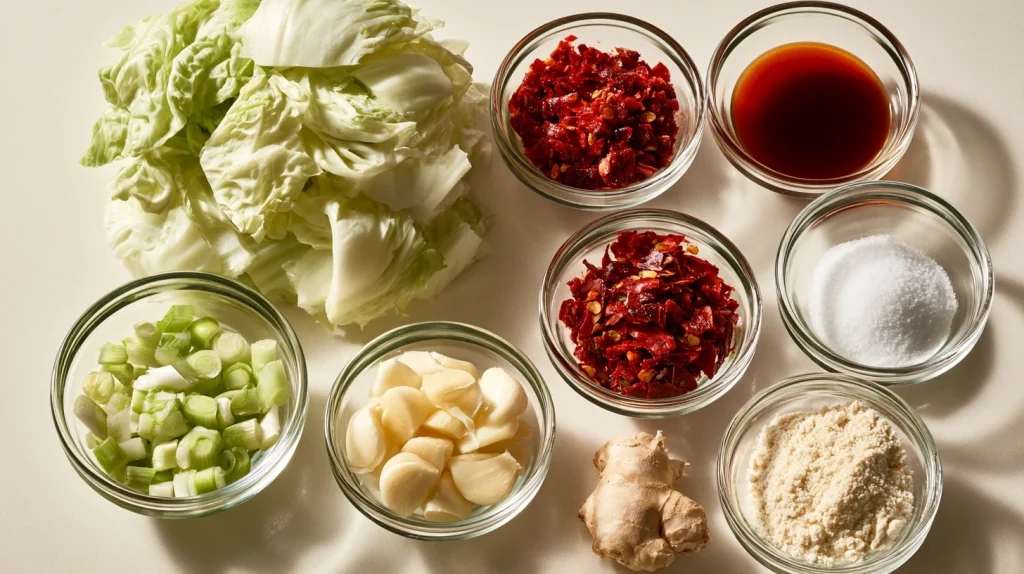
Ingredients
For the Cabbage
For the Kimchi Seasoning Paste
For the Vegetables
Optional Finishing Ingredients
Substitution Notes
Step-by-Step Instructions

Step 1: Prepare the Napa Cabbage
Remove any damaged outer leaves from the napa cabbage, then cut the cabbage lengthwise into quarters and remove the tough core from each section. Cut the cabbage into approximately 2-inch pieces, place them in a large bowl, and separate the leaves gently with your hands so the salt can reach between the layers.
Step 2: Salt the Cabbage
Sprinkle the kosher salt evenly over the cabbage while tossing the pieces gently with your hands to distribute the salt throughout the leaves, then pour the cold water over the cabbage and continue mixing until everything is evenly coated. Allow the cabbage to sit for approximately 1 1/2 to 2 hours, turning and mixing it every 30 minutes so the salt draws moisture from the leaves evenly without leaving some sections excessively salty.
Step 3: Rinse and Drain the Cabbage
Transfer the salted cabbage to a large colander and rinse it thoroughly under cold running water two or three times to remove excess salt from the surface. Taste a small piece after rinsing because it should still have a mild salty flavor but should not taste overwhelmingly salty, then allow the cabbage to drain for approximately 15 to 20 minutes so excess water does not dilute the seasoning paste.
Step 4: Prepare the Kimchi Seasoning
While the cabbage drains, combine the gochugaru, fish sauce, rice vinegar, sugar, grated ginger, minced garlic, grated Asian pear, and chopped onion in a large bowl and mix until the ingredients form a thick, evenly colored paste. Let the mixture sit for several minutes so the chili flakes can absorb some of the liquid and the garlic, ginger, and fermented seasoning can begin blending together.
Step 5: Add the Vegetables and Seasoning
Add the drained cabbage, daikon radish, carrot, and green onions to the bowl containing the seasoning paste, then use clean hands with food-safe gloves or clean kitchen tongs to gently massage and toss the vegetables until every piece is evenly covered with the red seasoning. Work carefully so you coat the leaves without crushing them, and make sure the seasoning reaches between the cabbage pieces rather than remaining only on the outside.
Step 6: Pack and Begin Fermentation
Transfer the seasoned kimchi into a clean fermentation jar or airtight food-safe container, pressing the mixture down firmly enough to remove large air pockets while leaving some space at the top because fermentation can produce gas and cause the mixture to expand. Close the container, leave it at room temperature away from direct sunlight for approximately 1 to 3 days, and check it daily for signs of fermentation such as small bubbles, a developing tangy aroma, and a slightly softer texture before transferring it to the refrigerator.
How to Serve
Additional Tips
Recipe Variations
Freezing and Storage
Nutritional Information
Approximate nutritional information per 1/2-cup serving:
These values are approximate and depend on the amount of salt, fish sauce, gochugaru, sugar, vegetables, and other ingredients used. Because kimchi is typically eaten in small portions as a side dish, the nutritional contribution of a serving is relatively modest, although the sodium content can be significant.
Final Words
Kimchi is a recipe that rewards patience more than complicated technique. The ingredients are straightforward, but each stage has an important purpose. Salting creates the right cabbage texture, rinsing controls the salt level, the seasoning paste builds the flavor, and fermentation develops the characteristic tang that makes Korean kimchi so distinctive.
If you have been searching for How To Make Kimchi, the most useful thing to remember is that there is no single fermentation time that works perfectly for every kitchen. Temperature, cabbage freshness, salt level, and personal preference all affect how quickly the kimchi changes. Taste it regularly during the initial fermentation period and refrigerate it when the flavor reaches the level you enjoy.
This Easy Kimchi Recipe is also flexible. You can make it mild or spicy, add more radish or carrots, create a vegan version, or experiment with different vegetables. Once you understand the basic technique, you are not limited to one fixed formula.
For anyone learning How To Make Kimchee for the first time, do not worry if the process seems unfamiliar. The preparation becomes much easier once you understand why the cabbage is salted and why fermentation needs to be monitored. The most important practical details are using clean equipment, properly draining the cabbage, keeping the seasoning balanced, and storing the finished kimchi correctly.
Freshly made kimchi has a bright, crunchy character that works beautifully with rice and grilled foods. As it ferments, the flavor becomes increasingly sour and complex. Instead of thinking of older kimchi as past its prime, use it as an ingredient for cooked dishes. Strongly fermented kimchi is excellent in fried rice, soups, stews, noodles, pancakes, and other savory recipes.
Making your own Kimchi Korean style at home also gives you control over the ingredients. You can adjust the chili level, sweetness, saltiness, vegetables, and fermentation time to create a batch that fits your taste. That makes homemade kimchi much more than a single recipe. It becomes a foundation that you can adapt over time.
If you have never tried making Kimchi Pickled Cabbage at home, this is a good place to begin. Start with a manageable batch, follow the salting and fermentation stages carefully, and taste the kimchi as it develops. With a little practice, the process becomes straightforward and the finished jar can add flavor to countless meals.
FAQs

Kimchi Recipe – Easy Korean Fermented Cabbage
Course: Snacks6
servings40
minutes25
kcalIngredients
- For the Cabbage
2 pounds napa cabbage
1/4 cup kosher salt
4 cups cold water
- For the Kimchi Seasoning Paste
1/3 cup Korean gochugaru
1/4 cup fish sauce
2 tablespoons rice vinegar
1 tablespoon granulated sugar
1 tablespoon grated fresh ginger
5 cloves garlic, finely minced
1/2 small Asian pear, finely grated
1/4 cup finely chopped yellow onion
- For the Vegetables
1 cup Korean or daikon radish, cut into thin matchsticks
4 green onions, cut into 2-inch pieces
1 small carrot, cut into thin matchsticks
- Optional Finishing Ingredients
1 tablespoon toasted sesame seeds
1 teaspoon finely grated fresh ginger
1 small Korean chili pepper, thinly sliced
Directions
- Remove any damaged outer leaves from the napa cabbage, then cut the cabbage lengthwise into quarters and remove the tough core from each section. Cut the cabbage into approximately 2-inch pieces, place them in a large bowl, and separate the leaves gently with your hands so the salt can reach between the layers.
- Sprinkle the kosher salt evenly over the cabbage while tossing the pieces gently with your hands to distribute the salt throughout the leaves, then pour the cold water over the cabbage and continue mixing until everything is evenly coated. Allow the cabbage to sit for approximately 1 1/2 to 2 hours, turning and mixing it every 30 minutes so the salt draws moisture from the leaves evenly without leaving some sections excessively salty.
- Transfer the salted cabbage to a large colander and rinse it thoroughly under cold running water two or three times to remove excess salt from the surface. Taste a small piece after rinsing because it should still have a mild salty flavor but should not taste overwhelmingly salty, then allow the cabbage to drain for approximately 15 to 20 minutes so excess water does not dilute the seasoning paste.
- While the cabbage drains, combine the gochugaru, fish sauce, rice vinegar, sugar, grated ginger, minced garlic, grated Asian pear, and chopped onion in a large bowl and mix until the ingredients form a thick, evenly colored paste. Let the mixture sit for several minutes so the chili flakes can absorb some of the liquid and the garlic, ginger, and fermented seasoning can begin blending together.
- Add the drained cabbage, daikon radish, carrot, and green onions to the bowl containing the seasoning paste, then use clean hands with food-safe gloves or clean kitchen tongs to gently massage and toss the vegetables until every piece is evenly covered with the red seasoning. Work carefully so you coat the leaves without crushing them, and make sure the seasoning reaches between the cabbage pieces rather than remaining only on the outside.
- Transfer the seasoned kimchi into a clean fermentation jar or airtight food-safe container, pressing the mixture down firmly enough to remove large air pockets while leaving some space at the top because fermentation can produce gas and cause the mixture to expand. Close the container, leave it at room temperature away from direct sunlight for approximately 1 to 3 days, and check it daily for signs of fermentation such as small bubbles, a developing tangy aroma, and a slightly softer texture before transferring it to the refrigerator.