

Authentic Kimchi Jigae Recipe – Easy Korean Kimchi Stew
Kimchi Jigae Recipe
A good kimchi jigae recipe is one of the clearest examples of how simple ingredients can create a deeply satisfying meal. This classic Korean stew combines fermented kimchi with pork, tofu, onion, garlic, Korean chili flakes, and a savory broth. The ingredients simmer together until the kimchi becomes tender and the broth develops a rich, spicy, slightly sour flavor. Kimchi jigae, also commonly written as kimchi jjigae, is not meant to taste delicate. Its character comes from bold fermented flavors. The kimchi provides acidity and spice, while pork adds richness and depth. Tofu absorbs the broth and becomes soft and savory, creating a contrast with the more intensely flavored kimchi.
The most important ingredient is the kimchi itself. Fresh kimchi can certainly be used, but well fermented kimchi is usually better for stew. As kimchi ages, its flavor becomes more sour and complex, which gives the broth a stronger foundation. This is one reason kimchi jigae is such a useful way to use kimchi that has become too sour to enjoy as a simple side dish.
The pork also plays an important role. Fatty pork shoulder or pork belly adds richness to the broth, and the rendered fat helps carry the flavor of the kimchi and seasonings throughout the stew. You can make a lighter version with lean pork, chicken, tuna, mushrooms, or tofu, but the classic pork version has a particularly satisfying depth.
This is a practical dish for anyone building a collection of recipes in a Homemade Cookbook because it teaches several useful cooking principles without requiring complicated techniques. You learn how to build flavor from fermented vegetables, how to balance acidity and spice, and how gentle simmering can transform simple ingredients into a complete meal.
As part of K Food, kimchi jigae is also an excellent introduction to Korean home cooking. It is warm, hearty, spicy, and designed to be eaten with rice and simple side dishes. Unlike dishes that require many individual components, a stew like this can be prepared in one pot and served family style.
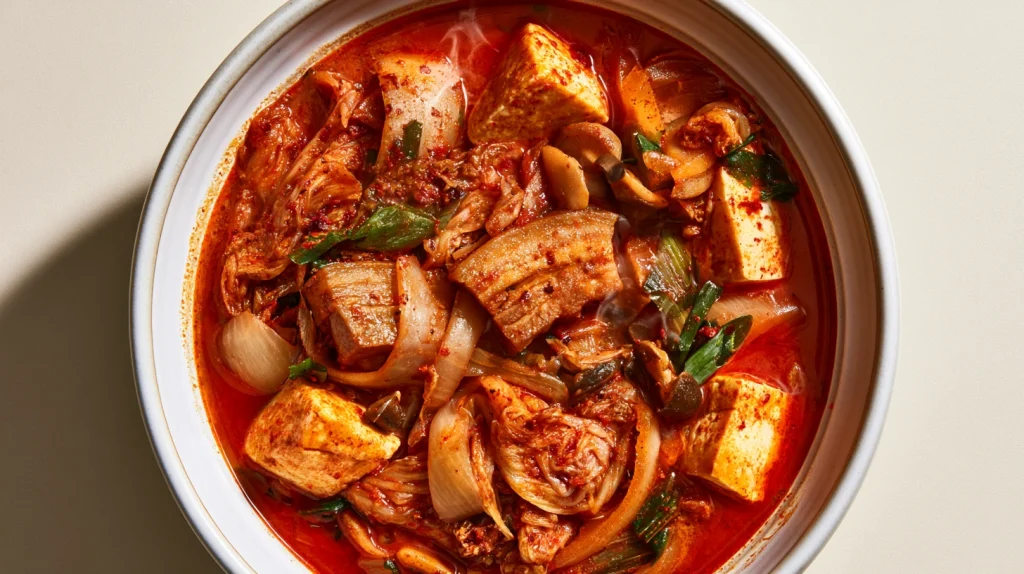
A well-made bowl should have a broth that is deeply seasoned but not excessively salty, tender pieces of kimchi, juicy pork, and tofu that has absorbed the surrounding flavors. The broth should be spicy enough to give the stew energy while still allowing the fermented character of the kimchi to come through. This dish can also fit into a Healthy Food Menu when prepared thoughtfully. Kimchi provides vegetables and fermented flavor, while tofu and leaner cuts of meat contribute protein. You can increase the amount of mushrooms, zucchini, green onions, or other vegetables to create a more vegetable focused version.
Although kimchi jigae is often associated with cold weather, it can be enjoyed throughout the year. The hot broth and spicy flavor make it particularly comforting on cool evenings, but the acidity of the kimchi keeps it from feeling overly heavy. If you are looking for Easy Cooking Recipes that deliver strong flavor, this is a good choice. Once your ingredients are prepared, most of the work involves simmering them together. The longer cooking time allows the kimchi and pork to exchange flavor and creates a broth that tastes much more developed than the ingredient list might suggest.
The recipe also gives you plenty of flexibility. You can adjust the amount of kimchi, add more broth for a lighter soup like consistency, use less liquid for a thicker stew, or add extra tofu and vegetables. You can make it mild or increase the Korean chili flakes for a stronger spicy flavor.
Kimchi jigae is traditionally served hot in individual bowls or from a bubbling pot placed in the center of the table. Steamed white rice is the natural companion because it balances the salty, sour, and spicy broth. A small selection of Korean side dishes can turn the stew into a complete meal.
The dish is sometimes associated online with Tasty Recipes Videos and other visual cooking content because the transformation from raw ingredients to a bubbling red stew is easy to demonstrate. However, the recipe is simple enough that you can make it successfully without following a complicated video technique.
While this recipe is focused on savory Korean food, it also fits naturally into a broader collection that may include Sweet Snacks Recipes and Delicious Snacks Recipes because a well-rounded Homemade Cookbook benefits from having different types of dishes. Kimchi jigae gives you a dependable savory main dish that can sit alongside lighter snacks and desserts.
The key is to avoid rushing the simmering process. Kimchi needs enough time to soften, and pork needs enough time to become tender. Once those ingredients have cooked together, the broth develops the full-bodied flavor that makes a traditional kimchi jigae so appealing.
Why You’ll Love This Recipe
Preparation and Cooking Time, Also Serving
Ingredients
For Serving
Substitution Notes
Step-by-Step Instructions

Step 1: Prepare the Ingredients
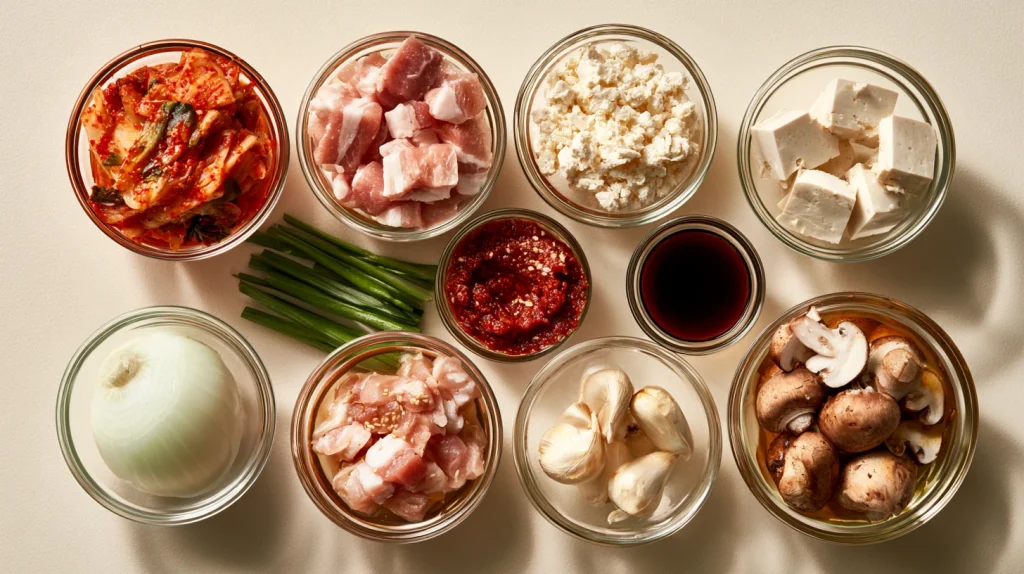
Chop the fermented kimchi into manageable pieces, reserving about 1/2 cup of kimchi juice, then cut the pork into bite sized pieces and prepare the onion, garlic, green onions, tofu, and mushrooms if using. Keep the white and green portions of the green onions separate because the white pieces will be cooked with the aromatics while the green pieces are best used toward the end as a fresh garnish. Measure the gochujang, Korean red pepper flakes, soy sauce, sesame oil, and sugar before you begin cooking so everything is ready when needed.
Step 2: Brown the Pork and Aromatics
Heat the neutral cooking oil in a large heavy pot or Korean style earthenware pot over medium heat, add the pork pieces, and cook for approximately 5 to 7 minutes, stirring occasionally, until the exterior is lightly browned and some of the pork fat has rendered into the pot. Add the sliced onion and the white portions of the green onions and cook for another 2 to 3 minutes until they begin to soften, then add the minced garlic and cook for approximately 30 seconds until fragrant without allowing it to burn.
Step 3: Cook the Kimchi With the Seasonings
Add the chopped kimchi to the pot with the pork and aromatics and cook for approximately 4 to 5 minutes, stirring regularly so the kimchi becomes softer and begins to release its fermented juices into the pork fat. Stir in the gochujang, Korean red pepper flakes, soy sauce, and sugar, then continue cooking for about 1 minute so the seasonings coat the kimchi and pork evenly. Cooking the kimchi before adding the broth helps deepen its flavor and gives the stew a more developed taste.
Step 4: Add the Broth and Kimchi Juice
Pour the reserved kimchi juice and broth into the pot and stir thoroughly, scraping the bottom gently with a wooden spoon or spatula to loosen any browned pieces created while cooking the pork. Bring the mixture to a gentle boil over medium high heat, then reduce the heat to medium low once the liquid is bubbling steadily. Allow the stew to simmer uncovered for approximately 20 minutes so the pork can become tender and the kimchi can soften while its flavor spreads throughout the broth.
Step 5: Add the Tofu and Additional Vegetables
Once the pork has become tender and the broth has developed a deep red color, add the cubed tofu and sliced mushrooms if using, then gently stir them into the stew without breaking the tofu apart. Continue simmering for another 8 to 10 minutes so the tofu absorbs the seasoned broth and the mushrooms become tender, then taste the liquid carefully and adjust the seasoning with additional kimchi juice, soy sauce, Korean red pepper flakes, or a small amount of sugar depending on the balance of spice, salt, and acidity.
Step 6: Finish the Stew
Reduce the heat to low and stir in the toasted sesame oil, then allow the kimchi jigae to simmer gently for another 2 to 3 minutes so the finishing oil can blend with the broth without losing its aroma. Check that the pork is fully cooked and tender, the kimchi is soft enough to bite comfortably, and the tofu is hot throughout, then turn off the heat and let the stew rest for approximately 3 to 5 minutes before serving so the broth settles and the flavors become more integrated.
Step 7: Serve Hot With Rice
Ladle the finished kimchi jigae into individual bowls while it is still very hot, making sure each serving contains a balanced amount of pork, kimchi, tofu, vegetables, and broth, then garnish with the reserved sliced green onion, fresh chili if desired, and a small sprinkle of toasted sesame seeds. Serve immediately with freshly steamed white rice on the side, allowing each person to combine spoonfuls of rice with the spicy broth according to their preference.
How to Serve
Kimchi jigae is traditionally served hot, often while the broth is still bubbling gently. The stew is flavorful enough to be the main focus of the meal, while steamed rice provides a mild base that balances the spicy, sour, and savory broth.
Additional Tips
Recipe Variations
Freezing and Storage
Nutritional Information
The following values are approximate for one serving of kimchi jigae with pork and tofu, excluding the accompanying rice. Exact nutrition will vary depending on the cut of pork, type of kimchi, broth, tofu, and seasonings used.
The sodium content can be relatively high because kimchi, kimchi juice, soy sauce, and gochujang all contain salt. Using low sodium broth and adjusting the amount of soy sauce can help reduce the overall sodium level.
Adding steamed white rice will increase the carbohydrate and calorie content of the complete meal. If you are creating a Healthy Food Menu, you can serve a smaller rice portion alongside extra vegetables, mushrooms, or tofu.
Using lean pork instead of pork belly can reduce the fat content. A vegetarian version made with tofu and mushrooms may also have a different nutritional profile depending on the amount of oil and tofu used.
Final Words
A well-made kimchi jigae recipe is more than just a spicy soup. It is a practical Korean comfort food that shows how fermentation, simple seasoning, and slow simmering can create remarkable depth from everyday ingredients. The key is to let the kimchi do much of the work. Well fermented kimchi already contains acidity, spice, salt, and complex fermented flavors. When it is cooked with pork, onion, garlic, gochujang, and broth, those flavors become even more concentrated and create a deeply satisfying stew.
The pork adds richness, while tofu absorbs the seasoned broth and provides a soft contrast to the tender kimchi. If you prefer a lighter meal, chicken, mushrooms, or additional tofu can replace some or all of the pork without taking away from the basic character of the dish. This recipe also fits naturally into a collection of Easy Cooking Recipes because the technique is straightforward. Once the ingredients are prepared, the stew mostly takes care of itself while it simmers. There is no complicated sauce to prepare and no need for specialized cooking skills.
If you are building a Homemade Cookbook, kimchi jigae deserves a place because it is versatile, affordable, and easy to adapt. You can keep the classic pork version for a rich meal, switch to tuna for convenience, or use tofu and mushrooms for a vegetable focused option.
As part of a K Food collection, this stew also demonstrates an important principle of Korean home cooking: strong flavors can work together when each ingredient has a clear purpose. Kimchi provides acidity and fermentation, gochugaru supplies chili flavor, gochujang adds fermented depth, pork contributes richness, and tofu absorbs the broth. For a Healthy Food Menu, you can make a few simple adjustments without losing the heart of the dish. Choose leaner pork, increase the vegetables, use low sodium broth, and serve a reasonable amount of rice. The result remains hearty while becoming easier to fit into a balanced meal plan.
Kimchi jigae is also a good reminder that cooking does not always require a long list of ingredients. A handful of well chosen components, prepared in the right order, can create a meal that tastes far more complex than the process suggests. Serve it piping hot with freshly cooked rice and simple side dishes. Add green onions just before serving for freshness, and let everyone adjust their bowl with additional chili, kimchi, or other toppings according to taste.
Once you become comfortable with the basic recipe, experiment with different proteins and vegetables. Tuna, chicken, mushrooms, zucchini, seafood, and extra tofu can all create satisfying variations. Whether you are exploring Korean cuisine for the first time or adding another dependable dish to your regular cooking routine, this kimchi jigae recipe is worth learning. It is warm, bold, practical, and flexible enough to become a regular part of your home menu.
FAQs

Authentic Kimchi Jigae Recipe – Easy Korean Kimchi Stew
Course: Dinner Recipes4
servings15
minutes45
minutes365
kcalIngredients
1 1/2 cups well fermented napa cabbage kimchi, roughly chopped
1/2 cup kimchi juice
12 ounces pork shoulder or pork belly, cut into bite sized pieces
1 tablespoon neutral cooking oil
1 medium yellow onion, thinly sliced
3 garlic cloves, finely minced
2 green onions, sliced, with the white and green portions separated
1 tablespoon gochujang
1 tablespoon Korean red pepper flakes
1 tablespoon soy sauce
1 teaspoon toasted sesame oil
4 cups low sodium chicken or anchovy broth
1 teaspoon sugar
8 ounces firm tofu, cut into bite sized cubes
1/2 teaspoon freshly ground black pepper
1/2 cup sliced mushrooms, optional
- For Serving
4 cups cooked white rice
1 green onion, thinly sliced
1 fresh red or green chili, thinly sliced, optional
1 teaspoon toasted sesame seeds
Additional kimchi, optional
Directions
- Chop the fermented kimchi into manageable pieces, reserving about 1/2 cup of kimchi juice, then cut the pork into bite sized pieces and prepare the onion, garlic, green onions, tofu, and mushrooms if using. Keep the white and green portions of the green onions separate because the white pieces will be cooked with the aromatics while the green pieces are best used toward the end as a fresh garnish. Measure the gochujang, Korean red pepper flakes, soy sauce, sesame oil, and sugar before you begin cooking so everything is ready when needed.
- Heat the neutral cooking oil in a large heavy pot or Korean style earthenware pot over medium heat, add the pork pieces, and cook for approximately 5 to 7 minutes, stirring occasionally, until the exterior is lightly browned and some of the pork fat has rendered into the pot. Add the sliced onion and the white portions of the green onions and cook for another 2 to 3 minutes until they begin to soften, then add the minced garlic and cook for approximately 30 seconds until fragrant without allowing it to burn.
- Add the chopped kimchi to the pot with the pork and aromatics and cook for approximately 4 to 5 minutes, stirring regularly so the kimchi becomes softer and begins to release its fermented juices into the pork fat. Stir in the gochujang, Korean red pepper flakes, soy sauce, and sugar, then continue cooking for about 1 minute so the seasonings coat the kimchi and pork evenly. Cooking the kimchi before adding the broth helps deepen its flavor and gives the stew a more developed taste.
- Pour the reserved kimchi juice and broth into the pot and stir thoroughly, scraping the bottom gently with a wooden spoon or spatula to loosen any browned pieces created while cooking the pork. Bring the mixture to a gentle boil over medium high heat, then reduce the heat to medium low once the liquid is bubbling steadily. Allow the stew to simmer uncovered for approximately 20 minutes so the pork can become tender and the kimchi can soften while its flavor spreads throughout the broth.
- Once the pork has become tender and the broth has developed a deep red color, add the cubed tofu and sliced mushrooms if using, then gently stir them into the stew without breaking the tofu apart. Continue simmering for another 8 to 10 minutes so the tofu absorbs the seasoned broth and the mushrooms become tender, then taste the liquid carefully and adjust the seasoning with additional kimchi juice, soy sauce, Korean red pepper flakes, or a small amount of sugar depending on the balance of spice, salt, and acidity.
- Reduce the heat to low and stir in the toasted sesame oil, then allow the kimchi jigae to simmer gently for another 2 to 3 minutes so the finishing oil can blend with the broth without losing its aroma. Check that the pork is fully cooked and tender, the kimchi is soft enough to bite comfortably, and the tofu is hot throughout, then turn off the heat and let the stew rest for approximately 3 to 5 minutes before serving so the broth settles and the flavors become more integrated.
- Ladle the finished kimchi jigae into individual bowls while it is still very hot, making sure each serving contains a balanced amount of pork, kimchi, tofu, vegetables, and broth, then garnish with the reserved sliced green onion, fresh chili if desired, and a small sprinkle of toasted sesame seeds. Serve immediately with freshly steamed white rice on the side, allowing each person to combine spoonfuls of rice with the spicy broth according to their preference.