

Flatbread Pizza Recipe – Easy Homemade Crispy Pizza
Flatbread Pizza
Flatbread pizza is one of the easiest ways to make homemade pizza when you want a crisp crust, flavorful toppings, and a shorter cooking time than traditional yeast-risen pizza. Instead of waiting for a dough to rise, you can use prepared flatbread, naan, pita, or a quick homemade flatbread as the base.
The appeal of flatbread pizza comes from its texture. The base becomes crisp around the edges while remaining slightly chewy in the center. Because the crust is thinner than traditional pizza dough, the toppings become an important part of the finished dish. A good balance of sauce, cheese, vegetables, meat, and fresh herbs gives every bite plenty of flavor without making the flatbread soggy.
This recipe uses a simple tomato sauce, mozzarella, Parmesan, cooked chicken, bell pepper, red onion, and fresh basil. It is flexible enough to change according to what you have in the refrigerator. You can make a classic cheese version, a vegetable combination, a spicy chicken pizza, or a white flatbread with ricotta and vegetables. If you are looking for Homemade Flatbread Pizza Recipes that are practical for busy evenings, this method is especially useful. You can have the pizza assembled and ready for the oven in about 15 minutes. The high oven temperature helps the cheese melt quickly while creating crisp edges.
Flatbread pizza also works particularly well for individual portions. Instead of making one large pizza, prepare several smaller flatbreads and let everyone choose their preferred toppings. This makes it a convenient option for families, casual entertaining, lunches, and quick dinners. The key to excellent flatbread pizza is restraint. Because flatbread is thinner than traditional pizza dough, too much sauce or too many wet toppings can prevent the crust from becoming crisp. A thin layer of sauce, moderate cheese, and properly prepared toppings produce a much better result.
Why You’ll Love This Recipe
Preparation and Cooking Time, also serving
Ingredients
Optional Toppings
Substitution Notes
Step-by-Step Instructions
Step 1: Prepare the Oven and Flatbreads
Preheat the oven to 425°F (220°C) and place a large baking sheet or pizza stone inside while it heats if you want a particularly crisp bottom. Arrange the flatbreads on parchment paper or a lightly oiled baking sheet, then brush the exposed surface very lightly with olive oil, making sure not to saturate the bread. A hot baking surface helps the bottom begin crisping immediately when the flatbread goes into the oven.
Step 2: Add the Sauce and Seasoning
Spread approximately 1/4 cup of pizza sauce over each flatbread, using the back of a spoon to create a thin, even layer while leaving a small border around the edge. Sprinkle the garlic powder, Italian seasoning, and black pepper lightly over the sauce, keeping the seasoning distributed rather than concentrated in one area. Avoid using too much sauce because excess moisture is one of the main causes of a soft flatbread crust.
Step 3: Add Cheese and Toppings
Sprinkle the mozzarella evenly over the sauced flatbreads, then distribute the cooked chicken, sliced bell pepper, red onion, and Parmesan across the surface. Keep the toppings in a relatively thin layer so the heat can reach the flatbread and cheese efficiently. If using mushrooms, fresh tomatoes, or other ingredients that release considerable moisture, slice them thinly and pat them dry before adding them.
Step 4: Bake the Flatbread Pizzas
Transfer the assembled flatbreads to the preheated baking sheet or pizza stone and bake for approximately 10 to 14 minutes, rotating the pan halfway through if necessary for even browning. The pizzas are ready when the cheese is completely melted and bubbling and the edges of the flatbread are golden brown and crisp. Watch the final few minutes carefully because thin flatbread can go from golden to overly dark relatively quickly.
Step 5: Finish and Rest
Remove the flatbread pizzas from the oven and allow them to rest for 2 to 3 minutes before cutting, which gives the melted cheese time to settle and makes the pizzas easier to handle. Scatter fresh basil over the top, add crushed red pepper flakes or additional Parmesan if desired, and finish with a small drizzle of olive oil or a few drops of fresh lemon juice for brightness.
Step 6: Slice and Serve
Use a sharp knife or pizza cutter to cut each flatbread into wedges or strips, then serve immediately while the crust is crisp and the cheese is warm. If preparing multiple varieties, label or identify the different topping combinations before serving so everyone can choose their preferred version.
How to Serve
Additional Tips
Recipe Variations
Freezing and Storage
Nutritional Information
The following values are approximate and will vary according to the type of flatbread, cheese, sauce, chicken, and toppings used.
Approximate nutrition per flatbread pizza:
Using less cheese, a smaller flatbread, reduced-sodium sauce, and additional vegetables can reduce the calorie and sodium content.
Final Words
Flatbread pizza is one of those recipes that proves homemade pizza does not have to involve a complicated dough process. With a sturdy flatbread, a thin layer of sauce, good melting cheese, and thoughtfully selected toppings, you can create a crisp and satisfying pizza in well under an hour.
The biggest lesson is to control moisture. Flatbread is thinner than traditional pizza dough, so it cannot handle an excessive amount of sauce or wet toppings. Keep each layer moderate and allow the oven to do the work. If you are exploring Flat Bread Toppings Ideas, start with combinations that have contrasting textures. Creamy cheese works well with crisp vegetables, smoky meats benefit from fresh herbs, and rich sauces become more balanced with acidic toppings such as pickled onions or fresh tomatoes.
There is also plenty of room to experiment with Homemade Flatbread Pizza Recipes. Try different cheeses, sauces, vegetables, cooked meats, herbs, and finishing ingredients until you find combinations your family enjoys. For a particularly easy approach, keep a package of flatbread or pita in the freezer and a few basic toppings in the refrigerator. That gives you the foundation for a quick DIY Flatbread Pizza whenever you need dinner without much planning.
Whether you call it Pizza Flatbread, flatbread pizza, or simply an easy homemade pizza, the method remains straightforward. Use a hot oven, avoid excessive moisture, distribute the toppings evenly, and serve the pizza while the crust is crisp. Once you have mastered the basic method, you can turn it into countless meals. Classic cheese, spicy chicken, Mediterranean vegetables, barbecue chicken, breakfast toppings, or simple herbs and vegetables can all work beautifully.
FAQs

Flatbread Pizza Recipe – Easy Homemade Crispy Pizza
Course: Appetizers4
servings15
minutes10
minutes520
kcalIngredients
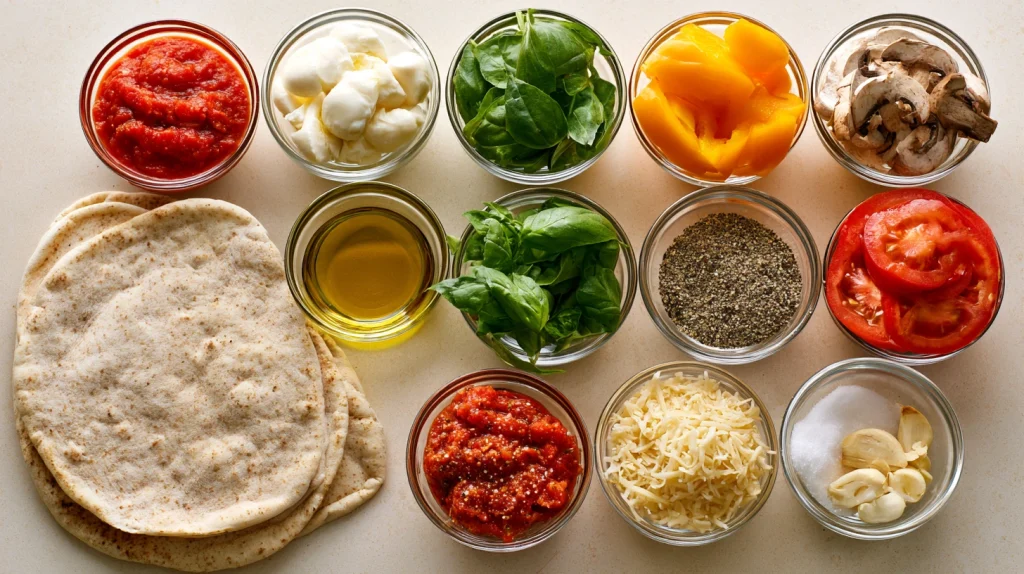
4 medium flatbreads, naan, or pita breads
1 cup pizza sauce or thick marinara sauce
2 cups shredded low-moisture mozzarella cheese
1/2 cup cooked chicken, shredded or diced
1/2 red bell pepper, thinly sliced
1/2 small red onion, thinly sliced
1/4 cup grated Parmesan cheese
1 teaspoon dried Italian seasoning
1/2 teaspoon garlic powder
1 tablespoon olive oil
1/4 teaspoon freshly ground black pepper
1/4 cup fresh basil leaves
Directions
- Preheat the oven to 425°F (220°C) and place a large baking sheet or pizza stone inside while it heats if you want a particularly crisp bottom. Arrange the flatbreads on parchment paper or a lightly oiled baking sheet, then brush the exposed surface very lightly with olive oil, making sure not to saturate the bread. A hot baking surface helps the bottom begin crisping immediately when the flatbread goes into the oven.
- Spread approximately 1/4 cup of pizza sauce over each flatbread, using the back of a spoon to create a thin, even layer while leaving a small border around the edge. Sprinkle the garlic powder, Italian seasoning, and black pepper lightly over the sauce, keeping the seasoning distributed rather than concentrated in one area. Avoid using too much sauce because excess moisture is one of the main causes of a soft flatbread crust.
- Sprinkle the mozzarella evenly over the sauced flatbreads, then distribute the cooked chicken, sliced bell pepper, red onion, and Parmesan across the surface. Keep the toppings in a relatively thin layer so the heat can reach the flatbread and cheese efficiently. If using mushrooms, fresh tomatoes, or other ingredients that release considerable moisture, slice them thinly and pat them dry before adding them.
- Transfer the assembled flatbreads to the preheated baking sheet or pizza stone and bake for approximately 10 to 14 minutes, rotating the pan halfway through if necessary for even browning. The pizzas are ready when the cheese is completely melted and bubbling and the edges of the flatbread are golden brown and crisp. Watch the final few minutes carefully because thin flatbread can go from golden to overly dark relatively quickly.
- Remove the flatbread pizzas from the oven and allow them to rest for 2 to 3 minutes before cutting, which gives the melted cheese time to settle and makes the pizzas easier to handle. Scatter fresh basil over the top, add crushed red pepper flakes or additional Parmesan if desired, and finish with a small drizzle of olive oil or a few drops of fresh lemon juice for brightness.
- Use a sharp knife or pizza cutter to cut each flatbread into wedges or strips, then serve immediately while the crust is crisp and the cheese is warm. If preparing multiple varieties, label or identify the different topping combinations before serving so everyone can choose their preferred version.