

Pork Tamales Recipe – Authentic Mexican Tamales Meal
Pork Tamales Recipe
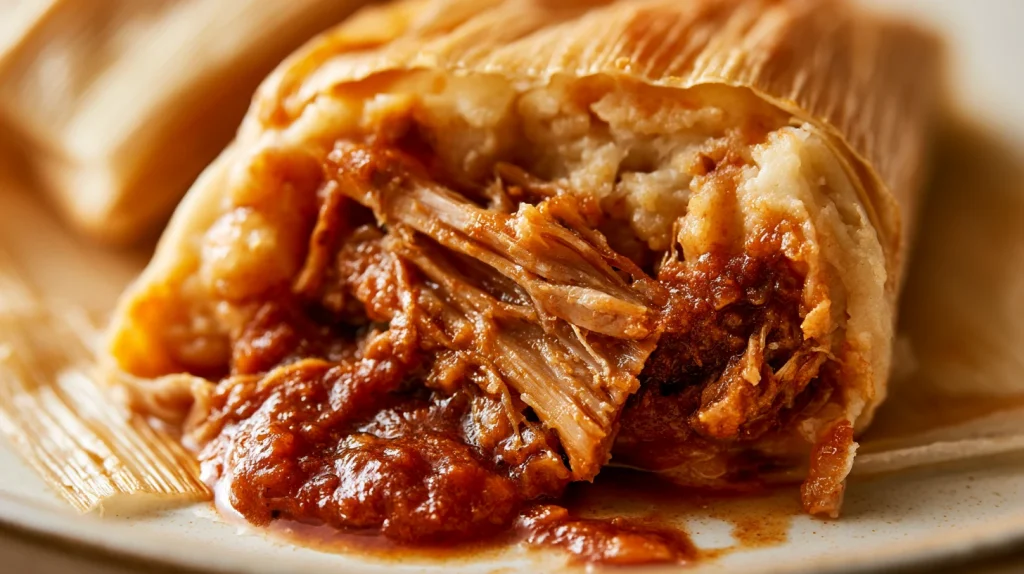
A pork tamales recipe is a classic example of how simple ingredients can become an exceptional meal when each component is prepared with care. Tender pork shoulder is slowly cooked with aromatic spices until it is easy to shred, then combined with a flavorful chile sauce and wrapped in soft masa before being steamed until tender.
Traditional Mexican tamales are especially valued because they are more than just a recipe. They are often prepared for holidays, family gatherings, birthdays, and celebrations where several people work together in the kitchen. The masa is spread over corn husks, the seasoned pork is placed in the center, and each tamale is folded and steamed until the masa becomes firm but tender.
The flavor of a well made pork tamales recipe comes from the balance between the masa and filling. The masa should have enough seasoning and fat to taste rich without overpowering the pork. The filling should be deeply savory, slightly spicy, and moist enough to remain tender after steaming. Pork shoulder is particularly well suited for tamales because it contains enough fat and connective tissue to become tender during slow cooking. Once cooked properly, it shreds easily and absorbs the chile sauce beautifully. This makes pork shoulder for tamales one of the most dependable choices when you want a flavorful filling.
For cooks learning how to make pork tamales, the process may initially look complicated, but it becomes much easier when divided into stages. Prepare the corn husks, cook the pork, make the sauce, prepare the masa, assemble the tamales, and steam them. You do not need to rush any of these stages. This recipe is also flexible. You can make green chile pork tamales with a tomatillo based sauce, add cheese for pork and cheese tamales, or make the filling more or less spicy according to your preference.
If you are planning Mexican holiday dinner ideas, pork tamales are an excellent centerpiece. They can be prepared in large batches, refrigerated or frozen, and reheated when needed. The work is substantial, but the reward is a meal that tastes homemade, comforting, and deeply satisfying.
Why You’ll Love This Recipe
A useful preparation principle is to keep the filling moist but not watery. Excess liquid can make the masa difficult to cook properly, while a dry filling will taste tough and lose moisture during steaming.
Preparation and Cooking Time, also Serving
The total time depends on the size of the pork pieces, the soaking time of the husks, the thickness of the masa, and the number of tamales in your steamer.
Ingredients
For the Pork Filling
For the Chile Sauce
For the Masa
For Assembly
Substitution Notes
Step by Step Instructions

Step 1: Soak the Corn Husks
Place the dried corn husks in a large bowl or clean sink and cover them completely with very hot water, then place a plate or another heavy heat safe object over them to keep them submerged for approximately 45 to 60 minutes until they become soft and flexible, separating the husks gently as they soften and setting aside the larger, intact husks for wrapping.
Step 2: Cook the Pork
Place the pork shoulder in a large heavy pot with the water or chicken broth, garlic, onion, salt, cumin, oregano, bay leaves, and black pepper, bring the liquid to a gentle boil, reduce the heat to low, cover the pot, and simmer for approximately 2 1/2 to 3 1/2 hours until the pork is very tender and easily pulls apart with a fork.
Step 3: Prepare the Chile Sauce
Toast the dried guajillo and ancho chiles briefly in a dry skillet over medium heat until fragrant without allowing them to burn, then soak them in hot water for approximately 15 minutes before transferring them to a blender with garlic, onion, cumin, oregano, salt, vinegar, and reserved pork broth and blending until completely smooth.
Step 4: Shred and Season the Pork
Remove the cooked pork from the broth and let it cool enough to handle, discard large pieces of fat and connective tissue while retaining some tender fat for flavor, shred the meat into small pieces, then combine it with approximately 1 to 1 1/2 cups of the chile sauce and enough reserved pork broth to create a moist filling that holds together without becoming runny.
Step 5: Prepare the Masa
Place the masa harina, baking powder, and salt in a large bowl and mix thoroughly, then add the softened lard and work it into the dry ingredients until evenly distributed before gradually adding the warm broth and mixing until the masa becomes soft, spreadable, and similar in texture to a thick smooth dough.
Step 6: Assemble the Tamales
Drain the softened corn husks and pat them lightly dry, place one large husk smooth side up on your work surface, spread approximately 2 tablespoons of masa over the wider portion while leaving a border around the edges, add about 1 tablespoon of seasoned pork down the center, fold the sides of the husk inward so the masa surrounds the filling, and fold the narrow bottom portion upward to secure the tamale.
Step 7: Steam the Tamales
Stand the assembled tamales upright in a steamer basket with the folded ends pointing downward and the open tops facing upward, cover the steamer tightly and steam for approximately 60 to 90 minutes while checking the water level occasionally, then remove one tamale and let it rest for several minutes before testing whether the masa separates cleanly from the husk, adding additional steaming time if the masa still feels wet or sticks heavily.
How to Serve
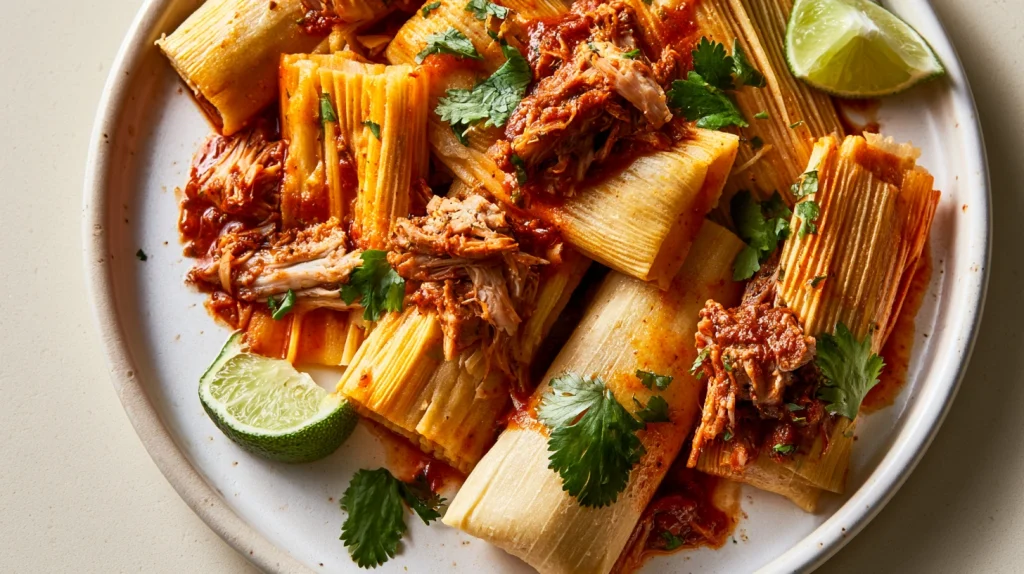
For a polished presentation, remove the corn husk before plating and place the tamale with the seam underneath. Spoon a small amount of chile sauce across the top rather than completely covering the masa.
Additional Tips
The texture of the masa is one of the most important parts of the process. If the masa is too stiff, it will be difficult to spread and can produce dense tamales. If it is excessively wet, it may remain sticky after steaming. Aim for a smooth, soft masa that spreads easily with the back of a spoon.
Recipe Variations
Freezing and Storage
Nutritional Information
These values are approximate and can change significantly depending on the amount of lard, pork fat, cheese, sauce, and masa used in each tamale.
Final Words
A good pork tamales recipe rewards patience. There are several stages involved, but each one has a clear purpose. The pork needs enough time to become tender, the chile sauce needs balanced seasoning, the masa needs the right consistency, and the assembled tamales need steady steam to cook properly.
The best place to begin is with the pork. Pork shoulder for tamales is an excellent choice because it stays moist during slow cooking and absorbs the chile sauce once shredded. Do not rush this step. Properly cooked pork should pull apart easily with very little resistance. The masa deserves the same attention. It should be soft enough to spread but firm enough to hold the filling. Using reserved pork broth instead of plain water gives the masa an extra layer of savory flavor and makes the finished tamales taste more complete.
If you are learning how to make pork tamales for the first time, give yourself enough workspace. Set up the soaked corn husks, masa, pork filling, sauce, and steamer before you begin assembly. This simple organization makes the process much more efficient. Traditional Mexican tamales are often associated with gatherings because making a large batch is naturally a group activity. One person can spread masa, another can add the filling, and another can fold the husks. This makes tamale preparation a practical choice for Mexican holiday dinner ideas and large family meals.
The recipe can also be adjusted to suit your table. Green chile pork tamales provide a bright, tangy alternative to the red chile version, while pork and cheese tamales add a creamy element to the filling. If you enjoy stronger flavors, chipotle, árbol chile, or mole can change the character of the same basic pork filling. Once you have made a batch, freezing the extras is one of the biggest advantages. Properly frozen tamales can be steamed directly from frozen, giving you a homemade meal without repeating the entire preparation process.
Whether you call them Mexican tomales, traditional Mexican tamales, or simply pork tamales, the process is worth learning. The combination of tender seasoned pork, flavorful masa, and chile sauce creates a meal that is satisfying enough for a holiday table but comforting enough for an ordinary family dinner. Take your time, keep the masa consistent, avoid overfilling the husks, and give the tamales enough steaming time. With those basics in place, you can confidently make a batch that tastes homemade from the first bite to the last.
FAQs

Pork Tamales Recipe – Authentic Mexican Tamales Meal
Course: Dinner Recipes24
servings1
hour15
minutes3
hours480
kcalIngredients
- For the Pork Filling
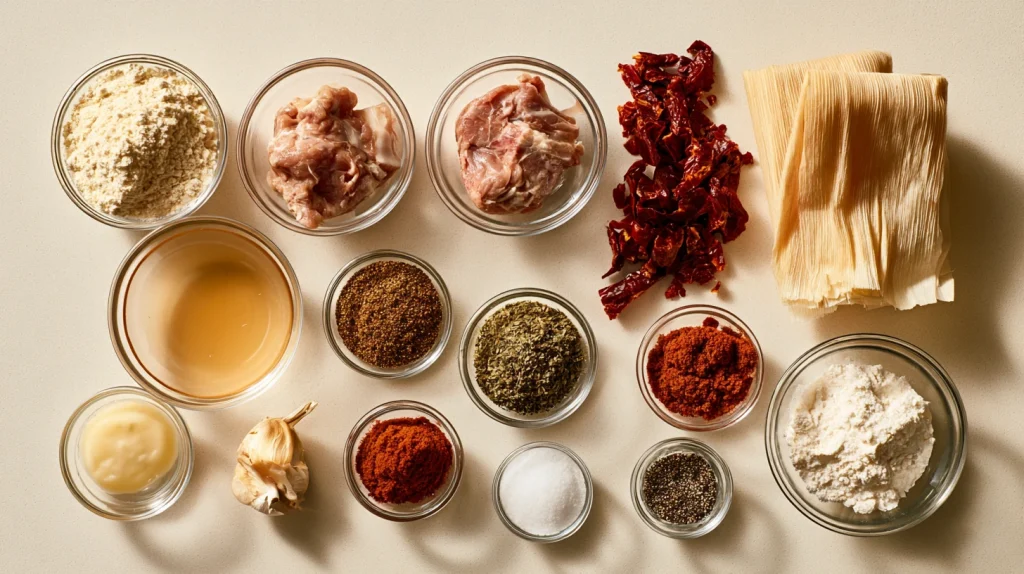
3 pounds pork shoulder, cut into large chunks
6 cups water or low sodium chicken broth
4 garlic cloves, peeled
1/2 medium white onion
2 teaspoons kosher salt
1 teaspoon ground cumin
1 teaspoon dried Mexican oregano
2 bay leaves
1/2 teaspoon black pepper
- For the Chile Sauce
5 dried guajillo chiles, stems and seeds removed
2 dried ancho chiles, stems and seeds removed
2 garlic cloves
1/4 medium white onion
1 teaspoon ground cumin
1 teaspoon dried Mexican oregano
1/2 teaspoon salt, plus more to taste
1 tablespoon apple cider vinegar
1 1/2 cups reserved pork cooking broth
- For the Masa
4 cups masa harina for tamales
2 1/2 cups warm chicken broth
1 1/2 cups lard or vegetable shortening
2 teaspoons baking powder
1 1/2 teaspoons salt
- For Assembly
30 to 36 dried corn husks
1 to 1 1/2 cups reserved chile sauce
1 cup shredded Monterey Jack or Oaxaca cheese, optional
Directions
- Place the dried corn husks in a large bowl or clean sink and cover them completely with very hot water, then place a plate or another heavy heat safe object over them to keep them submerged for approximately 45 to 60 minutes until they become soft and flexible, separating the husks gently as they soften and setting aside the larger, intact husks for wrapping.
- Place the pork shoulder in a large heavy pot with the water or chicken broth, garlic, onion, salt, cumin, oregano, bay leaves, and black pepper, bring the liquid to a gentle boil, reduce the heat to low, cover the pot, and simmer for approximately 2 1/2 to 3 1/2 hours until the pork is very tender and easily pulls apart with a fork.
- Toast the dried guajillo and ancho chiles briefly in a dry skillet over medium heat until fragrant without allowing them to burn, then soak them in hot water for approximately 15 minutes before transferring them to a blender with garlic, onion, cumin, oregano, salt, vinegar, and reserved pork broth and blending until completely smooth.
- Remove the cooked pork from the broth and let it cool enough to handle, discard large pieces of fat and connective tissue while retaining some tender fat for flavor, shred the meat into small pieces, then combine it with approximately 1 to 1 1/2 cups of the chile sauce and enough reserved pork broth to create a moist filling that holds together without becoming runny.
- Place the masa harina, baking powder, and salt in a large bowl and mix thoroughly, then add the softened lard and work it into the dry ingredients until evenly distributed before gradually adding the warm broth and mixing until the masa becomes soft, spreadable, and similar in texture to a thick smooth dough.
- Drain the softened corn husks and pat them lightly dry, place one large husk smooth side up on your work surface, spread approximately 2 tablespoons of masa over the wider portion while leaving a border around the edges, add about 1 tablespoon of seasoned pork down the center, fold the sides of the husk inward so the masa surrounds the filling, and fold the narrow bottom portion upward to secure the tamale.
- Stand the assembled tamales upright in a steamer basket with the folded ends pointing downward and the open tops facing upward, cover the steamer tightly and steam for approximately 60 to 90 minutes while checking the water level occasionally, then remove one tamale and let it rest for several minutes before testing whether the masa separates cleanly from the husk, adding additional steaming time if the masa still feels wet or sticks heavily.