

Aguachile Recipe Shrimp – Easy Mexican Shrimp Dinner
Aguachile Recipe Shrimp
Aguachile recipe shrimp is a bright, fresh Mexican seafood preparation built around a simple combination of shrimp, lime juice, fresh chiles, cilantro, cucumber, and onion. Unlike recipes that depend on long cooking times or heavy sauces, this dish gets its character from fresh ingredients and careful seasoning. The shrimp provides a naturally sweet, delicate flavor, while the lime brings acidity, the chile adds heat, and cucumber provides a cool contrast.
A well prepared aguachile should taste lively from the first bite. The lime should be noticeable but not painfully sour, the chile should provide heat without completely covering the shrimp, and the salt should bring all the flavors into focus. Cilantro gives the sauce an herbal freshness, while thinly sliced red onion adds a crisp, slightly sharp bite.
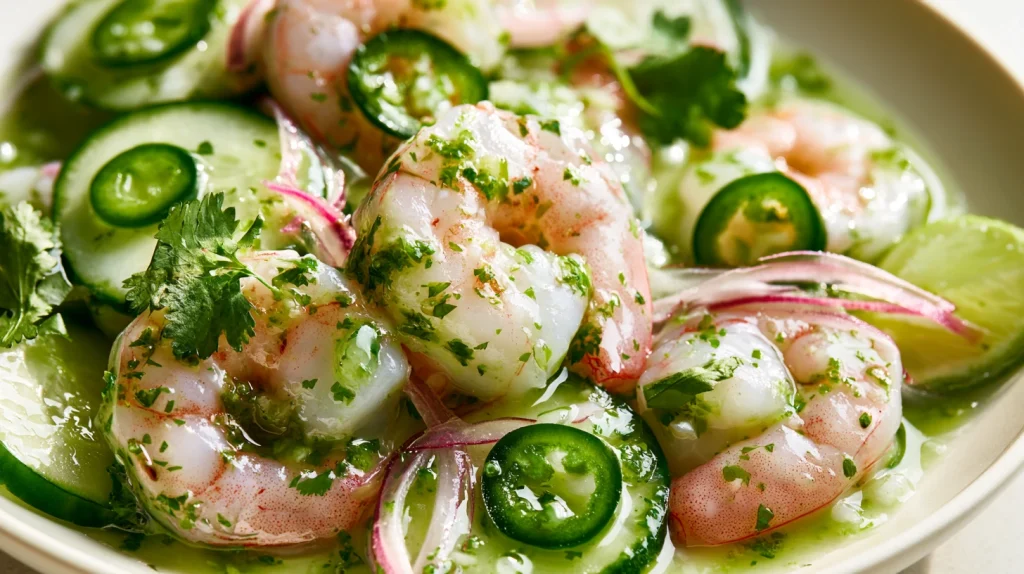
This Aguachile Seafood preparation is especially popular for its refreshing texture and straightforward method. It is often served cold and makes an excellent appetizer, light lunch, or seafood starter for a larger Mexican inspired meal. The dish is visually appealing as well, with pale pink shrimp, bright green chile lime sauce, crisp cucumber, purple onion, and fresh herbs creating a naturally colorful plate.
Aguachile is closely related to other Mexican seafood dishes, including ceviche, but it has its own identity. A typical Aguachile Recipe Mexican preparation places more emphasis on fresh chile and a vibrant liquid sauce. The seafood is usually dressed shortly before serving, which helps preserve its fresh texture and allows the lime, chile, and herbs to remain sharp and distinct.
Freshness is particularly important when making an aguachile recipe shrimp. Since the seafood is the central ingredient, poor quality shrimp cannot be hidden behind strong seasoning. Look for shrimp that has a clean, fresh smell and firm flesh. If preparing the shrimp raw, use seafood from a reputable source that is specifically suitable for raw consumption and keep it properly chilled. If you prefer not to eat raw seafood, the shrimp can be briefly cooked, chilled, and then dressed with the same sauce.
One of the best things about this Aguachile Dish is how much flavor comes from a short ingredient list. You do not need a complicated spice blend or an elaborate cooking technique. The success of the recipe depends on choosing good ingredients, preparing them correctly, and tasting the sauce before serving.
The recipe is also flexible enough for different preferences. You can make it moderately spicy with jalapeños, increase the heat with additional serranos, or add avocado for a creamy contrast. Mango can provide sweetness, while additional cucumber can make the finished dish even more refreshing. Whether you are making Aguachiles Recipe Shrimp for a family meal or preparing an impressive seafood platter for guests, the basic method remains easy to follow. Once you understand how the lime, chile, salt, herbs, and shrimp should balance each other, you can confidently make this Mexican classic at home.
Why You’ll Love This Recipe
Preparation and Cooking Time, Also Serving
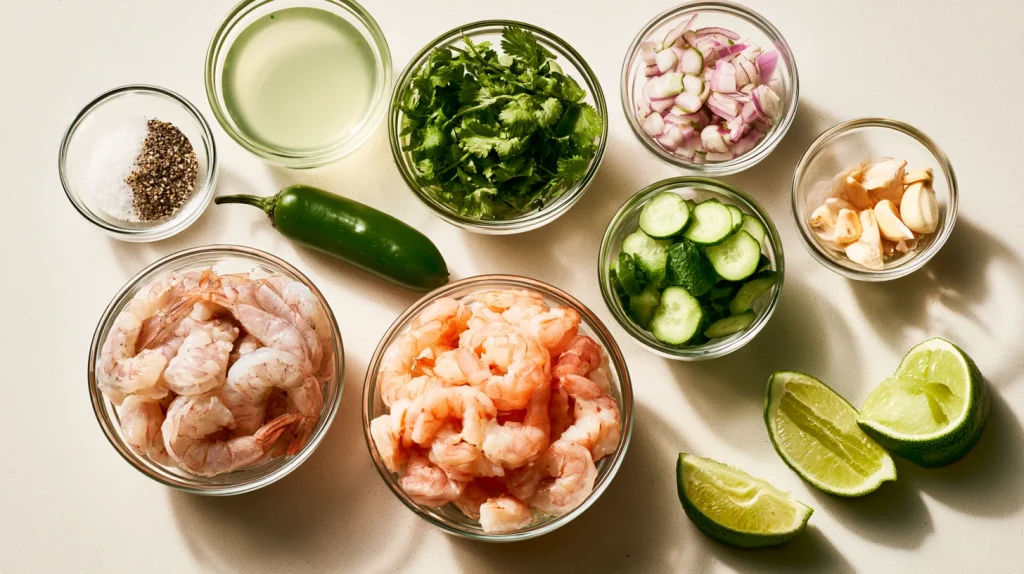
Ingredients
For the Shrimp
For the Aguachile Sauce
For the Vegetables
For Finishing
Substitution Notes
Step-by-Step Instructions

Step 1: Prepare the Shrimp
Peel and devein the shrimp, removing the shells and tails according to your preference, then rinse them briefly under cold water and pat them completely dry with paper towels because excess moisture can dilute the chile lime sauce. For a traditional raw preparation, carefully slice each shrimp lengthwise along the back without cutting completely through it, then open it gently so the shrimp lies flat and has a larger surface for the sauce. If using raw seafood, make sure the shrimp has been properly handled and is specifically suitable for raw consumption, and keep it refrigerated throughout preparation; alternatively, briefly cook the shrimp in gently simmering salted water until opaque and firm, immediately transfer it to an ice bath, and drain and dry it thoroughly before continuing.
Step 2: Prepare the Cucumber and Onion
Wash and dry the cucumber, then slice it into thin rounds or half moons so it remains crisp while absorbing some of the sauce, and slice the red onion as thinly as possible using a sharp knife. If the onion has a particularly strong flavor, place the slices in ice water for 5 to 10 minutes to soften their sharpness while preserving their crunch, then drain them thoroughly and pat them dry. Keep both vegetables chilled while preparing the sauce so the finished aguachile recipe shrimp remains cold and refreshing.
Step 3: Blend the Chile Lime Sauce
Add the freshly squeezed lime juice, serrano chiles, cilantro leaves, garlic, salt, and cold water to a blender and blend for approximately 30 to 45 seconds until the mixture is evenly green and mostly smooth. Taste the sauce before adding it to the seafood because lime acidity and chile heat can vary, then add a little more salt if the flavor seems flat, a small amount of cold water if the lime tastes excessively sharp, or another chile if you want more heat. The finished sauce should taste bright, spicy, fresh, and well seasoned without any single ingredient completely overpowering the shrimp.
Step 4: Strain and Taste the Sauce
For a smooth restaurant style sauce, pour the blended mixture through a fine mesh strainer into a clean bowl and gently press the solids with a spoon to extract the flavorful liquid, or leave the sauce unstrained if you prefer visible cilantro and chile particles for a more rustic Aguachile Dish. Taste it again after straining because the texture can change the way the flavors are perceived, then make any final adjustments with small amounts of salt, lime juice, or cold water. Avoid making the sauce excessively acidic because the shrimp will already provide a delicate natural sweetness that should remain noticeable.
Step 5: Arrange the Shrimp
Place the prepared shrimp in a wide, shallow serving dish and arrange the pieces in a single layer with the cut side facing upward so the chile lime mixture can contact as much of the seafood as possible. If serving individual portions, divide the shrimp evenly between chilled plates, then arrange the pieces neatly without stacking them deeply. A single layer gives you a better distribution of sauce and creates a cleaner presentation, especially when you are preparing Aguachiles Recipe Shrimp for guests.
Step 6: Add the Sauce and Vegetables
Pour the freshly prepared chile lime sauce evenly over the shrimp, making sure the liquid reaches the entire surface, then arrange the cucumber and red onion over and between the shrimp so every serving receives a good balance of seafood and vegetables. If using cooked shrimp, allow the assembled dish to rest in the refrigerator for approximately 5 to 10 minutes so the flavors can come together, while raw shrimp should be served promptly after dressing rather than left sitting in the acidic mixture for an extended period. Keep the dish cold throughout the process and avoid leaving seafood at room temperature longer than necessary.
Step 7: Garnish and Serve
Add thin slices of avocado if desired, sprinkle the remaining chopped cilantro over the shrimp, and finish with a few thin slices of serrano and fresh lime wedges for additional flavor and color, keeping the garnish restrained so the seafood remains the focus. Taste one complete bite containing shrimp, sauce, cucumber, and onion before serving, then make a final seasoning adjustment if needed and bring the dish to the table with crisp tostadas or tortilla chips. The finished aguachile recipe shrimp should be served cold and fresh, with the lime providing brightness, the chile providing controlled heat, and the cucumber and onion contributing crisp texture.
How to Serve
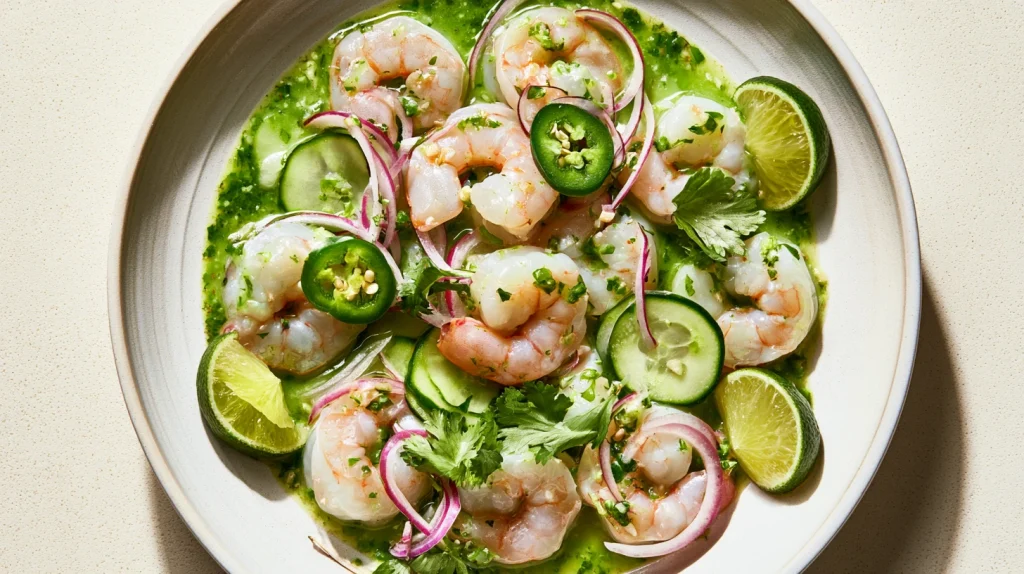
Aguachile recipe shrimp is best served cold and shortly after it has been assembled. The presentation should be simple because the natural colors of the shrimp, green sauce, cucumber, onion, and cilantro already make the dish attractive. Use a wide, shallow plate or platter so the shrimp can sit in a single layer and the chile lime sauce can spread around it.
Additional Tips
The quality of the shrimp is the foundation of this dish. Choose shrimp that smells clean and fresh, feels firm, and has been stored properly. Since an aguachile preparation is lightly seasoned, the natural flavor of the seafood remains very noticeable.
Recipe Variations
Freezing and Storage
Nutritional Information
The following nutritional estimate is based on four servings made with one pound of shrimp, lime juice, cucumber, red onion, cilantro, serrano chiles, and a small amount of avocado. It does not include tostadas or tortilla chips, which will increase the total calories and carbohydrates.
Shrimp provides a substantial amount of protein while remaining relatively low in carbohydrates. Cucumber, onion, lime, cilantro, and chiles contribute fresh flavor without requiring a heavy sauce. Avocado increases the amount of fat and calories while adding a creamy texture and additional fiber.
The nutritional values are estimates and can change according to shrimp size, exact ingredient quantities, serving portions, the amount of avocado used, and the type of tostadas or chips served with the dish.
Final Words
Making aguachile recipe shrimp at home is a great way to turn a few fresh ingredients into a dish with bold Mexican flavor. The recipe does not depend on complicated equipment or a long list of seasonings. Instead, it rewards careful ingredient selection, proper seafood handling, balanced seasoning, and good timing. The most important thing to remember is that freshness should remain the focus. Choose quality shrimp, use fresh lime juice, select firm cucumber, and use chiles that have good color and aroma. When these ingredients are fresh, the finished dish needs very little additional seasoning.
The balance of flavors is equally important. Lime should provide a bright acidity, serrano should give the dish its characteristic heat, cilantro should add freshness, and salt should make the natural sweetness of the shrimp more pronounced. Cucumber and onion then provide the texture needed to keep each bite interesting. This Aguachile Dish is also easy to personalize. If your family prefers less heat, use jalapeños. If you enjoy spicy seafood, increase the serranos. Add avocado for richness or mango for a sweet contrast.
Whether you know it as Aguachiles Recipe Shrimp, Aguachile With Shrimp, or simply an Aguachile Mexican Dish, the appeal comes from the same basic idea: fresh seafood paired with vibrant citrus, chile, herbs, and crisp vegetables.
Once you make this recipe a few times, you will become more comfortable adjusting the sauce according to the ingredients in front of you. That is one of the most valuable skills this recipe teaches. A lime may be more acidic than another, a serrano may be hotter, and shrimp may have different levels of natural sweetness, so tasting and adjusting is part of good cooking.
Serve the finished shrimp cold with crisp tostadas, fresh lime wedges, avocado, or your favorite light Mexican inspired sides. Keep the presentation simple and let the natural colors and textures speak for themselves. A homemade aguachile recipe shrimp is fresh, fast, colorful, and full of character. With careful preparation and good quality ingredients, you can create a seafood dish that feels special enough for guests while remaining simple enough for a relaxed meal at home.
FAQs

Aguachile Recipe Shrimp – Easy Mexican Shrimp Dinner
Course: Dinner Recipes4
servings20
minutes210
kcalIngredients
- For the Shrimp
1 pound large shrimp, peeled and deveined
1/2 teaspoon fine sea salt, for seasoning the shrimp
- For the Aguachile Sauce
1/2 cup freshly squeezed lime juice
3 fresh serrano chiles, stems removed
1/2 cup fresh cilantro leaves
1 small garlic clove
1/2 teaspoon fine sea salt
1/4 cup cold water
- For the Vegetables
1/2 English cucumber, thinly sliced
1/2 small red onion, very thinly sliced
1 tablespoon fresh cilantro, chopped
- For Finishing
1 avocado, thinly sliced, optional
1 small serrano chile, thinly sliced, optional
Fresh lime wedges, for serving
Tostadas or tortilla chips, for serving
Directions
- Peel and devein the shrimp, removing the shells and tails according to your preference, then rinse them briefly under cold water and pat them completely dry with paper towels because excess moisture can dilute the chile lime sauce. For a traditional raw preparation, carefully slice each shrimp lengthwise along the back without cutting completely through it, then open it gently so the shrimp lies flat and has a larger surface for the sauce. If using raw seafood, make sure the shrimp has been properly handled and is specifically suitable for raw consumption, and keep it refrigerated throughout preparation; alternatively, briefly cook the shrimp in gently simmering salted water until opaque and firm, immediately transfer it to an ice bath, and drain and dry it thoroughly before continuing.
- Wash and dry the cucumber, then slice it into thin rounds or half moons so it remains crisp while absorbing some of the sauce, and slice the red onion as thinly as possible using a sharp knife. If the onion has a particularly strong flavor, place the slices in ice water for 5 to 10 minutes to soften their sharpness while preserving their crunch, then drain them thoroughly and pat them dry. Keep both vegetables chilled while preparing the sauce so the finished aguachile recipe shrimp remains cold and refreshing.
- Add the freshly squeezed lime juice, serrano chiles, cilantro leaves, garlic, salt, and cold water to a blender and blend for approximately 30 to 45 seconds until the mixture is evenly green and mostly smooth. Taste the sauce before adding it to the seafood because lime acidity and chile heat can vary, then add a little more salt if the flavor seems flat, a small amount of cold water if the lime tastes excessively sharp, or another chile if you want more heat. The finished sauce should taste bright, spicy, fresh, and well seasoned without any single ingredient completely overpowering the shrimp.
- For a smooth restaurant style sauce, pour the blended mixture through a fine mesh strainer into a clean bowl and gently press the solids with a spoon to extract the flavorful liquid, or leave the sauce unstrained if you prefer visible cilantro and chile particles for a more rustic Aguachile Dish. Taste it again after straining because the texture can change the way the flavors are perceived, then make any final adjustments with small amounts of salt, lime juice, or cold water. Avoid making the sauce excessively acidic because the shrimp will already provide a delicate natural sweetness that should remain noticeable.
- Place the prepared shrimp in a wide, shallow serving dish and arrange the pieces in a single layer with the cut side facing upward so the chile lime mixture can contact as much of the seafood as possible. If serving individual portions, divide the shrimp evenly between chilled plates, then arrange the pieces neatly without stacking them deeply. A single layer gives you a better distribution of sauce and creates a cleaner presentation, especially when you are preparing Aguachiles Recipe Shrimp for guests.
- Pour the freshly prepared chile lime sauce evenly over the shrimp, making sure the liquid reaches the entire surface, then arrange the cucumber and red onion over and between the shrimp so every serving receives a good balance of seafood and vegetables. If using cooked shrimp, allow the assembled dish to rest in the refrigerator for approximately 5 to 10 minutes so the flavors can come together, while raw shrimp should be served promptly after dressing rather than left sitting in the acidic mixture for an extended period. Keep the dish cold throughout the process and avoid leaving seafood at room temperature longer than necessary.
- Add thin slices of avocado if desired, sprinkle the remaining chopped cilantro over the shrimp, and finish with a few thin slices of serrano and fresh lime wedges for additional flavor and color, keeping the garnish restrained so the seafood remains the focus. Taste one complete bite containing shrimp, sauce, cucumber, and onion before serving, then make a final seasoning adjustment if needed and bring the dish to the table with crisp tostadas or tortilla chips. The finished aguachile recipe shrimp should be served cold and fresh, with the lime providing brightness, the chile providing controlled heat, and the cucumber and onion contributing crisp texture.