

Dan Dan Mian Recipe – Easy Homemade Dan Dan Noodles
Dan Dan Mian Recipe
A great dan dan mian recipe is all about balance. Every bowl combines springy noodles, savory meat, rich sesame paste, fragrant aromatics, spicy chili oil, and a flavorful sauce that coats every strand. The result is a satisfying meal with layers of flavor that develop in every bite. Although this famous noodle dish originated in Sichuan cuisine, it has become a favorite around the world because it is comforting, bold, and surprisingly simple to prepare at home.
Many people think this dish is difficult because restaurant versions have deep, complex flavors. In reality, the secret comes from preparing each component correctly rather than using complicated techniques. A well seasoned meat topping, a balanced sauce, freshly cooked noodles, and crisp vegetables all work together to create an unforgettable bowl.
If you enjoy Best Dan Dan Noodles at restaurants, making them yourself allows you to control the spice level, richness, and ingredients. Homemade versions often taste fresher because the sauce is mixed just before serving, keeping every flavor bright and well balanced. This dan dan mian recipe is written especially for home cooks who want dependable results. Every instruction is explained clearly without unnecessary complexity, making it easy for beginners while still using techniques trusted by experienced chefs.
The sauce is the heart of this dish. Sesame paste provides creaminess, soy sauce adds depth, black vinegar brings gentle acidity, chili oil contributes heat, and a small amount of sugar balances the stronger flavors. When mixed properly, these ingredients create a silky sauce that clings beautifully to the noodles. This guide also works as a complete step by step reference for preparing homemade noodle dishes. Every stage builds naturally into the next, allowing you to understand not only what to do but also why each step improves the final result.
Many people searching for Better Than Takeout Dan Dan Noodles are surprised by how much fresher homemade noodles taste. Fresh garlic, ginger, green onions, and toasted sesame oil create aromas that are difficult to match with restaurant takeout after transportation.
If you enjoy Spicy Dan Dan Noodles, this recipe gives you complete control over the heat level. You can create a mild bowl with only a little chili oil or prepare a traditional spicy version with extra chili crisp and Sichuan peppercorns. The same techniques can also be adapted into a Spicy Beef Dan Dan Noodles version by replacing the traditional pork with ground beef while keeping the same balanced sauce. Small adjustments allow you to customize the recipe without losing its authentic character.
As you prepare this Spicy Chinese-inspired Noodles Recipe, you will discover that every ingredient contributes something important. Rich sesame paste creates body, vinegar brightens the sauce, chili oil adds warmth, and fresh vegetables provide contrast. Once you master this recipe, it will quickly become one of your favorite homemade noodle dishes.
Why You’ll Love This Recipe
Preparation and Cooking Time, Also Serving
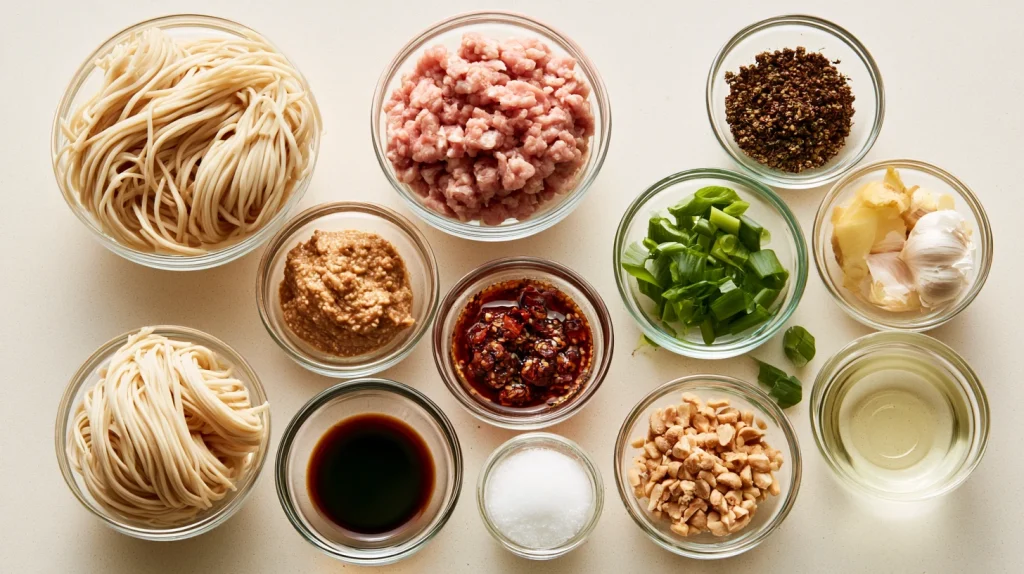
Ingredients
For the Noodles
For the Meat Topping
For the Sauce
For Garnish
Substitution Notes
Step-by-Step Instructions

Step 1: Prepare the Sauce
In a large serving bowl, combine the Chinese sesame paste, soy sauce, black vinegar, chili oil, chili crisp, sesame oil, sugar, chicken stock, and ground Sichuan pepper. Whisk until completely smooth and creamy. The sauce should have a pourable consistency that coats a spoon without becoming too thick. Set it aside while preparing the remaining ingredients so the flavors have time to blend together.
Step 2: Cook the Meat Topping
Heat the vegetable oil in a large skillet over medium high heat. Add the ground pork and cook until lightly browned while breaking it into small crumbles. Stir in the garlic, ginger, green onions, soy sauce, dark soy sauce, Shaoxing cooking wine, sugar, and white pepper. Continue cooking until the liquid has mostly evaporated and the meat becomes deeply flavorful without drying out. Remove from the heat and keep warm.
Step 3: Cook the Noodles and Vegetables
Bring a large pot of water to a rolling boil and cook the noodles according to the package directions until they are tender but still slightly firm. During the final minute of cooking, blanch the bok choy in the same pot. Drain everything immediately and briefly rinse the noodles with hot water to remove excess starch while keeping them warm.
Step 4: Assemble the Bowls
Divide the prepared sauce evenly among four serving bowls. Add the hot noodles directly over the sauce and toss thoroughly until every strand is evenly coated. Spoon the seasoned meat over the noodles and arrange the blanched bok choy alongside the meat for a balanced presentation.
Step 5: Garnish and Serve
Finish each bowl with chopped roasted peanuts, sliced green onions, toasted sesame seeds, and an extra drizzle of chili oil if desired. Serve immediately while the noodles are hot and the sauce is silky. Mix everything together thoroughly before eating so every bite includes the rich sauce, savory meat, crunchy peanuts, and fresh vegetables.
How to Serve
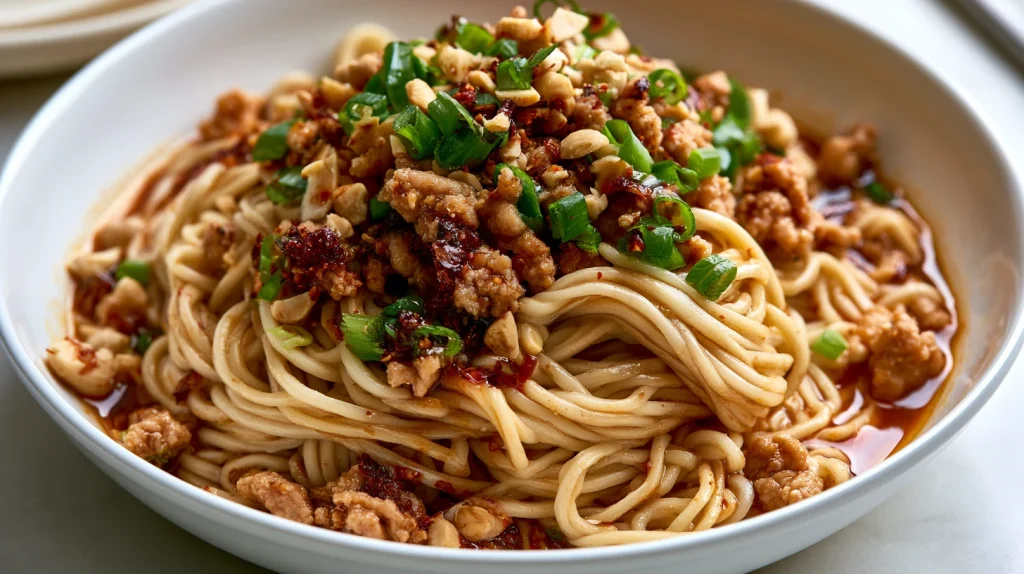
A freshly prepared dan dan mian recipe is best served immediately after the noodles are mixed with the sauce. The hot noodles absorb the rich sesame sauce while keeping their chewy texture, creating the perfect balance of flavor in every bite.
Serve the noodles in deep individual bowls so there is enough room to toss everything together before eating. Arrange the seasoned meat neatly over the noodles instead of mixing it in right away. This presentation allows everyone to appreciate each ingredient before combining them.
For an attractive finish, sprinkle chopped roasted peanuts, sliced green onions, toasted sesame seeds, and a small drizzle of chili oil over the top. These garnishes add freshness, crunch, and extra aroma without overpowering the sauce.
This dish pairs well with several simple side dishes.
For family style dinners, serve the noodles with several small side dishes so everyone can customize their meal. The combination of fresh vegetables and warm noodles creates a satisfying balance.
If you enjoy Spicy Dan Dan Noodles, offer extra chili oil and chili crisp at the table so each person can adjust the heat to their preference.
Additional Tips
Recipe Variations
Freezing and Storage
Nutritional Information
Approximate values per serving
Nutritional values are estimates and may vary depending on the ingredients used.
Final Words
This dan dan mian recipe proves that restaurant quality noodles can be prepared in your own kitchen with simple ingredients and reliable techniques. By taking time to prepare the sauce carefully, cook the meat properly, and serve the noodles while they are hot, you can create a bowl that is rich, balanced, and full of authentic flavor.
Whether you are making Easy Dan Dan Noodles for a quick family dinner or preparing Better Than Takeout Dan Dan Noodles for guests, this recipe delivers dependable results every time. As you become more comfortable with the process, you can easily adjust the spice level, toppings, and protein to suit your personal taste.
Homemade noodles are always rewarding because every ingredient is fresh and every flavor can be adjusted exactly the way you like it. Keep this dan dan mian recipe in your collection, and it will quickly become one of your favorite noodle dishes for both busy weeknights and special occasions.
FAQs

Dan Dan Mian Recipe – Easy Homemade Dan Dan Noodles
Course: Noodle Recipes4
servings20
minutes20
minutes640
kcalIngredients
- For the Noodles
14 ounces fresh Chinese wheat noodles
Water for boiling
- For the Meat Topping
1 pound ground pork
1 tablespoon vegetable oil
2 teaspoons fresh ginger, finely grated
3 garlic cloves, minced
2 green onions, finely chopped
2 tablespoons soy sauce
1 tablespoon Shaoxing cooking wine
1 teaspoon dark soy sauce
1 teaspoon sugar
½ teaspoon white pepper
- For the Sauce
3 tablespoons Chinese sesame paste
2 tablespoons light soy sauce
1 tablespoon Chinese black vinegar
2 tablespoons chili oil
1 teaspoon chili crisp
1 teaspoon toasted sesame oil
1 teaspoon sugar
¼ cup chicken stock
½ teaspoon ground Sichuan pepper
- For Garnish
2 green onions, thinly sliced
¼ cup roasted peanuts, chopped
1 cup baby bok choy, blanched
Toasted sesame seeds
Directions
- In a large serving bowl, combine the Chinese sesame paste, soy sauce, black vinegar, chili oil, chili crisp, sesame oil, sugar, chicken stock, and ground Sichuan pepper. Whisk until completely smooth and creamy. The sauce should have a pourable consistency that coats a spoon without becoming too thick. Set it aside while preparing the remaining ingredients so the flavors have time to blend together.
- Heat the vegetable oil in a large skillet over medium high heat. Add the ground pork and cook until lightly browned while breaking it into small crumbles. Stir in the garlic, ginger, green onions, soy sauce, dark soy sauce, Shaoxing cooking wine, sugar, and white pepper. Continue cooking until the liquid has mostly evaporated and the meat becomes deeply flavorful without drying out. Remove from the heat and keep warm.
- Bring a large pot of water to a rolling boil and cook the noodles according to the package directions until they are tender but still slightly firm. During the final minute of cooking, blanch the bok choy in the same pot. Drain everything immediately and briefly rinse the noodles with hot water to remove excess starch while keeping them warm.
- Divide the prepared sauce evenly among four serving bowls. Add the hot noodles directly over the sauce and toss thoroughly until every strand is evenly coated. Spoon the seasoned meat over the noodles and arrange the blanched bok choy alongside the meat for a balanced presentation.
- Finish each bowl with chopped roasted peanuts, sliced green onions, toasted sesame seeds, and an extra drizzle of chili oil if desired. Serve immediately while the noodles are hot and the sauce is silky. Mix everything together thoroughly before eating so every bite includes the rich sauce, savory meat, crunchy peanuts, and fresh vegetables.