

Japchae Recipe – Easy & Authentic Korean Glass Noodles
Japchae
Japchae is one of Korea’s most loved noodle dishes, known for its beautiful mix of chewy sweet potato glass noodles, colorful vegetables, savory beef, and a perfectly balanced soy-based sauce. Although it looks impressive enough for special occasions, it is surprisingly simple to prepare at home with the right technique. This classic Korean dish is often served during holidays, family celebrations, birthdays, and festive gatherings, but it is equally delicious as a satisfying weeknight meal.
The name japchae originally referred to a mixture of stir-fried vegetables before sweet potato noodles became the signature ingredient. Today, the dish combines translucent glass noodles with fresh vegetables, tender slices of beef, sesame oil, garlic, soy sauce, and a touch of sweetness. Every bite offers a wonderful combination of chewy noodles, crisp vegetables, and rich umami flavor that has made this dish popular around the world.
One of the reasons people love japchae is its balance. Instead of relying on heavy sauces, each ingredient is lightly seasoned to preserve its natural flavor while contributing to the overall dish. The vegetables remain vibrant and slightly crisp, the noodles absorb the savory sauce without becoming overly salty, and the sesame oil provides a fragrant finish that ties everything together.
Many home cooks search for recipes from respected Korean chefs such as Seonkyoung Longest Japchae and Japchae Maangchi because both have introduced authentic Korean cooking to audiences worldwide. While these recipes are excellent references, this version combines traditional techniques with practical tips that make it easy for beginners to achieve restaurant quality results in their own kitchens.
If you enjoy exploring Japche Recipes, you will quickly discover that every family has its own variation. Some include mushrooms, others add spinach or bell peppers, while some feature extra vegetables and skip the meat entirely. This flexibility makes japchae suitable for many different diets and occasions.
Learning How To Make Japchae properly begins with understanding that each ingredient deserves individual attention. Instead of cooking everything together in one pan, vegetables are briefly cooked separately before being combined with the noodles. This method preserves color, texture, and flavor while creating the polished appearance found in an Authentic Japchae Recipe.
Another reason this dish remains so popular is its versatility. It can be served warm, at room temperature, or even chilled, making it an excellent option for meal preparation, lunch boxes, and potluck gatherings. It also reheats well, allowing leftovers to maintain much of their original flavor and texture.
Whether you are preparing your first Korean meal or searching for the Best Japchae Recipe to add to your collection, this homemade version delivers authentic flavor with simple ingredients and clear instructions. Once you master the basic technique, you can easily customize it into a Japchae Recipe Vegetarian, create a Spicy Japchae Recipe, or experiment with your favorite vegetables while keeping the traditional character of this beloved Korean noodle dish.
Why You’ll Love This Recipe
Preparation and Cooking Time
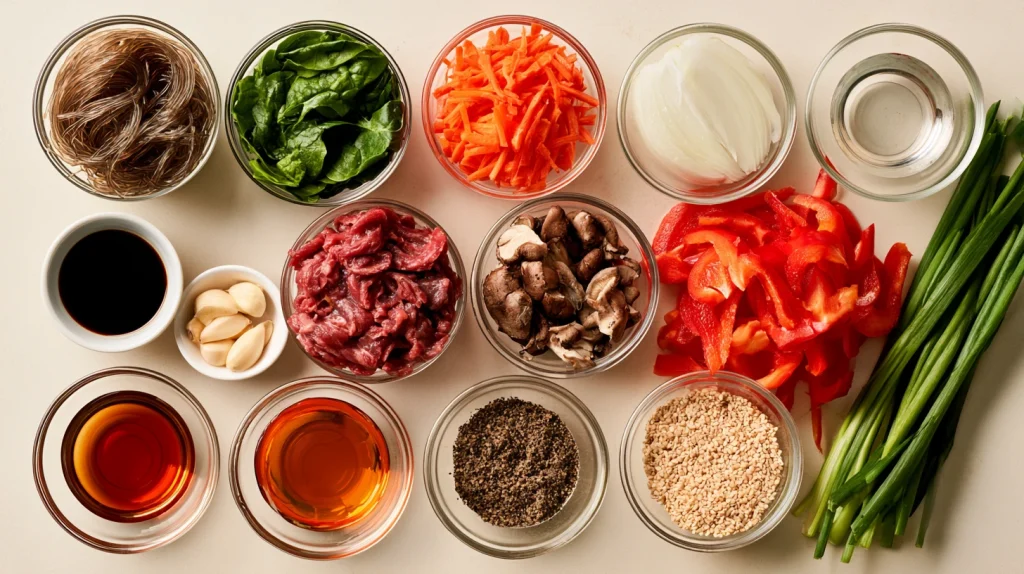
Ingredients
For the Noodles
For the Beef
For the Vegetables
For the Sauce
For Garnish
Substitution Notes
Step-by-Step Instructions

Step 1: Prepare the Noodles and Sauce
Bring a large pot of water to a boil and cook the sweet potato glass noodles according to the package instructions until they are tender but still pleasantly chewy. Drain the noodles immediately and rinse briefly with warm water to remove excess starch without cooling them completely. Toss the noodles with sesame oil, soy sauce, and brown sugar to prevent sticking while allowing them to absorb flavor as you prepare the remaining ingredients. In a separate bowl, whisk together the sauce ingredients until the sugar dissolves completely.
Step 2: Marinate and Cook the Beef
Combine the thinly sliced beef with soy sauce, sesame oil, minced garlic, brown sugar, and black pepper. Let the meat marinate for about fifteen minutes while preparing the vegetables. Heat a large skillet or wok over medium-high heat and cook the beef in a single layer until it is just browned and cooked through. Remove it from the pan immediately to keep it tender and prevent overcooking.
Step 3: Cook the Vegetables Separately
Using the same pan, lightly cook the onions until they begin to soften, followed by the carrots, bell peppers, mushrooms, and spinach, adding each ingredient separately so every vegetable keeps its natural color and texture. Stir in the minced garlic during the final minute of cooking and return all the vegetables to a large mixing bowl. This traditional technique creates the balanced appearance and texture found in an Authentic Japchae Recipe.
Step 4: Combine Everything Together
Add the cooked noodles and beef to the bowl of vegetables, then pour the prepared sauce evenly over the mixture. Using tongs or clean kitchen gloves, gently toss everything together until the noodles are evenly coated and every ingredient is well distributed. Continue tossing for several minutes so the noodles absorb the sauce while remaining glossy and springy.
Step 5: Finish and Serve
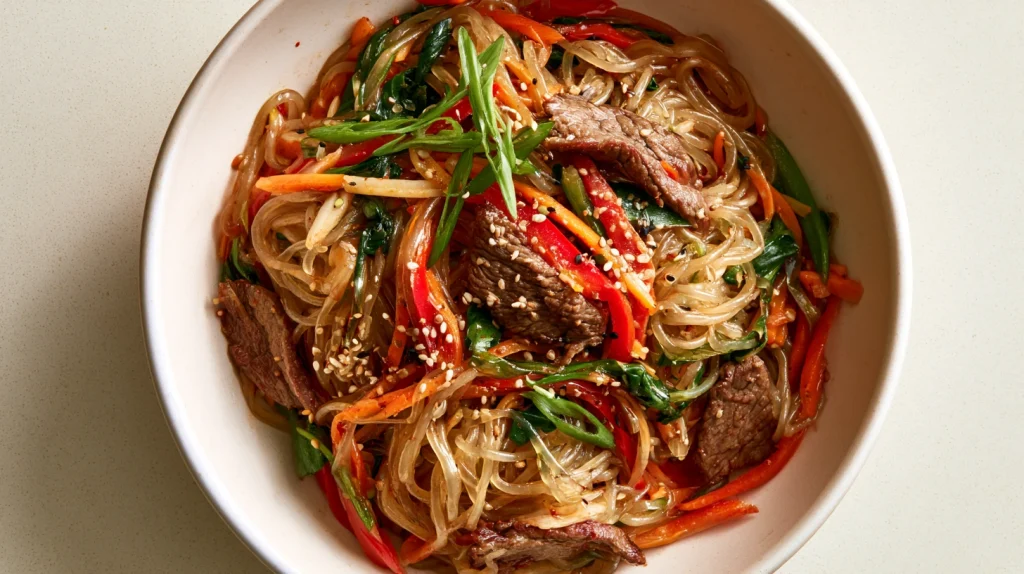
Transfer the japchae to a serving platter and sprinkle generously with toasted sesame seeds and sliced green onions. Let the dish rest for about five minutes before serving so the flavors have time to blend together. Serve warm or at room temperature as part of a Korean meal or enjoy it as a complete main dish with your favorite side dishes.
How to Serve
Japchae is one of the most versatile Korean dishes because it can be served warm, at room temperature, or lightly chilled. It works equally well as a main course, side dish, or part of a larger Korean meal.
Additional Tips
Recipe Variations
Freezing and Storage
Nutritional Information
Approximate values per serving
Nutritional values are estimates and may vary depending on the ingredients and brands used.
Final Words
Japchae is a wonderful example of how simple ingredients can come together to create a dish that is both elegant and comforting. The combination of chewy sweet potato noodles, colorful vegetables, tender beef, and a perfectly balanced soy and sesame sauce makes every bite satisfying without feeling heavy. Once you understand the traditional cooking method, preparing this Korean favorite becomes surprisingly simple.
Whether you discovered Korean cuisine through Seonkyoung Longest Japchae, Japchae Maangchi, or other popular Japche Recipes, this homemade version provides everything you need to recreate authentic flavors in your own kitchen. It is suitable for everyday family meals, festive celebrations, and meal preparation, while remaining flexible enough to become a Japchae Recipe Vegetarian or a Spicy Japchae Recipe whenever you want something different. If you have been wondering How To Make Japchae or searching for the Best Japchae Recipe, this dependable recipe is one you will return to again and again.
FAQs

Japchae Recipe – Easy & Authentic Korean Glass Noodles
Course: Noodle Recipes6
servings25
minutes20
minutes390
kcalIngredients
- For the Noodles
8 ounces Korean sweet potato glass noodles
1 tablespoon sesame oil
2 tablespoons soy sauce
1 tablespoon brown sugar
- For the Beef
8 ounces sirloin or ribeye, thinly sliced
1 tablespoon soy sauce
1 teaspoon sesame oil
1 teaspoon minced garlic
½ teaspoon brown sugar
¼ teaspoon black pepper
- For the Vegetables
1 medium carrot, julienned
1 small onion, thinly sliced
1 red bell pepper, thinly sliced
4 ounces shiitake mushrooms, sliced
3 cups fresh spinach
2 green onions, sliced
2 cloves garlic, minced
- For the Sauce
4 tablespoons soy sauce
2 tablespoons sesame oil
1½ tablespoons brown sugar
1 teaspoon rice vinegar
1 teaspoon toasted sesame seeds
¼ teaspoon freshly ground black pepper
- For Garnish
1 tablespoon toasted sesame seeds
2 green onions, thinly sliced
Directions
- Bring a large pot of water to a boil and cook the sweet potato glass noodles according to the package instructions until they are tender but still pleasantly chewy. Drain the noodles immediately and rinse briefly with warm water to remove excess starch without cooling them completely. Toss the noodles with sesame oil, soy sauce, and brown sugar to prevent sticking while allowing them to absorb flavor as you prepare the remaining ingredients. In a separate bowl, whisk together the sauce ingredients until the sugar dissolves completely.
- Combine the thinly sliced beef with soy sauce, sesame oil, minced garlic, brown sugar, and black pepper. Let the meat marinate for about fifteen minutes while preparing the vegetables. Heat a large skillet or wok over medium-high heat and cook the beef in a single layer until it is just browned and cooked through. Remove it from the pan immediately to keep it tender and prevent overcooking.
- Using the same pan, lightly cook the onions until they begin to soften, followed by the carrots, bell peppers, mushrooms, and spinach, adding each ingredient separately so every vegetable keeps its natural color and texture. Stir in the minced garlic during the final minute of cooking and return all the vegetables to a large mixing bowl. This traditional technique creates the balanced appearance and texture found in an Authentic Japchae Recipe.
- Add the cooked noodles and beef to the bowl of vegetables, then pour the prepared sauce evenly over the mixture. Using tongs or clean kitchen gloves, gently toss everything together until the noodles are evenly coated and every ingredient is well distributed. Continue tossing for several minutes so the noodles absorb the sauce while remaining glossy and springy.
- Transfer the japchae to a serving platter and sprinkle generously with toasted sesame seeds and sliced green onions. Let the dish rest for about five minutes before serving so the flavors have time to blend together. Serve warm or at room temperature as part of a Korean meal or enjoy it as a complete main dish with your favorite side dishes.