

Mandu Korean Recipe – Easy Korean Cuisine Dumplings
Mandu Korean
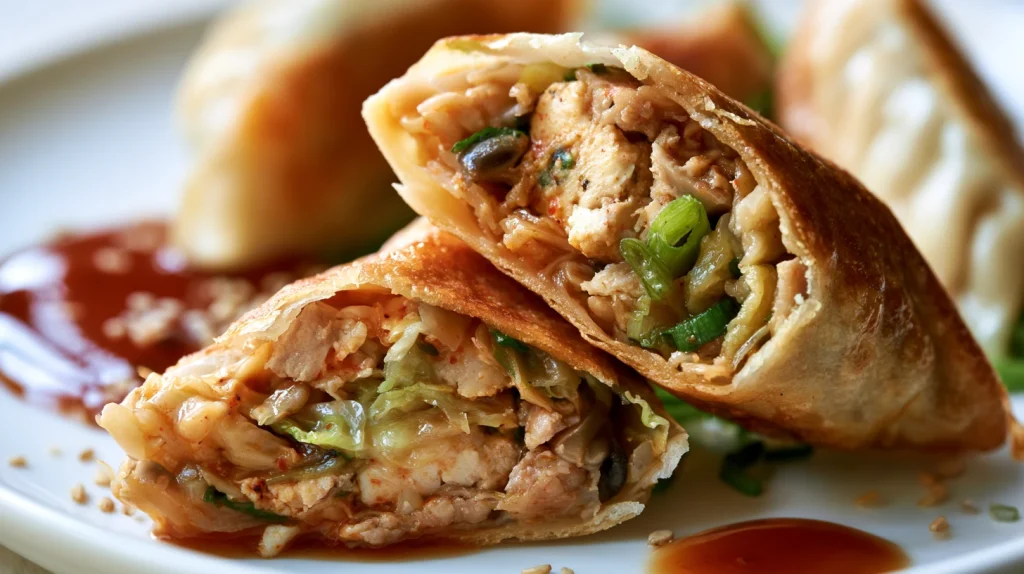
Mandu Korean dumplings are one of the most comforting foods in Korean cuisine. These small filled dumplings are made by wrapping a thin dough around a savory mixture, then cooking them by steaming, boiling, pan-frying, or adding them to soup. Their appeal comes from the contrast between the tender wrapper and the flavorful filling, which can contain meat, vegetables, tofu, noodles, or a combination of these ingredients.
Mandu Korean food is especially versatile because the same basic dumpling can be prepared in several different ways. Pan-fried mandu develops a crisp golden underside while remaining tender on top, steamed mandu has a soft and delicate texture, and boiled mandu works beautifully in soups and broths. This makes mandu suitable for everything from a quick snack to a substantial family meal.
Traditional Korean dumplings often include ingredients such as ground pork, beef, napa cabbage, garlic, green onions, tofu, and glass noodles. The filling should be flavorful but not excessively wet. Controlling moisture is one of the most important parts of making good Korean Food Dumplings because excess liquid can weaken the wrapper and make the dumplings difficult to seal. This recipe uses a balanced filling of ground pork, vegetables, tofu, and noodles. The combination produces a juicy, savory center while giving the mandu enough texture to remain interesting after cooking. The seasoning is deliberately straightforward, allowing the natural flavors of the ingredients to remain noticeable.
Dumplings Mandu are also excellent for meal preparation. You can assemble a large batch, cook what you need immediately, and freeze the remaining dumplings for later. Frozen mandu can go directly into boiling water, a steamer, or a pan, making them a practical homemade option for busy days. The shape and presentation of mandu can vary considerably. Some are folded into half-moon shapes, while others are sealed into round or pleated forms. You do not need perfect folds to make delicious dumplings. A secure seal and evenly distributed filling are much more important than appearance.
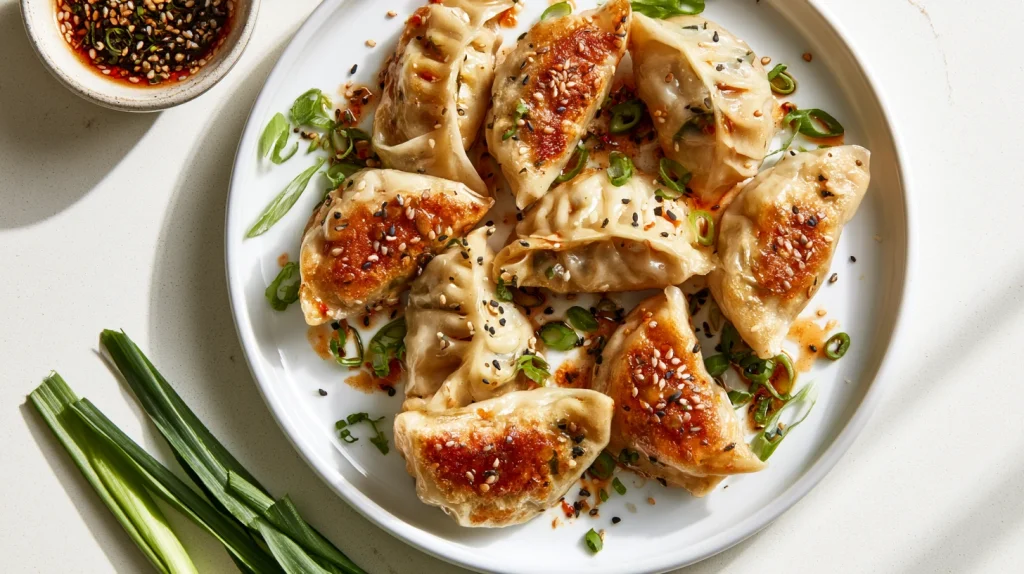
Mandu are often served with a simple dipping sauce made from soy sauce, vinegar, sesame oil, and optional chili. The acidity of the vinegar cuts through the richness of the filling, while sesame oil contributes a fragrant finish. For soup-style mandu, the dumplings can be cooked directly in a light broth with vegetables and egg. Mandu Korean Food is also visually appealing, making it a natural subject for Dumplings Food Images. Golden pan-fried wrappers, neatly folded dumplings, fresh green onions, sesame seeds, and a simple dipping bowl create an attractive presentation without requiring complicated styling.
If you enjoy Korean Mandu Aesthetic food photography, focus on clean plating and natural textures. A simple ceramic plate filled with golden dumplings can look more appealing than an overcrowded presentation. Keep the garnish minimal and let the dumplings remain the main subject. The term Mandu Coreano is also used to refer to Korean-style dumplings in Spanish-language food content. Regardless of the name used, the basic idea remains the same: a thin wrapper surrounding a seasoned filling that can be cooked in several delicious ways.
It is worth noting that Korean mandu are different from every other type of dumpling, even though they share some broad similarities with dumplings from other Asian cuisines. The seasoning, filling combinations, dipping sauces, and cooking methods give Korean mandu their own character. This recipe focuses on pan-fried mandu because it provides an especially satisfying combination of textures. The bottom becomes crisp and golden, while the upper wrapper stays tender and the filling remains juicy. Once you understand the basic technique, you can easily adapt the same dumplings for steaming, boiling, or soup.
Why You’ll Love This Recipe
Preparation and Cooking Time, Also Serving
The preparation time depends on how quickly you can fold and seal the dumplings. If this is your first time making mandu, work slowly and focus on creating a secure seal rather than trying to make the dumplings quickly.
For a meal, serve approximately 6 to 8 dumplings per person with dipping sauce and a simple vegetable side. For an appetizer or party platter, 3 to 5 dumplings per person is usually enough when other dishes are being served.
Ingredients
For Assembly
For the Dipping Sauce
Substitution Notes
Step-by-Step Instructions

Step 1: Prepare the Vegetables and Tofu
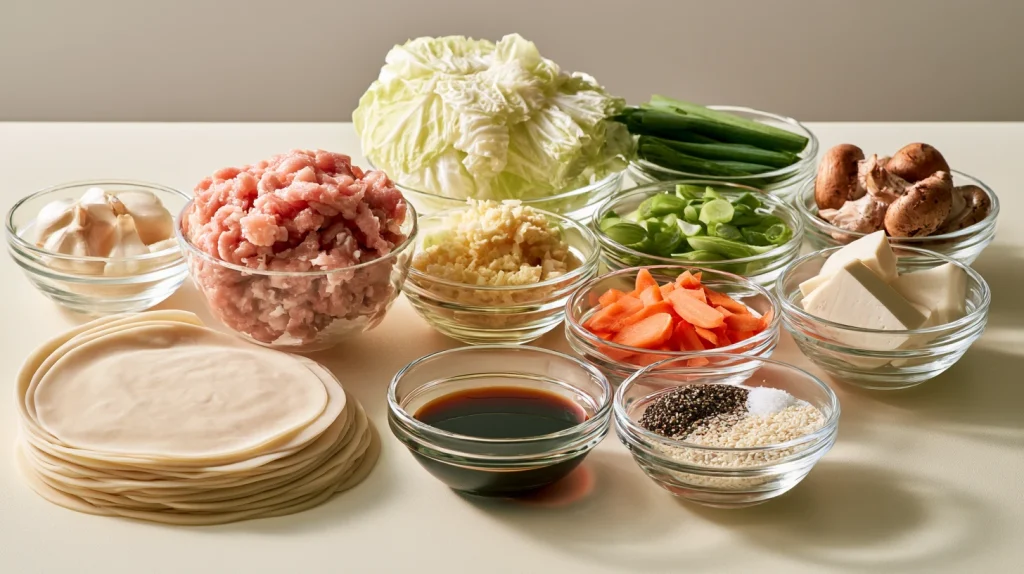
Finely chop the napa cabbage, onion, and green onions, then place the cabbage in a bowl with a small pinch of salt and let it sit for several minutes before squeezing it firmly to remove excess moisture. Crumble the tofu and press it gently between clean paper towels to remove as much water as possible, because a dry filling is easier to wrap and produces mandu that hold their shape during cooking.
Step 2: Prepare the Glass Noodles
Cook the sweet potato glass noodles according to the package instructions until tender, then drain them thoroughly and allow them to cool enough to handle. Chop the noodles into small pieces so they distribute evenly throughout the filling rather than forming long strands that make the dumplings difficult to seal.
Step 3: Mix the Mandu Filling
Place the ground pork, prepared cabbage, onion, green onions, garlic, tofu, chopped glass noodles, soy sauce, sesame oil, ginger, black pepper, salt, sugar, and egg in a large bowl, then mix thoroughly with clean hands or a sturdy spoon until the ingredients are evenly distributed. Mix in one direction for a few minutes so the meat becomes slightly cohesive, but do not mash the filling into a completely smooth paste because a little texture gives the cooked mandu a better bite.
Step 4: Fill the Dumpling Wrappers
Place one wrapper on a clean work surface and keep the remaining wrappers covered with a slightly damp towel so they do not dry out. Spoon approximately 1 tablespoon of filling into the center of the wrapper, leaving enough open space around the edge to seal it securely, then lightly moisten half of the wrapper edge with cold water.
Step 5: Seal the Mandu
Fold the wrapper over the filling to create a half-moon shape, press the edges together firmly, and pinch or pleat the seam if desired to create a secure seal. Check each dumpling for gaps or trapped filling along the edge, because even a small opening can allow the filling to escape during cooking and cause the wrapper to split.
Step 6: Pan-Fry the Mandu
Heat the neutral oil in a large nonstick skillet over medium heat, arrange the mandu in a single layer with a little space between them, and cook for approximately 2 to 3 minutes until the bottoms become lightly golden. Pour the 1/2 cup water into the side of the pan, immediately cover with a lid, and steam the dumplings for approximately 6 to 8 minutes until the filling is fully cooked and the wrappers become tender.
Step 7: Crisp and Serve
Remove the lid once the water has evaporated and allow the mandu to cook for another 1 to 2 minutes so the bottoms become crisp again, then transfer them carefully to a serving plate. Mix the soy sauce, rice vinegar, sesame oil, honey, sesame seeds, green onion, and optional Korean chili flakes in a small bowl and serve the dipping sauce alongside the hot mandu.
How to Serve
Additional Tips
Recipe Variations
Freezing and Storage
Nutritional Information
The following values are approximate and based on one serving of 6 pan-fried mandu with a portion of dipping sauce. Actual nutrition will vary depending on the wrapper size, meat used, amount of oil absorbed during cooking, and exact ingredients.
The dipping sauce contributes additional sodium, particularly if you use a generous amount of soy sauce. If you want to reduce sodium, use a reduced-sodium soy sauce and serve a smaller amount of dipping sauce.
For a lighter version, use ground chicken, reduce the amount of oil used for pan-frying, and increase the vegetables in the filling. Steaming the mandu instead of pan-frying also reduces the amount of added cooking oil.
Final Words
Mandu Korean cooking is a great example of how simple ingredients can become a deeply satisfying meal with the right technique. The filling does not need complicated seasoning, and the wrappers do not need perfect pleats. What matters most is controlling moisture, creating a secure seal, and cooking the dumplings carefully. The combination of pork, tofu, cabbage, green onions, garlic, ginger, and glass noodles creates a filling with several layers of texture. The crisp bottom from pan-frying adds another dimension that makes each bite more satisfying.
Once you understand the basic method, you can easily make Korean Food Dumplings according to your preferences. Use beef for a richer flavor, chicken for a lighter version, kimchi for spice and acidity, or additional vegetables for a meat-free filling. Mandu are also practical because they freeze so well. Making a large batch at home means you can have homemade Dumplings Mandu ready for a quick meal whenever you need them. Frozen dumplings can go straight into a pan, steamer, or pot of broth without requiring complicated preparation.
If you are interested in Mandu Korean Food, do not worry about making every dumpling look identical. Experienced cooks also understand that handmade dumplings naturally vary in shape. Focus on a tight seal, consistent filling, and even cooking. For presentation, simple is often best. Golden dumplings arranged on a clean ceramic plate with a small bowl of dipping sauce can create beautiful Dumplings Food Images without complicated styling. A few green onions and sesame seeds are enough to finish the dish.
The same recipe can also become a completely different meal depending on how you cook it. Pan-frying gives you crisp edges, steaming produces soft wrappers, boiling creates tender dumplings, and soup turns the mandu into a warm and comforting dish. If you have seen Korean Mandu Aesthetic food photography, you may notice that the most appealing images focus on texture. A golden crust, delicate wrapper, visible filling, and small dipping bowl tell the story of the dish without needing excessive decoration.
Mandu Coreano is another name you may encounter when searching for Korean dumplings, but regardless of the language used to describe them, the cooking principles remain the same. Keep the filling balanced, control moisture, seal the wrappers carefully, and cook them until the filling is completely done. Homemade mandu are worth the effort because they give you control over every part of the dish. You can make them spicy or mild, meaty or vegetable-filled, crisp or tender, and serve them as an appetizer or complete meal.
Once you make your first batch, the folding process becomes much easier. Prepare the filling in advance, set up a clean assembly station, keep the wrappers covered, and work at a comfortable pace. Whether you are cooking Mandu Dumplings for a family dinner, preparing a freezer batch, or creating a beautiful Korean-inspired platter, this recipe gives you a reliable foundation for making delicious mandu at home.
FAQs

Mandu Korean Recipe – Easy Korean Cuisine Dumplings
Course: Appetizers8
servings35
minutes15
minutes510
kcalIngredients
1 pound ground pork
1 cup finely chopped napa cabbage
1/2 cup finely chopped yellow onion
3 green onions, finely chopped
2 cloves garlic, finely minced
1/2 cup firm tofu, finely crumbled
1/2 cup cooked sweet potato glass noodles, finely chopped
1 tablespoon soy sauce
1 tablespoon sesame oil
1 teaspoon grated fresh ginger
1/2 teaspoon black pepper
1/2 teaspoon salt
1 teaspoon sugar
1 large egg
- For Assembly
30 round mandu or dumpling wrappers
1/3 cup cold water for sealing
2 tablespoons neutral cooking oil for pan-frying
1/2 cup water for steaming in the pan
- For the Dipping Sauce
3 tablespoons soy sauce
1 tablespoon rice vinegar
1 teaspoon sesame oil
1 teaspoon honey or sugar
1 teaspoon toasted sesame seeds
1 green onion, finely sliced
1/2 teaspoon Korean chili flakes, optional
Directions
- Finely chop the napa cabbage, onion, and green onions, then place the cabbage in a bowl with a small pinch of salt and let it sit for several minutes before squeezing it firmly to remove excess moisture. Crumble the tofu and press it gently between clean paper towels to remove as much water as possible, because a dry filling is easier to wrap and produces mandu that hold their shape during cooking.
- Cook the sweet potato glass noodles according to the package instructions until tender, then drain them thoroughly and allow them to cool enough to handle. Chop the noodles into small pieces so they distribute evenly throughout the filling rather than forming long strands that make the dumplings difficult to seal.
- Place the ground pork, prepared cabbage, onion, green onions, garlic, tofu, chopped glass noodles, soy sauce, sesame oil, ginger, black pepper, salt, sugar, and egg in a large bowl, then mix thoroughly with clean hands or a sturdy spoon until the ingredients are evenly distributed. Mix in one direction for a few minutes so the meat becomes slightly cohesive, but do not mash the filling into a completely smooth paste because a little texture gives the cooked mandu a better bite.
- Place one wrapper on a clean work surface and keep the remaining wrappers covered with a slightly damp towel so they do not dry out. Spoon approximately 1 tablespoon of filling into the center of the wrapper, leaving enough open space around the edge to seal it securely, then lightly moisten half of the wrapper edge with cold water.
- Fold the wrapper over the filling to create a half-moon shape, press the edges together firmly, and pinch or pleat the seam if desired to create a secure seal. Check each dumpling for gaps or trapped filling along the edge, because even a small opening can allow the filling to escape during cooking and cause the wrapper to split.
- Heat the neutral oil in a large nonstick skillet over medium heat, arrange the mandu in a single layer with a little space between them, and cook for approximately 2 to 3 minutes until the bottoms become lightly golden. Pour the 1/2 cup water into the side of the pan, immediately cover with a lid, and steam the dumplings for approximately 6 to 8 minutes until the filling is fully cooked and the wrappers become tender.
- Remove the lid once the water has evaporated and allow the mandu to cook for another 1 to 2 minutes so the bottoms become crisp again, then transfer them carefully to a serving plate. Mix the soy sauce, rice vinegar, sesame oil, honey, sesame seeds, green onion, and optional Korean chili flakes in a small bowl and serve the dipping sauce alongside the hot mandu.