Juicy Pan Seared Chicken Breast Recipe – Easy & Quick
Pan Seared Chicken Breast
Pan seared chicken breast is one of those dishes every home cook should master. It’s simple, quick, and deeply rewarding when done right. The beauty of this recipe lies in transforming a basic piece of chicken into a flavorful, golden masterpiece that’s juicy inside and crisp on the outside. It’s the kind of dish that looks elegant enough for dinner guests yet fits perfectly into your weekly meal rotation.
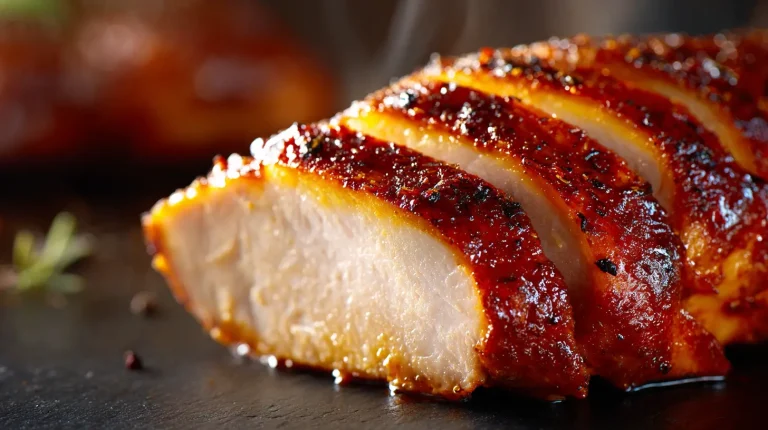
The flavor of a properly pan seared chicken breast is exceptional. The golden-brown crust carries a rich, caramelized taste from the Maillard reaction the natural browning that happens when protein meets high heat. Inside, the meat stays tender and moist, with every bite juicy and seasoned throughout. Unlike baked or boiled chicken, searing locks in flavor and texture without drying the meat.
This recipe is the backbone of countless chicken breast recipes pan variations. Once you learn how to control heat, seasoning, and timing, you can adapt it into sauces, salads, sandwiches, or pasta dishes. It’s also the base technique behind many best roasted chicken breast recipe cooking ideas for chicken breast, but done quickly on the stovetop.
Whether you’re looking for a healthy weeknight meal, a simple chicken breast recipe for meal prep, or a restaurant-style dish cooked entirely in one pan, this pan seared chicken breast delivers every time. It’s reliable, flavorful, and consistently impressive.
Why You’ll Love This Recipe
As a chef, I love this pan seared chicken breast because it teaches you one of the most important cooking lessons: control over heat and timing. Once you understand how to sear properly, you can apply the same skill to other proteins beef, pork, or fish and elevate your cooking instantly.
Home cooks love this recipe because it’s practical. It uses simple ingredients, minimal equipment, and cooks in under 20 minutes. The results are outstanding: golden, crisp-edged chicken with tender, juicy flesh. The recipe is naturally healthy, adaptable, and suits any diet or season. It can be served warm with summer salads, sliced over pasta, or paired with roasted vegetables for a comforting dinner.
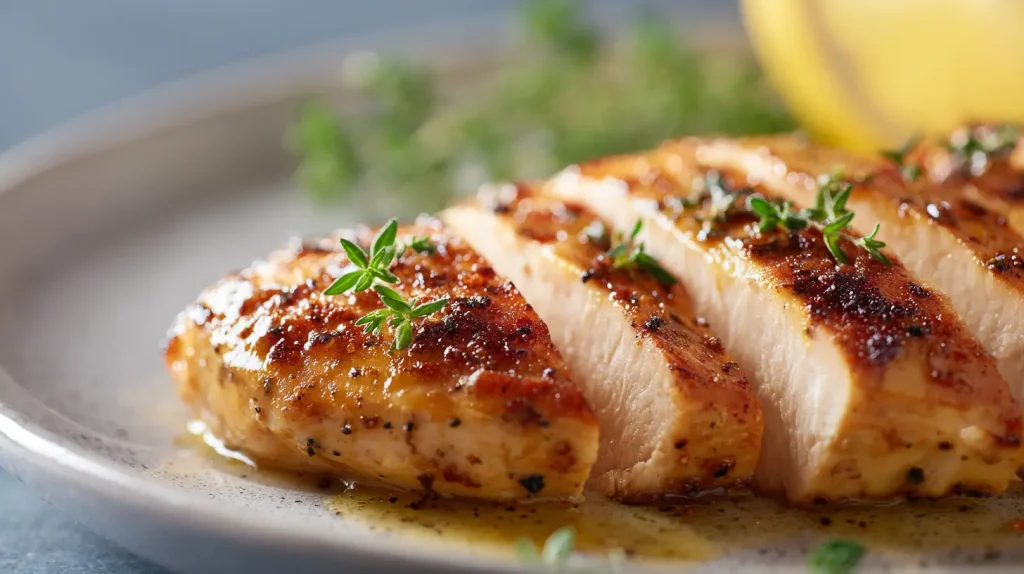
It’s also one of the most versatile chicken in a pan methods. You can easily switch up seasonings, use it as a base for pan baked chicken or finish it with a pan sauce for added depth. This technique is used by chefs everywhere because it delivers restaurant-level results from a home kitchen.
In short, this recipe is everything a cook could want fast, delicious, and reliable. It’s one of the best ways to cook chicken because it creates flavor and texture with minimal effort.
Preparation and Cooking Time, also Serving
This recipe makes four perfectly pan seared chicken breasts, enough for a family meal or for meal prepping throughout the week. Each serving pairs beautifully with vegetables, grains, or fresh salads, making it one of the most practical chicken recipes for dinner summer or any season.
Ingredients
Main Ingredients
Optional Flavor Add-ins
For Sauce (Optional but recommended)
Substitution Notes
Step-by-Step Instructions

Step 1: Prepare the Chicken
Start by patting each chicken breast dry with paper towels. Removing moisture ensures better browning. Trim any excess fat or thin edges for even cooking. Lightly pound the thicker ends using a meat mallet or rolling pin to even out thickness. This helps the chicken cook uniformly without drying out.
Step 2: Season Thoroughly
In a small bowl, mix salt, black pepper, garlic powder, and paprika. Sprinkle the mixture evenly on both sides of each chicken breast and gently pat it in with your hands. The seasoning blend gives the chicken a balanced flavor savory, aromatic, and slightly smoky. Proper seasoning before searing is what separates average chicken on pan recipes from professional-quality results.
Step 3: Heat the Pan
Place a large stainless steel or cast-iron skillet over medium-high heat. Allow it to heat up for about 2 minutes before adding oil. The pan should be hot but not smoking. Add olive oil and swirl to coat evenly. You want the surface shimmering this indicates it’s ready for searing.
Step 4: Sear the Chicken
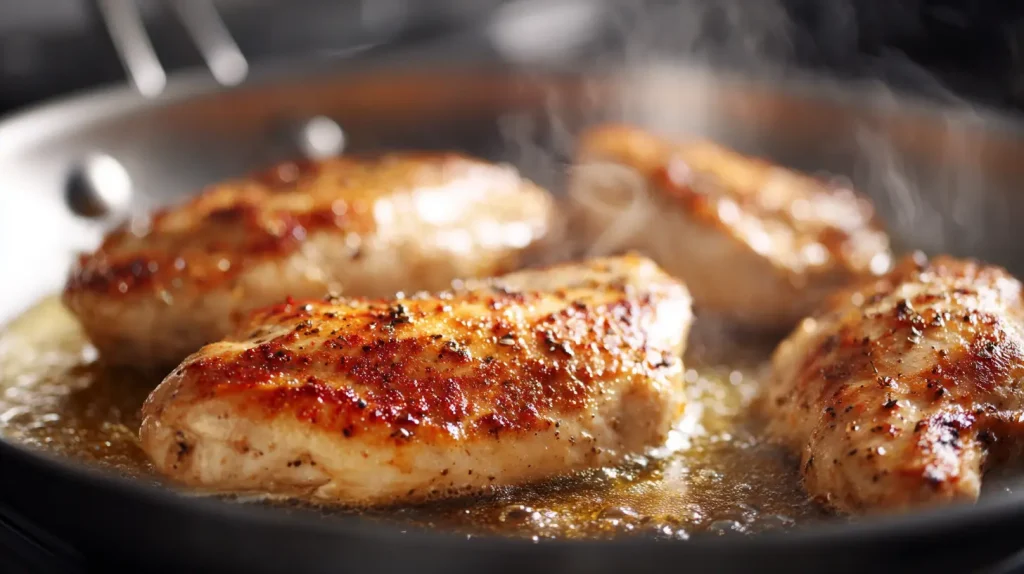
Lay the chicken breasts in the pan without overlapping. You should hear a strong sizzle when they hit the surface. Don’t move them for the first 4 to 5 minutes; this is when the golden crust forms. After that, flip carefully using tongs. The underside should be golden brown. Sear the second side for another 4 to 5 minutes. This high-heat sear caramelizes the natural juices, locking in moisture and giving the chicken that restaurant-quality color. If your chicken is browning too quickly, lower the heat slightly to prevent burning.
Step 5: Add Butter and Aromatics
Once both sides are seared, reduce the heat to medium and add the butter to the pan. As it melts, add a crushed garlic clove and herbs if using. Tilt the pan slightly and spoon the melted butter over the chicken for 1 to 2 minutes. This technique, known as basting, infuses the chicken with rich flavor and enhances juiciness.
Step 6: Check Doneness
Use a meat thermometer to check internal temperature it should read 165°F (74°C) at the thickest part. If you don’t have a thermometer, cut into one breast to check that the juices run clear and the center is opaque. Perfectly cooked stovetop chicken breast should feel firm yet springy to the touch.
Step 7: Rest Before Serving
Remove the chicken from the pan and let it rest on a plate for 5 minutes. Resting allows the juices to redistribute, keeping the meat tender. If you slice too early, those juices will run out, leaving the chicken dry.
Step 8: Optional Pan Sauce
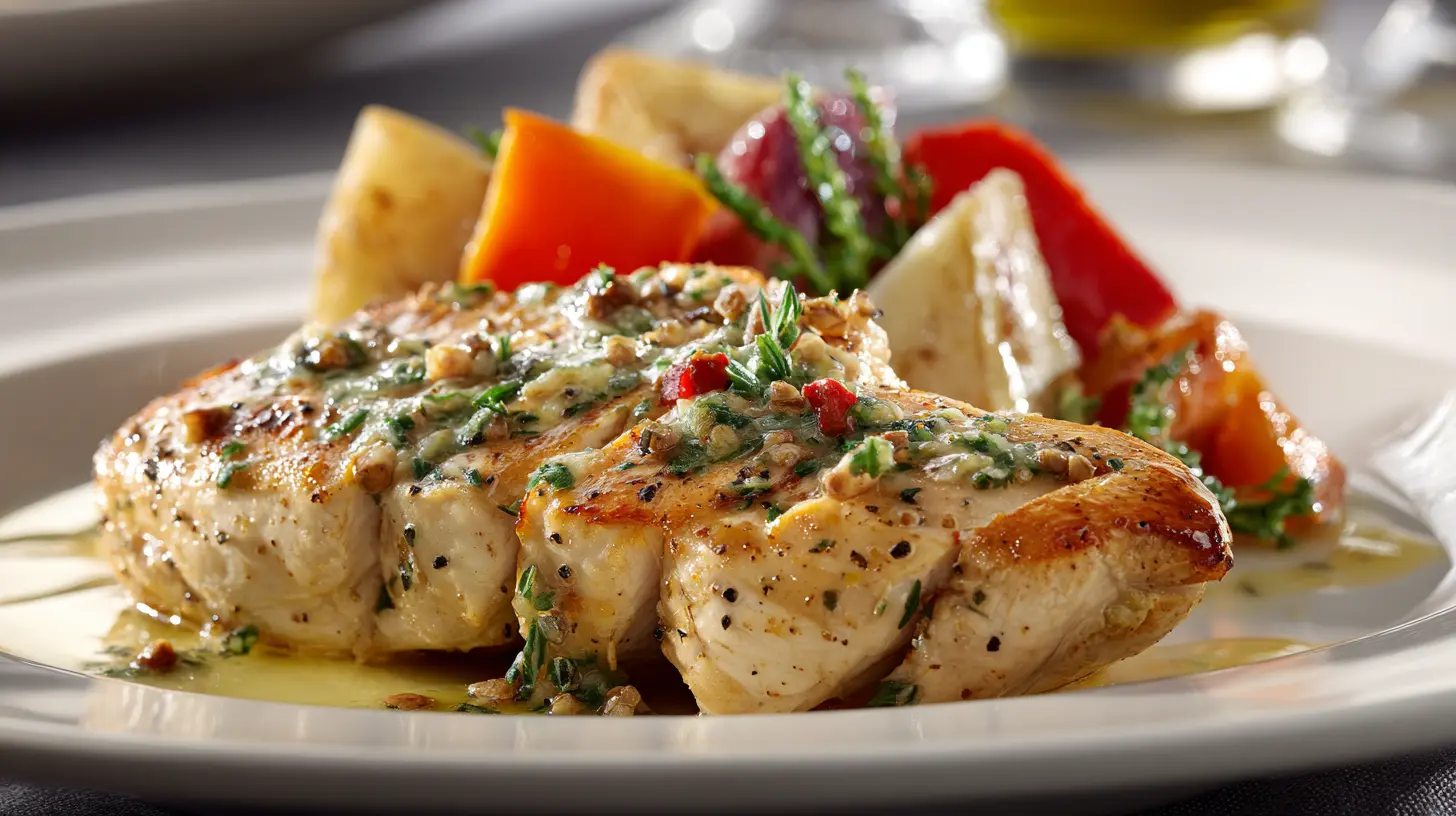
For a simple sauce, keep the pan on medium heat and pour in chicken broth. Stir to loosen the browned bits stuck at the bottom (that’s pure flavor). Add Dijon mustard, butter, and lemon juice. Stir until slightly thickened, then drizzle over the chicken when serving. This creates a rich, glossy finish that elevates the dish into one of those seared chicken breast recipes worthy of any dinner table.
How to Serve
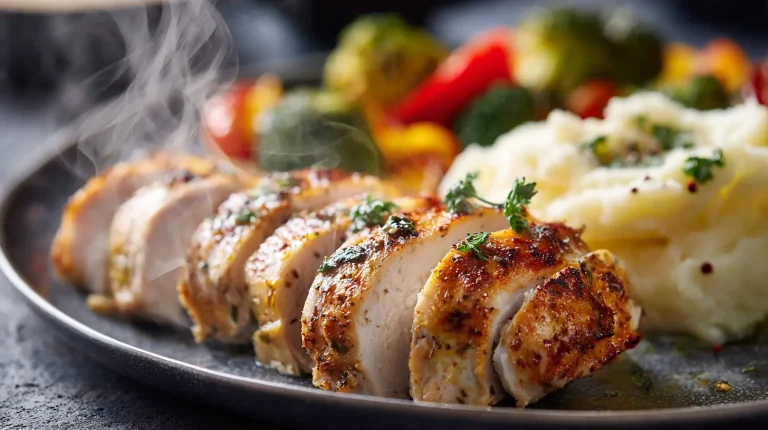
Pan seared chicken breast pairs well with nearly everything. Serve it sliced over mashed potatoes, rice, or quinoa. It also complements steamed vegetables, roasted carrots, or sautéed spinach. For a lighter option, serve over fresh greens with a lemon vinaigrette for a healthy chicken on the stove recipes salad bowl.
If you’re planning a chicken recipes for dinner summer menu, combine it with grilled corn, cherry tomatoes, and basil. For colder months, serve alongside creamy risotto or garlic butter noodles. The optional pan sauce adds richness but can also be replaced with honey mustard, mushroom cream, or a balsamic glaze.
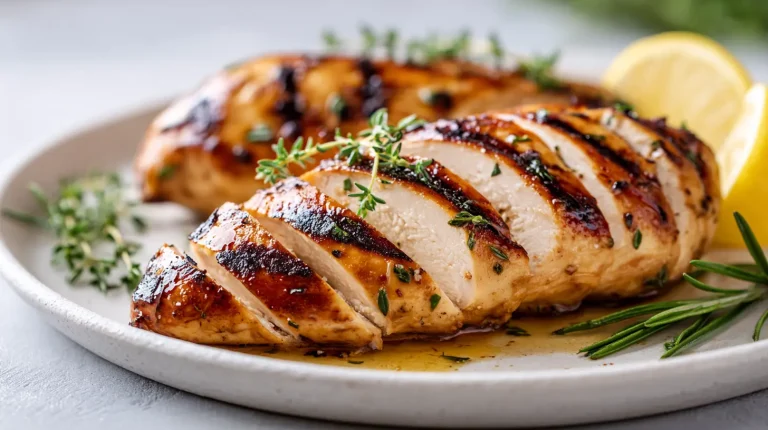
For plating, slice the pan seared chicken breast at a slight angle for a professional look. Drizzle with sauce, sprinkle chopped herbs on top, and serve on a clean white plate for contrast.
Additional Tips
Recipe Variations
These chicken in pan variations let you turn one technique into many pan seared chicken recipes worth keeping on rotation.
Freezing and Storage
Nutritional Information Per serving
These values will vary depending on sauce or added sides, but this is a balanced, high-protein meal that fits well into recipes with boneless skinless chicken for a healthy diet.
Final Words
Learning to make pan seared chicken breast properly is one of the most valuable kitchen skills. It teaches you the relationship between heat, moisture, and flavor and how a few basic ingredients can create something extraordinary. Once you master this, you’ll never struggle with dry, bland chicken again.
This recipe represents the foundation of countless chicken on the stove recipes that chefs use every day. It’s adaptable, impressive, and endlessly useful from weeknight dinners to elegant gatherings. With practice, you’ll be able to cook chicken in a pan perfectly every time, without relying on complicated steps or fancy tools.
The next time you’re planning dinner and wonder what to make, go with this classic. It’s reliable, delicious, and guaranteed to earn a spot in your list of best ever chicken recipes. Once you taste the golden crust and juicy interior, you’ll understand why chefs consider this simple dish one of the best techniques in cooking.
FAQ’s

Juicy Pan Seared Chicken Breast Recipe – Easy & Quick
Course: Chicken Breast4
servings10
minutes15
minutes290
kcalIngredients
- Main Ingredients
4 boneless skinless chicken breasts (about 6 ounces each)
1 teaspoon salt
½ teaspoon black pepper
1 teaspoon garlic powder
1 teaspoon paprika (optional for color)
2 tablespoons olive oil
1 tablespoon unsalted butter
1 teaspoon fresh lemon juice (optional for brightness)
- Optional Flavor Add-ins
1 teaspoon Italian seasoning or dried herbs of your choice
1 clove garlic, lightly crushed for infusing flavor
A few sprigs of fresh thyme or rosemary
- For Sauce (Optional but recommended)
½ cup chicken broth
1 tablespoon butter
1 teaspoon Dijon mustard
1 teaspoon lemon juice
Directions
- Start by patting each chicken breast dry with paper towels. Removing moisture ensures better browning. Trim any excess fat or thin edges for even cooking. Lightly pound the thicker ends using a meat mallet or rolling pin to even out thickness. This helps the chicken cook uniformly without drying out.
- In a small bowl, mix salt, black pepper, garlic powder, and paprika. Sprinkle the mixture evenly on both sides of each chicken breast and gently pat it in with your hands. The seasoning blend gives the chicken a balanced flavor savory, aromatic, and slightly smoky. Proper seasoning before searing is what separates average chicken on pan recipes from professional-quality results.
- Place a large stainless steel or cast-iron skillet over medium-high heat. Allow it to heat up for about 2 minutes before adding oil. The pan should be hot but not smoking. Add olive oil and swirl to coat evenly. You want the surface shimmering this indicates it’s ready for searing.
- Lay the chicken breasts in the pan without overlapping. You should hear a strong sizzle when they hit the surface. Don’t move them for the first 4 to 5 minutes; this is when the golden crust forms. After that, flip carefully using tongs. The underside should be golden brown. Sear the second side for another 4 to 5 minutes. This high-heat sear caramelizes the natural juices, locking in moisture and giving the chicken that restaurant-quality color. If your chicken is browning too quickly, lower the heat slightly to prevent burning.
- Once both sides are seared, reduce the heat to medium and add the butter to the pan. As it melts, add a crushed garlic clove and herbs if using. Tilt the pan slightly and spoon the melted butter over the chicken for 1 to 2 minutes. This technique, known as basting, infuses the chicken with rich flavor and enhances juiciness.
- Use a meat thermometer to check internal temperature it should read 165°F (74°C) at the thickest part. If you don’t have a thermometer, cut into one breast to check that the juices run clear and the center is opaque. Perfectly cooked stovetop chicken breast should feel firm yet springy to the touch.
- Remove the chicken from the pan and let it rest on a plate for 5 minutes. Resting allows the juices to redistribute, keeping the meat tender. If you slice too early, those juices will run out, leaving the chicken dry.
- For a simple sauce, keep the pan on medium heat and pour in chicken broth. Stir to loosen the browned bits stuck at the bottom (that’s pure flavor). Add Dijon mustard, butter, and lemon juice. Stir until slightly thickened, then drizzle over the chicken when serving. This creates a rich, glossy finish that elevates the dish into one of those seared chicken breast recipes worthy of any dinner table.
Notes
- Always start with dry chicken moisture prevents browning.
- Preheat your pan properly. A hot surface ensures a crisp sear and prevents sticking.
- Avoid overcrowding the pan. Cook in batches if needed to maintain high heat.
- Let the chicken rest before slicing to preserve juiciness.
- If your chicken is thick, finish cooking it in the oven for a few minutes at 375°F.
- For even more flavor, marinate chicken for 30 minutes before cooking with olive oil, lemon juice, and herbs.
- Use butter only after searing to prevent burning.