

Best Pea Risotto Recipe – Easy & Delicious Italian Classic
Pea Risotto
Pea risotto is one of those dishes that proves simple ingredients can create something truly special. Made with Arborio rice, peas, broth, Parmesan cheese, and a few carefully chosen ingredients, this classic Italian dish delivers rich flavor and a creamy texture without relying on heavy cream. The rice slowly releases its starch as it cooks, creating a naturally velvety consistency that makes every spoonful satisfying.
What makes pea risotto stand out is the balance between richness and freshness. The creamy rice provides comfort and depth, while the peas add sweetness, color, and a pleasant pop of texture. Many home cooks enjoy pea risotto because it feels elegant enough for guests yet simple enough for a weeknight dinner.
This dish can be served as a main course or as one of your favorite Italian side dishes. It pairs beautifully with roasted chicken, grilled seafood, baked fish, or seasonal vegetables. During spring celebrations, many families prepare Easter risotto because fresh peas are at their best and complement traditional holiday meals perfectly. If you’re looking for Easter Dinner Ideas that feel impressive without requiring complicated techniques, pea risotto is an excellent choice.
Another reason people love this recipe is its versatility. Some cooks add lemon for brightness, creating a delicious lemon and pea risotto. Others focus on the rich cheese flavor and prepare a creamy Parmesan risotto with peas. Whether you prefer a classic Parmesan risotto or a fresh lemon risotto variation, the foundation remains the same: perfectly cooked rice with a creamy texture and balanced flavor.
Learning how to make Parmesan risotto properly is a valuable skill because the technique can be adapted to countless ingredients and flavor combinations. Once you master this pea risotto recipe, you’ll have a foundation for creating many different risotto dishes throughout the year.
Why You’ll Love This Recipe
Pea risotto offers much more than great flavor. It is a recipe that teaches useful cooking skills while producing restaurant-quality results in your own kitchen.
Preparation and Cooking Time, Also Serving
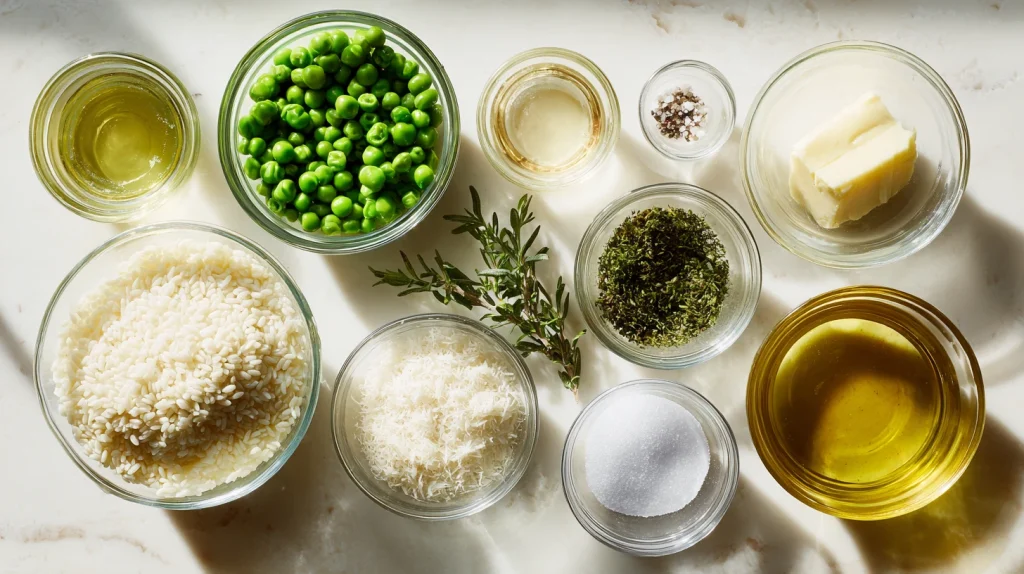
Ingredients
Substitution Notes
Step-by-Step Instructions

Step 1: Warm the Broth
Pour the broth into a saucepan and place it over low heat. Keep it warm throughout the cooking process. Warm broth helps the rice cook evenly and prevents interruptions in the cooking temperature. Cold broth can slow cooking and affect the final texture of the risotto.
Step 2: Cook the Onion
Heat the olive oil and one tablespoon of butter in a large heavy-bottomed skillet or Dutch oven over medium heat. Add the diced onion and cook for about five to six minutes, stirring occasionally. The onion should become soft and translucent without developing much color. Properly cooked onion provides a sweet and flavorful base for the risotto.
Step 3: Toast the Rice
Add the Arborio rice to the pan and stir continuously for two to three minutes. Each grain should become coated with the oil and butter mixture. Toasting the rice helps preserve the structure of the grains while encouraging the gradual release of starch that creates a creamy texture.
Step 4: Add the Wine
Pour in the white wine and stir continuously until most of the liquid has been absorbed. The wine adds depth and subtle acidity that balances the richness of the finished dish. Allowing the wine to cook down properly prevents any harsh alcoholic flavor from remaining.
Step 5: Begin Adding the Broth
Add one ladle of warm broth to the rice. Stir frequently and allow the liquid to be mostly absorbed before adding another ladle. Continue this process gradually. The rice should remain gently simmering throughout the cooking time.
Step 6: Continue Building Creaminess
Repeat the process of adding broth and stirring for approximately twenty to twenty-five minutes. As the rice cooks, starch is released into the liquid, creating the signature creamy texture associated with excellent risotto. The mixture should remain loose and fluid rather than thick and dry.
Step 7: Add the Peas
When the rice is almost fully cooked, stir in the peas. Continue cooking for about three to four minutes. The peas should become heated through while maintaining their bright color and fresh flavor. Overcooking can cause them to lose their vibrant appearance.
Step 8: Check the Texture
Taste the rice. It should be tender but retain a slight firmness at the center. The consistency should be creamy and flow gently when spooned. If necessary, add a small amount of additional warm broth to achieve the ideal texture.
Step 9: Finish with Butter, Parmesan, and Lemon
Remove the pan from the heat. Stir in the remaining tablespoon of butter, Parmesan cheese, lemon juice, and lemon zest. Mix thoroughly until everything is incorporated. This final step creates a silky finish and transforms the dish into a luxurious pea risotto.
Step 10: Rest and Serve
Allow the risotto to rest for one minute before serving. This brief resting period helps the ingredients settle together while maintaining the creamy consistency that makes risotto so enjoyable.
How to Serve
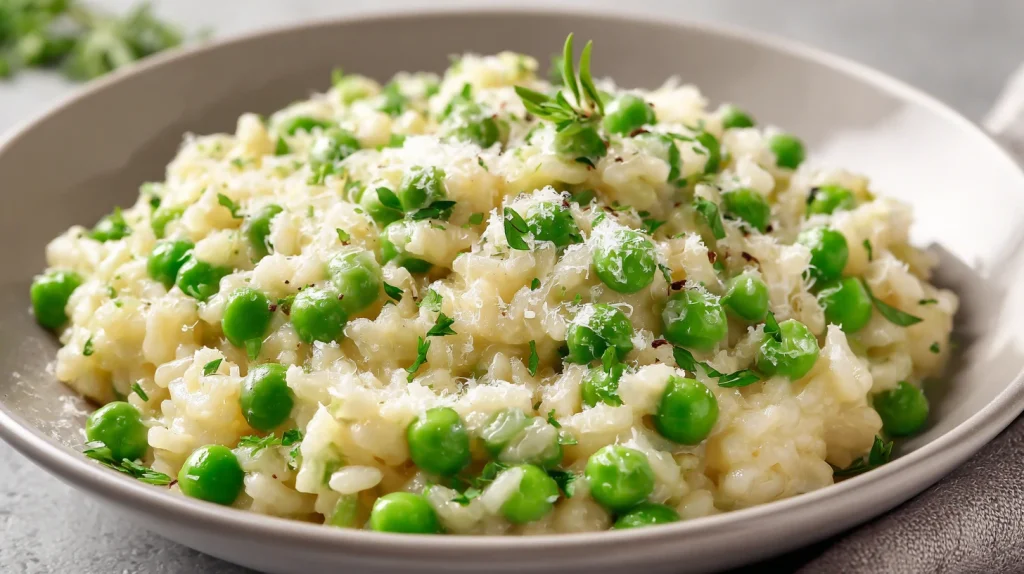
Pea risotto is versatile enough to work in many different settings. Presentation and thoughtful pairings can elevate the dish from simple comfort food to an elegant meal.
Additional Tips
Recipe Variations
Freezing and Storage
Pea risotto is best enjoyed fresh because risotto naturally changes texture as it cools. However, leftovers can still be stored successfully when handled properly.
Refrigerator Storage
Freezing Instructions
How to Reheat Refrigerated Risotto
How to Reheat Frozen Risotto
Chef’s Storage Advice
Nutritional Information
Approximate nutritional values per serving based on 4 servings.
Nutritional values may vary depending on the specific ingredients and brands used.
Final Words
Pea risotto is a wonderful example of how a few simple ingredients can create a meal that feels both comforting and elegant. The combination of creamy Arborio rice, sweet peas, rich Parmesan cheese, and bright lemon creates a dish that is satisfying without being heavy.
Learning how to make Parmesan risotto is a valuable skill because the technique can be used in countless other recipes. Once you understand the process of gradually adding broth and cooking the rice to the perfect consistency, you’ll have the confidence to create many different risotto variations throughout the year.
This recipe is suitable for casual family dinners, special occasions, holiday gatherings, and spring celebrations. It works beautifully as one of your favorite Italian side dishes or as a complete meal on its own. If you’re looking for Easter Dinner Ideas, this Easter risotto brings seasonal freshness and vibrant color to the table while still delivering the creamy comfort that guests love.
Whether you choose the classic Parmesan risotto version, a bright lemon and pea risotto, or a richer creamy Parmesan risotto with peas, the key is patience and attention to detail. Warm broth, properly cooked rice, fresh Parmesan, and careful seasoning will reward you with exceptional results every time.
Many home cooks assume risotto is difficult, but the truth is that success comes from understanding a few simple principles rather than mastering complicated techniques. Take your time, taste as you cook, and focus on texture. The result is a pea risotto that rivals what you would find in a quality Italian restaurant.
Save this recipe for busy weeknights, holiday menus, and special dinners with friends and family. Once you experience the creamy texture and balanced flavor of homemade pea risotto, it is likely to become a regular part of your recipe collection.
FAQs

Best Pea Risotto Recipe – Easy & Delicious Italian Classic
Course: Rice Recipes4
servings15
minutes35
minutes445
kcalIngredients
1½ cups Arborio rice
4 cups low-sodium vegetable broth or chicken broth
1 cup frozen peas, thawed
1 small yellow onion, finely diced
2 tablespoons olive oil
2 tablespoons unsalted butter
¾ cup freshly grated Parmesan cheese
½ cup dry white wine
1 teaspoon salt, or to taste
½ teaspoon black pepper
2 tablespoons chopped fresh parsley
1 tablespoon fresh lemon juice
1 teaspoon lemon zest
Directions
- Pour the broth into a saucepan and place it over low heat. Keep it warm throughout the cooking process. Warm broth helps the rice cook evenly and prevents interruptions in the cooking temperature. Cold broth can slow cooking and affect the final texture of the risotto.
- Heat the olive oil and one tablespoon of butter in a large heavy-bottomed skillet or Dutch oven over medium heat. Add the diced onion and cook for about five to six minutes, stirring occasionally. The onion should become soft and translucent without developing much color. Properly cooked onion provides a sweet and flavorful base for the risotto.
- Add the Arborio rice to the pan and stir continuously for two to three minutes. Each grain should become coated with the oil and butter mixture. Toasting the rice helps preserve the structure of the grains while encouraging the gradual release of starch that creates a creamy texture.
- Pour in the white wine and stir continuously until most of the liquid has been absorbed. The wine adds depth and subtle acidity that balances the richness of the finished dish. Allowing the wine to cook down properly prevents any harsh alcoholic flavor from remaining.
- Add one ladle of warm broth to the rice. Stir frequently and allow the liquid to be mostly absorbed before adding another ladle. Continue this process gradually. The rice should remain gently simmering throughout the cooking time.
- Repeat the process of adding broth and stirring for approximately twenty to twenty-five minutes. As the rice cooks, starch is released into the liquid, creating the signature creamy texture associated with excellent risotto. The mixture should remain loose and fluid rather than thick and dry.
- When the rice is almost fully cooked, stir in the peas. Continue cooking for about three to four minutes. The peas should become heated through while maintaining their bright color and fresh flavor. Overcooking can cause them to lose their vibrant appearance.
- Taste the rice. It should be tender but retain a slight firmness at the center. The consistency should be creamy and flow gently when spooned. If necessary, add a small amount of additional warm broth to achieve the ideal texture.
- Remove the pan from the heat. Stir in the remaining tablespoon of butter, Parmesan cheese, lemon juice, and lemon zest. Mix thoroughly until everything is incorporated. This final step creates a silky finish and transforms the dish into a luxurious pea risotto.
- Allow the risotto to rest for one minute before serving. This brief resting period helps the ingredients settle together while maintaining the creamy consistency that makes risotto so enjoyable.