

Fresh Pesto Pizza Recipe – Easy Homemade Basil Pesto Pizza
Pesto Pizza
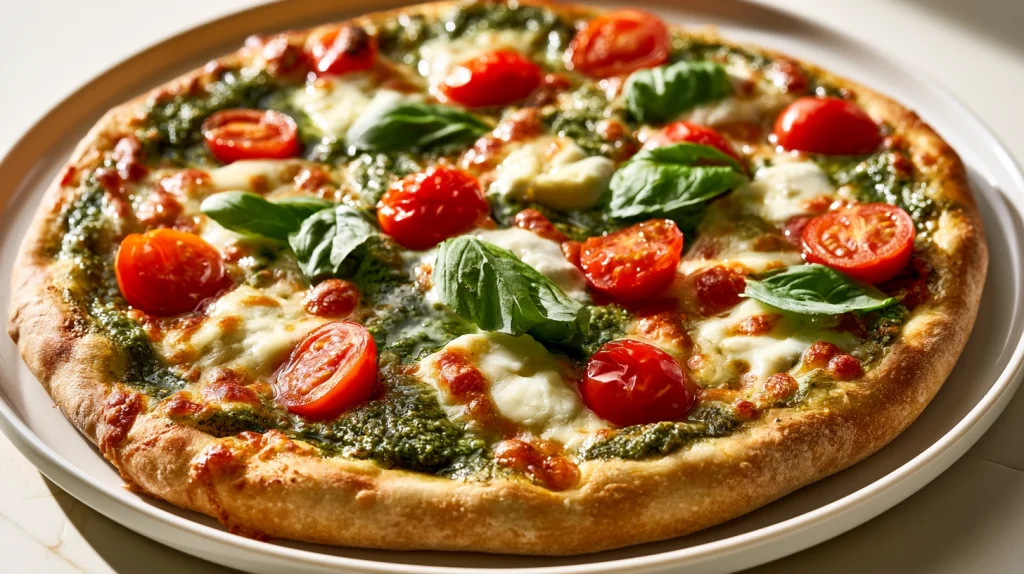
Pesto pizza is a fresh, flavorful alternative to traditional tomato sauce pizza. Instead of building the pizza around a red tomato base, this version uses fragrant basil pesto as the main source of flavor, then pairs it with creamy mozzarella and a crisp, golden crust. The combination works because pesto brings several flavors at once. Fresh basil provides an herbal aroma, Parmesan adds savory depth, garlic brings sharpness, and olive oil gives the sauce a rich texture. When baked with mozzarella, the pesto becomes even more fragrant while the cheese melts into the crust.
A well made pesto pizza should not be overloaded with toppings. Pesto is already concentrated in flavor, so a few carefully selected ingredients usually produce a better result than a crowded pizza. Mozzarella is an especially good partner because its mild flavor balances the stronger basil and garlic notes.
This recipe uses homemade pesto, but a good quality prepared pesto can also make an excellent weeknight pizza. If you are looking for the best pesto for pizza, choose one with a fresh basil flavor, good olive oil, Parmesan or another hard cheese, and enough garlic to provide character without becoming overpowering. The crust matters just as much as the toppings. A thin or medium thickness pizza crust allows the pesto and mozzarella to shine without making each slice too heavy. A crisp edge also provides a useful contrast to the creamy cheese and oily pesto.
There are plenty of pesto pizza toppings ideas you can explore once you have the basic recipe mastered. Cherry tomatoes, roasted vegetables, mushrooms, grilled chicken, prosciutto, spinach, artichokes, and extra Parmesan can all work well. The important thing is to use toppings that complement rather than overpower the pesto. This is also a practical pizza for home cooks because the pesto can be prepared in advance. Once the pesto is ready, assembling the pizza takes only a few minutes. That makes it suitable for weeknight dinners, weekend lunches, casual entertaining, and simple family meals.
If you enjoy pizza recipes with pesto, this version gives you a reliable foundation that can be customized according to the season. Fresh tomatoes work beautifully in summer, roasted vegetables are excellent in cooler months, and grilled chicken makes the pizza more substantial. The finished pizza is best served immediately. Fresh basil, a little Parmesan, and a final drizzle of olive oil can be added after baking for extra aroma and visual appeal.
Why You’ll Love This Recipe
The most important point when making pesto pizza is controlling moisture. Pesto contains olive oil, and mozzarella can release water as it melts. A thin layer of pesto and well drained cheese help the crust stay crisp.
Preparation and Cooking Time, also Serving
If using prepared pizza dough and store bought pesto, the active preparation time can be reduced considerably.
Ingredients
For the Pizza Dough
For the Homemade Pesto
For the Pizza Topping
Substitution Notes
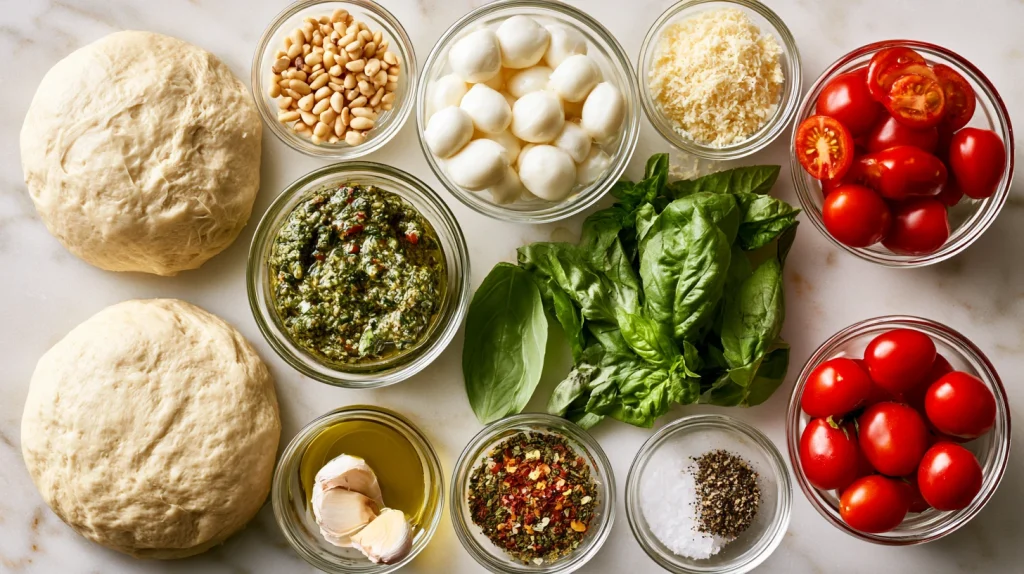
Step by Step Instructions
Step 1: Prepare the Pizza Dough
Combine the flour, instant yeast, and salt in a large bowl, add the warm water and olive oil, and mix until a rough dough forms before transferring it to a lightly floured surface and kneading for approximately 6 to 8 minutes until smooth and elastic.
Step 2: Let the Dough Rest
Shape the dough into a smooth ball, place it in a lightly oiled bowl, cover it, and allow it to rest in a warm area for approximately 30 minutes or until it becomes softer and easier to stretch.
Step 3: Make the Pesto
Add the basil, Parmesan, pine nuts, garlic, lemon juice, salt, and black pepper to a food processor and pulse until finely chopped, then gradually add the olive oil while processing until the pesto reaches a thick but spreadable consistency.
Step 4: Prepare the Pizza Base
Preheat the oven to 475°F with a pizza stone or baking sheet inside if available, then transfer the rested dough to a lightly floured surface and stretch or roll it into a 12 inch round while leaving the outer edge slightly thicker.
Step 5: Add the Pesto and Toppings
Spread approximately 3/4 cup of pesto evenly over the dough while leaving a small border around the edge, then distribute the shredded mozzarella, fresh mozzarella, and halved cherry tomatoes evenly across the surface before adding Parmesan.
Step 6: Bake the Pizza
Transfer the pizza to the preheated baking surface and bake for approximately 10 to 14 minutes until the crust is golden and crisp around the edges and the mozzarella is fully melted with lightly browned spots.
Step 7: Finish and Serve
Remove the pizza from the oven and allow it to rest for approximately 2 minutes before adding fresh basil, a light drizzle of olive oil, and optional crushed red pepper, then cut into wedges and serve immediately.
How to Serve
A light finish is usually best. Since pesto already contains olive oil and cheese, you do not need a heavy sauce or excessive garnish.
Additional Tips
If your pesto seems very oily, do not automatically add more cheese or nuts. Instead, use a thinner layer on the pizza. Pesto is concentrated, so a little can provide plenty of flavor.
Recipe Variations
Freezing and Storage
Nutritional Information
These values are approximate and will vary depending on the pizza dough, pesto, cheese, toppings, and serving size used.
Final Words
Pesto pizza is an excellent recipe for anyone who wants something different from the usual tomato based pizza. The combination of basil, garlic, Parmesan, olive oil, and mozzarella creates a pizza that tastes fresh, savory, and rich without requiring a long list of ingredients.
The secret is balance. Pesto is already concentrated, so you do not need to cover the dough with a thick layer. A moderate amount provides plenty of basil flavor while allowing the crust to remain crisp. Making homemade pesto is worth the small amount of extra effort when fresh basil is available. The flavor is brighter and more aromatic than many prepared versions, and you can adjust the garlic, cheese, lemon, and olive oil to your preference.
If you are researching how to make herb pesto pizza, the process is straightforward. Prepare the dough, make or select your pesto, spread it evenly, add mozzarella and a few complementary toppings, then bake everything in a very hot oven. For anyone looking for pesto pizza toppings ideas, start with ingredients that naturally complement basil. Tomatoes, mushrooms, spinach, chicken, artichokes, roasted peppers, prosciutto, and creamy cheeses are all excellent choices.
A simple pesto mozzarella pizza is often the best place to begin. It lets the pesto remain the main flavor while mozzarella adds richness and a satisfying melted texture. This recipe also gives you a useful base for experimenting with pizza recipes with pesto. Once you know how much pesto your crust can handle, you can create different combinations based on the ingredients you have available.
If you have leftover pesto, do not let it go to waste. Use it with pasta, roasted vegetables, grilled chicken, sandwiches, eggs, or grain bowls. Making a batch of pesto can therefore become the starting point for several meals. For the best homemade result, focus on a hot oven, a well rested dough, drained mozzarella, and a moderate amount of pesto. These small details have a much bigger effect on the final pizza than adding complicated ingredients.
Serve the pizza immediately with a simple salad, roasted vegetables, or fresh fruit for a complete meal. The bright green pesto and golden crust also make an attractive presentation for casual dinners and entertaining. Once you make this version, you may find yourself using pesto as a regular pizza sauce alternative. It is quick, flexible, flavorful, and easy to adapt.
FAQs

Fresh Pesto Pizza Recipe – Easy Homemade Basil Pesto Pizza
Course: Appetizers4
servings20
minutes15
minutes540
kcalIngredients
- For the Pizza Dough
2 1/2 cups bread flour or all purpose flour
1 teaspoon instant yeast
1 teaspoon fine sea salt
1 tablespoon olive oil
3/4 cup warm water, plus more if needed
- For the Homemade Pesto
2 cups packed fresh basil leaves
1/3 cup freshly grated Parmesan cheese
1/4 cup pine nuts
2 garlic cloves
1/2 cup extra virgin olive oil
1 tablespoon fresh lemon juice
1/4 teaspoon salt
1/4 teaspoon black pepper
- For the Pizza Topping
3/4 cup prepared basil pesto
2 cups shredded low moisture mozzarella
1/2 cup fresh mozzarella, torn into small pieces
1/2 cup cherry tomatoes, halved
2 tablespoons grated Parmesan
1 tablespoon extra virgin olive oil
Fresh basil leaves for finishing
Crushed red pepper, optional
Directions
- Combine the flour, instant yeast, and salt in a large bowl, add the warm water and olive oil, and mix until a rough dough forms before transferring it to a lightly floured surface and kneading for approximately 6 to 8 minutes until smooth and elastic.
- Shape the dough into a smooth ball, place it in a lightly oiled bowl, cover it, and allow it to rest in a warm area for approximately 30 minutes or until it becomes softer and easier to stretch.
- Add the basil, Parmesan, pine nuts, garlic, lemon juice, salt, and black pepper to a food processor and pulse until finely chopped, then gradually add the olive oil while processing until the pesto reaches a thick but spreadable consistency.
- Preheat the oven to 475°F with a pizza stone or baking sheet inside if available, then transfer the rested dough to a lightly floured surface and stretch or roll it into a 12 inch round while leaving the outer edge slightly thicker.
- Spread approximately 3/4 cup of pesto evenly over the dough while leaving a small border around the edge, then distribute the shredded mozzarella, fresh mozzarella, and halved cherry tomatoes evenly across the surface before adding Parmesan.
- Transfer the pizza to the preheated baking surface and bake for approximately 10 to 14 minutes until the crust is golden and crisp around the edges and the mozzarella is fully melted with lightly browned spots.
- Remove the pizza from the oven and allow it to rest for approximately 2 minutes before adding fresh basil, a light drizzle of olive oil, and optional crushed red pepper, then cut into wedges and serve immediately.