

Pizza Maison – Easy Homemade Artisan Pizza Recipe
Pizza Maison
Pizza maison means homemade pizza, but a truly good pizza maison is more than dough topped with sauce and cheese. It is about controlling each part of the process so the crust becomes crisp underneath, light around the edges, and strong enough to hold the toppings without becoming soggy. When you make pizza at home, you can also control the amount of sauce, cheese, vegetables, herbs, and cured meats, making every pizza exactly the way you like it.
The foundation is the dough. A good homemade pizza dough should be soft and slightly elastic before baking, then develop a crisp base and a pleasantly chewy interior in the oven. The dough does not need complicated handling. The important details are using the correct amount of water, giving the dough enough time to rest, and avoiding excessive flour during shaping. This pizza maison recipe uses a simple dough made with bread flour, instant yeast, water, olive oil, salt, and a small amount of honey. The dough is easy enough for a home cook but has enough structure for a professional-style result.
The sauce is intentionally simple. Crushed tomatoes, garlic, olive oil, salt, black pepper, and dried oregano create a fresh tomato base that allows the crust and toppings to remain noticeable. There is no need to cook the sauce for a long time because it will continue cooking and concentrating inside the hot oven. Mozzarella provides the creamy, stretchy cheese layer associated with classic pizza. A small amount of Parmesan adds a stronger savory flavor and helps create a beautifully browned surface. Fresh basil can be added after baking so its aroma stays bright.
One of the advantages of pizza maison is that the basic dough can become many different styles. You can make a simple cheese pizza, a vegetable-heavy pizza, a spicy Sopressata Pizza, or an Italian Pizza With Arugula finished with fresh greens after baking. Arugula is particularly useful as a finishing ingredient because it adds peppery freshness to rich toppings. A combination of thinly sliced prosciutto, mozzarella, Parmesan, and fresh arugula creates a balanced pizza that resembles an Arugula Proscuitto Pizza while remaining practical to make at home.
You can also use this dough for a Pizza Artisan approach. Artisan pizza does not require expensive equipment or complicated ingredients. It mainly depends on good dough handling, high heat, restrained toppings, and attention to texture. For cooks interested in lighter pizza ideas, pita bread can also be used as a shortcut. A Pitta Pizza Healthy variation can be made with whole wheat pita, a thin layer of tomato sauce, moderate cheese, and plenty of vegetables. It will not have the same texture as traditional yeast dough, but it is convenient for a quick meal.
A Margherita Pita Pizza is another useful variation when you want something fast. Pita provides a crisp base, while tomato, mozzarella, basil, and olive oil keep the topping combination simple and fresh. This recipe can also be adapted to different regional pizza styles. Montreal Style Pizza, for example, can inspire a pizza with a more generous topping arrangement and a substantial crust, while a thinner homemade base can be used when you prefer a lighter and crispier result.
Pizza Florentine is another useful source of inspiration for homemade pizza. Spinach, garlic, cheese, and sometimes egg can be used to create a rich but vegetable-focused topping. The same basic dough gives you a flexible foundation for experimenting with different flavor combinations.
The term Elliot Pizza can refer to different pizza-related searches or styles depending on context, so this recipe does not attempt to reproduce a specific restaurant preparation. Instead, the homemade dough and topping method provide a flexible base for creating your own version with ingredients you enjoy. The main goal is to make pizza that tastes fresh and balanced rather than overloaded. Too much sauce can make the center wet, too much cheese can prevent the crust from becoming crisp, and too many toppings can weigh down the dough. A restrained approach usually produces a better homemade pizza.
High oven temperature is another important part of the process. A properly heated oven gives the dough enough heat to expand quickly while helping the bottom develop a crisp texture. A preheated pizza stone or steel can improve the result, but a heavy baking sheet can also work well.
Pizza maison is especially rewarding because the finished pizza can be customized for different occasions. Make one large pizza for a family dinner, prepare several smaller pizzas for guests, or let everyone choose their own toppings. Once you understand the basic dough, sauce, and baking method, homemade pizza becomes much easier. The recipe below gives you a reliable starting point and enough flexibility to create everything from a simple Margherita-style pizza to a more elaborate Pizza Artisan.
Why You’ll Love This Recipe
Preparation and Cooking Time, Also Serving
The dough can be made a day ahead and refrigerated for a slower fermentation. If using this method, allow the dough to sit at room temperature for approximately 45 to 60 minutes before shaping so it becomes easier to stretch.
If you are making the pizza on the same day, allow the dough to rise until it has noticeably expanded and feels soft and airy. The exact rising time depends on the temperature of your kitchen.
Ingredients
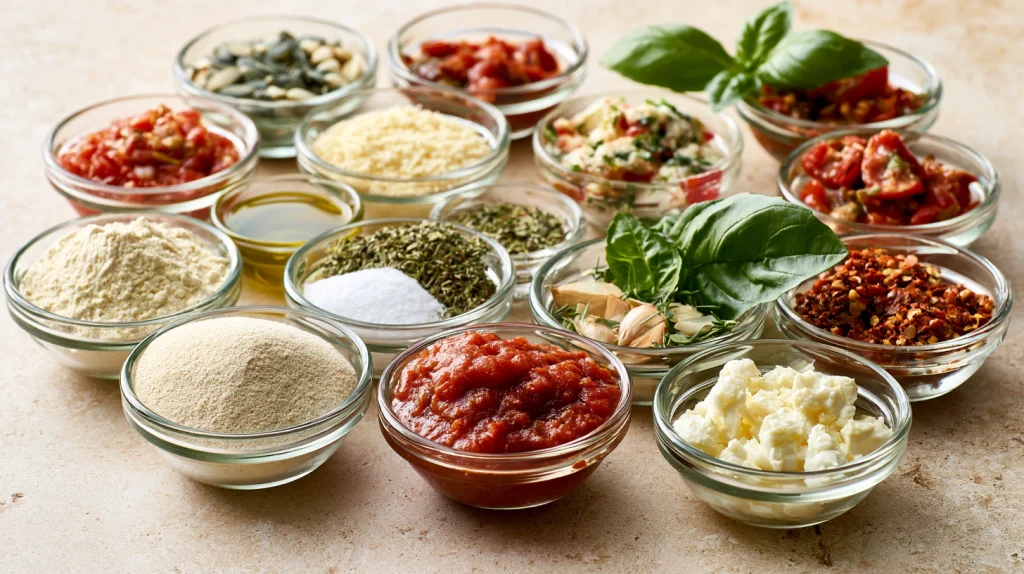
For the Pizza Dough
For the Tomato Sauce
For the Cheese Topping
Optional Toppings
Substitution Notes
Step-by-Step Instructions
Step 1: Make the Pizza Dough
Place the warm water, honey, and instant yeast in a large mixing bowl and stir briefly, then add the bread flour, salt, and olive oil and mix until a rough dough forms with no large patches of dry flour remaining. Transfer the dough to a lightly floured work surface and knead for approximately 7 to 9 minutes until it becomes smooth, elastic, and slightly tacky without feeling excessively sticky, then shape it into a ball and place it in a lightly oiled bowl.
Step 2: Let the Dough Rise
Cover the bowl tightly with plastic wrap or a clean reusable cover and leave the dough in a warm, draft-free area for approximately 1 1/2 to 2 hours, or until it has increased noticeably in volume and feels soft when gently pressed. For deeper flavor, divide the dough into two portions after the first rise, place each portion in a lightly oiled covered container, and refrigerate for 12 to 24 hours before bringing it back to room temperature for shaping.
Step 3: Prepare the Sauce and Toppings
Combine the crushed tomatoes, olive oil, grated garlic, dried oregano, salt, and black pepper in a small bowl and stir until evenly mixed, then prepare all toppings before shaping the dough by shredding the mozzarella, grating the Parmesan, washing and thoroughly drying the arugula, slicing any vegetables, and arranging the cured meats so everything is ready to use once the dough is stretched.
Step 4: Preheat the Oven
Place a pizza stone, pizza steel, or heavy baking sheet in the oven and preheat it to 500°F or the highest temperature your oven safely reaches for at least 30 to 45 minutes before baking. If using a baking sheet, turn it upside down so the flat underside can be used as a larger baking surface, and keep the oven fully heated while you shape the dough.
Step 5: Shape the Pizza Dough
Transfer one portion of dough to a lightly floured surface and gently press it from the center outward with your fingertips, leaving a slightly thicker border around the edge before lifting and stretching the dough gradually until it forms an approximately 11 to 12-inch round. Avoid using a rolling pin because it can compress the gas developed during fermentation, then transfer the shaped dough to a piece of parchment paper or a lightly floured pizza peel.
Step 6: Add the Sauce, Cheese, and Toppings
Spread approximately 1/2 cup of tomato sauce over the dough in a thin, even layer while leaving about 1/2 inch around the edge uncovered, then distribute half of the mozzarella and Parmesan over the sauce and add your selected toppings in a restrained, even arrangement so the dough remains visible between ingredients. If making an Italian Pizza With Arugula or Arugula Proscuitto Pizza, reserve the arugula and prosciutto for after baking rather than placing all of them on the raw dough.
Step 7: Bake the Pizza
Carefully transfer the prepared pizza to the preheated stone, steel, or baking sheet and bake for approximately 10 to 14 minutes, rotating it once if your oven browns unevenly, until the crust is deeply golden around the edges, the cheese is melted and lightly browned, and the bottom feels firm when carefully checked. Remove the pizza from the oven and allow it to rest for 2 to 3 minutes before adding fresh basil, arugula, prosciutto, a light drizzle of olive oil, or crushed red pepper, then slice and serve immediately.
How to Serve
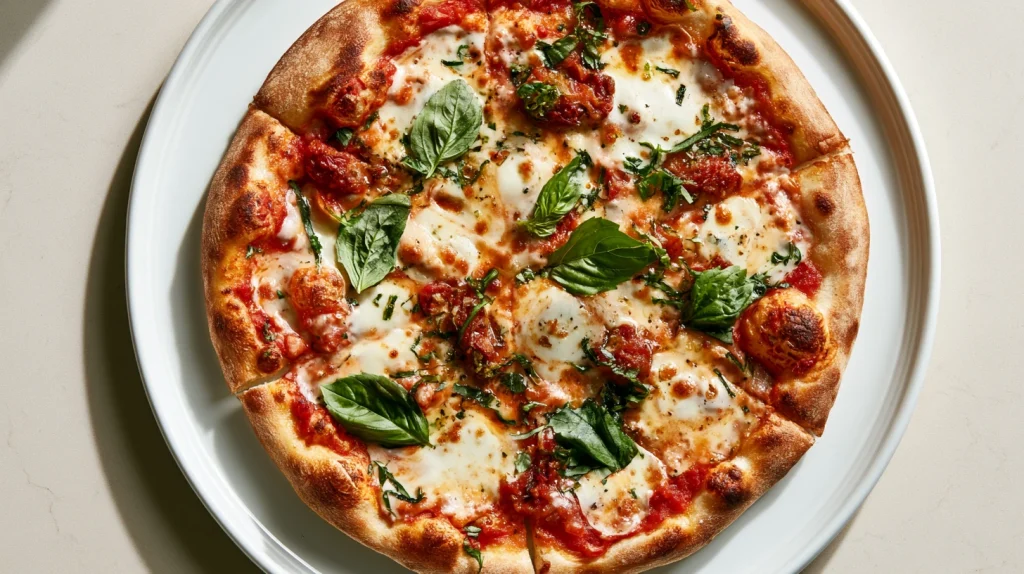
Pizza maison is best served immediately while the crust is still crisp and the cheese is warm. The toppings should complement the crust rather than overwhelm it, so keep the presentation simple and add fresh ingredients at the end whenever possible.
Additional Tips
Recipe Variations
Freezing and Storage
Nutritional Information
The following nutritional values are approximate and based on one quarter of the recipe when prepared as two medium pizzas with mozzarella, Parmesan, and tomato sauce but without optional cured meats or additional toppings.
Adding sopressata, prosciutto, extra cheese, or other cured meats will increase the calorie, fat, and sodium content. Using reduced-sodium cheese and limiting cured meat can help create a lighter pizza.
A Pitta Pizza Healthy variation made with whole wheat pita, moderate cheese, vegetables, and a thin layer of sauce may have a different nutritional profile depending on the pita and toppings used.
The easiest way to control the nutritional content of pizza maison is to control portions and toppings. A thinner layer of cheese, plenty of vegetables, fresh greens, and leaner toppings can create a satisfying pizza without making the meal excessively heavy.
Final Words
Pizza maison is one of those recipes that becomes more useful the more you make it. Once you understand how the dough should feel, how thinly to spread the sauce, how much cheese is enough, and how hot the oven needs to be, homemade pizza becomes much less intimidating. The most important lesson is that great pizza does not require an enormous list of ingredients. Good flour, properly fermented dough, quality tomatoes, mozzarella, olive oil, and a few fresh toppings can create an excellent meal.
The dough is the foundation, so give it enough time to develop. A slow refrigerator fermentation is especially helpful when you have the time. It allows the dough to develop more flavor while making your cooking day easier because the main preparation is already finished. The toppings should be treated with the same restraint. A pizza covered with too many ingredients may look impressive before baking, but the excess moisture and weight can prevent the crust from cooking properly. Choose a few ingredients that work together and distribute them evenly.
Fresh ingredients are particularly valuable after baking. Arugula, basil, prosciutto, Parmesan shavings, and olive oil can transform a simple pizza into something much more balanced and aromatic. This is why an Italian Pizza With Arugula or Arugula Proscuitto Pizza works so well as a homemade variation.
If you prefer cured meats, a Sopressata Pizza offers a stronger, spicier flavor. If vegetables are your priority, Pizza Florentine or a mushroom and spinach version provides plenty of texture without relying on heavy meat toppings. For busy days, pita-based versions offer a practical shortcut. A Margherita Pita Pizza can be ready much faster than traditional dough, while a Pitta Pizza Healthy variation can combine whole wheat pita with vegetables and moderate amounts of cheese.
There is also plenty of room to experiment with the style. A Pizza Artisan approach can focus on a thin, carefully stretched crust and a small number of premium toppings, while a Montreal Style Pizza inspired version can be made with a thicker base and more generous toppings. The key is to understand the basic method first. Once the dough is reliable, the sauce is balanced, and the oven is properly heated, you can create almost endless combinations.
Pizza maison is ultimately about making a restaurant-style meal using straightforward ingredients and techniques you can control at home. Give the dough time, keep the toppings balanced, bake at high heat, and finish the pizza with fresh ingredients when appropriate. The result is a homemade pizza with a crisp base, tender interior, melted cheese, flavorful toppings, and a fresh aroma that is difficult to achieve with a heavily processed frozen pizza. It is a recipe worth learning because the same basic method can become countless different meals.
FAQs

Pizza Maison – Easy Homemade Artisan Pizza Recipe
Course: Appetizers4
servings30
minutes10
minutes530
kcalIngredients
- For the Pizza Dough
3 cups bread flour, approximately 390 grams
1 1/4 cups warm water, approximately 300 milliliters
2 teaspoons instant yeast
1 teaspoon honey
1 1/2 teaspoons fine sea salt
1 tablespoon extra-virgin olive oil
- For the Tomato Sauce
1 cup crushed tomatoes
1 tablespoon extra-virgin olive oil
1 small garlic clove, finely grated
1/2 teaspoon dried oregano
1/4 teaspoon fine sea salt
1/4 teaspoon freshly ground black pepper
- For the Cheese Topping
8 ounces low-moisture mozzarella, shredded or thinly sliced
1/4 cup finely grated Parmesan cheese
2 tablespoons fresh basil leaves, torn
- Optional Toppings
3 ounces thinly sliced sopressata
2 ounces thinly sliced prosciutto
2 cups fresh arugula
1 cup baby spinach
1/2 cup sliced mushrooms
1/2 cup thinly sliced bell pepper
1/4 cup thinly sliced red onion
1 tablespoon extra-virgin olive oil for finishing
Crushed red pepper flakes, as desired
Directions
- Place the warm water, honey, and instant yeast in a large mixing bowl and stir briefly, then add the bread flour, salt, and olive oil and mix until a rough dough forms with no large patches of dry flour remaining. Transfer the dough to a lightly floured work surface and knead for approximately 7 to 9 minutes until it becomes smooth, elastic, and slightly tacky without feeling excessively sticky, then shape it into a ball and place it in a lightly oiled bowl.
- Cover the bowl tightly with plastic wrap or a clean reusable cover and leave the dough in a warm, draft-free area for approximately 1 1/2 to 2 hours, or until it has increased noticeably in volume and feels soft when gently pressed. For deeper flavor, divide the dough into two portions after the first rise, place each portion in a lightly oiled covered container, and refrigerate for 12 to 24 hours before bringing it back to room temperature for shaping.
- Combine the crushed tomatoes, olive oil, grated garlic, dried oregano, salt, and black pepper in a small bowl and stir until evenly mixed, then prepare all toppings before shaping the dough by shredding the mozzarella, grating the Parmesan, washing and thoroughly drying the arugula, slicing any vegetables, and arranging the cured meats so everything is ready to use once the dough is stretched.
- Place a pizza stone, pizza steel, or heavy baking sheet in the oven and preheat it to 500°F or the highest temperature your oven safely reaches for at least 30 to 45 minutes before baking. If using a baking sheet, turn it upside down so the flat underside can be used as a larger baking surface, and keep the oven fully heated while you shape the dough.
- Transfer one portion of dough to a lightly floured surface and gently press it from the center outward with your fingertips, leaving a slightly thicker border around the edge before lifting and stretching the dough gradually until it forms an approximately 11 to 12-inch round. Avoid using a rolling pin because it can compress the gas developed during fermentation, then transfer the shaped dough to a piece of parchment paper or a lightly floured pizza peel.
- Spread approximately 1/2 cup of tomato sauce over the dough in a thin, even layer while leaving about 1/2 inch around the edge uncovered, then distribute half of the mozzarella and Parmesan over the sauce and add your selected toppings in a restrained, even arrangement so the dough remains visible between ingredients. If making an Italian Pizza With Arugula or Arugula Proscuitto Pizza, reserve the arugula and prosciutto for after baking rather than placing all of them on the raw dough.
- Carefully transfer the prepared pizza to the preheated stone, steel, or baking sheet and bake for approximately 10 to 14 minutes, rotating it once if your oven browns unevenly, until the crust is deeply golden around the edges, the cheese is melted and lightly browned, and the bottom feels firm when carefully checked. Remove the pizza from the oven and allow it to rest for 2 to 3 minutes before adding fresh basil, arugula, prosciutto, a light drizzle of olive oil, or crushed red pepper, then slice and serve immediately.