

Easy Pizza Napolitana – Classic Italian Neapolitan Pizza
Pizza Napolitana
Pizza Napolitana is one of the most recognizable styles of Italian pizza, known for its thin center, soft edge, simple ingredients, and intense oven baked flavor. The beauty of this pizza is not in using a long list of toppings. It comes from treating a few quality ingredients with care. A traditional pizza napolitana has a dough base that is stretched thin in the center while leaving a raised border around the edge. The crust should become lightly blistered and deeply aromatic during baking, while the center remains tender enough to fold.
The classic combination is simple: tomato, mozzarella, fresh basil, olive oil, and properly fermented dough. The result is balanced rather than overloaded. Sweet tomato flavor meets creamy cheese, fragrant basil, and a crisp yet tender crust. What makes this style especially appealing is its simplicity. You do not need a complicated topping list to create a memorable pizza. In fact, adding too many ingredients can make the center heavy and prevent the crust from baking properly.
Pizza napolitana is part of a broader tradition of Neapolitan pizza styles, where technique, dough fermentation, oven temperature, and ingredient quality all play important roles. Different versions may vary in toppings and cheese, but the focus remains on the relationship between dough and a small number of flavorful ingredients. For a home cook, the biggest challenge is recreating the intense heat of a professional pizza oven. A household oven cannot always reach the same temperature, but a preheated pizza stone or baking steel can help transfer heat quickly to the dough and produce a better crust.
The dough also benefits from patience. Fermentation develops flavor and improves the texture of the finished crust. Although the actual shaping and topping process is quick, giving the dough enough time to ferment can make a noticeable difference. This pizza is also visually appealing. The red tomato, white mozzarella, and green basil create the familiar Italian color combination that makes an Italian Neapolitan pizza immediately recognizable.
Unlike heavily loaded American style pizzas, this is a pizza where restraint matters. The sauce should be thin, the mozzarella should be distributed evenly, and the basil should remain fresh and aromatic.Once you learn the basic technique, you can adapt the dough and toppings to your own oven and preferences while keeping the spirit of the style intact.
Why You’ll Love This Recipe
The most important technique is shaping the dough without pressing down the outer edge. That outer rim contains air created during fermentation, and preserving it helps create the characteristic raised crust.
Preparation and Cooking Time, also Serving
For the best results, prepare the dough the day before. The long fermentation is what gives the crust more flavor and a lighter texture.
Ingredients
For the Dough
For the Tomato Topping
For the Pizza
Substitution Notes
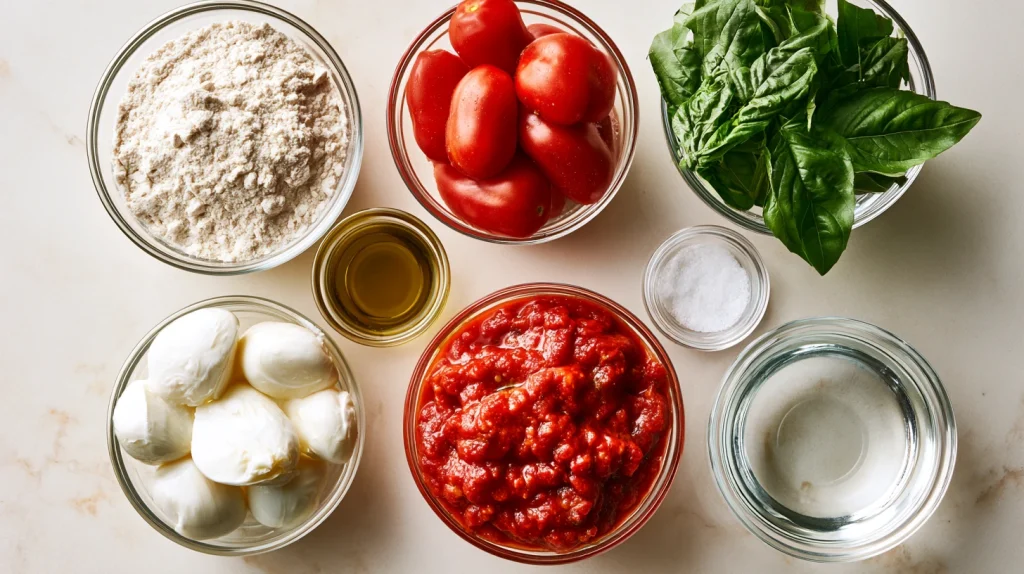
Step by Step Instructions
Step 1: Make the Dough
Add the water to a large mixing bowl, dissolve the yeast into the water, then gradually add the flour while mixing until a rough dough forms before adding the salt and continuing to mix until the dough becomes cohesive and no dry flour remains.
Step 2: Knead the Dough
Transfer the dough to a lightly floured work surface and knead it for approximately 8 to 10 minutes until it becomes smooth, elastic, and slightly tacky without feeling excessively sticky, then shape it into a smooth ball and place it in a lightly covered bowl.
Step 3: Ferment the Dough
Cover the dough and allow it to ferment at room temperature for approximately 1 to 2 hours before transferring it to the refrigerator for longer fermentation, or keep it at a suitable room temperature for a shorter fermentation schedule until it becomes noticeably lighter and more relaxed.
Step 4: Divide and Rest the Dough
Divide the fermented dough into two equal portions, shape each portion gently into a tight ball without pressing out the internal air, place the dough balls in covered containers, and allow them to rest at room temperature for approximately 30 to 60 minutes before shaping.
Step 5: Prepare the Sauce and Oven
Combine the crushed tomatoes with salt and olive oil without cooking the sauce, then place a pizza stone or baking steel in the oven and preheat the oven at its highest safe temperature for at least 45 minutes so the cooking surface becomes thoroughly heated.
Step 6: Shape and Top the Pizza
Place one dough ball on a lightly floured surface and press gently from the center outward while leaving the outer edge untouched, stretch the dough into a thin round, transfer it to a lightly floured peel, spread a thin layer of tomato sauce over the center, then add mozzarella, basil, and a small drizzle of olive oil.
Step 7: Bake and Serve
Slide the pizza onto the preheated stone or steel and bake at the highest available temperature until the crust has puffed around the edges and developed golden brown spots while the cheese is melted and bubbling, then remove the pizza, add fresh basil if desired, and serve immediately.
How to Serve
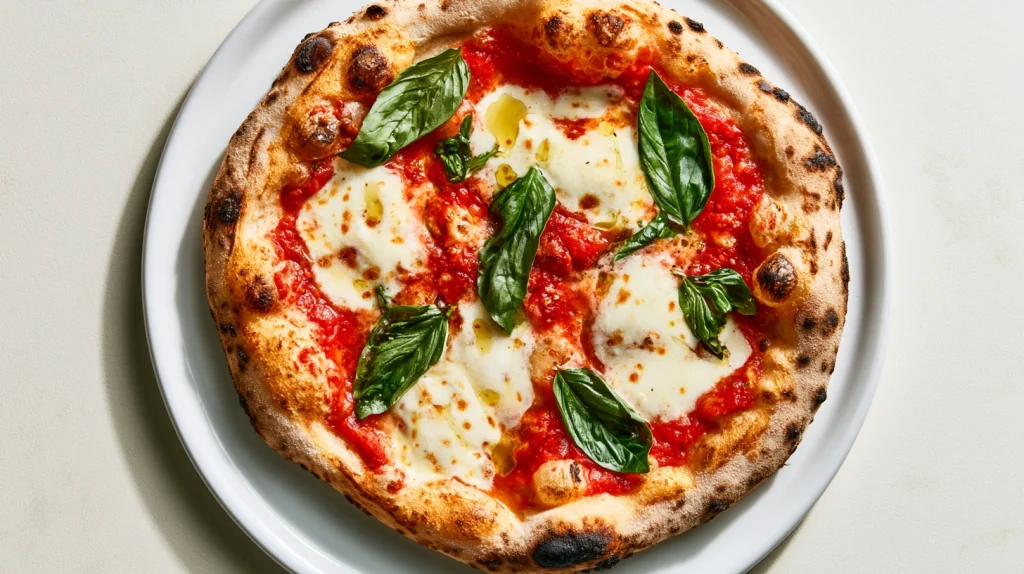
For photography, the classic combination of bright tomato sauce, white mozzarella, and fresh green basil creates the visual character often associated with Italian food pizza photography.
Additional Tips
If the dough feels difficult to stretch, do not force it. Give it another 10 to 15 minutes to relax. Gluten becomes more cooperative after resting, making it easier to stretch without tearing.
Another important point is moisture. Fresh mozzarella can release water during baking, particularly when used in large pieces. Tear or slice it into small pieces and drain excess liquid before topping the pizza.
Recipe Variations
Freezing and Storage
Nutritional Information
These values are approximate and will vary depending on the flour, mozzarella, tomato products, portion size, and amount of olive oil used.
Final Words
Pizza napolitana is a perfect example of how simple cooking can produce exceptional results when technique is handled carefully. You do not need a complicated topping list. You need well fermented dough, good tomatoes, quality mozzarella, fresh basil, olive oil, and enough heat to bake the pizza quickly. The dough deserves most of your attention. Allowing it to ferment gives the crust better flavor and a more relaxed texture, while gentle shaping preserves the air in the outer edge. That air helps create the characteristic puffed crust associated with Italian Neapolitan pizza.
A home oven will not behave exactly like a traditional wood fired pizza oven, but you can still achieve excellent results. A thoroughly preheated pizza stone or baking steel gives the dough a strong burst of heat from below, helping the crust develop color and structure. The toppings should remain restrained. This is one of the biggest differences between this style and heavily topped pizzas. Tomato should complement the dough rather than soak it, mozzarella should melt without flooding the center, and basil should provide freshness.
The broader world of Neapolitan pizza styles offers plenty of inspiration. Once you are comfortable with the basic dough, you can explore different combinations while maintaining the same principles of thin center, airy edge, balanced toppings, and high heat. This pizza also makes a beautiful Italian food pizza photo because the colors are naturally striking. The bright red tomato, creamy white cheese, green basil, and golden crust create a simple presentation that looks as good as it tastes.
If you are building an Italian pizza selection for a family gathering, make several pizzas with different toppings rather than trying to put everything on one. This keeps each pizza focused and allows everyone to discover different flavor combinations.
For a more casual meal, serve the pizza with a salad and sparkling water. For a larger Italian food pizza meal, add grilled vegetables, antipasti, or a simple dessert. The same dough can also become the foundation for creative variations. You can create a rustic breakfast pizza with suitable toppings, make a spicy version, or explore vegetable combinations without losing the character of the crust.
The real reward of making pizza at home is learning how dough responds to fermentation, temperature, shaping, and baking. Once you understand those fundamentals, pizza becomes much less intimidating. Give the dough enough time, keep the toppings balanced, heat your oven thoroughly, and work confidently. With those simple principles, you can create a homemade pizza that is flavorful, beautifully textured, and worthy of sharing.
FAQs

Easy Pizza Napolitana – Classic Italian Neapolitan Pizza
Course: Appetizers2
servings25
minutes5
minutes590
kcalIngredients
- For the Dough
500 g tipo 00 flour
325 g cool water
15 g fine sea salt
2 g instant yeast
- For the Tomato Topping
1 1/2 cups crushed San Marzano style tomatoes
1/2 teaspoon fine sea salt
1 tablespoon extra virgin olive oil
- For the Pizza
250 g fresh mozzarella
12 to 16 fresh basil leaves
2 tablespoons extra virgin olive oil
A small amount of semolina or flour for shaping
Directions
- Add the water to a large mixing bowl, dissolve the yeast into the water, then gradually add the flour while mixing until a rough dough forms before adding the salt and continuing to mix until the dough becomes cohesive and no dry flour remains.
- Transfer the dough to a lightly floured work surface and knead it for approximately 8 to 10 minutes until it becomes smooth, elastic, and slightly tacky without feeling excessively sticky, then shape it into a smooth ball and place it in a lightly covered bowl.
- Cover the dough and allow it to ferment at room temperature for approximately 1 to 2 hours before transferring it to the refrigerator for longer fermentation, or keep it at a suitable room temperature for a shorter fermentation schedule until it becomes noticeably lighter and more relaxed.
- Divide the fermented dough into two equal portions, shape each portion gently into a tight ball without pressing out the internal air, place the dough balls in covered containers, and allow them to rest at room temperature for approximately 30 to 60 minutes before shaping.
- Combine the crushed tomatoes with salt and olive oil without cooking the sauce, then place a pizza stone or baking steel in the oven and preheat the oven at its highest safe temperature for at least 45 minutes so the cooking surface becomes thoroughly heated.
- Place one dough ball on a lightly floured surface and press gently from the center outward while leaving the outer edge untouched, stretch the dough into a thin round, transfer it to a lightly floured peel, spread a thin layer of tomato sauce over the center, then add mozzarella, basil, and a small drizzle of olive oil.
- Slide the pizza onto the preheated stone or steel and bake at the highest available temperature until the crust has puffed around the edges and developed golden brown spots while the cheese is melted and bubbling, then remove the pizza, add fresh basil if desired, and serve immediately.