

Samgyupsal At Home – Easy Korean BBQ Pork Belly Dinner
Samgyupsal
Samgyupsal is a Korean barbecue favorite centered around thick slices of pork belly cooked hot and fast on a grill. The name is commonly associated with samgyeopsal, a Korean term referring to pork belly, and the dish is especially popular because diners cook the meat themselves at the table. As the pork cooks, the fat renders into the grill, helping the edges become browned and crisp while the center stays juicy.
What makes samgyupsal more than simply grilled pork is the way it is served. Korean barbecue is built around interaction, variety, and balance. Hot slices of pork are usually wrapped in lettuce with rice, dipping sauces, garlic, chili, or other accompaniments. A meal can include several Korean side dishes, known as banchan, giving each bite a different combination of salty, spicy, sour, fresh, and savory flavors.
At home, you do not need a restaurant-style tabletop grill to enjoy this meal. A large cast iron skillet, electric grill, griddle, or heavy frying pan can produce excellent results. The important points are to use properly sliced pork belly, heat the cooking surface thoroughly, avoid overcrowding, and cook the meat until the fat has rendered and the exterior is deeply browned. Samgyupsal is also an excellent choice when you want to create a social meal. Instead of cooking everything in advance, arrange the ingredients around the table and let everyone grill their own pork. This approach is particularly useful when learning How To Host A Korean BBQ Party because much of the preparation can be completed before guests arrive.
The Korean Barbecue Table Setup also matters. A successful table should give diners easy access to the grill while keeping raw meat separate from cooked food. Small bowls of dipping sauces, sliced garlic, lettuce leaves, rice, vegetables, and Korean side dishes can be arranged around the cooking surface. Keeping everything within reach makes the meal feel organized rather than crowded. A traditional Korean barbecue meal is rarely just meat. The richness of pork belly is naturally balanced by crisp vegetables, fermented side dishes, steamed rice, and sharp dipping sauces. This contrast is what keeps the meal enjoyable even when the pork is rich and fatty.
For people searching for Best Korean Barbecue Restaurants, the appeal often comes from the same experience that can be recreated at home: sizzling meat, aromatic smoke, numerous side dishes, and the freedom to build each bite according to personal taste. Making samgyupsal at home gives you control over the meat, seasoning, cooking temperature, and accompaniments.
This dish can also become a visually appealing meal for anyone interested in Food Photos Instagram content. The combination of colorful vegetables, neatly arranged banchan, glossy dipping sauces, and sizzling pork naturally creates strong food photography opportunities. A clean table arrangement can also capture the distinctive Grill Aesthetics associated with Korean barbecue.
Although an Asian Restaurant may serve samgyupsal with specialized equipment and a wider selection of side dishes, the basic meal is surprisingly approachable at home. You can keep the setup simple with pork belly, lettuce, rice, a few sauces, and several vegetables.
The goal is not to overwhelm the table with dozens of ingredients. A well-planned selection of fresh and fermented sides gives enough variety without making preparation unnecessarily difficult. The cooking itself should remain the center of the meal. Whether you are planning a weekend gathering, looking for a fun family dinner, or simply want to understand Korean barbecue better, samgyupsal offers an enjoyable way to cook and eat together. Once you understand how to control the grill and balance the rich pork with fresh accompaniments, the meal becomes easy to repeat.
Why You’ll Love This Recipe
Preparation and Cooking Time, Also Serving
Ingredients
For the Lettuce Wraps
For the Ssamjang
For the Dipping Sauce
For Serving
Substitution Notes
Step-by-Step Instructions

Step 1: Prepare the Pork and Vegetables
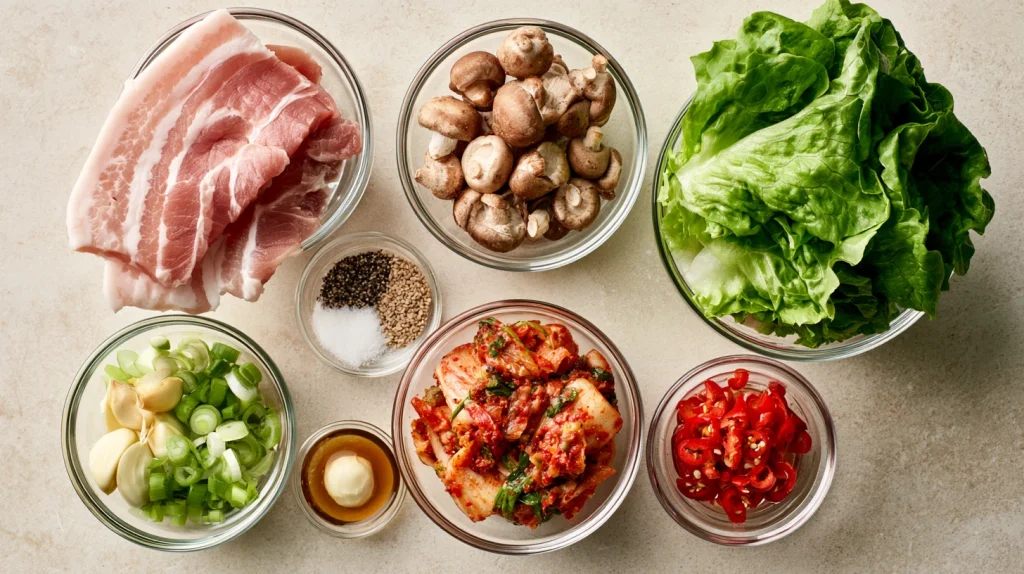
Remove the pork belly from its packaging and pat both sides thoroughly with paper towels to remove excess moisture, then cut larger pieces into manageable portions if necessary so they fit comfortably on your cooking surface. Season the pork lightly with salt and black pepper, keeping the seasoning simple because the dipping sauces and side dishes provide much of the meal’s flavor. Wash and dry the lettuce carefully, prepare the sliced garlic, onion, green onions, cucumber, and carrot, and arrange the prepared ingredients on separate plates so everything is ready before the grill is heated.
Step 2: Prepare the Ssamjang and Dipping Sauce
Combine the soybean paste, Korean chili paste, sesame oil, rice vinegar, chopped green onion, minced garlic, and sesame seeds in a small bowl and stir until evenly blended to create the ssamjang. In a second small bowl, combine the sesame oil, salt, and black pepper to create a simple dipping sauce for the pork. Taste both sauces before serving and adjust the chili paste or vinegar according to your preference, keeping in mind that the pork itself is only lightly seasoned.
Step 3: Heat the Cooking Surface
Place a cast iron skillet, heavy griddle, or Korean barbecue grill over medium-high heat and allow it to become thoroughly hot before adding the pork. The cooking surface should be hot enough that the pork begins sizzling immediately, but it should not be smoking heavily because excessive heat can burn the rendered fat and create unpleasant flavors. If using an indoor electric grill, follow the manufacturer’s instructions and position it where there is enough ventilation for the cooking smoke.
Step 4: Grill the Pork Belly
Place the pork belly pieces on the hot cooking surface in a single layer, leaving enough room between pieces for the fat to render and the edges to brown rather than steam. Cook for several minutes on the first side until the underside develops a deep golden-brown crust, then turn the pork and continue cooking until the second side is browned and the center is fully cooked. Add sliced garlic and onion toward the end of cooking so they can soften and absorb some of the rendered pork fat without burning.
Step 5: Cut and Finish the Pork
Transfer the cooked pork to a clean cutting board and allow it to rest briefly before cutting it into bite-sized pieces, taking care to keep the surface clean and separate from the plate that held the raw meat. If the pork was cooked in larger pieces, use a clean pair of kitchen scissors or a sharp knife to cut it into pieces that are easy to place into lettuce wraps. Return the pieces to the hot grill briefly if you want extra crisp edges, then move them to the serving platter.
Step 6: Assemble the Korean Barbecue Table
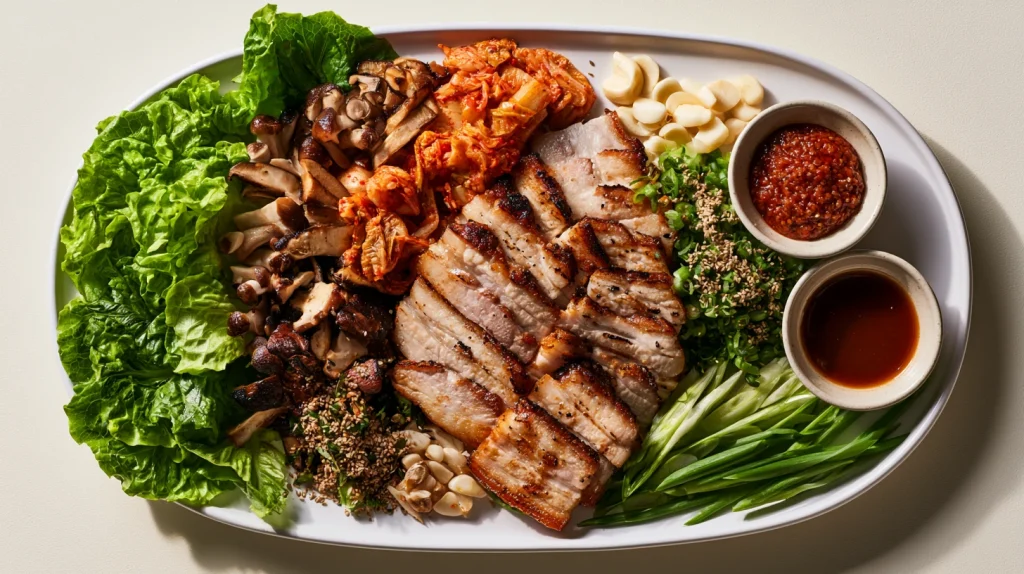
Arrange the cooked pork, washed lettuce, rice, ssamjang, sesame oil dipping sauce, kimchi, sliced garlic, green onions, cucumber, carrots, perilla leaves, and other Korean side dishes around the cooking surface so everyone can reach the ingredients comfortably. Keep raw pork on a separate plate away from cooked food and utensils, and provide clean tongs or chopsticks for handling the meat during cooking. Once the table is organized, diners can grill additional pork in small batches and assemble wraps as they eat.
Step 7: Build and Eat the Lettuce Wraps
Place a lettuce leaf or perilla leaf in your hand, add a small spoonful of rice, one piece of grilled pork, a little ssamjang, and your choice of garlic, kimchi, or fresh vegetables, then fold the leaf around the filling and eat it in one or two bites. Keep the amount of filling moderate because an oversized wrap becomes difficult to handle and can overpower the balance between the pork, sauce, and fresh vegetables. Continue cooking and assembling wraps at the table while the pork remains hot and crisp.
How to Serve
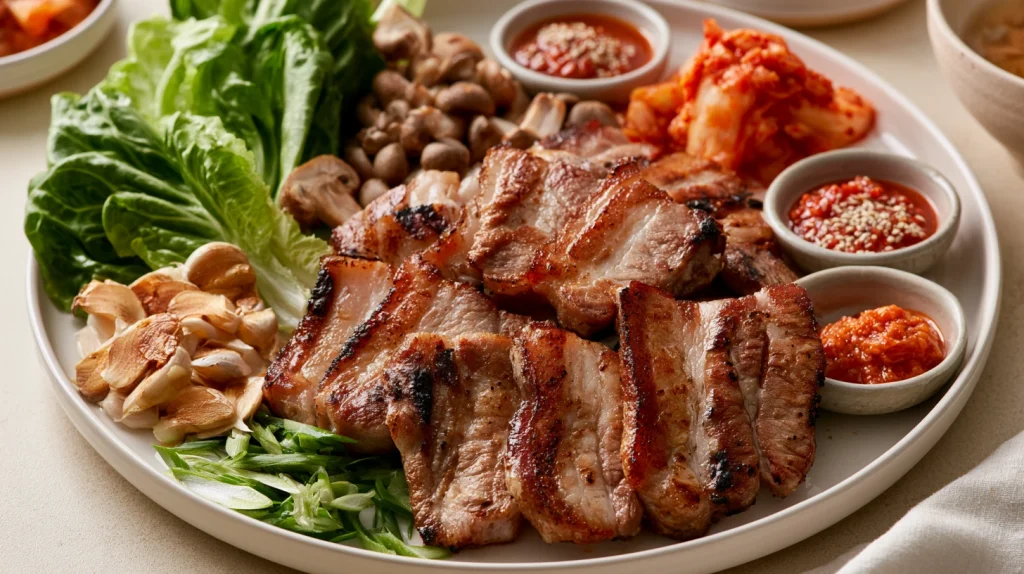
Samgyupsal is best served as a complete Korean barbecue spread rather than as a single plated meat dish. The pork should arrive at the table hot, while the lettuce, rice, sauces, and side dishes remain chilled or at room temperature as appropriate. This allows everyone to build their own wraps and adjust the balance of meat, vegetables, rice, and sauces.
For a traditional Korean barbecue meal, place the grill in the center of the table and arrange small dishes around it. Keep the layout practical rather than decorative, with the ingredients people use most often closest to the grill.
If you are creating a Korean Barbecue Table Setup for guests, avoid placing too many dishes directly around the grill. Leave enough open space for diners to turn the pork safely and comfortably. A few well-chosen side dishes usually create a better eating experience than a crowded table.
Additional Tips
Recipe Variations
Freezing and Storage
Refrigerating
Freezing
Reheating
Nutritional Information
Approximate values per serving of grilled pork with basic lettuce wrap accompaniments
The actual nutritional values will vary depending on the amount of pork, rice, sauces, kimchi, and side dishes served.
Final Words
Samgyupsal is more than grilled pork. It is a meal built around cooking together, choosing your own combinations, and balancing rich meat with fresh vegetables, rice, sauces, and Korean side dishes. That combination is what makes Korean barbecue so enjoyable and why the experience can be recreated successfully at home without complicated cooking techniques. The most important cooking principle is to give the pork enough contact with a properly heated cooking surface. Let the meat brown before turning it, and avoid overcrowding the grill. Because pork belly contains a considerable amount of fat, it will render naturally as it cooks, creating crisp edges and a deep savory flavor.
The supporting ingredients are just as important. Lettuce provides freshness, rice adds substance, ssamjang brings savory heat, and kimchi or pickled vegetables provide acidity. Garlic, green onions, cucumbers, and other vegetables add different textures and flavors. You do not need every possible Korean side dish to create a satisfying meal. A thoughtful selection is enough. If you have been searching for How To Host A Korean BBQ Party, samgyupsal is one of the easiest places to begin. Prepare the ingredients ahead of time, organize the Korean Barbecue Table Setup carefully, and let guests cook the pork in small batches. This turns dinner into an interactive experience rather than simply serving food from the kitchen.
The meal also works beautifully for anyone interested in creating attractive Food Photos Instagram content. Arrange the colorful side dishes in small bowls, place fresh lettuce and vegetables around the grill, and photograph the pork while it is sizzling. The combination naturally creates strong Grill Aesthetics without requiring complicated decoration. Whether you are inspired by Best Korean Barbecue Restaurants, have visited an Asian Restaurant that served tabletop barbecue, or simply want to try a new style of home cooking, samgyupsal is an approachable choice. Once you understand the basic grilling and wrapping technique, you can customize the meal to suit your family and guests.
FAQs

Samgyupsal At Home – Easy Korean BBQ Pork Belly Dinner
Course: Dinner Recipes4
servings25
minutes15
minutes690
kcalIngredients
2 pounds (900 g) thick-cut pork belly
1 teaspoon fine sea salt
½ teaspoon freshly ground black pepper
1 teaspoon toasted sesame oil, optional
4 cloves garlic, thinly sliced
1 small onion, thinly sliced
2 green onions, cut into short pieces
- For the Lettuce Wraps
2 large heads green leaf lettuce or red leaf lettuce
2 cups cooked short-grain white rice
1 small cucumber, thinly sliced
1 large carrot, cut into thin matchsticks
1 small bunch perilla leaves, optional
- For the Ssamjang
¼ cup Korean soybean paste
2 tablespoons Korean chili paste
1 tablespoon sesame oil
1 tablespoon rice vinegar
1 tablespoon finely chopped green onion
1 teaspoon minced garlic
1 teaspoon toasted sesame seeds
- For the Dipping Sauce
2 tablespoons toasted sesame oil
½ teaspoon fine sea salt
¼ teaspoon freshly ground black pepper
- For Serving
1 cup prepared kimchi
1 cup assorted Korean side dishes
Toasted sesame seeds
Extra sliced garlic
Extra green onions
Directions
- Remove the pork belly from its packaging and pat both sides thoroughly with paper towels to remove excess moisture, then cut larger pieces into manageable portions if necessary so they fit comfortably on your cooking surface. Season the pork lightly with salt and black pepper, keeping the seasoning simple because the dipping sauces and side dishes provide much of the meal’s flavor. Wash and dry the lettuce carefully, prepare the sliced garlic, onion, green onions, cucumber, and carrot, and arrange the prepared ingredients on separate plates so everything is ready before the grill is heated.
- Combine the soybean paste, Korean chili paste, sesame oil, rice vinegar, chopped green onion, minced garlic, and sesame seeds in a small bowl and stir until evenly blended to create the ssamjang. In a second small bowl, combine the sesame oil, salt, and black pepper to create a simple dipping sauce for the pork. Taste both sauces before serving and adjust the chili paste or vinegar according to your preference, keeping in mind that the pork itself is only lightly seasoned.
- Place a cast iron skillet, heavy griddle, or Korean barbecue grill over medium-high heat and allow it to become thoroughly hot before adding the pork. The cooking surface should be hot enough that the pork begins sizzling immediately, but it should not be smoking heavily because excessive heat can burn the rendered fat and create unpleasant flavors. If using an indoor electric grill, follow the manufacturer’s instructions and position it where there is enough ventilation for the cooking smoke.
- Place the pork belly pieces on the hot cooking surface in a single layer, leaving enough room between pieces for the fat to render and the edges to brown rather than steam. Cook for several minutes on the first side until the underside develops a deep golden-brown crust, then turn the pork and continue cooking until the second side is browned and the center is fully cooked. Add sliced garlic and onion toward the end of cooking so they can soften and absorb some of the rendered pork fat without burning.
- Transfer the cooked pork to a clean cutting board and allow it to rest briefly before cutting it into bite-sized pieces, taking care to keep the surface clean and separate from the plate that held the raw meat. If the pork was cooked in larger pieces, use a clean pair of kitchen scissors or a sharp knife to cut it into pieces that are easy to place into lettuce wraps. Return the pieces to the hot grill briefly if you want extra crisp edges, then move them to the serving platter.
- Arrange the cooked pork, washed lettuce, rice, ssamjang, sesame oil dipping sauce, kimchi, sliced garlic, green onions, cucumber, carrots, perilla leaves, and other Korean side dishes around the cooking surface so everyone can reach the ingredients comfortably. Keep raw pork on a separate plate away from cooked food and utensils, and provide clean tongs or chopsticks for handling the meat during cooking. Once the table is organized, diners can grill additional pork in small batches and assemble wraps as they eat.
- Place a lettuce leaf or perilla leaf in your hand, add a small spoonful of rice, one piece of grilled pork, a little ssamjang, and your choice of garlic, kimchi, or fresh vegetables, then fold the leaf around the filling and eat it in one or two bites. Keep the amount of filling moderate because an oversized wrap becomes difficult to handle and can overpower the balance between the pork, sauce, and fresh vegetables. Continue cooking and assembling wraps at the table while the pork remains hot and crisp.