

Sichuan Twice-Cooked Pork Belly Recipe – Easy Family Dinner
Sichuan Twice-Cooked Pork Belly
Sichuan Twice-Cooked Pork Belly is a deeply savoury Chinese dish made by cooking pork belly in two stages. The pork is first gently simmered until it becomes tender, then sliced and cooked again with aromatic ingredients, vegetables, and a bold Sichuan style sauce. This double cooking method gives the dish its distinctive texture and flavour. The first stage softens the meat and renders some of the fat, while the second stage adds colour, aroma, and a rich coating of seasoning.
The name twice-cooked describes the traditional process rather than a complicated technique. Pork belly is initially cooked in water with simple aromatics, then removed, sliced, and stir-fried with ingredients such as chilli bean paste, fermented black beans, ginger, garlic, and soy sauce. The final dish has tender pork, lightly crisp edges, and a glossy sauce with savoury, spicy, slightly sweet, and fermented flavours.
Sichuan Twice-Cooked Pork Belly is especially popular because it makes excellent use of the natural richness of pork belly. The first cooking stage softens the meat without making it dry. The second cooking stage allows some fat to render while the slices absorb the strong flavours of the sauce. When prepared correctly, the pork should be tender and rich but not oily or heavy.
Traditional twice-cooked pork is usually prepared on the hob, but this recipe also includes practical slow cooker guidance for home cooks. A Twice Cooked Pork Belly Recipe Slow Cooker method can be useful when you want the pork to become tender with minimal attention. The slow cooker handles the first cooking stage, while a quick final stir-fry creates the classic Sichuan flavour and lightly caramelised edges.
Using a Pork Belly Slow Cooker Recipe does not mean the entire dish should remain in the slow cooker. The pork benefits from a final high heat cooking stage because the sauce needs to coat the slices quickly and develop a concentrated flavour. This combination gives you the convenience of slow cooking while preserving the character of traditional twice-cooked pork.
If you are searching for a Belly Pork Recipe Slow Cooker that produces tender meat without constant monitoring, this method is practical and reliable. The pork cooks gently until soft, then the final stir-fry adds the bold seasoning that makes Sichuan Twice-Cooked Pork Belly memorable. This recipe is also a useful addition to Slow Cook Pork Belly Recipes because it offers more texture than a standard braised pork dish. Instead of serving the pork directly from the cooking liquid, the meat is sliced and cooked again at high heat. The result is tender pork with lightly browned edges and a sauce that clings to every piece.
Learning How To Cook Pork Belly In Slow Cooker gives you a flexible method that can be used for many dishes. Once the pork is cooked, it can be sliced and finished with different sauces, vegetables, and seasonings. For this recipe, the final Sichuan sauce gives the pork a balanced combination of heat, savoury depth, and gentle sweetness. Whether you are looking for Pork Belly In Slow Cooker ideas, Pork Belly Recipes Slow Cooked for a family meal, or Slow Cooker Pork Belly Slices with bold Chinese flavours, this recipe gives you a clear method for preparing tender pork and finishing it with a restaurant style result.
Why You’ll Love This Recipe
Preparation and Cooking Time, Also Serving
The exact cooking time depends on the thickness of the pork belly and the heat level of the slow cooker. The pork should be tender enough to pierce easily with a fork but firm enough to slice without breaking apart.
Ingredients
For the First Cooking Stage
For the Sichuan Sauce and Final Cooking
For Garnishing
Substitution Notes
Step-by-Step Instructions

Step 1: Prepare the Pork Belly for Slow Cooking
Place the pork belly in the slow cooker and add the water, thick ginger slices, spring onion pieces, Chinese cooking wine, bay leaves, and black peppercorns. Arrange the pork so it is mostly surrounded by the liquid, then cover the slow cooker with its lid and cook on low for 4 to 5 hours. Check the pork after 4 hours by inserting a fork into the thickest part. The fork should enter easily, but the pork should still hold its shape because it will be sliced and cooked again. Remove the pork from the slow cooker, place it on a tray, and allow it to cool for about 20 minutes before slicing.
Step 2: Slice and Prepare the Cooked Pork
Place the slightly cooled pork belly on a stable cutting board and use a sharp knife to cut it into slices approximately 5 mm thick. Keep the slices even so they cook at a similar rate during the final stir-fry. If the pork feels too soft to slice cleanly, refrigerate it for 30 to 45 minutes until it becomes firmer. Do not discard the cooking liquid immediately because a small amount can be used in place of chicken stock. Measure and prepare the remaining sauce ingredients before heating the pan because the final cooking stage moves quickly.
Step 3: Render and Brown the Pork Slices
Heat a large wok or wide frying pan over medium high heat and add the neutral oil. Arrange the pork slices in a single layer and cook for 2 to 3 minutes without moving them so the edges begin to brown and some fat renders into the pan. Turn the slices and cook the other side for another 1 to 2 minutes. Work in batches if necessary because overcrowding the pan will cause the pork to steam. Once the pork has lightly browned, transfer it to a plate while leaving a small amount of rendered fat in the pan.
Step 4: Cook the Sichuan Aromatics and Vegetables
Reduce the heat to medium and add the Sichuan chilli bean paste and fermented black beans to the pan. Cook for about 30 seconds while stirring until the paste becomes fragrant and the oil begins to take on a reddish colour. Add the chopped garlic and ginger and stir for another 30 seconds, then add the red and green bell peppers and cook for 2 to 3 minutes. The vegetables should soften slightly while remaining colourful and crisp. Add the spring onion pieces and stir briefly before returning the browned pork to the pan.
Step 5: Add the Sauce and Coat the Pork
Pour the light soy sauce, dark soy sauce, Chinese cooking wine, chicken stock, and brown sugar around the pork, then stir and turn the slices carefully until they are evenly coated. Cook over medium high heat for 2 to 3 minutes while allowing the liquid to reduce into a glossy sauce. The sauce should cling to the pork rather than collect as a thin pool at the bottom of the pan. Add the toasted sesame oil and crushed Sichuan peppercorns, then toss gently for another 30 seconds so the final aromatics are evenly distributed.
Step 6: Rest and Finish the Dish
Remove the pan from the heat and allow the Sichuan Twice-Cooked Pork Belly to rest for 3 to 5 minutes. This short resting period allows the sauce to settle and cling more effectively to the pork. Taste one piece and adjust only if needed. Add a small splash of chicken stock if the sauce has become too thick, or add a small amount of soy sauce if it needs more savoury flavour. Avoid adding extra salt because the chilli bean paste, fermented black beans, and soy sauce already provide considerable seasoning.
Step 7: Garnish and Serve
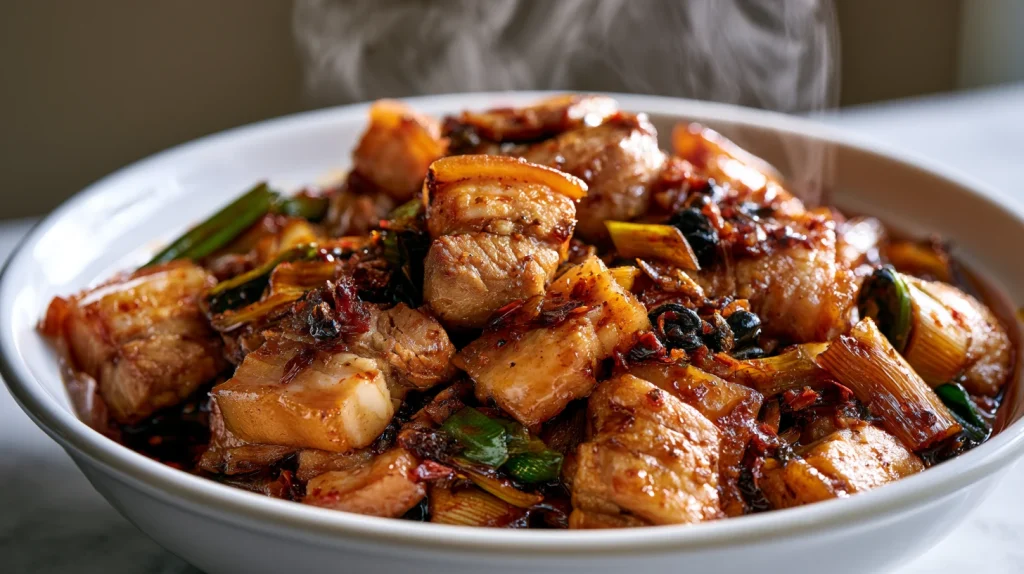
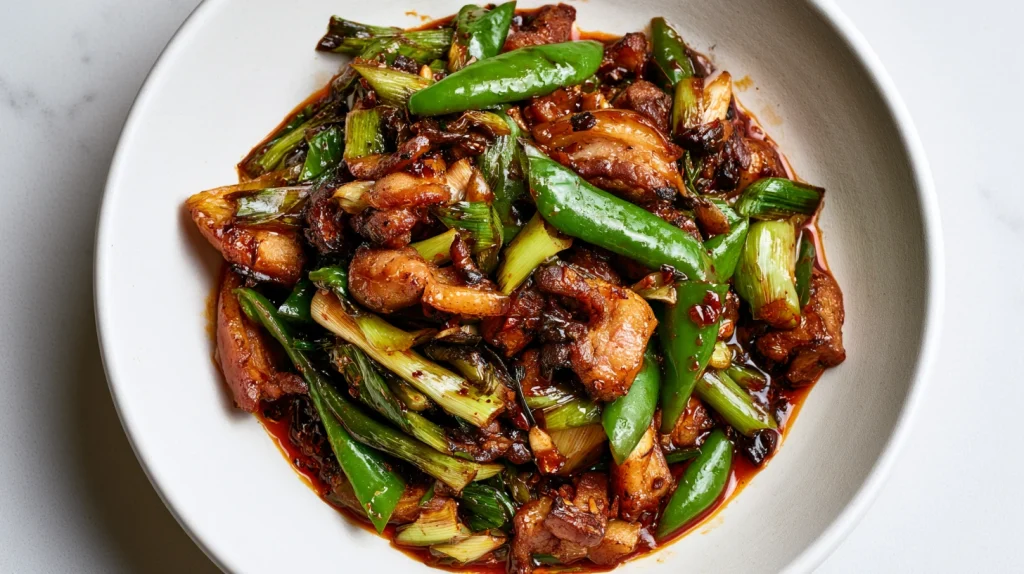
Transfer the finished pork and vegetables to a warm serving dish, arranging the slices so the browned edges remain visible. Spoon the remaining sauce over the pork and garnish with thinly sliced spring onions, toasted sesame seeds, and fresh red chilli if desired. Serve immediately while the pork is hot and the vegetables remain lightly crisp. Offer steamed jasmine rice, plain noodles, or fresh vegetables on the side, and provide extra chilli or Sichuan pepper for anyone who prefers a stronger flavour.
How to Serve
Additional Tips
Recipe Variations
Freezing and Storage
Nutritional Information
Approximate values per serving, based on 6 servings:
Nutritional values are estimates and may change depending on the exact pork belly used, the amount of rendered fat removed, and the brands of chilli bean paste, soy sauce, and stock.
Final Words
Sichuan Twice-Cooked Pork Belly is a flavourful dish that combines gentle slow cooking with a quick, high heat finish. The first cooking stage makes the pork tender and easy to slice, while the second cooking stage adds lightly browned edges and coats every piece with a bold Sichuan sauce. The most important part of this recipe is controlling the texture during both cooking stages. The pork should become tender during slow cooking but should not become so soft that it breaks apart when sliced. Cooling the pork before cutting helps create neat pieces, while the final stir-fry gives the dish its characteristic colour and concentrated flavour.
A Twice Cooked Pork Belly Recipe Slow Cooker is a practical option for home cooks who want tender pork without monitoring a pot for several hours. The slow cooker handles the first stage, and the final stir-fry takes only a few minutes. This method combines convenience with the texture and flavour expected from Sichuan twice-cooked pork. This Pork Belly Slow Cooker Recipe can also be prepared in advance. Cook and cool the pork one day before, then refrigerate it until you are ready to slice and finish the dish. The chilled pork is easier to cut, and the final cooking stage is fast enough for a busy dinner.
If you enjoy Slow Cook Pork Belly Recipes, this dish provides a useful alternative to standard braised pork. The second cooking stage creates more texture and gives the sauce a stronger finish. It also allows you to add fresh vegetables that remain colourful and lightly crisp. Learning How To Cook Pork Belly In Slow Cooker gives you a flexible foundation for many meals. You can use the tender cooked pork in noodle dishes, rice bowls, wraps, or other Chinese inspired recipes. For this dish, the combination of chilli bean paste, fermented black beans, garlic, ginger, and Sichuan pepper creates a balanced and memorable flavour.
Pork Belly In Slow Cooker can become exceptionally tender with very little active work, but the final high heat cooking stage is what gives this recipe its distinctive character. Serve the finished pork with rice, noodles, fresh vegetables, or a crisp cucumber salad for a complete meal. Whether you are exploring Pork Belly Recipes Slow Cooked or preparing Slow Cooker Pork Belly Slices for the first time, this recipe gives you a clear and reliable method. Cook the pork gently, slice it carefully, finish it quickly over high heat, and serve it while the sauce is glossy and the vegetables are fresh.
FAQs

Sichuan Twice-Cooked Pork Belly Recipe – Easy Family Dinner
Course: Pork Recipes6
servings25
minutes5
hours720
kcalIngredients
- For the First Cooking Stage
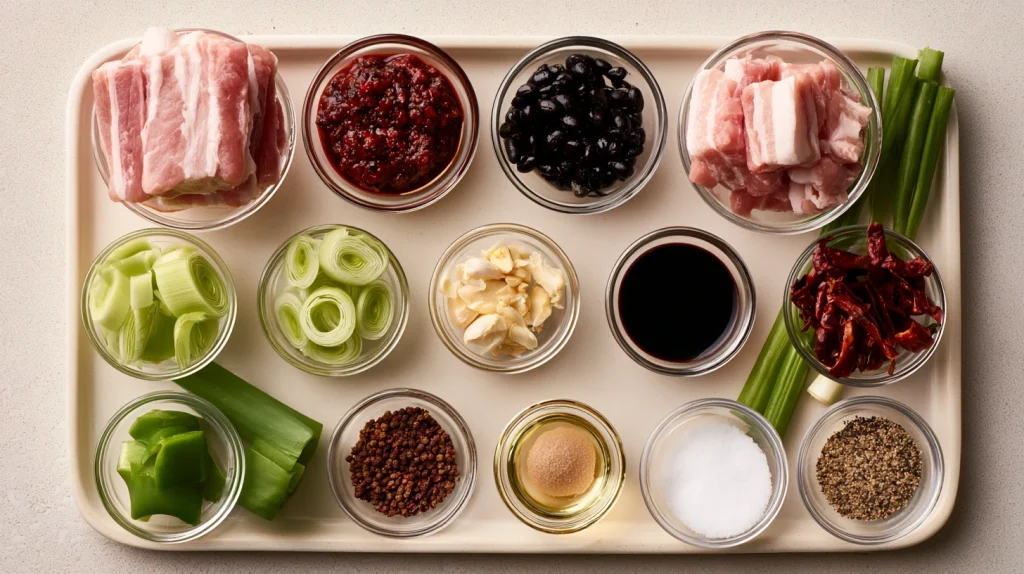
1.5 kg skinless pork belly, kept whole or cut into two large pieces
1.2 litres water
5 thick slices fresh ginger
4 spring onions, cut into large pieces
2 tablespoons Chinese cooking wine or dry sherry
2 bay leaves
1 teaspoon whole black peppercorns
- For the Sichuan Sauce and Final Cooking
2 tablespoons neutral cooking oil
2 tablespoons Sichuan chilli bean paste
1 tablespoon fermented black beans, lightly rinsed and chopped
5 garlic cloves, finely chopped
25 g fresh ginger, finely chopped
1 red bell pepper, thinly sliced
1 green bell pepper, thinly sliced
4 spring onions, cut into short pieces
2 tablespoons light soy sauce
1 tablespoon dark soy sauce
1 tablespoon Chinese cooking wine or dry sherry
2 teaspoons brown sugar
60 ml chicken stock
1 teaspoon toasted sesame oil
1 teaspoon Sichuan peppercorns, lightly crushed
- For Garnishing
2 spring onions, thinly sliced
1 teaspoon toasted sesame seeds
1 small fresh red chilli, thinly sliced, optional
Directions
- Place the pork belly in the slow cooker and add the water, thick ginger slices, spring onion pieces, Chinese cooking wine, bay leaves, and black peppercorns. Arrange the pork so it is mostly surrounded by the liquid, then cover the slow cooker with its lid and cook on low for 4 to 5 hours. Check the pork after 4 hours by inserting a fork into the thickest part. The fork should enter easily, but the pork should still hold its shape because it will be sliced and cooked again. Remove the pork from the slow cooker, place it on a tray, and allow it to cool for about 20 minutes before slicing.
- Place the slightly cooled pork belly on a stable cutting board and use a sharp knife to cut it into slices approximately 5 mm thick. Keep the slices even so they cook at a similar rate during the final stir-fry. If the pork feels too soft to slice cleanly, refrigerate it for 30 to 45 minutes until it becomes firmer. Do not discard the cooking liquid immediately because a small amount can be used in place of chicken stock. Measure and prepare the remaining sauce ingredients before heating the pan because the final cooking stage moves quickly.
- Heat a large wok or wide frying pan over medium high heat and add the neutral oil. Arrange the pork slices in a single layer and cook for 2 to 3 minutes without moving them so the edges begin to brown and some fat renders into the pan. Turn the slices and cook the other side for another 1 to 2 minutes. Work in batches if necessary because overcrowding the pan will cause the pork to steam. Once the pork has lightly browned, transfer it to a plate while leaving a small amount of rendered fat in the pan.
- Reduce the heat to medium and add the Sichuan chilli bean paste and fermented black beans to the pan. Cook for about 30 seconds while stirring until the paste becomes fragrant and the oil begins to take on a reddish colour. Add the chopped garlic and ginger and stir for another 30 seconds, then add the red and green bell peppers and cook for 2 to 3 minutes. The vegetables should soften slightly while remaining colourful and crisp. Add the spring onion pieces and stir briefly before returning the browned pork to the pan.
- Pour the light soy sauce, dark soy sauce, Chinese cooking wine, chicken stock, and brown sugar around the pork, then stir and turn the slices carefully until they are evenly coated. Cook over medium high heat for 2 to 3 minutes while allowing the liquid to reduce into a glossy sauce. The sauce should cling to the pork rather than collect as a thin pool at the bottom of the pan. Add the toasted sesame oil and crushed Sichuan peppercorns, then toss gently for another 30 seconds so the final aromatics are evenly distributed.
- Remove the pan from the heat and allow the Sichuan Twice-Cooked Pork Belly to rest for 3 to 5 minutes. This short resting period allows the sauce to settle and cling more effectively to the pork. Taste one piece and adjust only if needed. Add a small splash of chicken stock if the sauce has become too thick, or add a small amount of soy sauce if it needs more savoury flavour. Avoid adding extra salt because the chilli bean paste, fermented black beans, and soy sauce already provide considerable seasoning.
- Transfer the finished pork and vegetables to a warm serving dish, arranging the slices so the browned edges remain visible. Spoon the remaining sauce over the pork and garnish with thinly sliced spring onions, toasted sesame seeds, and fresh red chilli if desired. Serve immediately while the pork is hot and the vegetables remain lightly crisp. Offer steamed jasmine rice, plain noodles, or fresh vegetables on the side, and provide extra chilli or Sichuan pepper for anyone who prefers a stronger flavour.