

Tea Eggs with Asian Noodles Recipe – Easy Homemade
Tea Eggs with Asian Noodles
Tea Eggs with Asian Noodles is a comforting and satisfying meal that combines beautifully marbled tea eggs with tender Asian noodles, fresh vegetables, and a rich, savory broth. It is a dish that proves simple ingredients can create remarkable flavor when prepared with care. Every bowl offers a balance of soft noodles, aromatic broth, and deeply seasoned eggs, making it perfect for lunch or dinner throughout the year.
The highlight of this recipe is the tea eggs. Unlike regular boiled eggs, they are gently simmered and then marinated in a mixture of black tea, soy sauce, warm spices, ginger, garlic, and a touch of sweetness. As the eggs rest in the flavorful liquid, they slowly absorb the seasoning while developing the beautiful marble pattern that makes them instantly recognizable. The result is an egg with tender whites, rich yolks, and flavor that reaches far beyond the surface.
Many home cooks assume tea eggs are difficult to prepare, but learning How To Make Tea Eggs At Home is surprisingly simple. The ingredients are easy to find, the cooking process is straightforward, and most of the flavor develops while the eggs marinate. With a little patience, ordinary eggs become a centerpiece worthy of any noodle bowl.
This Tea Egg Recipe pairs those flavorful eggs with Asian noodles that soak up every drop of the savory broth. Fresh vegetables such as bok choy, carrots, and mushrooms add freshness, texture, and color, turning the dish into a complete meal instead of simply a bowl of noodles. Each ingredient has a purpose, creating a balance of protein, vegetables, and carbohydrates that is both nourishing and satisfying.
The broth itself is full of depth without being heavy. Soy sauce provides rich umami flavor, black tea contributes gentle earthy notes, while ginger and garlic add warmth and freshness. Chinese five spice brings everything together with subtle hints of cinnamon, star anise, fennel, cloves, and pepper. These flavors are familiar in many traditional Asian recipes and work together naturally without overpowering the noodles or eggs.
If you already enjoy Chinese Soy Sauce Eggs, this recipe introduces another level of complexity by combining soy sauce with fragrant black tea and aromatic spices. The tea softens the salty notes while creating a deeper, more rounded flavor. The finished eggs are savory, fragrant, and perfectly suited for serving with noodles.
Traditional Chinese Five Spice Tea Eggs are commonly enjoyed as snacks, breakfast items, or street food, but they become even more satisfying when served over steaming noodles. The noodles absorb the flavorful broth while the eggs provide richness and protein, creating a comforting meal that feels complete in every bite. Although this recipe uses fully cooked eggs for the best marbling and easiest slicing, it can easily be adapted if you enjoy Soft Boiled Tea Eggs with slightly creamy centers. Both versions work well, although fully cooked eggs develop stronger flavor during longer marinating.
Anyone looking for creative Hard Boiled Eggs Recipes will appreciate how different these eggs taste compared to ordinary boiled eggs. Instead of being plain, they become deeply seasoned while remaining moist and tender. They also store well, making them ideal for meal preparation and quick lunches throughout the week.
One feature that makes this recipe especially appealing is the texture of the eggs. After marinating, the whites stay tender instead of becoming rubbery, creating the Smooth Eggs that many people associate with authentic tea eggs. Combined with chewy noodles and crisp vegetables, every bite delivers a satisfying contrast of textures.
Whether you are discovering Chinese Eggs for the first time or expanding your collection of Asian-inspired recipes, Tea Eggs with Asian Noodles is a recipe worth mastering. It is approachable enough for beginner cooks, rewarding enough for experienced home chefs, and delicious enough to become a regular favorite at the dinner table.
Why You’ll Love This Recipe
Preparation and Cooking Time, Also Serving
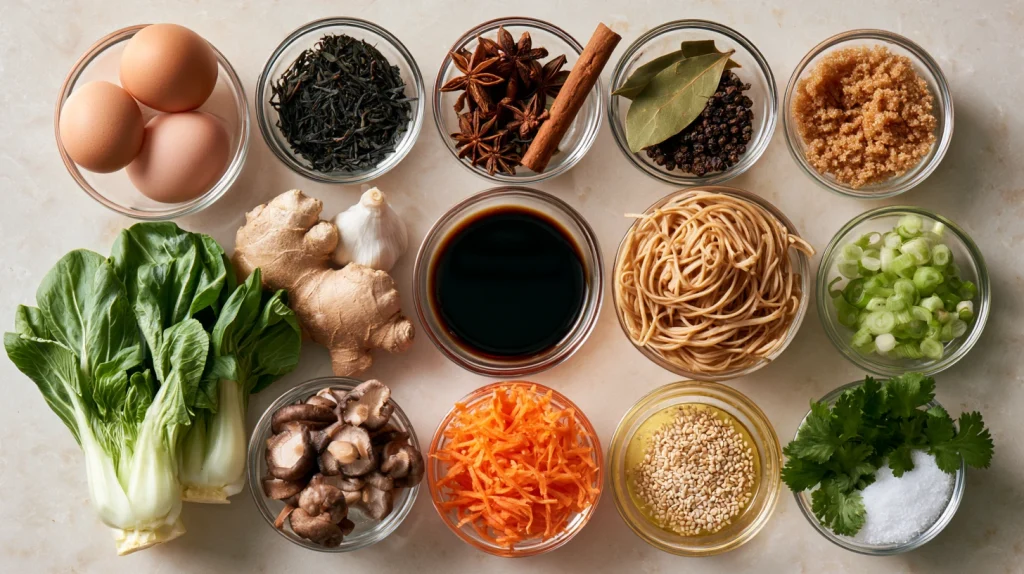
Ingredients
For the Tea Eggs
For the Noodles and Broth
Optional Garnishes
Substitution Notes
Step-by-Step Instructions

Step 1: Cook and Crack the Eggs
Place the eggs in a saucepan and cover them with cold water until they are submerged by about one inch. Bring the water to a gentle boil over medium high heat, then reduce the heat slightly and cook the eggs for 8 to 9 minutes until the yolks are fully set. Transfer the eggs immediately into ice water and allow them to cool completely. Once cooled, gently tap each egg with the back of a spoon until fine cracks cover the shell without removing it. These cracks allow the marinade to seep inside while creating the beautiful marbled pattern.
Step 2: Prepare the Tea Marinade
Combine the water, black tea, light soy sauce, dark soy sauce, brown sugar, cinnamon stick, star anise, Chinese five spice powder, Sichuan peppercorns, black peppercorns, ginger, garlic, and green onions in a saucepan. Bring the mixture to a gentle boil, then reduce the heat and simmer for about 15 minutes. This slow simmer allows the tea, spices, and aromatics to fully infuse the liquid, producing a rich marinade with balanced savory and aromatic flavors.
Step 3: Simmer and Marinate the Eggs
Carefully lower the cracked eggs into the hot tea mixture and make sure they remain completely submerged. Simmer gently over low heat for 30 to 35 minutes without allowing the liquid to boil vigorously. Remove the saucepan from the heat and let the eggs cool naturally in the marinade. Transfer the eggs and the liquid to a covered container and refrigerate for at least 8 hours, although marinating overnight or up to 24 hours produces deeper flavor and more striking marbling.
Step 4: Prepare the Flavorful Broth
Heat the vegetable oil and sesame oil in a large soup pot over medium heat. Add the minced garlic and grated ginger, stirring continuously for about one minute until fragrant. Pour in the chicken stock, light soy sauce, dark soy sauce, oyster sauce, and rice vinegar. Bring the broth to a gentle simmer before adding the carrots, mushrooms, and bok choy. Cook the vegetables for 4 to 5 minutes until they are tender while still maintaining a pleasant bite.
Step 5: Cook the Noodles and Assemble the Bowls
Cook the noodles in a separate pot of boiling water according to the package instructions until just tender. Drain them well and toss lightly with a small amount of sesame oil to prevent sticking. Divide the noodles among serving bowls and ladle the hot broth and vegetables over the top. Peel the marinated tea eggs, slice each one in half, and arrange them over the noodles. Finish each bowl with green onions, toasted sesame seeds, and any optional garnishes before serving immediately while hot.
How to Serve
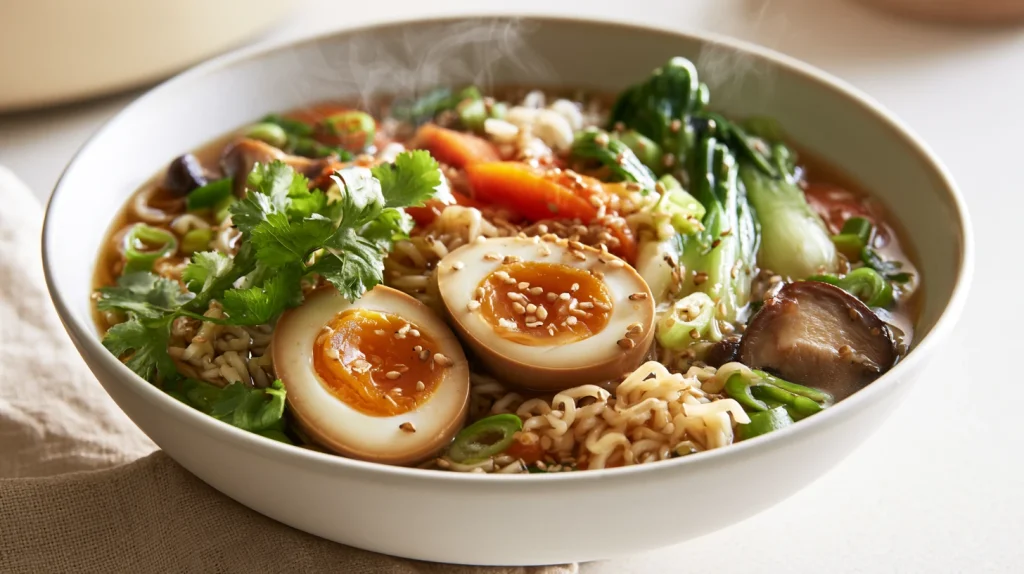
Tea Eggs with Asian Noodles is a complete meal on its own, but thoughtful presentation makes it even more enjoyable. Serve the noodles in deep bowls so the broth stays hot and the ingredients remain evenly distributed. Arrange the noodles first, spoon the vegetables around the edges, then place the halved tea eggs on top with the marbled side facing upward to showcase their beautiful pattern.
For extra freshness, sprinkle sliced green onions, fresh coriander, and toasted sesame seeds over each serving. A drizzle of chili oil adds gentle heat, while a squeeze of fresh lime brightens the rich broth. If you enjoy a little crunch, top each bowl with crispy fried onions.
This dish pairs well with several Asian-inspired side dishes.
For a family-style meal, place small bowls of garnishes on the table so everyone can customize their own bowl with extra herbs, chili oil, sesame seeds, or fresh chili slices.
Additional Tips
Recipe Variations
Freezing and Storage
Nutritional Information
Approximate values per serving.
Final Words
Tea Eggs with Asian Noodles is a recipe that proves comforting food does not need to be complicated. A handful of everyday ingredients become a deeply satisfying meal through careful cooking and a little patience. The marinated eggs provide rich flavor, the noodles make the dish hearty, and the vegetables bring freshness that balances every bowl.
Once you learn How To Make Tea Eggs At Home, you will discover just how versatile they are. They can be served with noodles, rice, salads, or enjoyed on their own as a quick snack. The same cooking method can also be adapted to make Soft Boiled Tea Eggs or fully marinated Chinese Soy Sauce Eggs depending on your personal preference.
Whether you are preparing this recipe for a weeknight family dinner or introducing friends to homemade Chinese Eggs, this Tea Egg Recipe delivers dependable results every time. It captures the comforting flavors of traditional Chinese Five Spice Tea Eggs while remaining approachable for home cooks of every skill level.
If you enjoy collecting reliable Hard Boiled Eggs Recipes, this one deserves a permanent place in your kitchen. The combination of tender Smooth Eggs, savory broth, fresh vegetables, and perfectly cooked noodles creates a meal that is comforting, balanced, and impressive enough to serve on any occasion.
Enjoy making Tea Eggs with Asian Noodles, experiment with your favorite vegetables and garnishes, and make the recipe your own. With every batch, the flavors become more familiar, your technique becomes more confident, and this comforting noodle bowl is sure to become one of your most requested homemade meals.
FAQs

Tea Eggs with Asian Noodles Recipe – Easy Homemade
Course: Dinner Recipes4
servings20
minutes1
hour10
minutes520
kcalIngredients
- For the Tea Eggs
6 large eggs
4 cups water
2 black tea bags or 2 tablespoons loose black tea
½ cup light soy sauce
2 tablespoons dark soy sauce
2 tablespoons brown sugar
1 cinnamon stick
2 whole star anise
1 teaspoon Chinese five spice powder
1 teaspoon Sichuan peppercorns
1 teaspoon whole black peppercorns
4 slices fresh ginger
4 garlic cloves, lightly crushed
2 green onions, cut into large pieces
- For the Noodles and Broth
12 ounces fresh Asian egg noodles or ramen noodles
1 tablespoon vegetable oil
1 tablespoon sesame oil
2 garlic cloves, minced
1 tablespoon grated fresh ginger
4 cups chicken stock or vegetable stock
1 tablespoon light soy sauce
1 teaspoon dark soy sauce
1 tablespoon oyster sauce
1 teaspoon rice vinegar
2 cups baby bok choy, halved
1 cup sliced shiitake or button mushrooms
1 medium carrot, julienned
2 green onions, thinly sliced
1 tablespoon toasted sesame seeds
- Optional Garnishes
Fresh cilantro or coriander leaves
Chili oil
Crispy fried onions
Thinly sliced red chili
Nori strips
Lime wedges
Directions
- Place the eggs in a saucepan and cover them with cold water until they are submerged by about one inch. Bring the water to a gentle boil over medium high heat, then reduce the heat slightly and cook the eggs for 8 to 9 minutes until the yolks are fully set. Transfer the eggs immediately into ice water and allow them to cool completely. Once cooled, gently tap each egg with the back of a spoon until fine cracks cover the shell without removing it. These cracks allow the marinade to seep inside while creating the beautiful marbled pattern.
- Combine the water, black tea, light soy sauce, dark soy sauce, brown sugar, cinnamon stick, star anise, Chinese five spice powder, Sichuan peppercorns, black peppercorns, ginger, garlic, and green onions in a saucepan. Bring the mixture to a gentle boil, then reduce the heat and simmer for about 15 minutes. This slow simmer allows the tea, spices, and aromatics to fully infuse the liquid, producing a rich marinade with balanced savory and aromatic flavors.
- Carefully lower the cracked eggs into the hot tea mixture and make sure they remain completely submerged. Simmer gently over low heat for 30 to 35 minutes without allowing the liquid to boil vigorously. Remove the saucepan from the heat and let the eggs cool naturally in the marinade. Transfer the eggs and the liquid to a covered container and refrigerate for at least 8 hours, although marinating overnight or up to 24 hours produces deeper flavor and more striking marbling.
- Heat the vegetable oil and sesame oil in a large soup pot over medium heat. Add the minced garlic and grated ginger, stirring continuously for about one minute until fragrant. Pour in the chicken stock, light soy sauce, dark soy sauce, oyster sauce, and rice vinegar. Bring the broth to a gentle simmer before adding the carrots, mushrooms, and bok choy. Cook the vegetables for 4 to 5 minutes until they are tender while still maintaining a pleasant bite.
- Cook the noodles in a separate pot of boiling water according to the package instructions until just tender. Drain them well and toss lightly with a small amount of sesame oil to prevent sticking. Divide the noodles among serving bowls and ladle the hot broth and vegetables over the top. Peel the marinated tea eggs, slice each one in half, and arrange them over the noodles. Finish each bowl with green onions, toasted sesame seeds, and any optional garnishes before serving immediately while hot.