

Thai Chicken Curry Recipe – Easy Creamy Thai Curry
Thai Chicken Curry
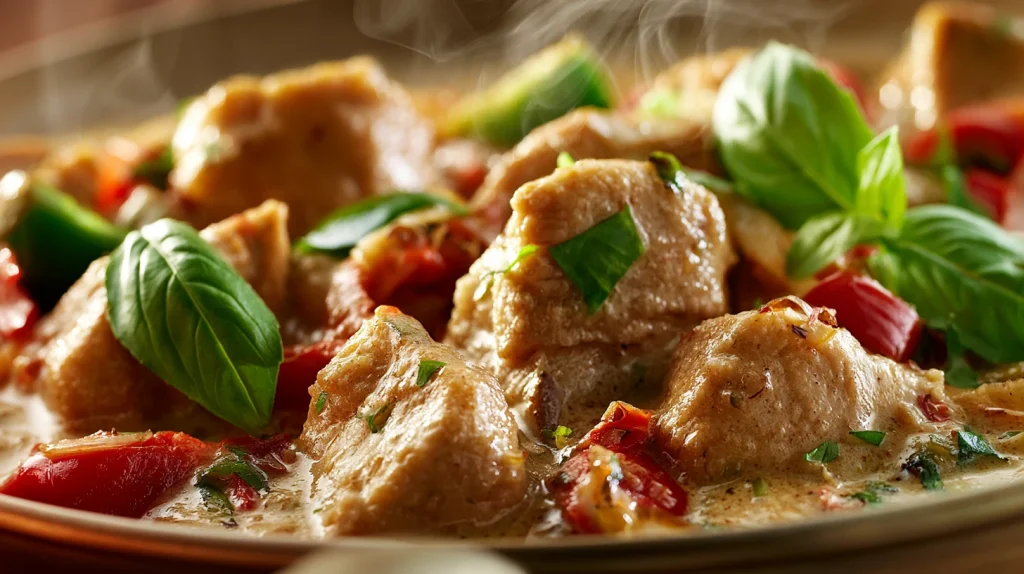
Thai Chicken Curry is a comforting dish that combines tender chicken, creamy coconut milk, fragrant herbs, vegetables, and aromatic red curry paste into one satisfying meal. Every spoonful delivers a balance of creamy, savory, mildly spicy, and slightly sweet flavors that make Thai cuisine so enjoyable. Unlike heavier curries, Thai Chicken Curry has a fresh, vibrant character that allows each ingredient to stand out while blending beautifully into a smooth, flavorful sauce.
One of the reasons Thai Chicken Curry is loved around the world is its versatility. It is easy enough for a weeknight dinner yet impressive enough for entertaining guests. The rich coconut milk softens the bold flavors of the red curry paste while creating a silky sauce that coats every piece of chicken and vegetable. Served with steamed rice, it becomes a complete meal that is both filling and comforting.
This recipe is an excellent introduction for anyone learning How To Make Red Thai Curry at home. Using simple ingredients and straightforward techniques, you can recreate restaurant-quality flavor without complicated cooking methods. The combination of Red Curry Paste Coconut Milk Chicken creates the signature creamy texture and balanced taste that defines authentic Thai-inspired cooking.
Thai Chicken Curry is also a practical choice for busy families because it cooks quickly while producing exceptional results. It fits naturally into collections of Healthy Dinner Recipes Thai thanks to its lean chicken, fresh vegetables, and flavorful sauce. Whether you enjoy classic Thai Curry And Rice or prefer serving it with noodles or vegetables, this recipe adapts easily to your preferences.
If you have been searching for the Best Thai Curry recipe that is approachable for home cooks, this dish deserves a place in your regular meal rotation. It combines everyday ingredients with traditional flavors to create a meal that is rich, satisfying, and full of fresh character. Once you prepare this Thai Chicken Curry at home, it is likely to become one of your favorite homemade curry recipes.
Why You’ll Love This Recipe
Preparation and Cooking Time, Also Serving
Ingredients
Substitution Notes
Step by Step Instructions

Step 1: Prepare the Ingredients
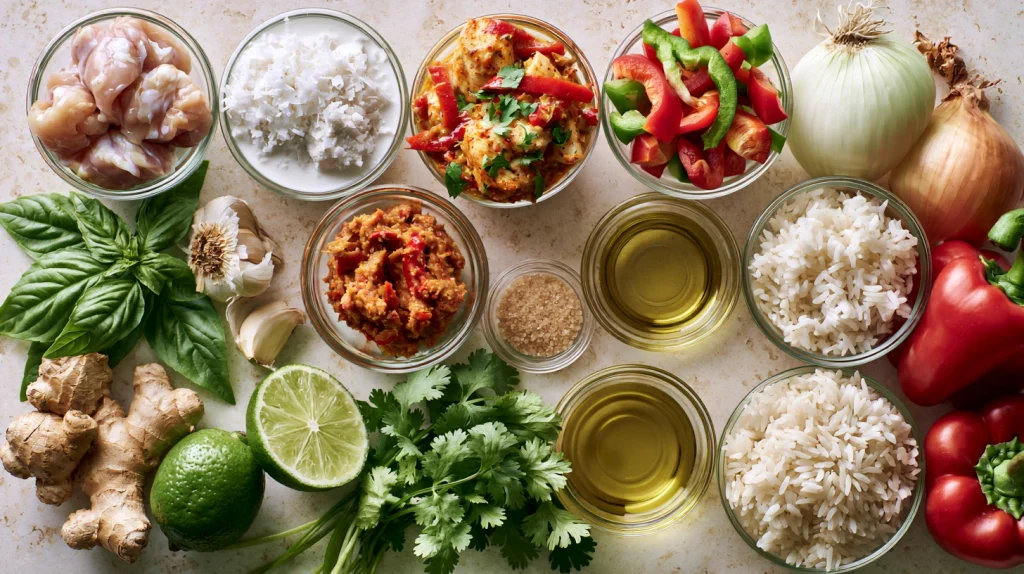
Cut the chicken into evenly sized pieces and prepare all the vegetables before beginning to cook. Slice the onions and peppers, grate the ginger, mince the garlic, and measure every ingredient in advance. Organizing everything before heating the pan allows the curry to cook smoothly and helps maintain the ideal texture of both the chicken and vegetables.
Step 2: Cook the Curry Base
Heat the vegetable oil in a large deep skillet or Dutch oven over medium heat. Add the sliced onion and cook until softened, then stir in the garlic and grated ginger until fragrant. Add the red curry paste and cook it gently for about one minute while stirring constantly. This step allows the curry paste to release its full aroma and creates the flavorful foundation that defines Chicken Curry Recipe Red dishes.
Step 3: Build the Curry Sauce
Slowly pour in the coconut milk while stirring continuously to combine it with the cooked curry paste, then add the chicken broth, fish sauce, and brown sugar. Bring the mixture to a gentle simmer and stir until the sauce becomes smooth and evenly blended. This combination of Red Curry Paste Coconut Milk Chicken creates the creamy, flavorful base that gives Thai Chicken Curry its signature richness while remaining balanced and easy to enjoy.
Step 4: Cook the Chicken and Vegetables
Add the chicken pieces to the simmering curry sauce and stir gently until they are evenly coated. Cook for about 10 minutes, then add the bell peppers, broccoli, and snap peas. Continue cooking until the chicken is fully cooked and the vegetables are tender while still slightly crisp. This method allows the vegetables to keep their bright color and fresh texture while absorbing the rich curry flavor.
Step 5: Finish the Curry
Stir in the fresh lime juice, basil leaves, and chopped cilantro just before removing the pan from the heat. These fresh ingredients brighten the rich coconut sauce and balance the deeper flavors of the curry paste. Taste the curry and adjust the seasoning if needed by adding a little more fish sauce, lime juice, or brown sugar to achieve the flavor you enjoy most.
Step 6: Rest and Serve
Allow the Thai Chicken Curry to rest for about 5 minutes before serving so the flavors have time to blend completely. Spoon the curry over freshly cooked rice or your preferred side dish, making sure each serving includes plenty of creamy sauce, tender chicken, and colorful vegetables. Garnish with additional basil, cilantro, or lime wedges for a fresh finish.
How to Serve
Additional Tips
Recipe Variations
Freezing and Storage
Nutritional Information
Approximate values per serving
Final Words
Thai Chicken Curry is a wonderful example of how a few carefully selected ingredients can create a meal with remarkable depth of flavor. The creamy coconut milk, aromatic curry paste, tender chicken, and fresh vegetables work together to produce a balanced dish that is comforting without being overly heavy. Every bowl offers a combination of rich texture, gentle spice, and fresh herbs that makes homemade Thai-inspired cooking both approachable and rewarding.
One of the greatest advantages of preparing Thai Chicken Curry at home is the freedom to customize it according to your family’s preferences. You can adjust the spice level, change the vegetables with the seasons, or even substitute different proteins while keeping the creamy curry base that makes this recipe so satisfying. Whether you are learning How To Make Red Thai Curry for the first time or expanding your collection of Healthy Dinner Recipes Thai, this recipe provides dependable results that are easy to recreate.
Once you prepare this Thai Chicken Curry, it will likely become one of your favorite homemade dinners. It reheats beautifully, making it an excellent option for meal preparation, and it pairs perfectly with Thai Curry And Rice for a complete and satisfying meal. From weeknight family dinners to special occasions, this recipe delivers restaurant-quality flavor using simple techniques that every home cook can master.
FAQs

Thai Chicken Curry Recipe – Easy Creamy Thai Curry
Course: Dinner Recipes6
servings20
minutes30
minutes435
kcalIngredients
2 pounds boneless skinless chicken breasts, cut into bite-sized pieces
2 tablespoons vegetable oil
1 medium onion, sliced
3 cloves garlic, minced
1 tablespoon fresh ginger, grated
3 tablespoons red curry paste
2 cans (13.5 ounces each) full-fat coconut milk
1 cup chicken broth
1 red bell pepper, sliced
1 yellow bell pepper, sliced
1 cup broccoli florets
1 cup snap peas
1 tablespoon fish sauce
1 tablespoon brown sugar
1 tablespoon fresh lime juice
¼ cup fresh basil leaves
2 tablespoons chopped fresh cilantro
Directions
- Cut the chicken into evenly sized pieces and prepare all the vegetables before beginning to cook. Slice the onions and peppers, grate the ginger, mince the garlic, and measure every ingredient in advance. Organizing everything before heating the pan allows the curry to cook smoothly and helps maintain the ideal texture of both the chicken and vegetables.
- Heat the vegetable oil in a large deep skillet or Dutch oven over medium heat. Add the sliced onion and cook until softened, then stir in the garlic and grated ginger until fragrant. Add the red curry paste and cook it gently for about one minute while stirring constantly. This step allows the curry paste to release its full aroma and creates the flavorful foundation that defines Chicken Curry Recipe Red dishes.
- Slowly pour in the coconut milk while stirring continuously to combine it with the cooked curry paste, then add the chicken broth, fish sauce, and brown sugar. Bring the mixture to a gentle simmer and stir until the sauce becomes smooth and evenly blended. This combination of Red Curry Paste Coconut Milk Chicken creates the creamy, flavorful base that gives Thai Chicken Curry its signature richness while remaining balanced and easy to enjoy.
- Add the chicken pieces to the simmering curry sauce and stir gently until they are evenly coated. Cook for about 10 minutes, then add the bell peppers, broccoli, and snap peas. Continue cooking until the chicken is fully cooked and the vegetables are tender while still slightly crisp. This method allows the vegetables to keep their bright color and fresh texture while absorbing the rich curry flavor.
- Stir in the fresh lime juice, basil leaves, and chopped cilantro just before removing the pan from the heat. These fresh ingredients brighten the rich coconut sauce and balance the deeper flavors of the curry paste. Taste the curry and adjust the seasoning if needed by adding a little more fish sauce, lime juice, or brown sugar to achieve the flavor you enjoy most.
- Allow the Thai Chicken Curry to rest for about 5 minutes before serving so the flavors have time to blend completely. Spoon the curry over freshly cooked rice or your preferred side dish, making sure each serving includes plenty of creamy sauce, tender chicken, and colorful vegetables. Garnish with additional basil, cilantro, or lime wedges for a fresh finish.