

Tteokbokki Recipe – Easy & Quick Korean Rice Cake Recipe
Tteokbokki Recipe
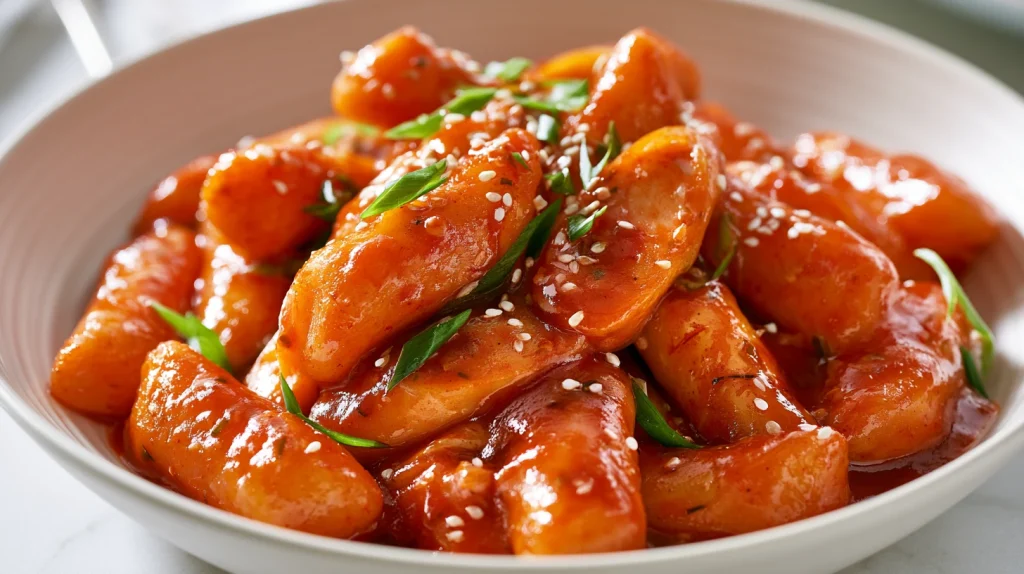
A tteokbokki recipe is one of the most iconic street foods in Korea, loved for its chewy rice cakes coated in a rich, spicy, and slightly sweet sauce. This comforting dish has become popular around the world because of its bold flavors, satisfying texture, and simple preparation. Whether enjoyed as a quick snack, a light meal, or part of a larger Korean feast, tteokbokki delivers a memorable combination of heat, sweetness, and savory depth in every bite.
The heart of this recipe is the Korean rice cakes, known as tteok, which have a pleasantly chewy texture unlike any other ingredient. As they simmer in the flavorful sauce, they absorb the seasonings while remaining soft and slightly springy. Combined with gochujang, gochugaru, soy sauce, garlic, and a touch of sweetness, the result is a dish that is both comforting and exciting to eat.
One of the reasons this tteokbokki recipe is so popular is its versatility. While the traditional version focuses on rice cakes and a spicy sauce, many home cooks customize it with fish cakes, boiled eggs, ramen noodles, dumplings, cheese, vegetables, or seafood. This flexibility makes it easy to prepare according to personal preferences while still preserving its authentic Korean character.
If you are exploring Korean Recipe Ideas or looking for Asian Food Recipes Korean families prepare at home, this dish is an excellent place to begin. The ingredients are straightforward, the cooking process is quick, and every step is easy to understand. Even if you have never cooked Korean cuisine before, this recipe will guide you through the process with confidence.
This recipe also allows you to adjust the flavor to suit your taste. You can prepare a milder version by reducing the chili ingredients or create a bold Spicy Tteokbokki by increasing the amount of gochujang and gochugaru. If you enjoy a sweeter balance, it can easily become a Sweet Tteokbokki Recipe with a little extra sugar or honey. These simple adjustments allow one recipe to satisfy a wide range of preferences.
Throughout this guide, you will learn how to prepare tender rice cakes, create a smooth and balanced sauce, and finish the dish with professional techniques that deliver restaurant-quality results. Whether you are searching for a Korean Rice Cake Recipe, collecting Korean Food Recipes Easy enough for weeknight dinners, or simply looking for Easy Yummy Recipes that everyone will enjoy, this Delicious Food Recipe will quickly become one of your favorite homemade meals.
Why You’ll Love This Recipe
Preparation and Cooking Time, Also Serving
Ingredients
Optional Garnishes
Substitution Notes
Step-by-Step Instructions

Step 1: Prepare the Rice Cakes and Ingredients
If using refrigerated rice cakes, separate them gently with your hands. If using frozen rice cakes, soak them in warm water for about twenty minutes until they soften before draining thoroughly. Slice the fish cakes into bite-sized pieces, prepare the green onions, mince the garlic, and have all the remaining ingredients measured before heating the pan. Preparing everything in advance allows the cooking process to move smoothly because the sauce thickens quickly once it begins simmering.
Step 2: Build the Sauce
Pour the anchovy stock into a wide saucepan and place it over medium heat. Add the gochujang, gochugaru, soy sauce, sugar, and minced garlic, whisking continuously until the seasonings dissolve completely into the broth. Bring the mixture to a gentle simmer while stirring occasionally so the sauce develops a smooth texture and the flavors blend together evenly without scorching on the bottom of the pan.
Step 3: Cook the Rice Cakes
Add the prepared rice cakes to the simmering sauce and stir gently so each piece becomes evenly coated. Continue cooking while stirring occasionally for several minutes as the rice cakes soften and begin absorbing the flavorful sauce. Once they become tender yet pleasantly chewy, stir in the sliced fish cakes and continue simmering until the sauce naturally thickens and clings to every ingredient without becoming overly dry.
Step 4: Finish the Dish
Add the green onions during the final few minutes of cooking so they remain slightly crisp while contributing fresh flavor to the sauce. Drizzle the sesame oil over the tteokbokki and gently stir to distribute its aroma throughout the dish. Taste the sauce and adjust the seasoning by adding a little more sugar for sweetness or additional gochujang if you prefer a richer and spicier finish.
Step 5: Garnish and Serve
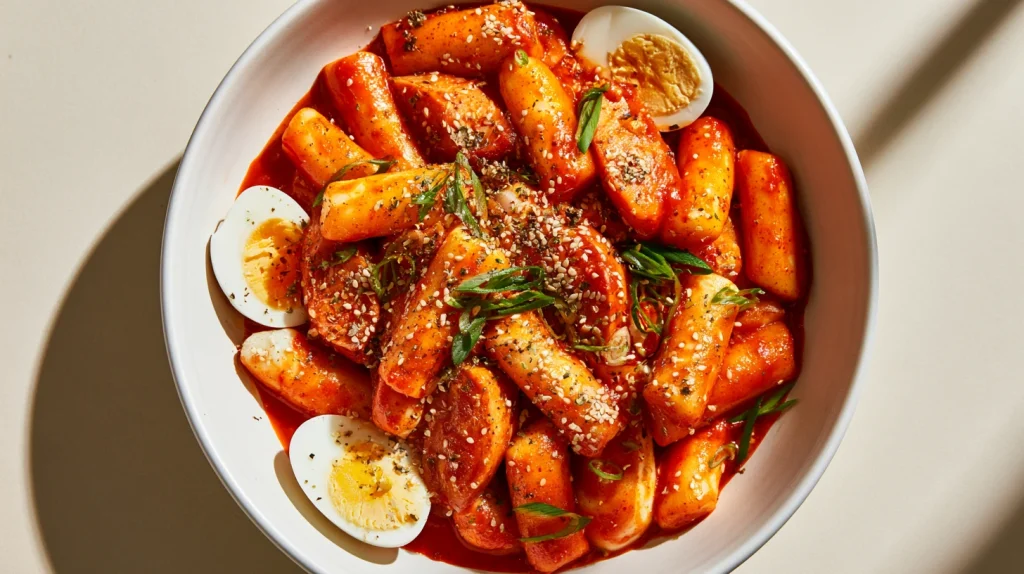
Transfer the finished tteokbokki to warm serving bowls while it is still bubbling hot. Arrange the boiled eggs on top and garnish with toasted sesame seeds, sliced green onions, roasted seaweed strips, or shredded mozzarella cheese if desired. Serve immediately while the rice cakes remain soft and chewy and the sauce is thick, glossy, and full of authentic Korean flavor.
How to Serve
Tteokbokki recipe is best served immediately while the sauce is hot, glossy, and clings perfectly to the rice cakes. The chewy texture of the rice cakes is at its best when freshly cooked, making this dish ideal for serving straight from the pan. Present it in a shallow serving bowl and finish with colorful garnishes that add freshness, texture, and visual appeal.
Although tteokbokki is often enjoyed as a street food snack, it can easily become a complete meal when paired with complementary side dishes.
Additional Tips
Recipe Variations
Freezing and Storage
Refrigerating
Freezing
Reheating
Nutritional Information
Approximate values per serving
Final Words
This tteokbokki recipe brings one of Korea’s most famous street foods into your kitchen with simple ingredients and easy-to-follow techniques. The combination of chewy rice cakes, rich spicy sauce, and flavorful seasonings creates a comforting meal that is both satisfying and full of authentic character. Whether you enjoy a traditional version or customize it with cheese, seafood, vegetables, or noodles, this recipe delivers reliable results every time.
If you are exploring Korean Recipe Ideas, collecting Korean Food Recipes Easy enough for busy weeknights, or searching for a flavorful Korean Rice Cake Recipe, this homemade tteokbokki is an excellent addition to your recipe collection. With its bold flavor, simple preparation, and endless serving possibilities, it is a Delicious Food Recipe that you will enjoy making again and again.
FAQs

Tteokbokki Recipe – Easy & Quick Korean Rice Cake Recipe
Course: Snacks4
servings10
minutes20
minutes420
kcalIngredients
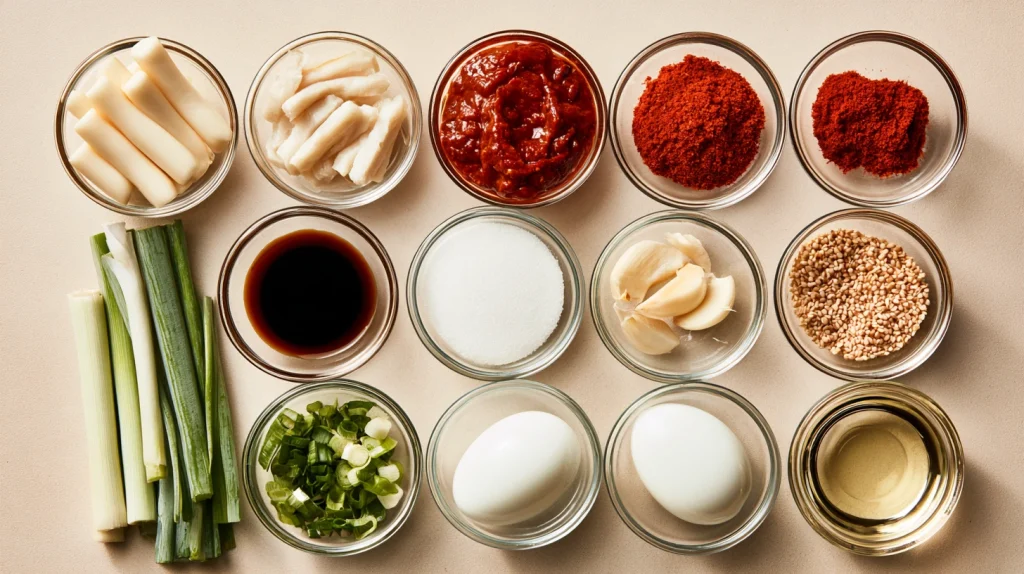
1 pound (450 g) Korean cylindrical rice cakes
4 cups anchovy stock or vegetable stock
2 tablespoons gochujang
1 tablespoon gochugaru
1 tablespoon soy sauce
1 tablespoon sugar
2 teaspoons minced garlic
1 teaspoon sesame oil
2 green onions, cut into 2-inch pieces
6 ounces (170 g) Korean fish cakes, sliced
2 boiled eggs
- Optional Garnishes
Toasted sesame seeds
Thinly sliced green onions
Shredded mozzarella cheese
Roasted seaweed strips
Directions
- If using refrigerated rice cakes, separate them gently with your hands. If using frozen rice cakes, soak them in warm water for about twenty minutes until they soften before draining thoroughly. Slice the fish cakes into bite-sized pieces, prepare the green onions, mince the garlic, and have all the remaining ingredients measured before heating the pan. Preparing everything in advance allows the cooking process to move smoothly because the sauce thickens quickly once it begins simmering.
- Pour the anchovy stock into a wide saucepan and place it over medium heat. Add the gochujang, gochugaru, soy sauce, sugar, and minced garlic, whisking continuously until the seasonings dissolve completely into the broth. Bring the mixture to a gentle simmer while stirring occasionally so the sauce develops a smooth texture and the flavors blend together evenly without scorching on the bottom of the pan.
- Add the prepared rice cakes to the simmering sauce and stir gently so each piece becomes evenly coated. Continue cooking while stirring occasionally for several minutes as the rice cakes soften and begin absorbing the flavorful sauce. Once they become tender yet pleasantly chewy, stir in the sliced fish cakes and continue simmering until the sauce naturally thickens and clings to every ingredient without becoming overly dry.
- Add the green onions during the final few minutes of cooking so they remain slightly crisp while contributing fresh flavor to the sauce. Drizzle the sesame oil over the tteokbokki and gently stir to distribute its aroma throughout the dish. Taste the sauce and adjust the seasoning by adding a little more sugar for sweetness or additional gochujang if you prefer a richer and spicier finish.
- Transfer the finished tteokbokki to warm serving bowls while it is still bubbling hot. Arrange the boiled eggs on top and garnish with toasted sesame seeds, sliced green onions, roasted seaweed strips, or shredded mozzarella cheese if desired. Serve immediately while the rice cakes remain soft and chewy and the sauce is thick, glossy, and full of authentic Korean flavor.