

Teriyaki Pork Tenderloin Recipe – Juicy and Flavorful
Introduction to Teriyaki Pork Tenderloin
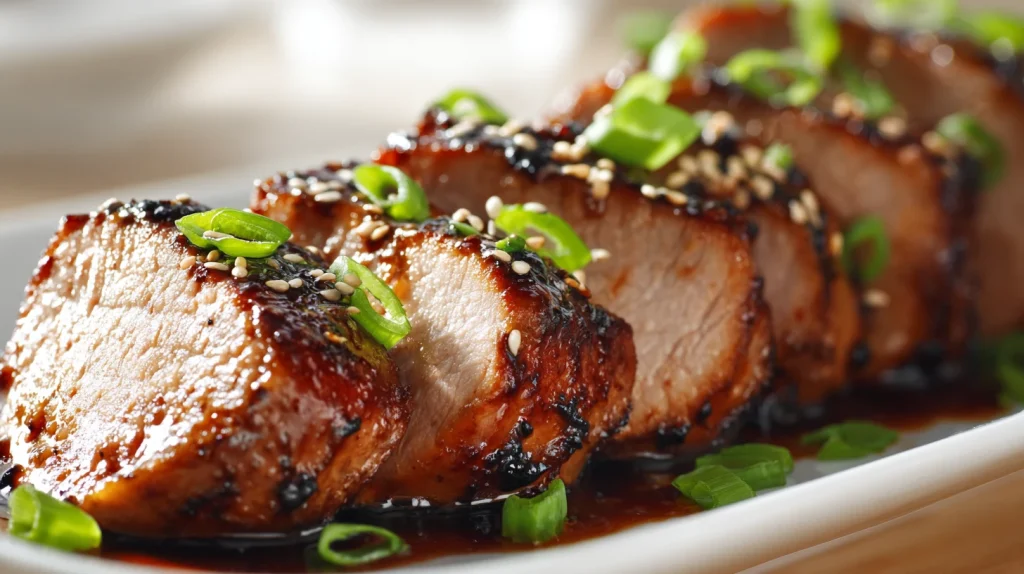
Teriyaki pork tenderloin is one of those meals that tastes like it came from a restaurant kitchen but is surprisingly simple to prepare at home. The combination of tender pork, glossy teriyaki sauce, garlic, ginger, and a balanced sweet savory flavor creates a dish that feels comforting and impressive at the same time. A properly cooked pork tenderloin stays juicy, slices beautifully, and absorbs marinade better than many other cuts of meat.
What makes this teriyaki pork tenderloin stand out is the balance between texture and flavor. The outside develops a rich caramelized coating while the center stays moist and tender. The homemade pork tenderloin marinade deeply seasons the meat instead of just coating the surface. Every slice carries sweet soy flavor, mild garlic warmth, and the unmistakable richness of classic teriyaki pork.
Many people love this recipe because it fits different cooking styles. It works in the oven, on the stovetop, or even as a crockpot pork tenderloin for busy weeknights. The leftovers are just as good the next day, making it ideal for meal prep, rice bowls, salads, or sandwiches. While this dish is inspired by Asian pork tenderloin recipes, the ingredients are simple and easy to find in most kitchens.
This teriyaki recipe also adapts well if you want to experiment. You can turn it into a spicy version, make it sweeter, or even use the marinade as a recipe using chicken. That flexibility makes it one of the most practical and rewarding pork recipes to master at home.
Why You’ll Love This Recipe
One of the biggest advantages of this teriyaki pork tenderloin recipe is how quickly pork tenderloin cooks compared to larger cuts. You get deep flavor without waiting hours for the meat to become tender. Because pork tenderloin is naturally lean, the marinade becomes especially important, and this recipe is designed to keep every bite juicy and flavorful.
The homemade teriyaki glaze is another reason this dish works so well. Many bottled sauces are either too salty or overly sweet. Making your own allows you to control the flavor and texture. The sauce thickens into a glossy coating that clings to the pork instead of running off the plate.
This recipe also delivers reliable results for home cooks. The cooking method is straightforward and forgiving as long as the pork is not overcooked. Even beginners can achieve a juicy pork tenderloin with a flavorful crust and tender center.
Another reason people return to this recipe is versatility. It pairs naturally with rice, noodles, roasted vegetables, grilled pineapple, stir fried greens, or mashed potatoes. The marinated pork tenderloins can also be sliced thin for wraps, tacos, or noodle bowls.
For busy households, this dish is practical because the marinade can be prepared ahead of time. You can marinate the pork overnight, then cook it quickly the next day. It is also excellent for entertaining because it looks elegant when sliced and arranged on a serving platter.
Preparation and Cooking Time
Ingredients
Substitution Notes
Step by Step Instructions
Step 1: Trim and Prepare the Pork
Remove any silver skin from the pork tenderloin using a sharp knife because this tough connective tissue does not break down during cooking and can make the meat chewy. Pat the pork dry with paper towels so the marinade can coat the surface properly and season lightly with salt and black pepper before placing the tenderloins into a large bowl or resealable bag.
Step 2: Make the Pork Tenderloin Marinade
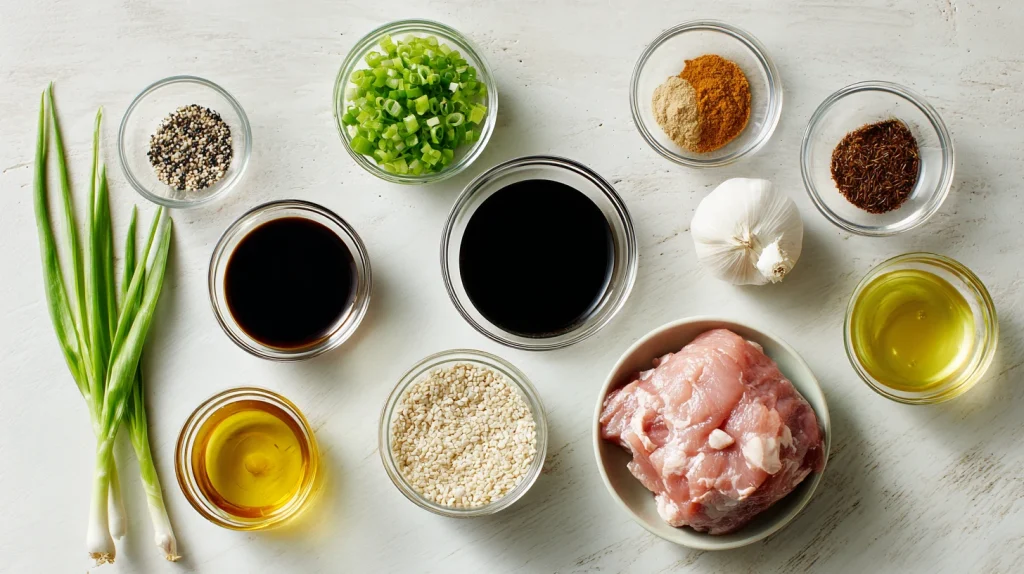
In a mixing bowl combine soy sauce, brown sugar, honey, rice vinegar, sesame oil, garlic, and fresh ginger until the sugar dissolves completely and the mixture smells rich and aromatic. This pork tenderloin marinade should taste balanced between salty and sweet because the flavor will intensify during cooking and create the glossy teriyaki coating.
Step 3: Marinate the Pork
Pour most of the marinade over the pork while reserving about half a cup for the sauce later, then coat the tenderloins thoroughly so every surface absorbs flavor evenly. Cover and refrigerate for at least one hour, though overnight marination gives the best flavor and helps create exceptionally juicy pork tenderloin results.
Step 4: Bring the Pork to Room Temperature
Remove the marinated pork tenderloins from the refrigerator about 20 minutes before cooking because cold meat cooks unevenly and can tighten during roasting. Allowing the pork to warm slightly helps it cook more evenly and retain moisture.
Step 5: Sear the Pork
Heat vegetable oil in a large oven safe skillet over medium high heat until shimmering, then add the pork tenderloins and sear them on all sides until golden brown. This step builds flavor through caramelization and helps lock the teriyaki glaze onto the surface while creating a richer final texture.
Step 6: Roast the Teriyaki Pork Tenderloin
Transfer the skillet to a preheated 400 degree Fahrenheit oven and roast the pork for about 15 to 20 minutes or until the internal temperature reaches 145 degrees Fahrenheit. Avoid overcooking because pork tenderloin is lean and can dry out quickly if left in the oven too long.
Step 7: Prepare the Teriyaki Sauce
While the pork cooks, place the reserved marinade into a small saucepan and bring it to a gentle simmer to ensure it is fully cooked and safe to use. Stir together cornstarch and water to create a slurry, then whisk it into the sauce and cook until thickened into a shiny teriyaki glaze that coats the back of a spoon.
Step 8: Rest the Pork Before Slicing
Remove the cooked teriyaki pork tenderloin from the oven and let it rest on a cutting board for about 10 minutes before slicing. Resting allows the juices to redistribute through the meat instead of running out immediately when cut.
Step 9: Slice and Glaze
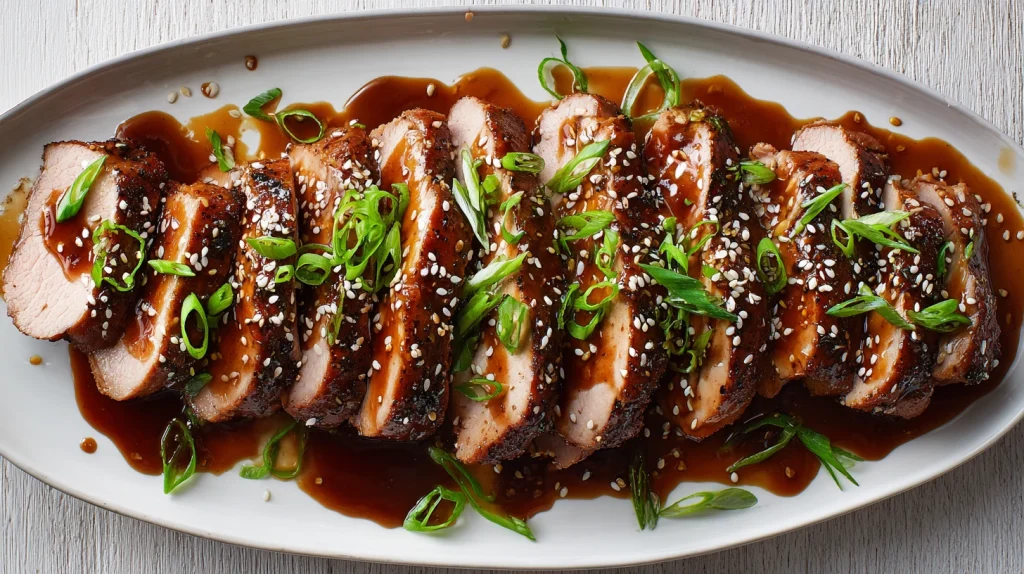
Slice the pork into medallions using a sharp knife and arrange the pieces on a serving platter before spooning the warm teriyaki sauce over the top. Finish with sesame seeds and sliced green onions for freshness, texture, and visual appeal.
How to Serve
Teriyaki pork tenderloin is best served sliced thinly over steamed jasmine rice or fluffy short grain rice because the grains absorb the extra teriyaki sauce beautifully. For a complete meal, pair it with stir fried vegetables such as broccoli, snap peas, bok choy, or carrots. Roasted asparagus or sesame green beans also complement the sweet savory flavor of the teriyaki pork. If you want a more restaurant style presentation, fan the sliced pork across a platter and drizzle the glossy sauce over the center before garnishing with sesame seeds and green onions. Grilled pineapple adds freshness and natural sweetness that balances the salty richness of the sauce. You can also serve this Asian pork tenderloin in lettuce wraps, noodle bowls, or alongside fried rice for a more filling dinner.
Secret Behind This Recipe
The secret behind truly juicy teriyaki pork tenderloin is controlling moisture at every stage of cooking. Many home cooks overcook pork because they wait until it looks completely white throughout, but pork tenderloin reaches perfect doneness at 145 degrees Fahrenheit. At that temperature the meat stays tender and flavorful while remaining fully safe to eat.
Another important detail is the balance inside the marinade. Soy sauce seasons the meat, brown sugar helps caramelization, honey creates shine, and vinegar cuts through richness so the final dish does not taste overly sweet. Garlic and ginger provide depth that gives the teriyaki recipe its signature flavor.
Searing before roasting is another chef technique that makes a huge difference. The hot pan develops a flavorful crust that intensifies the taste and improves texture. Finishing in the oven then cooks the inside gently without burning the glaze.
Finally, resting the pork after cooking is essential. Cutting immediately causes valuable juices to spill out onto the board instead of staying inside the meat. Resting transforms good pork into juicy pork tenderloin that stays moist in every bite.
Recipe Variations
Additional Tips
Freezing and Storage
Store leftover teriyaki pork tenderloin in an airtight container in the refrigerator for up to four days. Keep extra sauce separately if possible so the pork does not become overly saturated during storage. To reheat, warm the slices gently in a skillet with a splash of water or extra sauce over medium low heat until heated through. Avoid microwaving too aggressively because lean pork can dry out quickly. For freezing, wrap the cooled pork tightly in plastic wrap followed by foil or place it into freezer safe containers. Freeze for up to three months. Thaw overnight in the refrigerator before reheating slowly for the best texture and flavor.
Nutritional Information
Approximate values per serving:
Nutritional values may vary depending on ingredient brands and portion sizes.
Final Words
Teriyaki pork tenderloin is the kind of recipe that proves home cooking can be both practical and deeply satisfying. With the right pork tenderloin marinade, careful cooking, and a few chef level techniques, you can create restaurant quality teriyaki pork in your own kitchen without complicated ingredients or difficult methods. This recipe delivers rich flavor, tender texture, and versatility that works for weeknight dinners, meal prep, or special occasions.
Once you make this juicy pork tenderloin at home, it quickly becomes a reliable favorite because it pairs easily with so many side dishes and adapts well to different cooking styles. Whether you roast it traditionally, turn it into crockpot pork tenderloin, or experiment with marinated pork tenderloins for grilling, the results stay flavorful and satisfying. Cooking this Asian pork tenderloin yourself also allows you to control the sweetness, saltiness, and texture exactly the way you like it.
FAQs

Teriyaki Pork Tenderloin Recipe That Stays Juicy and Flavorful
Course: Halloween Recipes6
servings15
minutes20
minutes340
kcalIngredients
2 pork tenderloins, about 1 to 1.5 pounds each
1/2 cup low sodium soy sauce
1/3 cup brown sugar
3 tablespoons honey
2 tablespoons rice vinegar
2 tablespoons sesame oil
4 garlic cloves, finely minced
1 tablespoon fresh ginger, grated
1 tablespoon cornstarch
2 tablespoons water
1 tablespoon vegetable oil
1 teaspoon black pepper
1/2 teaspoon salt
1 teaspoon sesame seeds for garnish
2 green onions, thinly sliced
Directions
- Remove any silver skin from the pork tenderloin using a sharp knife because this tough connective tissue does not break down during cooking and can make the meat chewy. Pat the pork dry with paper towels so the marinade can coat the surface properly and season lightly with salt and black pepper before placing the tenderloins into a large bowl or resealable bag.
- In a mixing bowl combine soy sauce, brown sugar, honey, rice vinegar, sesame oil, garlic, and fresh ginger until the sugar dissolves completely and the mixture smells rich and aromatic. This pork tenderloin marinade should taste balanced between salty and sweet because the flavor will intensify during cooking and create the glossy teriyaki coating.
- Pour most of the marinade over the pork while reserving about half a cup for the sauce later, then coat the tenderloins thoroughly so every surface absorbs flavor evenly. Cover and refrigerate for at least one hour, though overnight marination gives the best flavor and helps create exceptionally juicy pork tenderloin results.
- Remove the marinated pork tenderloins from the refrigerator about 20 minutes before cooking because cold meat cooks unevenly and can tighten during roasting. Allowing the pork to warm slightly helps it cook more evenly and retain moisture.
- Heat vegetable oil in a large oven safe skillet over medium high heat until shimmering, then add the pork tenderloins and sear them on all sides until golden brown. This step builds flavor through caramelization and helps lock the teriyaki glaze onto the surface while creating a richer final texture.
- Transfer the skillet to a preheated 400 degree Fahrenheit oven and roast the pork for about 15 to 20 minutes or until the internal temperature reaches 145 degrees Fahrenheit. Avoid overcooking because pork tenderloin is lean and can dry out quickly if left in the oven too long.
- While the pork cooks, place the reserved marinade into a small saucepan and bring it to a gentle simmer to ensure it is fully cooked and safe to use. Stir together cornstarch and water to create a slurry, then whisk it into the sauce and cook until thickened into a shiny teriyaki glaze that coats the back of a spoon.
- Remove the cooked teriyaki pork tenderloin from the oven and let it rest on a cutting board for about 10 minutes before slicing. Resting allows the juices to redistribute through the meat instead of running out immediately when cut.
- Slice the pork into medallions using a sharp knife and arrange the pieces on a serving platter before spooning the warm teriyaki sauce over the top. Finish with sesame seeds and sliced green onions for freshness, texture, and visual appeal.