

Jeyuk Bokkeum Recipe – Best Korean Spicy Pork Stir-Fry
Jeyuk Bokkeum
Jeyuk bokkeum is a Korean spicy pork dish made by marinating thinly sliced pork in a savory, spicy, slightly sweet sauce and quickly stir-frying it with vegetables. It is one of those Korean dishes that delivers a lot of flavor from a relatively simple list of ingredients. The pork becomes tender and deeply seasoned, while onions, cabbage, carrots, and green onions add sweetness, freshness, and texture.
The name jeyuk bokkeum refers to stir-fried pork, and the dish is especially known for its bold red sauce. Gochujang, gochugaru, soy sauce, garlic, ginger, and a little sweetness create the foundation of the marinade. When the pork hits a hot skillet, the sauce coats the meat and develops a rich, slightly caramelized flavor.
A good jeyuk bokkeum depends heavily on the pork being sliced thinly. Thin slices absorb the Korean Spicy Pork Marinade quickly and cook fast over high heat. Pork shoulder is an excellent choice because it has enough fat to remain juicy while developing browned edges during stir-frying. Pork belly can also be used for a richer result, while leaner cuts require more attention to avoid overcooking.
The balance of the sauce is equally important. Gochujang contributes fermented depth and heat, while gochugaru adds a cleaner chili flavor. Soy sauce brings saltiness and umami, garlic and ginger add aromatic depth, and sugar or honey rounds out the heat. The finished sauce should be bold without being overwhelmingly sweet or salty.
Unlike dishes that simmer slowly, this Korean Spicy Stir Fried Pork is cooked quickly over high heat. That means preparation matters. Have the pork marinated and the vegetables chopped before the pan becomes hot. Once cooking begins, the ingredients should move efficiently through the skillet so the pork browns rather than steams.
Jeyuk bokkeum is commonly enjoyed with steamed rice, making it especially satisfying as a Spicy Pork Stir-fry With Rice. The rice provides a neutral base that absorbs the spicy sauce. You can also serve the pork with lettuce leaves, kimchi, cucumber, bean sprouts, or other Korean-style side dishes.
This recipe is useful for anyone who enjoys Korean food but wants a practical home-cooked meal. The ingredients are straightforward, the marinade can be prepared in advance, and the entire stir-fry comes together quickly. It is also flexible enough for different spice levels, vegetables, and serving styles.
For people searching for a Korean Spicy Pork Recipe, this method provides a dependable starting point. The goal is not simply to make the pork hot. A successful dish should have several layers of flavor, including fermented chili richness, savory depth, mild sweetness, garlic, ginger, and the natural flavor of properly browned pork.
Whether served as a weeknight dinner, packed for lunch, or included as part of a larger Korean meal, jeyuk bokkeum is a dish worth learning. Once the marinade is balanced and the pork is cooked over sufficiently high heat, the recipe becomes remarkably easy to repeat.
Why You’ll Love This Recipe
Preparation and Cooking Time, Also Serving
The pork needs at least 30 minutes in the marinade so the seasonings can begin penetrating the thin slices. If you have more time, you can marinate it for several hours in the refrigerator. Avoid leaving the pork in a highly acidic marinade for an excessively long period because the texture can change.
The cooking process is intentionally quick. Prepare all vegetables and keep the marinated pork ready before heating the skillet. Once the pan is hot, the pork should be stir-fried in a way that encourages browning while preventing the sauce from burning.
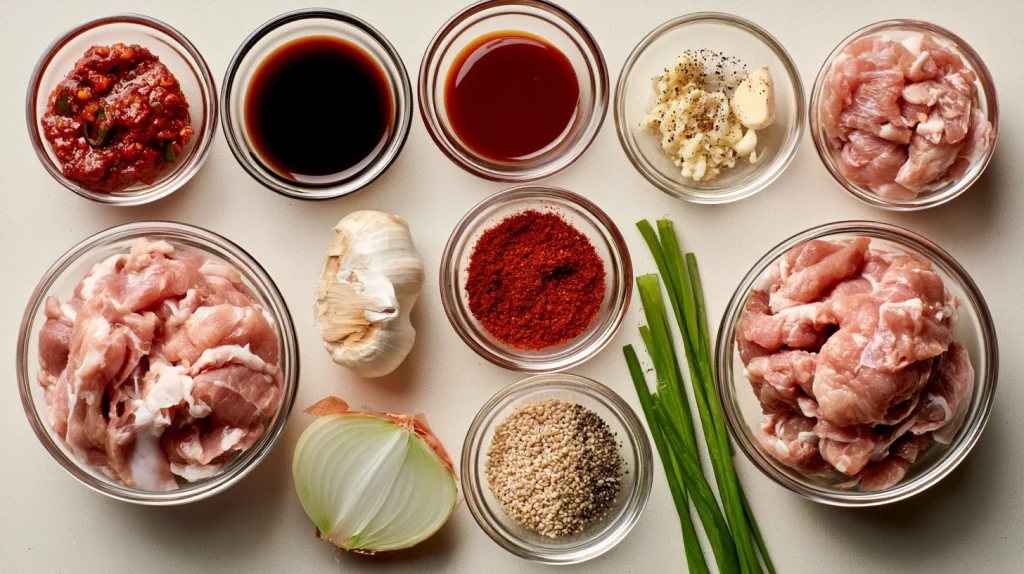
Ingredients
For the Korean Spicy Pork Marinade
For Serving
Substitution Notes
Step-by-Step Instructions

Step 1: Prepare the Pork
Place the pork shoulder on a clean cutting board and slice it as thinly as possible across the grain, aiming for pieces approximately 1/8 to 1/4 inch thick. If the pork is difficult to slice, place it in the freezer for 20 to 30 minutes first, which firms the meat and makes thin slicing much easier. Once sliced, place the pork in a large mixing bowl and set it aside while you prepare the marinade.
Step 2: Make the Marinade
Add gochujang, gochugaru, soy sauce, honey, rice vinegar, sesame oil, minced garlic, grated ginger, grated Asian pear, and black pepper to a bowl and stir until the mixture is smooth and evenly combined. The marinade should be thick enough to cling to the pork while still being easy to mix, with a balanced combination of spicy, savory, sweet, and aromatic flavors.
Step 3: Marinate the Pork
Pour the prepared Korean Spicy Pork Marinade over the sliced pork and mix thoroughly with clean hands or tongs until every piece is evenly coated. Cover the bowl and refrigerate for at least 30 minutes, or allow the pork to marinate for several hours when preparing ahead, making sure it remains refrigerated throughout the marinating time.
Step 4: Prepare the Vegetables and Pan
While the pork marinates, slice the onion, napa cabbage, carrot, and green onions so everything is ready before cooking begins. Heat a large skillet, wok, or heavy sauté pan over medium-high to high heat until the surface is hot, then add the neutral cooking oil and allow it to heat briefly before adding the marinated pork.
Step 5: Stir-Fry the Pork and Vegetables
Add the marinated pork to the hot pan in a single layer as much as possible and cook for several minutes, stirring and turning the pieces regularly until the pork begins to brown and the sauce becomes glossy. Add the onion, cabbage, carrot, and green onions, then continue stir-frying until the pork is fully cooked and the vegetables are tender-crisp, making sure the sauce does not scorch on the bottom of the pan.
Step 6: Finish and Serve
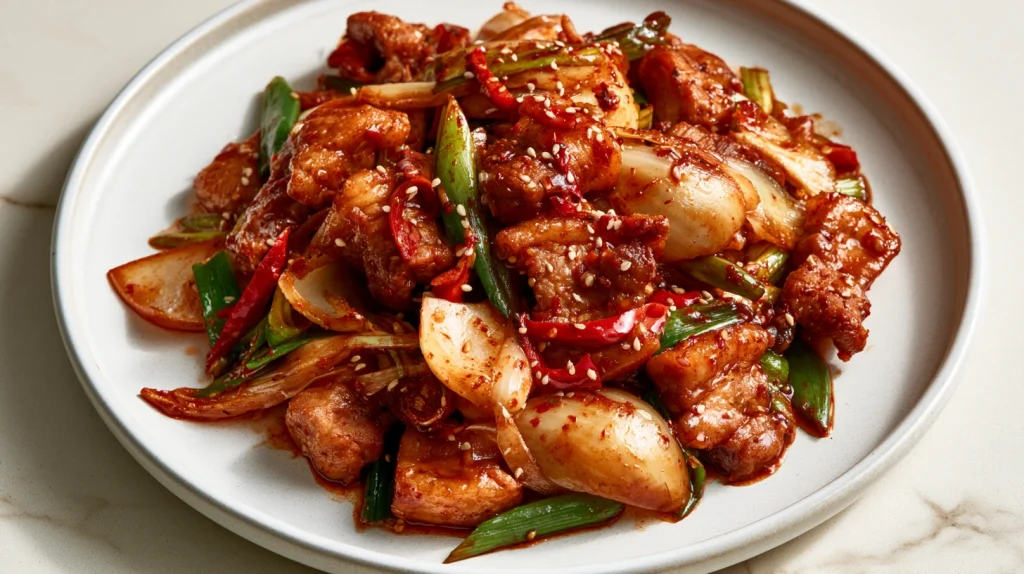
Remove the finished jeyuk bokkeum from the heat once the pork is cooked through and the sauce has thickened enough to coat the meat, then transfer it to a serving dish and finish with toasted sesame seeds and sliced green onions. Serve immediately with hot steamed rice, cucumber, kimchi, or lettuce leaves so the rice can absorb the flavorful Korean Spicy Pork Sauce while the pork is still hot.
How to Serve
Additional Tips
Recipe Variations
Freezing and Storage
Nutritional Information
Approximate nutritional information per serving of jeyuk bokkeum with approximately 1 cup cooked white rice:
These values are estimates and can vary depending on the cut of pork, amount of marinade absorbed, cooking oil, rice portion, and specific brands of gochujang and soy sauce.
Using pork loin instead of pork shoulder can reduce the fat content, while serving the dish with brown rice or cauliflower rice can change the carbohydrate and calorie content. Additional kimchi, sauces, or side dishes will also change the overall nutritional values.
Final Words
Jeyuk bokkeum is a practical Korean dish that delivers impressive flavor without requiring complicated cooking. The combination of thinly sliced pork, fermented chili paste, gochugaru, garlic, ginger, soy sauce, and a touch of sweetness creates a sauce that is spicy, savory, aromatic, and deeply satisfying. The most important part of the recipe is preparing the pork correctly. Thin slices cook quickly and give the marinade plenty of surface area to cling to. Taking a few extra minutes to slice the pork properly makes a noticeable difference in the finished dish.
High heat is equally important. The pan should be hot before the pork goes in, and the meat should have enough room to brown. If the pan is overcrowded, the pork will release moisture and steam instead of developing the browned edges that give Korean Spicy Stir Fried Pork its characteristic flavor. The sauce should also remain balanced. Gochujang brings fermented depth and heat, gochugaru adds chili flavor, soy sauce provides savory saltiness, and honey and Asian pear provide gentle sweetness. Ginger and garlic bring the aromatic character that makes the dish taste complete.
Serve the finished pork over steamed rice and let the sauce soak into the grains. Add kimchi, cucumber, lettuce, or other Korean side dishes to provide contrasting textures and flavors. For a more substantial meal, top the rice with a fried egg and garnish everything with sesame seeds and green onions. This recipe is also easy to adapt. You can make the pork hotter, reduce the spice for a milder meal, add mushrooms and extra vegetables, use pork belly for richness, or prepare the dish as a convenient rice bowl. These variations allow you to keep the basic technique while creating a meal that suits your table.
If you have been searching for a dependable Korean Spicy Pork Recipe, jeyuk bokkeum is an excellent one to learn. It is flavorful enough for a special dinner but simple enough to become part of your regular weeknight rotation. Once you have the marinade prepared and the pork sliced, the actual stir-frying takes only a short time. Prepare your rice and side dishes first, cook the pork last, and serve everything while it is hot. That simple approach gives you tender pork, glossy sauce, crisp vegetables, and a satisfying Korean-style meal at home.
FAQs

Jeyuk Bokkeum Recipe – Best Korean Spicy Pork Stir-Fry
Course: Dinner Recipes4
servings20
minutes15
minutes620
kcalIngredients
1 1/2 pounds boneless pork shoulder, thinly sliced
1 medium yellow onion, thinly sliced
1 cup napa cabbage, thinly sliced
1 medium carrot, cut into thin matchsticks
3 green onions, cut into 2-inch pieces
2 tablespoons neutral cooking oil
1 tablespoon toasted sesame seeds, for serving
- For the Korean Spicy Pork Marinade
3 tablespoons gochujang
1 tablespoon gochugaru
2 tablespoons soy sauce
1 1/2 tablespoons honey
1 tablespoon rice vinegar
1 tablespoon toasted sesame oil
4 cloves garlic, finely minced
1 tablespoon fresh ginger, finely grated
1/2 small Asian pear, finely grated
1/2 teaspoon black pepper
- For Serving
4 cups cooked short-grain white rice
1 tablespoon sliced green onions
1 tablespoon toasted sesame seeds
1 small cucumber, thinly sliced
Kimchi, optional
Lettuce leaves, optional
Directions
- Place the pork shoulder on a clean cutting board and slice it as thinly as possible across the grain, aiming for pieces approximately 1/8 to 1/4 inch thick. If the pork is difficult to slice, place it in the freezer for 20 to 30 minutes first, which firms the meat and makes thin slicing much easier. Once sliced, place the pork in a large mixing bowl and set it aside while you prepare the marinade.
- Add gochujang, gochugaru, soy sauce, honey, rice vinegar, sesame oil, minced garlic, grated ginger, grated Asian pear, and black pepper to a bowl and stir until the mixture is smooth and evenly combined. The marinade should be thick enough to cling to the pork while still being easy to mix, with a balanced combination of spicy, savory, sweet, and aromatic flavors.
- Pour the prepared Korean Spicy Pork Marinade over the sliced pork and mix thoroughly with clean hands or tongs until every piece is evenly coated. Cover the bowl and refrigerate for at least 30 minutes, or allow the pork to marinate for several hours when preparing ahead, making sure it remains refrigerated throughout the marinating time.
- While the pork marinates, slice the onion, napa cabbage, carrot, and green onions so everything is ready before cooking begins. Heat a large skillet, wok, or heavy sauté pan over medium-high to high heat until the surface is hot, then add the neutral cooking oil and allow it to heat briefly before adding the marinated pork.
- Add the marinated pork to the hot pan in a single layer as much as possible and cook for several minutes, stirring and turning the pieces regularly until the pork begins to brown and the sauce becomes glossy. Add the onion, cabbage, carrot, and green onions, then continue stir-frying until the pork is fully cooked and the vegetables are tender-crisp, making sure the sauce does not scorch on the bottom of the pan.
- Remove the finished jeyuk bokkeum from the heat once the pork is cooked through and the sauce has thickened enough to coat the meat, then transfer it to a serving dish and finish with toasted sesame seeds and sliced green onions. Serve immediately with hot steamed rice, cucumber, kimchi, or lettuce leaves so the rice can absorb the flavorful Korean Spicy Pork Sauce while the pork is still hot.