

Bossam Korean Pork Belly Recipe – Easy Weeknight Dinner
Bossam Korean Pork Belly
Bossam Korean pork belly is a traditional Korean dish built around one simple idea: slowly cook pork until it becomes tender enough to slice or pull apart, then serve it with fresh, crunchy, and savory accompaniments. The pork is usually boiled or gently simmered with aromatics until the fat becomes silky and the meat becomes exceptionally tender. It is then sliced and served with ingredients such as napa cabbage, kimchi, garlic, green onions, and a Korean dipping sauce.
Unlike heavily seasoned roasted pork, bossam gets much of its character from the cooking liquid and the accompaniments served alongside it. The pork itself is savory and aromatic but not overwhelmingly spicy. This makes it possible to combine each bite with salty fermented kimchi, fresh vegetables, spicy dipping sauce, or a small amount of ssamjang according to your taste.
Pork belly is especially suitable for bossam because it contains enough fat to remain moist during the long cooking process. The gentle simmer allows the connective tissue to soften gradually, producing meat that is tender without becoming dry. When sliced correctly, each piece should have a pleasant balance of meat and soft rendered fat.
A traditional bossam meal is also about how the food is assembled at the table. Rather than placing everything into one bowl, the pork is usually surrounded by separate accompaniments. You can take a piece of pork, place it on a lettuce or cabbage leaf, add kimchi or pickled vegetables, spoon over a little sauce, and fold everything into a bite.
This style of eating makes bossam particularly interesting for anyone who enjoys Asian Food Plating. The contrasting colors and textures of pale pork, green vegetables, red kimchi, and dark dipping sauces create an attractive spread without requiring complicated decoration. Bossam is part of the broader world of South Korean Dishes that emphasize balance. Rich pork is paired with acidic, spicy, salty, and fresh ingredients to prevent the meal from feeling too heavy. That balance is one of the reasons the dish works so well as a shared dinner.
Although bossam is commonly made with pork belly, other cuts can be used. Pork shoulder is a useful alternative when you want less fat, while pork butt provides enough connective tissue to remain tender during slow cooking. However, pork belly gives the most recognizable rich texture. The cooking liquid can also be adjusted. Garlic, ginger, green onion, onion, black pepper, and Korean cooking wine are commonly used to create a fragrant environment for the pork. Some versions include soybean paste, coffee, or other ingredients that help deepen the flavor and reduce strong pork aromas.
This is not the same as Grilled Pork Belly Recipes because the pork is gently simmered rather than cooked over direct high heat. Grilled pork belly develops browned and smoky surfaces, while bossam focuses on tenderness, clean pork flavor, and the contrast created by fresh and fermented side dishes. If you are searching for a satisfying Pork Dish Recipe that can serve several people, bossam is an excellent choice. Most of the cooking time is hands-off, and the finished pork can be arranged on a large platter for everyone to assemble according to their preferences.
Bossam also fits naturally into a collection of Korean Food Ideas because it can become either a casual family meal or a more elaborate Korean-inspired dinner. Serve it with rice and a few side dishes for a complete meal, or create a larger spread with kimchi, pickles, sauces, vegetables, and other Korean accompaniments. The key to excellent bossam is patience. The pork should simmer gently rather than boil aggressively. This gives the connective tissue enough time to soften while protecting the meat from becoming tough. Once the pork is cooked, a short resting period makes slicing much easier and helps the juices remain inside the meat.
Why You’ll Love This Recipe
Preparation and Cooking Time, Also Serving
The cooking time can vary depending on the thickness of the pork belly. A thick slab may require closer to 2 hours, while smaller pieces can become tender sooner. The most reliable test is not the clock but the texture. A knife or fork should slide into the meat with little resistance.
If you are serving bossam at a gathering, prepare the pork ahead of time and keep the accompaniments refrigerated until you are ready to serve. Slice the pork shortly before placing it on the table so the pieces remain moist and attractive.
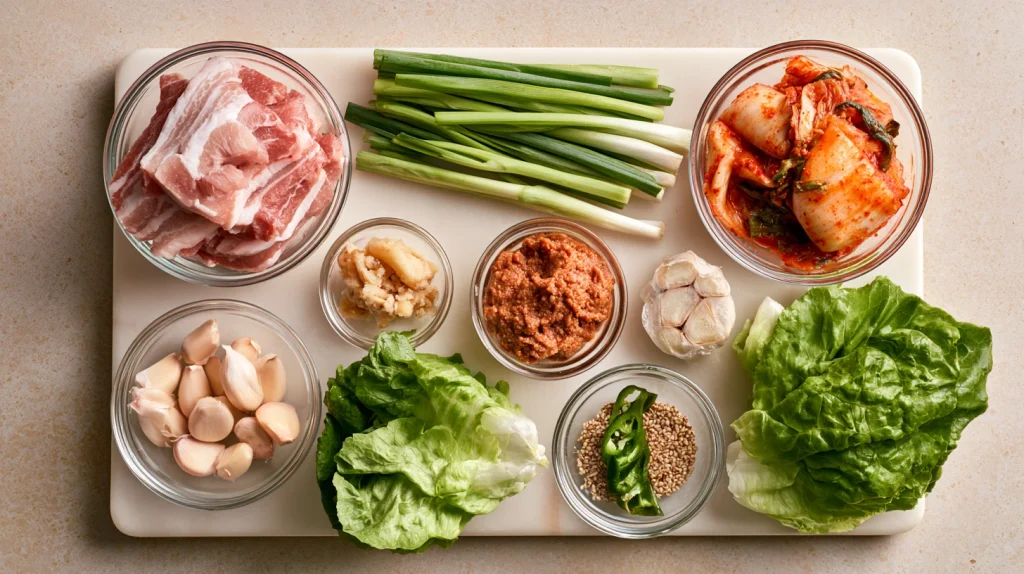
Ingredients
For the Serving Wraps
For the Dipping Sauce
Optional Finishing Ingredients
Substitution Notes
Step-by-Step Instructions

Step 1: Prepare the Pork and Aromatics
Remove the pork belly from its packaging and pat it thoroughly dry with paper towels, then inspect the slab and trim only any excessively thick or loose pieces of fat while leaving enough fat attached to keep the pork moist during cooking. Prepare the onion, garlic, ginger, and green onions, and measure the doenjang, cooking wine, soy sauce, black peppercorns, bay leaves, and salt so everything is ready before the pot begins simmering.
Step 2: Build the Cooking Broth
Place the water in a large heavy-bottomed pot and add the quartered onion, crushed garlic, sliced ginger, green onions, doenjang, Korean cooking wine, soy sauce, black peppercorns, bay leaves, and salt, then stir briefly to distribute the ingredients before bringing the liquid to a gentle boil over medium-high heat. Once the liquid is hot and aromatic, reduce the heat slightly and allow it to simmer for approximately 5 minutes so the aromatics begin releasing their flavor into the broth.
Step 3: Add and Simmer the Pork
Carefully lower the pork belly into the simmering liquid and make sure it is mostly submerged, then reduce the heat to maintain a gentle simmer rather than a rapid boil. Cover the pot partially and cook the pork for approximately 1 hour 30 minutes, checking the liquid occasionally and adjusting the heat as necessary to maintain a steady simmer, then continue cooking for another 15 to 30 minutes if the pork is still firm when tested with a fork or thin knife.
Step 4: Check the Pork for Tenderness
Test the thickest part of the pork by inserting a fork or small knife into the center, and continue simmering if there is noticeable resistance because properly cooked bossam should be tender enough to pierce easily without requiring force. Once the pork reaches the desired tenderness, turn off the heat and allow it to remain in the hot cooking liquid for approximately 5 minutes so the temperature settles before removing it from the pot.
Step 5: Prepare the Wraps and Sauce
While the pork is cooking or resting, separate the napa cabbage leaves and rinse them thoroughly before drying them well, then arrange the cucumber slices, kimchi, thinly sliced garlic, and green onions on separate small plates or sections of a serving platter. For the dipping sauce, combine the ssamjang, rice vinegar, sesame oil, honey, sesame seeds, chopped green onion, and water in a small bowl and stir until smooth, adding a little more water if necessary to create a thick but spoonable consistency.
Step 6: Rest and Slice the Pork
Remove the tender pork belly from the cooking liquid and place it on a clean cutting board, then allow it to rest for approximately 10 minutes before slicing. Use a sharp knife to cut the pork across the grain into slices approximately 1/3 to 1/2 inch thick, keeping the knife steady and using long controlled strokes so the slices remain intact rather than breaking apart.
Step 7: Arrange and Serve
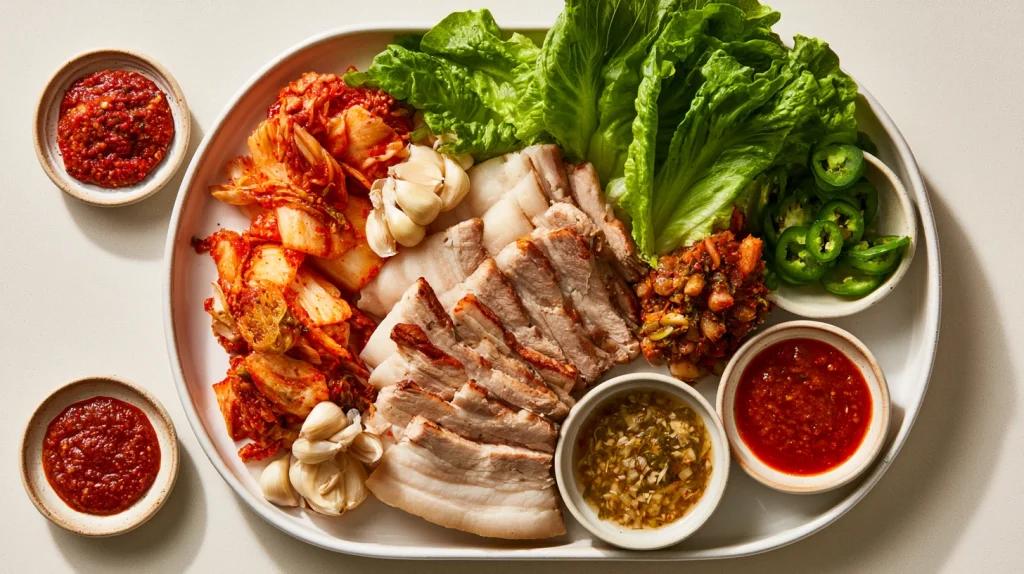
Arrange the sliced pork belly on a large serving platter and surround it with the prepared napa cabbage leaves, kimchi, cucumber, garlic, green onions, and dipping sauce, then sprinkle the pork lightly with toasted sesame seeds and additional green onion if desired. Serve the platter while the pork is warm or slightly warm, allowing everyone to place a slice of pork into a cabbage leaf or lettuce wrap and add kimchi, vegetables, and sauce before folding the wrap and eating it immediately.
How to Serve
Bossam is best served as a shared platter so everyone can build their own wraps. Keep the pork warm and arrange the fresh accompaniments around it so the table has a good balance of colors, textures, and flavors.
A simple serving sequence is to place a cabbage or lettuce leaf in your hand, add one slice of pork, top it with a little kimchi, garlic, green onion, and ssamjang, then fold it into a compact wrap and eat it immediately.
Additional Tips
Recipe Variations
Freezing and Storage
Nutritional Information
The following nutritional values are approximate and based on six servings using the listed ingredients. Actual values will vary depending on the specific pork belly, portion size, sauces, and accompaniments used.
Pork belly is naturally high in fat, so the nutritional profile can change considerably depending on the amount of visible fat in the cut and how much pork each person eats. Serving the pork with plenty of fresh cabbage, lettuce, cucumber, and other vegetables can make the meal more balanced.
The sodium level is also influenced by the doenjang, soy sauce, ssamjang, and kimchi. Using reduced-sodium soy sauce and controlling the amount of dipping sauce can lower the overall sodium content.
Final Words
Bossam Korean pork belly is a rewarding dish to make at home because the cooking technique is simple but produces exceptionally tender meat. The pork does not need complicated seasoning or elaborate preparation. A gentle simmer with garlic, ginger, onion, green onion, doenjang, and a few basic aromatics is enough to create a flavorful foundation. What makes bossam special is the way the pork is served. Instead of treating the meat as a standalone Pork Dish, you build each bite with fresh cabbage, kimchi, garlic, vegetables, and sauce. The richness of the pork is balanced by acidity, spice, freshness, and crunch.
That balance is an important characteristic of South Korean Dishes. A rich ingredient is often paired with fermented or fresh accompaniments that provide contrast. Bossam demonstrates this particularly well because every person can adjust the ratio of pork, kimchi, vegetables, and sauce to suit their own taste. It is also a great recipe for entertaining. The pork can be cooked in advance, while the vegetables and sauces can be prepared separately. When it is time to eat, arrange everything on a large platter and let everyone assemble their own wraps.
If you enjoy Grilled Pork Belly Recipes, bossam gives you another way to appreciate pork belly without relying on high-heat cooking. Instead of chasing a browned crust, this recipe focuses on tenderness, moisture, and the interaction between the pork and its accompaniments. The dish also offers plenty of room for creativity. You can change the protein, adjust the dipping sauce, add more vegetables, introduce spicy flavors, or turn leftovers into rice bowls. This makes bossam a useful addition to your collection of Korean Food Ideas.
From the cooking method to the colorful serving platter, bossam is a dish that rewards attention to simple details. Choose a well-balanced pork belly, keep the simmer gentle, cook until truly tender, rest the meat before slicing, and serve it with fresh accompaniments. Once you make it this way, you will have a dependable Korean pork recipe that can work for an ordinary family dinner or a larger shared meal.
FAQs

Bossam Korean Pork Belly Recipe – Easy Weeknight Dinner
Course: Dinner Recipes6
servings20
minutes1
hour40
minutes620
kcalIngredients
2 pounds pork belly, preferably one thick slab
8 cups water
1 medium yellow onion, quartered
6 cloves garlic, lightly crushed
1 piece fresh ginger, approximately 2 inches, sliced
4 green onions, cut into large pieces
2 tablespoons doenjang, Korean fermented soybean paste
2 tablespoons Korean cooking wine or rice wine
1 tablespoon soy sauce
1 teaspoon whole black peppercorns
2 dried bay leaves
1 teaspoon salt
- For the Serving Wraps
1 small head napa cabbage
1 large English cucumber, thinly sliced
1 cup kimchi
6 cloves fresh garlic, thinly sliced
4 green onions, thinly sliced
- For the Dipping Sauce
3 tablespoons ssamjang
1 tablespoon rice vinegar
1 teaspoon sesame oil
1 teaspoon honey or sugar
1 teaspoon toasted sesame seeds
1 tablespoon finely chopped green onion
1 teaspoon water, or more as needed
- Optional Finishing Ingredients
1 tablespoon toasted sesame seeds
1 tablespoon thinly sliced green onions
1 small red chili, thinly sliced
Directions
- Remove the pork belly from its packaging and pat it thoroughly dry with paper towels, then inspect the slab and trim only any excessively thick or loose pieces of fat while leaving enough fat attached to keep the pork moist during cooking. Prepare the onion, garlic, ginger, and green onions, and measure the doenjang, cooking wine, soy sauce, black peppercorns, bay leaves, and salt so everything is ready before the pot begins simmering.
- Place the water in a large heavy-bottomed pot and add the quartered onion, crushed garlic, sliced ginger, green onions, doenjang, Korean cooking wine, soy sauce, black peppercorns, bay leaves, and salt, then stir briefly to distribute the ingredients before bringing the liquid to a gentle boil over medium-high heat. Once the liquid is hot and aromatic, reduce the heat slightly and allow it to simmer for approximately 5 minutes so the aromatics begin releasing their flavor into the broth.
- Carefully lower the pork belly into the simmering liquid and make sure it is mostly submerged, then reduce the heat to maintain a gentle simmer rather than a rapid boil. Cover the pot partially and cook the pork for approximately 1 hour 30 minutes, checking the liquid occasionally and adjusting the heat as necessary to maintain a steady simmer, then continue cooking for another 15 to 30 minutes if the pork is still firm when tested with a fork or thin knife.
- Test the thickest part of the pork by inserting a fork or small knife into the center, and continue simmering if there is noticeable resistance because properly cooked bossam should be tender enough to pierce easily without requiring force. Once the pork reaches the desired tenderness, turn off the heat and allow it to remain in the hot cooking liquid for approximately 5 minutes so the temperature settles before removing it from the pot.
- While the pork is cooking or resting, separate the napa cabbage leaves and rinse them thoroughly before drying them well, then arrange the cucumber slices, kimchi, thinly sliced garlic, and green onions on separate small plates or sections of a serving platter. For the dipping sauce, combine the ssamjang, rice vinegar, sesame oil, honey, sesame seeds, chopped green onion, and water in a small bowl and stir until smooth, adding a little more water if necessary to create a thick but spoonable consistency.
- Remove the tender pork belly from the cooking liquid and place it on a clean cutting board, then allow it to rest for approximately 10 minutes before slicing. Use a sharp knife to cut the pork across the grain into slices approximately 1/3 to 1/2 inch thick, keeping the knife steady and using long controlled strokes so the slices remain intact rather than breaking apart.
- Arrange the sliced pork belly on a large serving platter and surround it with the prepared napa cabbage leaves, kimchi, cucumber, garlic, green onions, and dipping sauce, then sprinkle the pork lightly with toasted sesame seeds and additional green onion if desired. Serve the platter while the pork is warm or slightly warm, allowing everyone to place a slice of pork into a cabbage leaf or lettuce wrap and add kimchi, vegetables, and sauce before folding the wrap and eating it immediately.